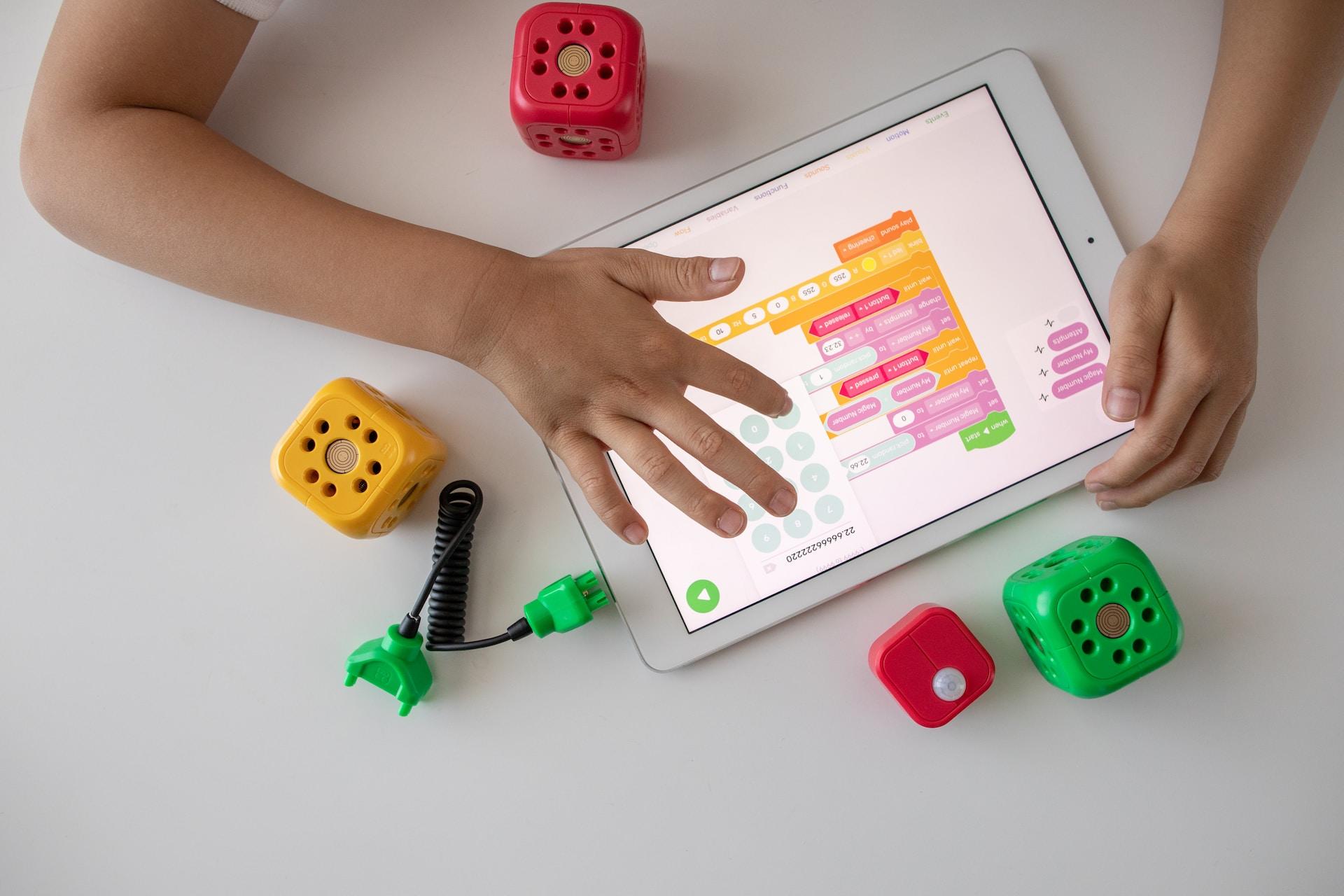

Math puzzles and logic challenges have always been favourites among kids who like to solve problems with a twist. These mind-bending challenges improve critical thinking skills and foster an interest in arithmetic, geometry, or even personal finance.
If you're a parent or educator who's looking for fun and challenging maths puzzles and games tailored for Year 5 and Year 6 students, you're definitely in the right place. In this article, we've curated a selection of logic puzzles, number games, and interactive challenges designed to enhance mathematical thinking and problem-solving skills.


🧠 Logic Puzzles for Critical Thinking
What is mathematics? It is only a systematic effort of solving puzzles posed by nature.
Shakuntala Devi, Human calculator
📍Classic Logic Problems
Our first logic puzzle recommendation is the river crossing puzzle. 1 The simplest variation of this puzzle involves a farmer, a rowboat, a fox, a chicken, and a sack of corn.
This puzzle requires you to determine the minimum number of trips required for everyone to cross the river safely under these three conditions:
This puzzle develops problem-solving skills by getting students to plan each move and think ahead so that certain animals or items are not left together. The answer to this puzzle? 7 boat crossings.
Trip 1
The farmer takes the chicken across
Trip 2
The farmer returns alone
Trip 3
The farmer takes the fox across
Trip 4
The farmer brings the chicken back
Trip 5
The farmer takes the grain across
Trip 6
The farmer returns alone
Trip 7
The farmer takes the chicken across
The next logic game recommendation is a classic and perhaps very viral puzzle: Which Cup Fills First? Students need to observe the image closely and deduce logically before making their final choice.
At a glance, almost every cup seems the same. But if you look more closely, you'll notice that some pipes are blocked to certain cups and some have leaks, and you'll get your final answer.
📍Visual and Spatial Puzzles
Our first recommendation for this category is tangram puzzles — a dissection of a square into seven flat pieces.2 It is a great way to teach students about geometry, symmetry, and how different shapes fit together, while developing problem-solving and logical thinking skills.
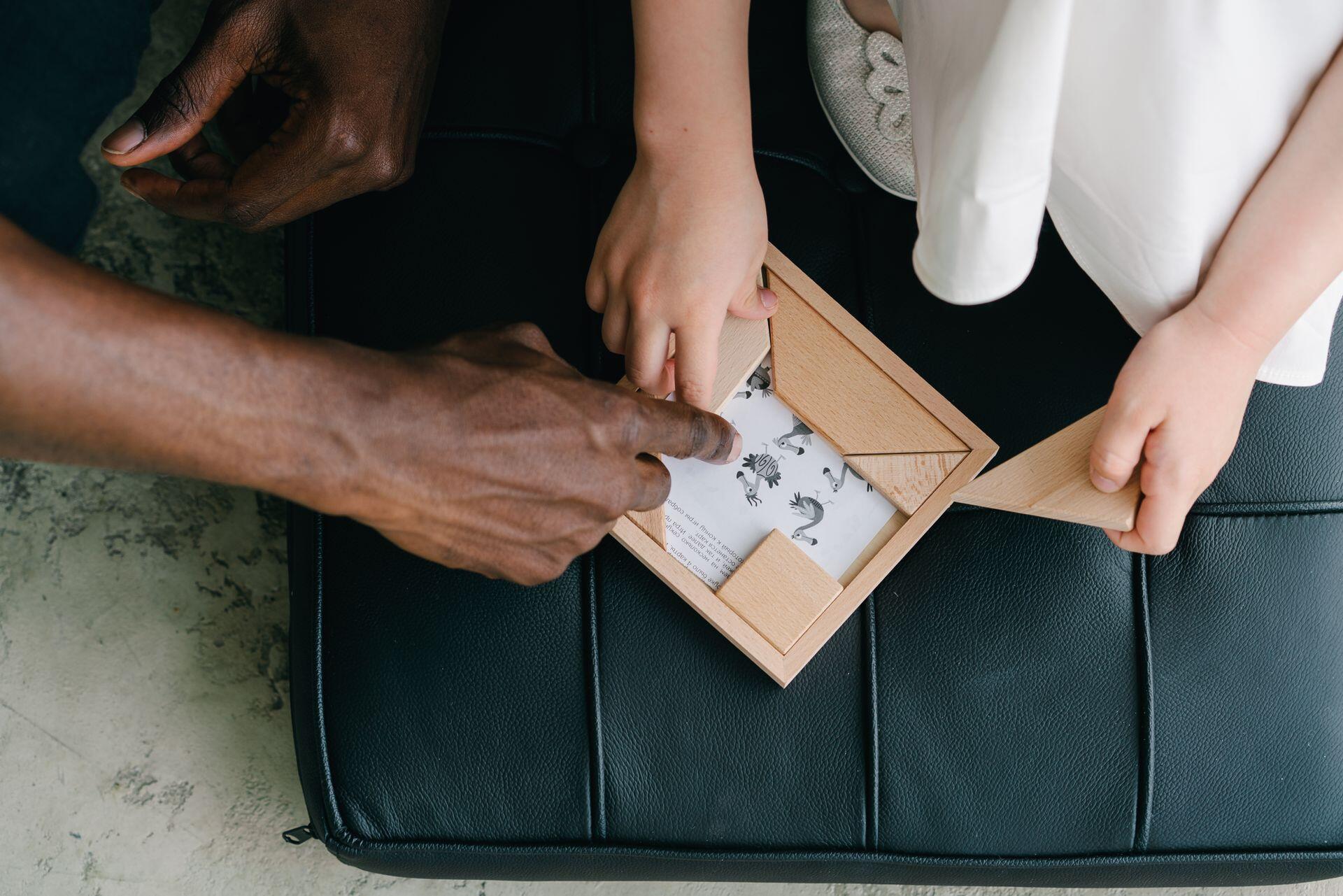
Another popular visual-spatial game is the mirror symmetry puzzle. Although it looks straightforward, doing these puzzles has many benefits, such as:
- Strengthening mental rotation and pattern recognition skills
- Making sense of abstract concepts
- Developing a strong foundation of geometric concepts, like reflection and transformation
Explore the usage of geometry and mathematics in the field of architecture.
🔢 Number Puzzles to Enhance Numeracy
Here are some number-focused puzzles involving numerical expressions or sequences. They are a fun and engaging way to teach children math skills. Solving number puzzles also requires children to use different math skills, such as addition, subtraction, multiplication, and division.
📍Arithmetic Challenges
One popular number puzzle is KenKen, a Japanese arithmetic and logic puzzle.
Players fill a grid with numbers while following simple calculation clues. The grid is divided into smaller outlined regions called cages, and each cage must reach a target number using the operation shown.
KenKen helps children practise basic arithmetic (addition, subtraction, multiplication, and division) while developing logical reasoning and problem-solving skills.
📍Pattern Recognition
A math game that helps to cultivate pattern recognition skills is the Function Machine Game. It acts as a bridge between arithmetic patterns and algebraic operations (which will be useful for advanced mathematics later).
A function machine is a visual model that:
Takes an input number
Applies one or more operations (e.g. +3, ×2, −5)
Produces an output
Based on the input number and output number, students have to spot the pattern. From that pattern, they have to predict new outputs in the following sequence.
Let's look at this example:
| Input | Output |
|---|---|
| 1 | 4 |
| 2 | 7 |
| 3 | 10 |
| 4 | 13 |
Students must recognise the pattern:
- The output increases by 3 each time.
- Operation solution: Output = 3 × input + 1.
👧 Interactive Maths Games
Gamification plays a significant role in making maths learning more engaging for Year 5 and Year 6 students, both in the classroom and beyond. Explore the following online and traditional interactive maths games to support mathematical thinking and problem-solving skills.
📌Online Platforms and Apps
Here are some websites and resources with different math topics and features, where students can access and revise the subject at their own pace and level.
| Website | Best For | Main Features | Link |
|---|---|---|---|
| Topmarks | Curriculum-aligned maths games | Time, money, fractions, decimals, Daily 10, Hit the Button | Topmarks |
| Math Playground | Maths games and problem solving | Multiplication, fractions, algebra, logic games | Math Playground |
| NRICH | Mathematical reasoning and enrichment | Open-ended challenges, puzzles, investigations | NRICH |
| Mathsframe | Interactive KS2 maths practice | Games linked to number, fractions and geometry | Mathsframe |
| BBC Bitesize Maths | Guided learning and quizzes | Videos, practice activities, curriculum support | BBC Bitesize Maths |
| Maths Is Fun | Independent maths exploration | Logic puzzles, arithmetic, geometry, explanations | Maths Is Fun |
📌Board and Card Games
In the family setting, you can help kids develop self-regulation and enhance their number fluency through various board and card games. 3
Here are two classic examples:
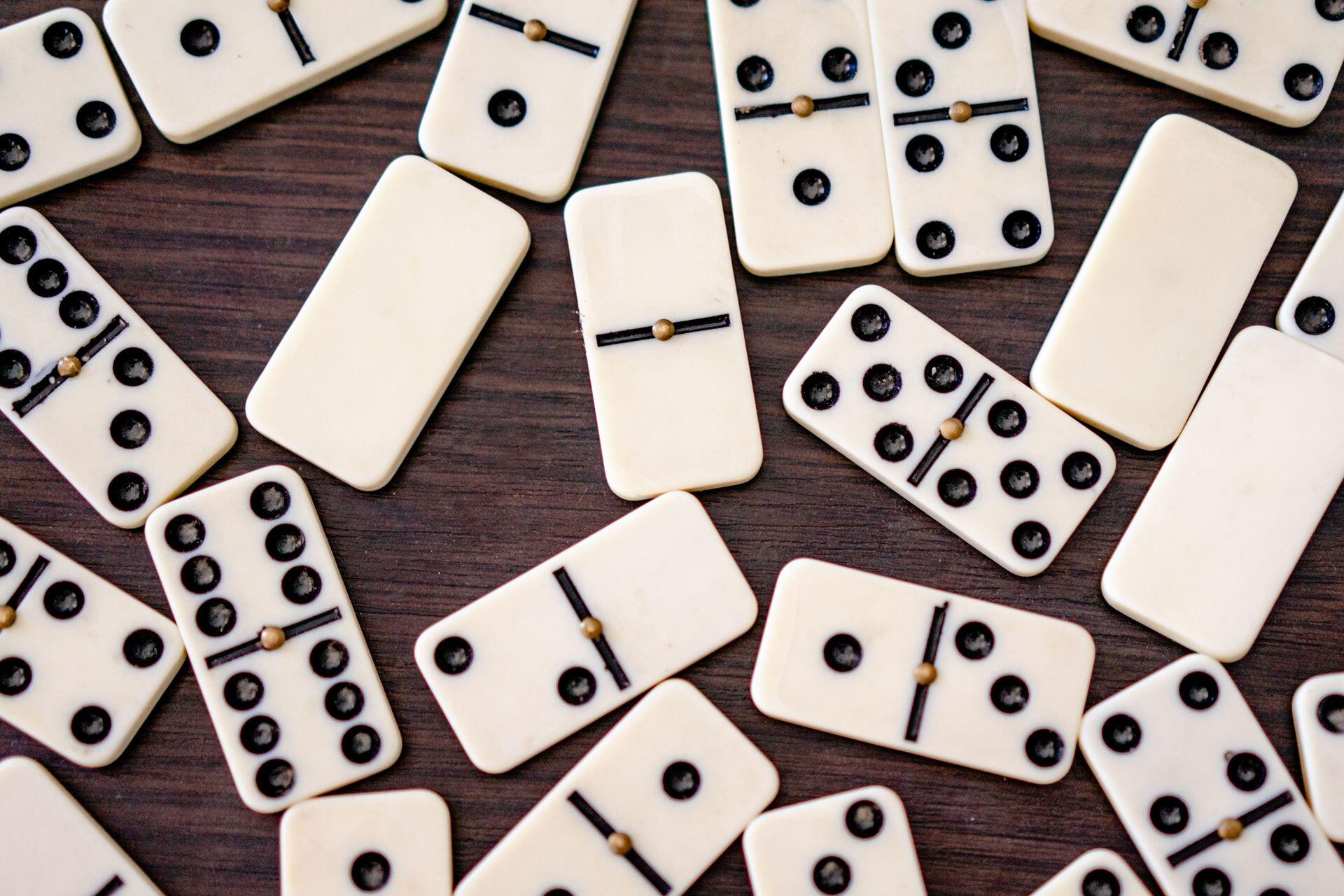
Dominoes
- Strengthens automatic recall of number bonds
- Builds a strong visual sense of quantities (pip patterns) in group learning
- Matches identical numbers and symmetrical patterns
- Develops spatial + logical placement of tiles in chains
- Great for kids who need concrete visual support in maths
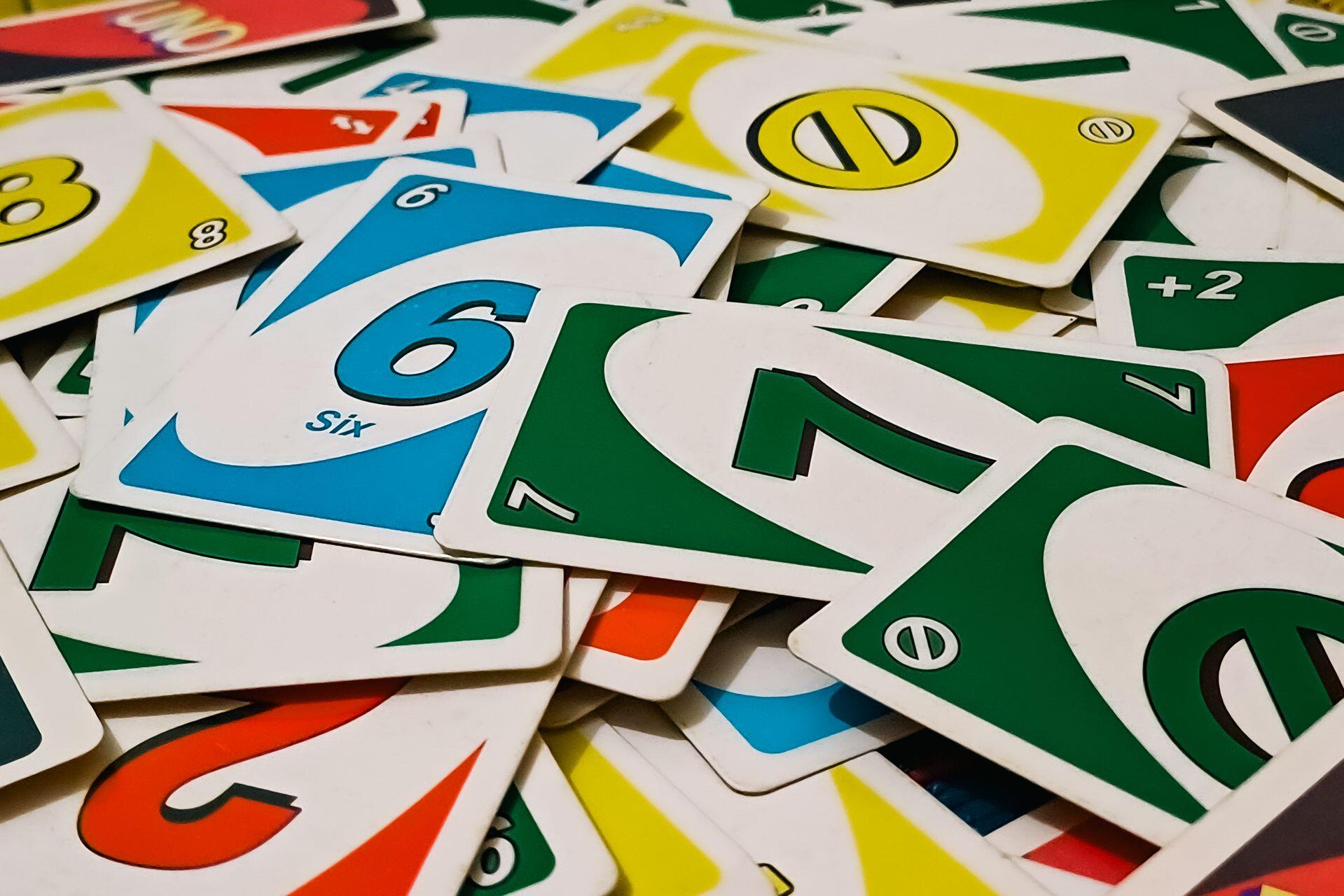
Uno Cards
- Introduces kids to concepts like probability and chance
- Fosters fast-paced, competitive, dynamic gameplay
- Builds strong concepts of addition, subtraction, and multiplication, depending on the game rules
- Develops a strong awareness of colour/number patterns, sequences, suits, or rule-based patterns
- Great for kids who want to extend reasoning and decision-making skills
Developing a knack and persistence for solving maths puzzles and problems can be useful one day when you venture into something that uses advanced mathematics, like cryptocurrencies and blockchains.
📊 General Knowledge Maths Puzzles with Answers
Now, let's look at some fun math trivia and brain teasers that can help cultivate reasoning and curiosity among KS2 students.
🔍 Fun Facts and Trivia
You can include them in a Q&A format to help students be more proactive. Here are some examples of maths fun facts and trivia that you can start with in school or at home. 4
If you multiply a number by 5 and double it, it’s the same as multiplying by 10.
Eg: 3x5 = 15
15+15 =30 --> 3x10 =30
When is Pi Day celebrated?
It is celebrated on the 14th of March, which is in alignment with the value of Pi, corresponding to the first three digits of π (3.14)
The only even prime number is the number 2.
That's because every other even number can be divided by 2.
🔍 Brain Teasers
You can also try out some fun maths riddles and brain teasers during quizzes or ice-breaking sessions before class begins.
What becomes two if you add five to nine?
Answer: A clock ( The time becomes 2 o'clock after 5 hours)
When Joanne was 8, her brother, Andrew, was half her age. Joanne is now 20, so how old is Andrew?
Answer: Andrew is 16 years old. He was 4 when Joanne was 8, so there’s a 4-year difference between them (20 - 6 = 16).
What number do you get if you multiply all the numbers in order on a mobile phone’s dial pad?
Answer: Zero. The dial pad ends in zero, so anything you multiply it by will always equal zero.
🏫 KS2 Maths Puzzles for Classroom and Home
Here are some learning resources that are organised by topic and difficulty level so pupils can gradually build skills.
✨Printable Worksheets
With online printable worksheets, you can choose how many questions to print and prioritise the types of topics according to the school's curriculum and the students' learning needs.
Here is a list that you can refer to:
| Topic | Difficulty Levels | Download Link |
|---|---|---|
| KS2 Maths Worksheets (Years 3–6) | Easy, Intermediate, Difficult | Twinkl KS2 Maths Worksheets |
| Problem-Solving Riddles | Level 1–3 (Logic & reasoning) | Twinkl Problem Solving Riddles |
| KS2 Maths Challenges | Easy / Intermediate / Difficult | Twinkl KS2 Challenge Area |
| Custom Worksheets (Generator) | Choose topic + difficulty | Maths White Board KS2 Generator |
| KS1 & KS2 Statistics Worksheets | Year 2–6 (Graphs, data) | Cazoom Maths Statistics |
| Free KS2 Maths Worksheets | Curriculum-aligned (Years 3–6) | TeachWire KS2 Maths |
| Key Stage 2 Maths Worksheets | Various topics | Atom Learning Maths Worksheets |
| Math Puzzles (50+ worksheets) | Sudoku, logic, brain teasers | Wayground Math Puzzles |
✨Group Activities
One of the best ways to keep mathematics fun and effective is through group activities such as collaborative puzzles and games.

There are many benefits that students will gain while working together in problem-solving.
Develop and strengthen their reasoning skills
- Students use critical skills to explain their work and final answers to peers
- It makes them deepen their own understanding of the math topics to articulate their answers
Cultivate self-confidence and persistence
- Pupils can share their opinions in a supportive setting
- Group settings can motivate students to keep trying despite the increased difficulty level of questions
Improves communication and teamwork skills
- Pupils need to communicate clearly and work together to find the final solution
- Everyone gets a different approach to solving a maths question
Whether you are an educator or a parent, here are some group activity suggestions that will help kids to improve their maths skills and also cultivate teamwork at the same time.
| Activity | Format | Task | Educational Benefit |
|---|---|---|---|
| Number Pyramid Challenge | Small groups (3–4 students) | Complete addition/subtraction number pyramids with increasing difficulty | Practices formal written methods while encouraging peer explanation |
| Maths Riddle Relay | Teams of 4–5 | Each team member solves one riddle, then passes to next person | Builds logic, reasoning, and sequential problem-solving |
| Sudoku Tournament | Pair or small group work | Solve 4×4 or 6×6 Sudokus together, then compete | Develops pattern recognition and logical deduction |
| 24 Game Challenge | Teams of 3–4 | Use 4 numbers to make 24 using any operations | Strengthens mental maths and operation fluency |
| Code Breaking Maths | Pairs or small groups | Decode maths-based secret messages | Combines maths with cryptography for cross-curricular learning |
We hope you have enjoyed reading this article. There are many ways to make maths engaging for kids, especially in helping them build foundational skills in a purposeful, playful way, regardless of their age and learning pace.
Remember, practice makes perfect!
References
- Chicken Crossing Puzzle - Solution. (2024). Mathsisfun.com. https://www.mathsisfun.com/chicken_crossing_solution.html
- Tangrams | NRICH. (2024). Maths.org. https://nrich.maths.org/problems/tangrams
- The value of maths games. (2024). BookTrust. https://www.booktrust.org.uk/resources/find-resources/the-value-of-maths-games/
- Fascinating Maths Facts and Riddles | Maths | KS2 | Twinkl. (2026). Twinkl. https://www.twinkl.my/blog/52-fascinating-maths-facts-and-riddles
Summarise with AI:
Did you like this article? Leave a rating!

 Loading...