

Onomatopoeia is a word that describes a sound. The word itself is a direct representation of the sound itself. Think of words like "buzz," "hiss," or "bang".
Key Takeaways
- Onomatopoeia is a type of figurative language that represents sound
- Common onomatopoeia examples include “buzz,” “clang,” and “splash”
- These words are used in literature, media, and everyday language
- Different languages represent sounds in different ways
- Using onomatopoeia can make writing more vivid and engaging




What Is Onomatopoeia?
Onomatopoeia is the formation of a word from a sound associated with what is named.
Oxford English Dictionary
Onomatopoeia is a linguistic device like personification, a simile, or a metaphor. Writers use it to represent sounds. In the English language and literature, you'll find it in all kinds of writing, from poetry and storytelling to comics. You'll recognise onomatopoeia by words like “buzz,” “hiss,” and “clang”; classic examples that sound like the actions or objects they describe.¹
Onomatopoeia refers to words that imitate or suggest the natural sound they describe. Common examples include “buzz,” “hiss,” “bang,” and “splash.” These words help readers hear and imagine sounds, making writing more vivid and engaging.
Onomatopoeia comes from the Greek words onoma (name) and poiein (to make). The etymology "to make a name" mightn't sound like onomatopoeia, but it's more about giving names to sounds. With onomatopoeia, you can mirror real-world sounds rather than describe them abstractly.³
In writing, onomatopoeia makes descriptions more vivid and engaging, much like emotive language appeals to our emotions. Rather than saying a sound occurred, writers can recreate the sound and help them imagine it more clearly. This is why schools teach it as a key part of figurative language.⁵
Common Onomatopoeic Words and Examples
Onomatopoeic words recreate sounds. They do this in a way that feels natural and immediate to the reader. They appear in every language, in literature and in comics, bringing scenes to life. While some examples are ubiquitous, many are created by the writers themselves to convey the specific sound they want.
Onomatopoeic words can be grouped into categories such as animal sounds (meow, woof), natural sounds (splash, rustle), and mechanical sounds (click, beep). Understanding these categories helps learners recognise patterns and use them effectively in writing.

Animal Sounds
Natural Sounds
Rustle – a soft, light sound made by leaves or paper
Mechanical Sounds
Onomatopoeia Across Different Languages
Onomatopoeia exists in different languages, but since not every language is pronounced the same, the spelling and sounds can vary. The real-world sound may be described in various ways. You can see how onomatopoeia is influenced not just by sound, but also by the structure of each language.¹
| Sound | English | Spanish | Japanese | German |
|---|---|---|---|---|
| Dog bark | Woof | Guau | Wan-wan | Wau-wau |
| Cat sound | Meow | Miau | Nyan | Miau |
| Explosion | Bang | Pum | Don | Bumm |
| Clock | Tick-tock | Tic-tac | Chiku-taku | Tick-tack |
| Splash | Splash | Chapoteo | Basha | Platsch |
Take a dog barking, for example. In English, we often "woof" in English. There's also "bow-wow" sometimes, but written this way wouldn't necessarily convey the right sound in other languages. Since these words are interpretations of the sound, every language finds its own way toward representing it. In Spanish, dogs go "guau," and in Japanese, "wan-wan" makes the sound.
The Role of Onomatopoeia in Literature and Media
Onomatopoeia can be used in different forms of writing. You'll find it in everything from literature to instruction manuals. In some cases, it's used to create vivid, sound-rich experiences for the reader, while in others, it may be very functional. Much like using a simile to compare two things, you can make writing clearer with onomatopoeia rather than completely describing a sound.
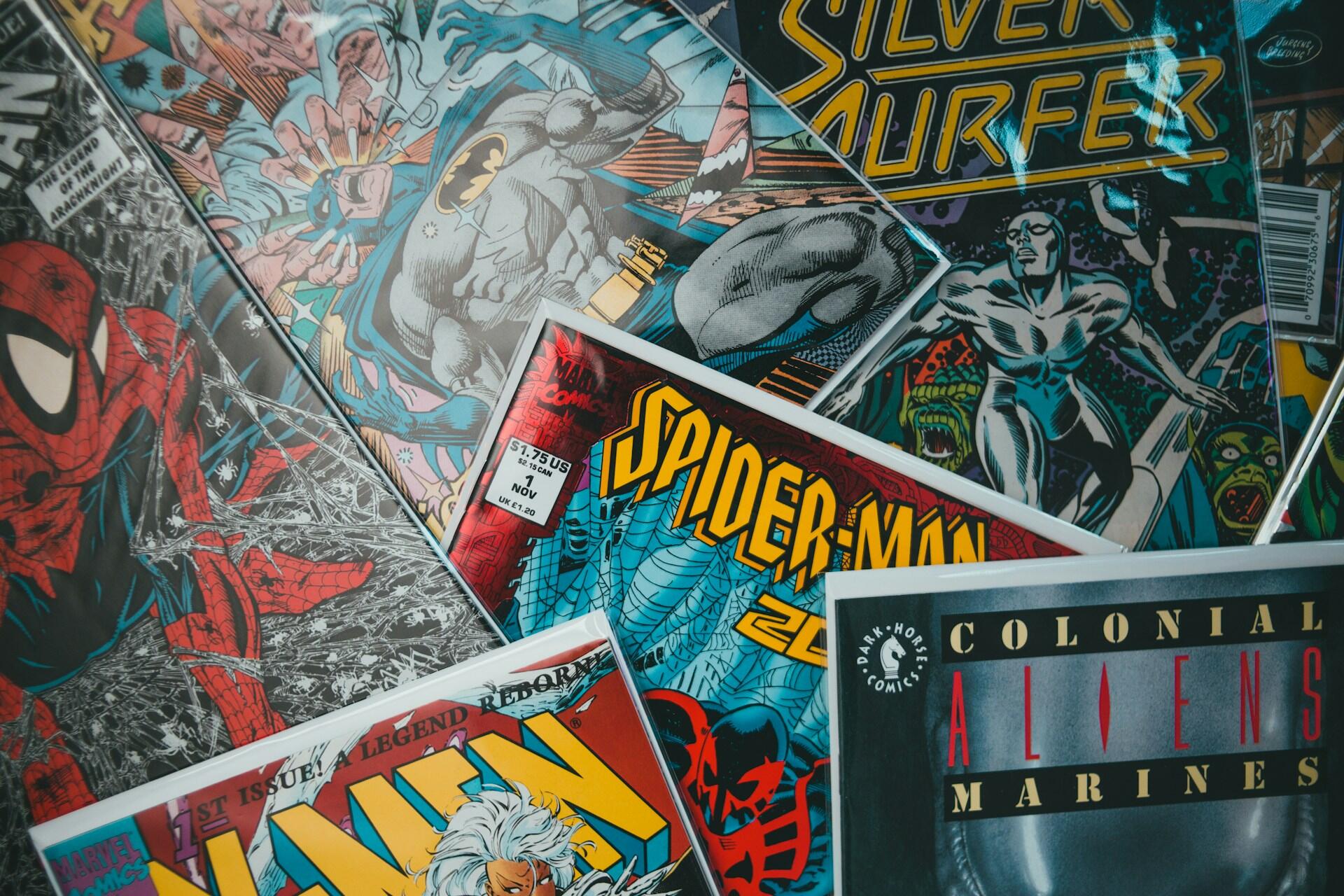
of onomatopoeia represented fast-motion/action sounds.
Writers use onomatopoeia to bring scenes to life and immerse the reader.
Example: “The fire crackled as the logs burned in the quiet night.”
Poets often rely on sound devices, including onomatopoeia, to create rhythm and mood.
Example: “The bees buzzed lazily under the summer sun.”
Onomatopoeia is essential in comics for visually representing action and sound.
Example: “Boom!” “Crash!” and “Pow!” are often used during action scenes.
Advertisers use sound words to make products more memorable and engaging.
Example: “Snap, crackle, pop” to describe cereal sounds.
Scripts use onomatopoeia to indicate sound effects and enhance scenes.
Example: “The door slams shut with a loud bang.”
Onomatopoeia helps young readers connect words with sounds and actions.
Example: “The duck went quack as it waddled across the pond.”
Musicians use onomatopoeia to create catchy and rhythmic phrases.
Example: “Bang bang” in song lyrics to emphasise impact.
Sound effects are often represented with text for stylistic or retro design.
Example: “Zap!” or “Boom!” appearing during gameplay.
Writers sometimes use onomatopoeia to grab attention and convey impact.
Example: “Markets crash as stocks plunge overnight.”
onomatopoeic words were identified.
Onomatopoeia in Everyday Language
You'll hear onomatopoeia in everyday language. People use it to describe sounds. Whether you're having a conversation or telling a story, you'll likely use it without really thinking too much about it.

Examples in Speech
- “The bacon sizzled in the pan.”
- “The door creaked open slowly.”
- “The phone buzzed on the table.”
Impact on Language
- Makes speech more expressive
- Helps listeners visualise sounds
- Common in storytelling and casual conversation
Fun Facts About Onomatopoeia
More than just a writing tool, onomatopoeia has interesting and surprising features. You'll see these sound-based words in many languages, but they also tell us about ourselves. Here are some of our favourite facts about onomatopoeia.
It combines onoma (name) and poiein (to make), meaning “to make a name.”³
A dog says "woof" in English, but "guau" in Spanish and "wan-wan" in Japanese.⁴
The word "onomatopoeia" is itself related to the concept it defines.
This means some words naturally "feel" like the sounds they represent.²
Words like "boom," "crash," and "zap" help visually and audibly show action.
Words like "moo," "woof," and "vroom" are often among the first sound words children recognise.⁵
Words like "click" and "buzz" are now fully accepted as regular English words.¹
These include direct (e.g., "bang") and indirect (e.g., "whisper").
The language has hundreds of sound-symbolic words used in everyday speech.
Catchy sound-based words help products feel more memorable and engaging.
Enhancing Your Writing with Onomatopoeia
the act of creating or using words that include sounds that are similar to the noises the words refer to
Cambridge Dictionary
You can make your writing more vivid with onomatopoeia or other writing techniques like metaphor. It can help readers hear and imagine what's happening. Add energy, clarity, and sensory details to your descriptions. However, as with other stylistic devices, you have to think carefully about how much or how little you use it.
Onomatopoeia adds sensory detail to writing by appealing to sound. It can make descriptions more immersive, improve storytelling, and help readers connect emotionally with a scene. However, it should be used carefully to avoid overuse or distraction.

Add onomatopoeia where sound is important, such as action scenes or descriptive passages.
Too many onomatopoeic words can make writing feel exaggerated or distracting.
Choose sound words that fit the mood, whether serious, playful, or dramatic.
Pair onomatopoeia with adjectives and verbs to create richer imagery.
Common sounds like "buzz" or "click" are easier for readers to understand.
Try using onomatopoeia in dialogue or narrative to make writing more engaging.
Simpler sound words work well for younger readers, while more subtle ones suit advanced writing.
This helps you check whether the sound words feel natural and effective.
Onomatopoeia is more suited to creative or descriptive contexts than academic writing.
References
- “Onomatopoeia.” Cambridge Dictionary, Cambridge University Press, https://dictionary.cambridge.org/dictionary/english/onomatopoeia. Accessed 20 Mar. 2026.
- Körtvélyessy, Lívia, and Pavol Štekauer. “Onomatopoeia.” Complex Words, Cambridge University Press, 2020, https://www.cambridge.org/core/books/complex-words/onomatopoeia/0F67561B2CC19AE5E84FECD5A87CA03D. Accessed 20 Mar. 2026.
- “Onomatopoeia.” Oxford English Dictionary, Oxford University Press, https://www.oed.com/dictionary/onomatopoeia_n. Accessed 20 Mar. 2026.
- “Onomatopoeia: Definition, Meaning, Usage and Examples.” FlexiPrep, https://www.flexiprep.com/Important-Topics/English/Grammar/Onomatopoeia-Definition-Meaning-Usage-and-Examples.html. Accessed 20 Mar. 2026.
- “Onomatopoeia – Definition.” Save My Exams, 15 Apr. 2025, https://www.savemyexams.com/glossary/gcse/english-language/onomatopoeia-definition/. Accessed 20 Mar. 2026.
Summarise with AI:
Did you like this article? Leave a rating!

 Loading...
