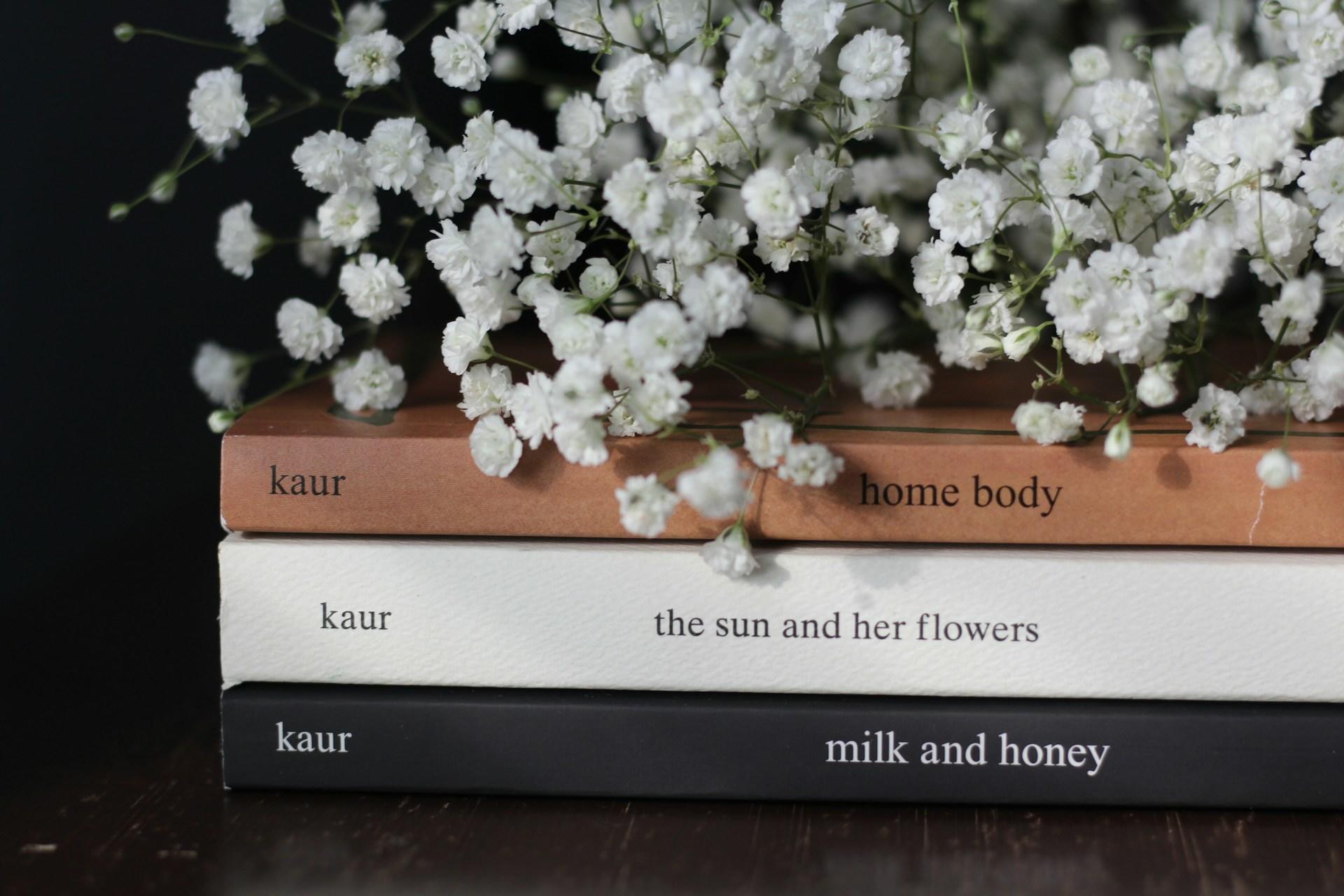

You have probably come across Rupi Kaur in your Instagram feed or while you were looking for women in poetry nowadays. Rupi Kaur has inspired millions of people with her simple yet touching poetry and her performances.


Biography
Rupi Kaur is born in Punjab in 1992, she describes herself as a poet, illustrator, photographer, and performance artist. At a young age, she migrated to Canada with her family to escape the persecution of Sikhs that was happening in India. While growing up, despite the difficulties and instability of life, Kaur grew up in a family where poetry and painting were practised by her mother and her father as hobbies.
Poetry is an essential aspect of her Sikh faith and was integrated into her spirituality and everyday life. Growing up away from her culture, Kaur had to face the difficulties of an immigrant family in Canada, discrimination, racism, bullying and other types of abuse were present in her daily life. She developed what she calls 'constant survival mode'.
Literature and poetry brought her solace throughout her childhood and teenage years, she enjoyed Indian classic literature and poetry and later discovered more authors she would enjoy, among them: Amrita Pritam, Maya Angelou, Roald Dahl, Dr. Seuss and J.K. Rowling.

Rupi Kaur studied rhetoric and professional writing at the University of Waterloo, while studying, she taught creative-writing classes.
She first began performing in 2009, she decided to perform and write poetry in an attempt to find a voice or a way to express her personal trauma and past abusive relationship. Throughout time, her writing became more reflective as she was finding her own voice and style.
Her poetry was received with enthusiasm in most venues, although she had been told that her style was sometimes too aggressive for certain venues and audiences. She was often in conflict with her parents when discussing her career choice and pursuit of poetry.
Kaur is the stage name that Rupi Kaur uses because it is the name of every Sikh woman –brought in to eradicate the caste system in India – and she thought that this would inspire and empower young Kaur women that would see this name in a bookshop.
Rupi Kaur, also an Instapoet
Rupi Kaur started sharing her work online in 2013 on Tumblr, and once Instagram was launched in 2014 she started adding some illustrations to her poetry.
Nowadays, the media and social media platforms have enabled different ways for us to absorb information but also to express ourselves in the digital world. Social media particularly has become a realm for brands, and organizations, but also for artists and individuals, opening many opportunities to express yourself. Kaur and other poets like Yung Pueblo embraced this media to publish their poems and art.
While Instapoetry has been criticized by academia for not respecting or following certain canons of literature, Instapoetry provides a modern take on traditional poetic principles. Nevertheless, Instapoets have opened a door and democratized the access to poetry like never before, stimulating a broader audience in getting interested in poetry is a major step for poetry.
Since then, Kaur has gathered 4.5 million followers from around the world and is the most popular 'Instapoet'.
Rupi Kaur's books
In the beginning, Kaur was sending her poetry and literature to various magazines and journals with little success. Thus, she decided to self-publish her first book, milk and honey in 2014.
milk and honey
This book is her first self-published book with 'zero concepts in mind' according to Kaur's words. When it first came out, it sold more than 10, 000 copies. This collection of poetry and prose is about survival. This book is divided into four sections, each of the sections depicts a time or experience in Kaur's life.
- the hurting
- the loving
- the breaking
- the healing
Each of these sections explores the themes of violence, loss, love, abuse, and feminity.
the sun and her flowers
This second collection of poetry and prose was published in 2017and is composed of five chapters with illustrations by Kaur herself. The five chapters of this book are:
- Wilting–addresses heartbreak and loss
- Falling–addresses depressive feelings and loss of a significant relationship
- Rooting–addresses female infanticide, immigration, and border
- Rising– addresses healing and love
- Blooming– addresses joy and self-love and acceptance
and the themes explored in this book are related to love, loss, abuse, healing, trauma, feminity, and the body.
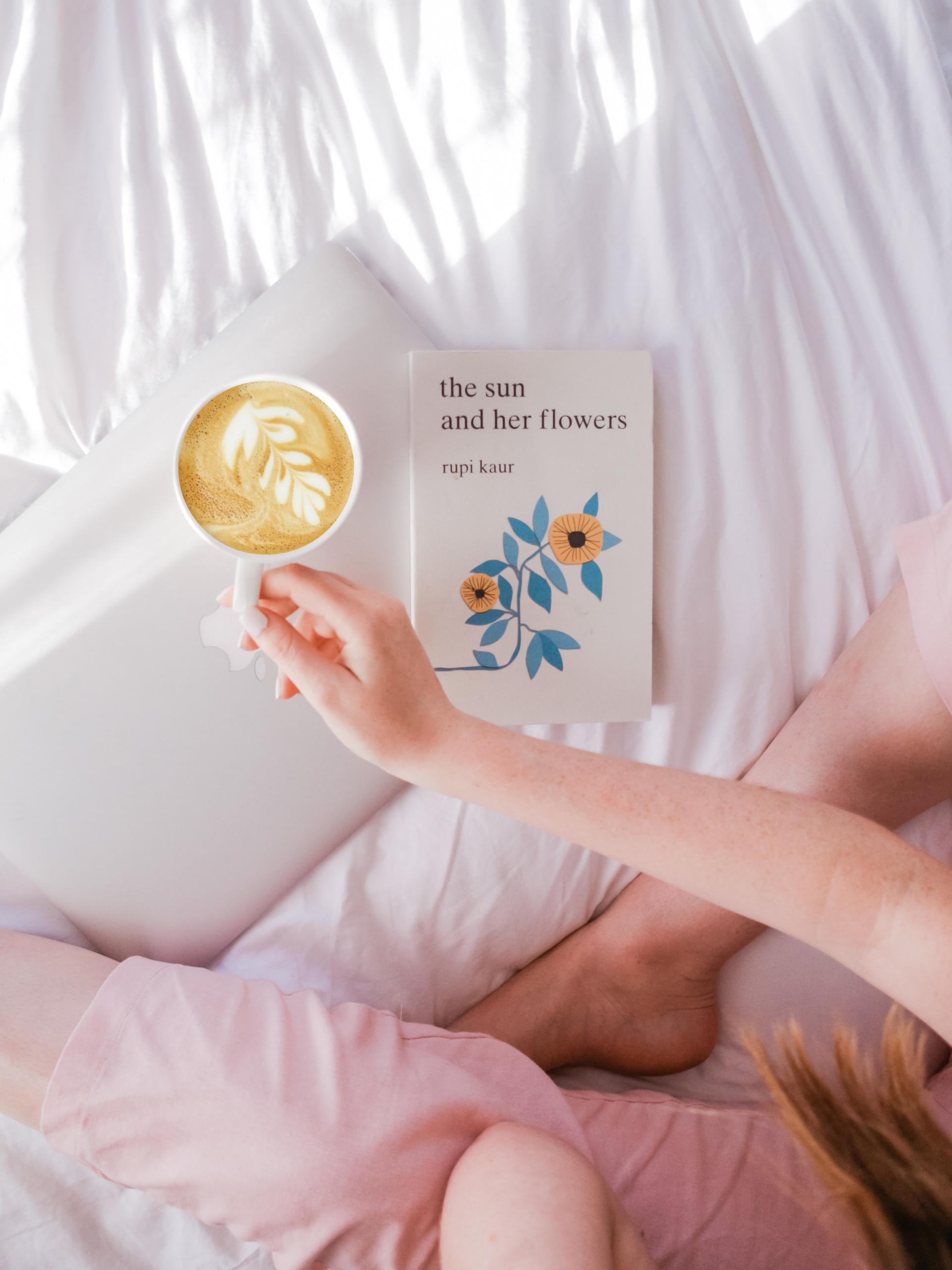
The inspiration for this book were different elements from unhealthy love and relationships with other, but also with herself. Kaur explores the various feelings and reflections she had about her identity in relation to death and immigration and how, despite these difficult emotions, she wants to talk about love.
home body
In 2020 Kau released her latest poetry collection home body, which became one of the best-selling books of 2020. While Kaur is always on a healing journey and takes her audience with her in embracing growth, this collection is a reflective journey depicting the past, present, and potential of the self.
The book follows a structure of honest and raw conversation with oneself, where the reader is constantly reminded to fill their life with love, acceptance, community, family, and embrace change. This collection is also illustrated by Kaur with themes of nature and nurture, light and dark.
i dive into the well of my body
and end up in another world
everything i need
already exists in me
there’s no need
to look anywhere else
– home
Kaur's poetry
Kaur's poetry has had different reception, on one side she has been praised and recognized as a poet that merged poetry and pop culture. Thus allowing the democratization of poetry and literature in general.
The topics that Kaur has been writing about, are related to, her personal trauma as an immigrant person and woman. And her fans have considered her to elevate diversity in a literary scene that is predominantly white. She is regarded as a poet and activist that has opened the discussion about menstruation and feminism on social media with her fans. This has encouraged several artists of colour to also use the platform for activism.
The critics
There is a polarized opinion about Kaur's poetry and Kaur as an artist, critics from the literary world have been particularly severe. They have often diminished her work and qualify it as 'juvenile, attenuated, inauthentic or over-simplistic'. They argue that her writing style is 'an open denigration of intellectual engagement and rejection of craft', which means that she does not follow a certain style or method of writing poetry.
Another critic is authenticity, and how she does not discern her personal trauma from collective trauma, this lack of distinction has been deemed problematic for some critics.
On the other hand, the magazines and the publishing world have praised Kaur for her refreshing take on poetry, despite the very difficult and hurtful themes she brings up in her poems. They are more forgiving of the literary aspects and are more interested in her impact on the media and on the public, making her a figure or artist of a new kind in our digital world. She is a Forbes 30 under 30, an editor of the 2016 Mays Literary Anthology of New Writing from the Universities of Oxford and Cambridge, and one of BBC’s 100 Women
Regardless of the critics, if you enjoy poetry from Rupi Kaur that is the most important aspect of her poetry and art. Other famous British poets, such as William Shakespeare, have also been using poetry to express difficult or beautiful emotions. Kaur's poetry is representative of a part of how poetry is evolving nowadays, this can be an explanation of why so many people desire to read her work, like her posts or follow her on social media.
When Kaur or any poet shares a poem, they are aiming at making us feel, think, reflect be touched by simplicity and nuance, she has been able to capture the heart of millions through this simplicity and musical interactions of poetry in her live performances, they often include musical interaction, art, and theatre.
The magic of poetry and its history has been to move the reader and the audience, if that is accomplished can we say it is not poetry? If you are looking to start writing your poems or study poetry thoroughly, you can always have a read at rupikaur's poetry, but we also recommend you study classical poetry. You can easily find a Superprof tutor that will guide you in your discovery of poetry, or that can help you get deeper into the study of poems from famous British poets and more.
Summarise with AI:
Did you like this article? Leave a rating!

 Loading...