
Did you know that Virginia Woolf was more than just an established novelist and essayist? She was also a publisher, co-founding the Hogarth Press with her husband, Leonard Woolf.
Fun fact: The press was named after Hogarth House in Richmond, where the couple was living when they started it. 1
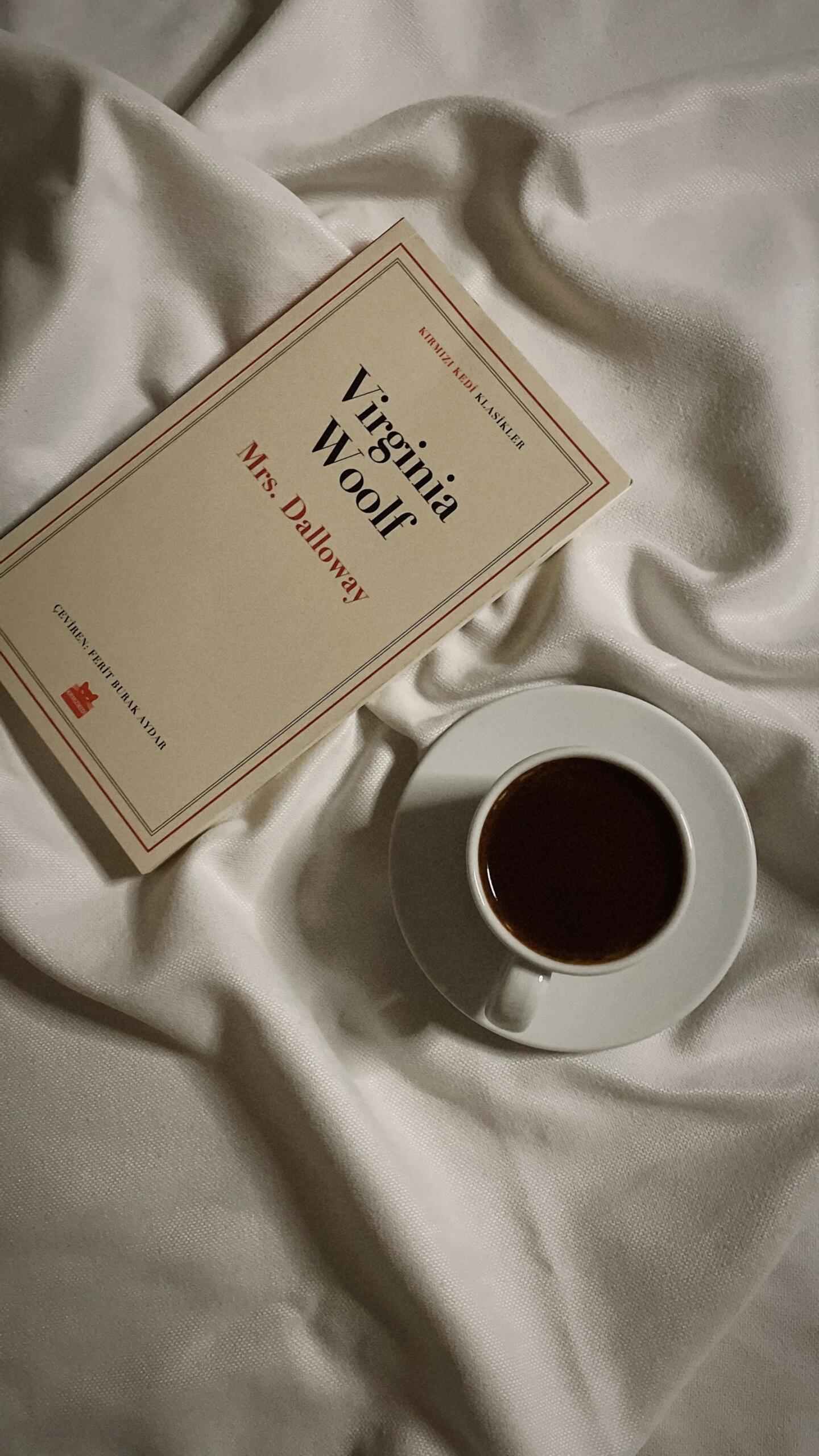
She went on to publish some of the defining works of literary modernism, including Mrs Dalloway, To the Lighthouse, Orlando, The Waves, and A Room of One’s Own. Her writing remains widely shared today as they capture universal themes of the inner life, artistic freedom, identity, and consciousness.
📍Women & independence
📍Identity & selfhood
📍Consciousness & inner life
📍Memory & the passage of time
📍Writing & creativity




Most Famous Virginia Woolf Quotes
First, let's look at some of Woolf's most widely recognised lines from fiction and essays.
A woman must have money and a room of her own if she is to write fiction.
Virginia Woolf, A Room of One’s Own, 1929
This quote may sound simple, but Woolf paints a bigger picture of the social restrictions on women’s authorship: financial independence and a private, controllable space.
Only with sufficient time, space, and financial security can women fully pursue their creative ambitions without interruption from society’s demands. This idea still resonates today. 2

Mrs. Dalloway said she would buy the flowers herself.
Virginia Woolf, Mrs Dalloway, 1925
Undoubtedly one of the most iconic opening lines of modernist fiction, Woolf allows us to peek into the character of Clarissa Dalloway, the titular character of the book.
Woolf delicately narrates the life of Mrs Dalloway, revealing to us that she’s independent, rich, and loves flowers. For a woman of her social standing, she still wants to maintain autonomy in her everyday life through little decisions, such as buying flowers herself — highlighting the relationship between social class, control, and even femininity. 3
Life is not a series of gig-lamps symmetrically arranged; life is a luminous halo, a semi-transparent envelope surrounding us from the beginning of consciousness to the end.
Virginia Woolf, Modern Fiction, 1919
In this essay, Woolf rejects the idea that life (and also fiction) is meant to be experienced as a neat sequence of events.
Instead of adhering to a fixed structure, both life and fiction are constantly shifting and moving based on one's consciousness about memories, events, and experience, through the highs and lows. 4
Don't forget to explore these quotes from George Orwell, another prominent writer during the 20th century.
Virginia Woolf Quotes About Writing, Reading & Literature
As both a novelist and essayist, Woolf believes that it's only by reading deeply and well that one can have a successful writing and artistic discipline. Let's look at these quotes, which showcase important themes revolving around ideas on writing, reading, and literature.
The mind, exposed to the ordinary course of life, receives upon its surface a myriad impressions—trivial, fantastic, evanescent, or engraved with the sharpness of steel.
Virginia Woolf, Modern Fiction, 1919
Theme
- The relationship between consciousness and creative freedom
Meaning
- Woolf suggests that the mind (our consciousness) is like a sponge that constantly absorbs impressions from everyday life — acting as a raw and rich source of fiction material.
The only advice, indeed, that one person can give another about reading is to take no advice, to follow your own instincts, to use your own reason, to come to your own conclusions.
Virginia Woolf, How Should One Read a Book? ,1926
Theme
- The importance of independent reading
Meaning
- Woolf believes that reading, like writing, is a personal experience and readers should trust their own judgment 5 .
If you do not tell the truth about yourself you cannot tell it about other people.
Virginia Woolf, The Leaning Tower, 1940
Theme
- The importance of truth and self-knowledge in writing
Meaning
- Good writing comes from honesty with oneself, especially with one's emotions and experience. Only then can we observe and portray other people with nuance. 6
Check out these quotes by Shakespeare.
Virginia Woolf Quotes About Women, Feminism & Independence
Woolf is also well known as a foundational figure in feminist literary criticism, where she advocates for women's intellectual and creative freedom, be it through her novels or essays.
Lock up your libraries if you like; but there is no gate, no lock, no bolt that you can set upon the freedom of my mind.
Virginia Woolf, A Room of One’s Own, 1929
Theme
- Intellectual freedom and independence (especially from patriarchal control)
Meaning
- Woolf reflects that a woman's mind remains uncontainable despite restrictions in education, knowledge, and intellectual freedom.
Explore these insightful Oscar Wilde literary quotes.
For we think back through our mothers if we are women.
Virginia Woolf, A Room of One’s Own, 1929
Theme
- Women’s literary inheritance and the need for female predecessors to shape their identities
Meaning
- Woolf highlights the importance of having women role models in terms of literary traditions, as women’s identities are shaped by those who came before them.
This book, which is divided into six chapters, is based on two lectures on “Women and Fiction” delivered in October 1928 at Newnham College and Girton College, Cambridge. 7
Woolf believes material conditions shape women’s ability to write and be taken seriously as novelists.
In fact, as a woman, I have no country. As a woman I want no country. As a woman my country is the whole world.
Virginia Woolf, Three Guineas, 1938
Theme
- Relationship between gender, nationality, and the positioning of women
Meaning
- Woolf rejects the notion that women should base their nation as their primary identity. Instead, she envisions a broader sense of belonging that extends beyond national borders 8.
Explore these quotes from another famous female author, Maya Angelou.
Virginia Woolf Quotes About Life, Solitude & Identity
Woolf's passion for her craft lies in her deep and philosophical insights, especially about identity, selfhood, and transformation — which reflects her emphasis on the inner experience rather than the external action.
Here are some quote examples revolving around this theme:
I am made and remade continually. Different people draw different words from me.
Virginia Woolf, The Waves, 1931
Theme
- The connection between our identity and relationships
Meaning
- The self is constantly shaped and reshaped by time and our relationship with others, where different people bring out different sides of us 9.
Memory is the seamstress, and a capricious one at that. Memory runs her needle in and out, up and down, hither and thither.
Virginia Woolf, Orlando, 1928
Theme
- The construction of identity through memories
Meaning
- Woolf compares memory to an unpredictable craftswoman, where the fragments are stitched without any particular order, so our memories can change as we look back on them 10 .
She always had the feeling that it was very, very dangerous to live even one day.
Virginia Woolf, Mrs Dalloway, 1925
Theme
- Solitude and the fragility of life
Meaning
- Woolf's narration captures the tension of being alive and being exposed to the possibility of death — the irony that being alive itself is also dangerous
Discover these quotes by Charles Dickens, which also revolve around life's reflections.
Virginia Woolf Quotes by Book and Essay
Based on a selected bibliography of Virginia Woolf’s major works, you can group them into three categories: fiction, nonfiction, and life writing.
Novels and short stories
Eg: Mrs Dalloway (1925)
Book-length essays, shorter essays, and reviews
Eg: A Room of One’s Own (1929)
Diaries, letters, autobiographical essays, factual biographies
A Writer’s Diary (1953)
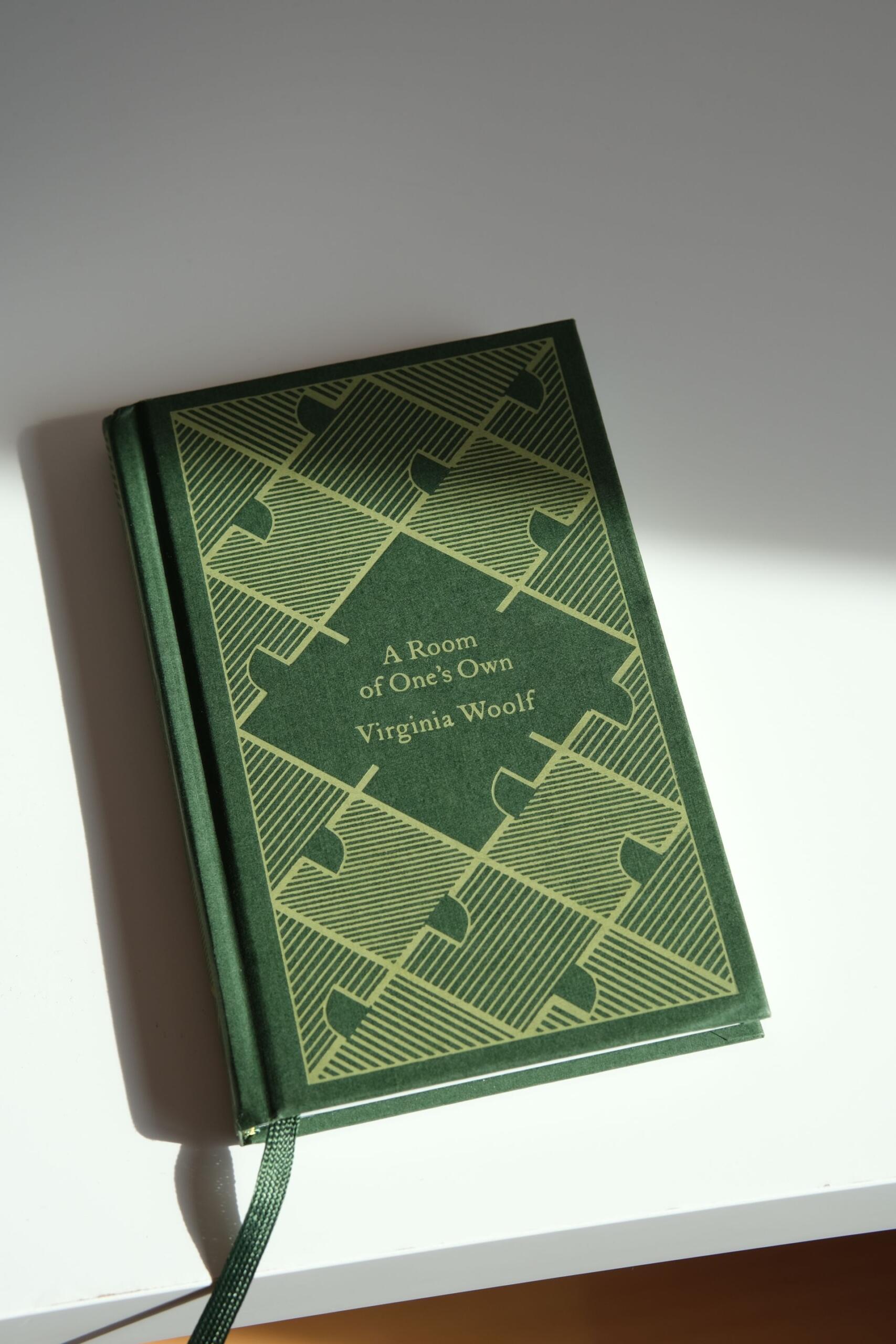
Here are some notable quote examples from Woolf's different books, like To the Lighthouse 11 and essays like On Being Ill. 12
| Novel or Essay | Best Quote | Main Theme | Best For |
|---|---|---|---|
| To the Lighthouse (1927) | “What is the meaning of life? That was all—a simple question; one that tended to close in on one with years.” | Meaning and the search for life’s significance | Readers reflecting on purpose, mortality, and the meaning of life |
| A Room of One’s Own (1929) | “Fiction must stick to facts, and the truer the facts the better the fiction—so we are told.” | Fiction, truth, and artistic freedom | Readers interested in Woolf’s ideas about writing and literary convention |
| Orlando (1928) | “Time, unfortunately, though it makes animals and vegetables bloom and fade with amazing punctuality, has no such simple effect upon the mind.” | Subjective time and the human mind | Readers interested in time, identity, and consciousness |
| Three Guineas (1938) | “Though we see the same world, we see it through different eyes.” | Different perspectives | Readers interested in gender, society, and competing viewpoints |
| On Being Ill (1926) | “English, which can express the thoughts of Hamlet and the tragedy of Lear, has no words for the shiver and the headache.” | Illness and altered perception | Readers interested in the body, illness, and consciousness |
Feel free to explore these quotes from Jane Austen.
About Virginia Woolf
25 January 1882
South Kensington, London, England
Novelist, essayist
Mrs Dalloway, The Lighthouse, A Room of One's Own
Virginia Woolf was an English writer who transformed twentieth-century fiction and non-fiction with her introspective insights on gender, writing, and how memories are formed and shaped through the inner experience.
She was willing to challenge traditional narrative conventions in different genres, as well as rewrite literary culture by founding her own publishing business, The Hogarth Press, with her husband, Leonard Woolf, in 1917.
This publishing business is a testament to what she wrote in A Room of One's Own, where she enjoyed creative freedom as a female author who could write and publish without pressure from a commercial publisher or male editor.
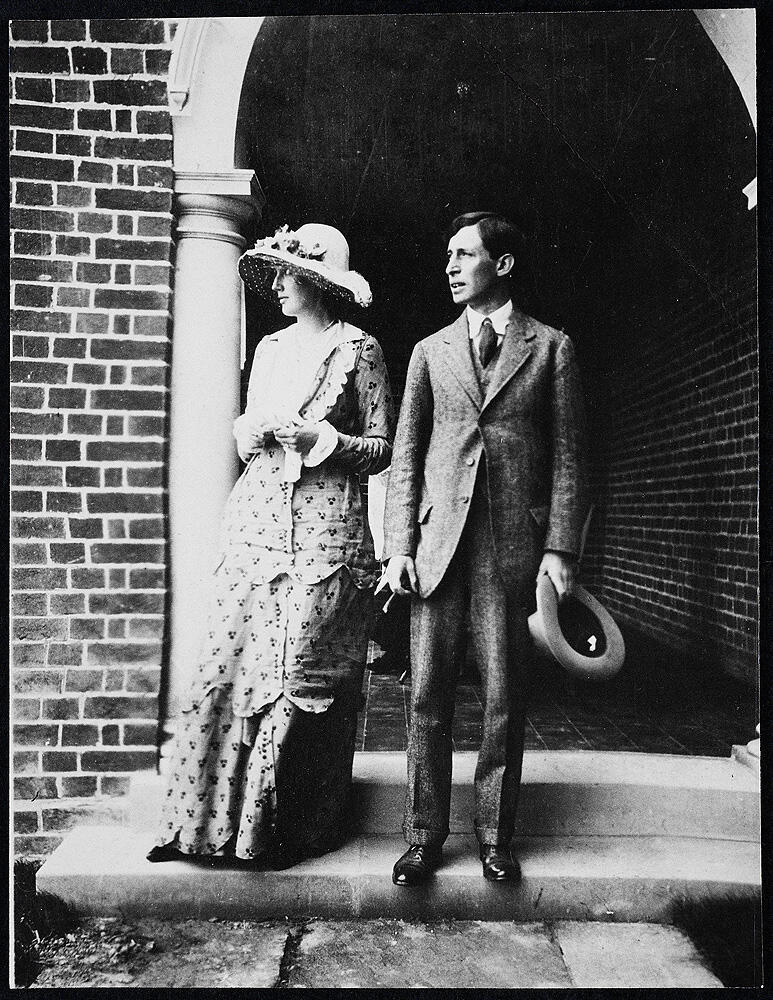
From printing books themselves on a hand press at their home to publishing other writers' works, she played a key role in elevating female literary criticism and modernism (where the description of the inner experience is as important as the description of the event itself).
| Work | Central Concerns |
|---|---|
| Mrs Dalloway (1925) | Time, memory, consciousness, social identity, mortality, and the inner lives of ordinary people |
| To the Lighthouse (1927) | Family, grief, relationships, perception, time, and the search for meaning |
| Orlando (1928) | Gender, identity, transformation, time, and the relationship between life and literature |
| A Room of One’s Own (1929) | Women’s education, financial independence, creativity, literary history, and the conditions necessary for women to write |
| The Waves (1931) | Identity, consciousness, friendship, individuality, and the passage of time |
| Three Guineas (1938) | Gender inequality, education, war, nationalism, and the relationship between patriarchy and political power |
Here's an overview of Woolf's 10 key years during her lifetime.
1882
Born on 25 January in London
1895
Her mother, Julia Stephen, passed away, causing Woolf to suffer a severe psychological crisis
1904
Her father, Leslie Stephen, passed away, and she moved to Gordon Square, Bloomsbury
1912
She married Leonard Woolf
1915
She published her first novel, The Voyage Out
1917
She co-founded the Hogarth Press with her husband
1925
She published Mrs Dalloway and the essay collection The Common Reader
1929
She published A Room of One’s Own, a landmark essay on women and fiction.
1931
She published another experimental novel, The Waves
1941
She died on 28 March at the age of 59
Having said that, here are some tips for sharing some of the most famous literary quotes of all time, from your favourite writers.
- Before you share any quote by Virginia Woolf, be sure to attribute the quote to the correct work and distinguish the genres between fiction, essays, letters, and diaries.
- Don't be quick to copy quotations from online attributions, as you need to verify if the quote is disputed or paraphrased.
- Check and use the exact wording, and be precise if the citation requires you to cite specific passages or pages.
- This is super important if you are planning to use the quote for academic purposes (written assignments, creative essays, or conferences).
We hope you have enjoyed reading this article and diving deep into these beautiful and impactful quotes by Virginia Woolf. Happy reading!
References
- Young, A. (2021, June 15). 5 Interesting Facts About English Modernist Writer Virginia Woolf. My Modern Met. https://mymodernmet.com/virginia-woolf-facts/
- A Room of One’s Own (1929). (n.d.). Project Gutenberg Australia. Retrieved September 16, 2026, from https://gutenberg.net.au/ebooks02/0200791.txt
- Mrs Dalloway (1925). (n.d.). Project Gutenberg. Retrieved September 16, 2026, from https://www.gutenberg.org/ebooks/71865
- Woolf, V. (1925). Modern Fiction. In The Common Reader (First Series). Project Gutenberg Australia. Retrieved September 16, 2026, from https://gutenberg.net.au/ebooks02/0200771h.html
- Woolf, V. (1932). How Should One Read a Book? In The Common Reader (Second Series). Project Gutenberg Australia. Retrieved September 16, 2026, from https://gutenberg.net.au/ebooks02/0200761h.html
- The Moment and Other Essays. (n.d.). Www.Gutenberg.Net.Au. Retrieved September 15, 2026, from https://www.gutenberg.net.au/ebooks15/1500221h.html#ch18
- Exhibition Items : Women and Fiction: Autograph manuscript of A Room of One’s Own. (n.d.). Cambridge Digital Library. https://cudl.lib.cam.ac.uk/view/MS-FITZWILLIAM-00001-01942/4
- Three Guineas (1938). (n.d.). Project Gutenberg Australia. Retrieved September 16, 2026, from https://gutenberg.net.au/ebooks02/0200781h.html
- The Waves (1931). (n.d.). Project Gutenberg Australia. Retrieved September 16, 2026, from https://gutenberg.net.au/ebooks01/0100111h.html
- Orlando: A Biography (1928). (n.d.). Project Gutenberg Australia. Retrieved September 16, 2026, from https://gutenberg.net.au/ebooks02/0200761h.html
- To the Lighthouse (1927). (n.d.). Project Gutenberg Australia. Retrieved September 16, 2026, from https://gutenberg.net.au/ebooks01/0100101h.html
- Woolf, V. (1926). On Being Ill. In The Criterion (January 1926). Project Gutenberg. Retrieved September 16, 2026, from https://www.gutenberg.org/ebooks/59693
Summarise with AI:
Did you like this article? Leave a rating!

 Loading...