
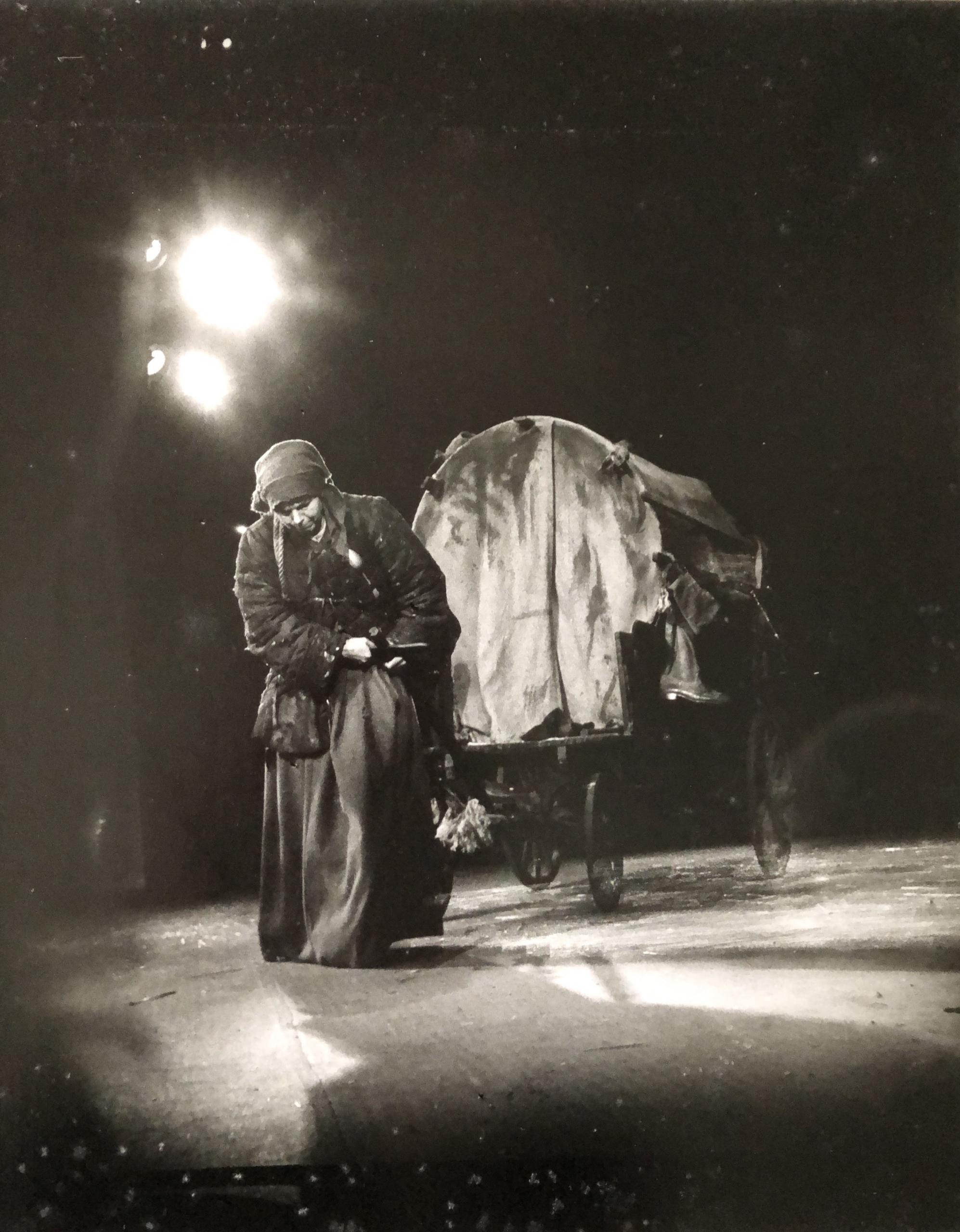

In theatre, few figures have made such a lasting impact as Bertolt Brecht, the German playwright and director. Recognised as a distinct departure from traditional theatre, Brechtian theatre invites audiences to actively participate in the theatrical experience through a variety of theatrical techniques that have become central to contemporary theatre.
In this article, we’ll break down the main Brecht techniques, looking at how they actually appear on stage and what they're designed to do. Alongside this, we’ll touch on the man behind the ideas and explore how his techniques play out in well-known productions. So whether you're a seasoned actor looking to expand your repertoire or a newcomer eager to explore alternative approaches to performance, keep reading to find out more about Brechtian acting methods and their enduring impact on modern theatre.
Brechtian Theatre - Key Points
- What is Brechtian Theatre? A style of theatre that keeps the audience aware of the performance instead of drawing them into the story
- Who Was Bertolt Brecht? A German playwright and director known for developing a new way of staging plays that focused on how audiences think about what they see
- What Are the Main Characteristics of Brechtian Theatre? A style that avoids smooth, natural storytelling, using episodic scenes, visible staging, etc
- What Are Brechtian Techniques? Methods like the alienation effect, gestus, direct address, narration, and songs that interrupt the action and draw attention to key moments


What is Brechtian Theatre?
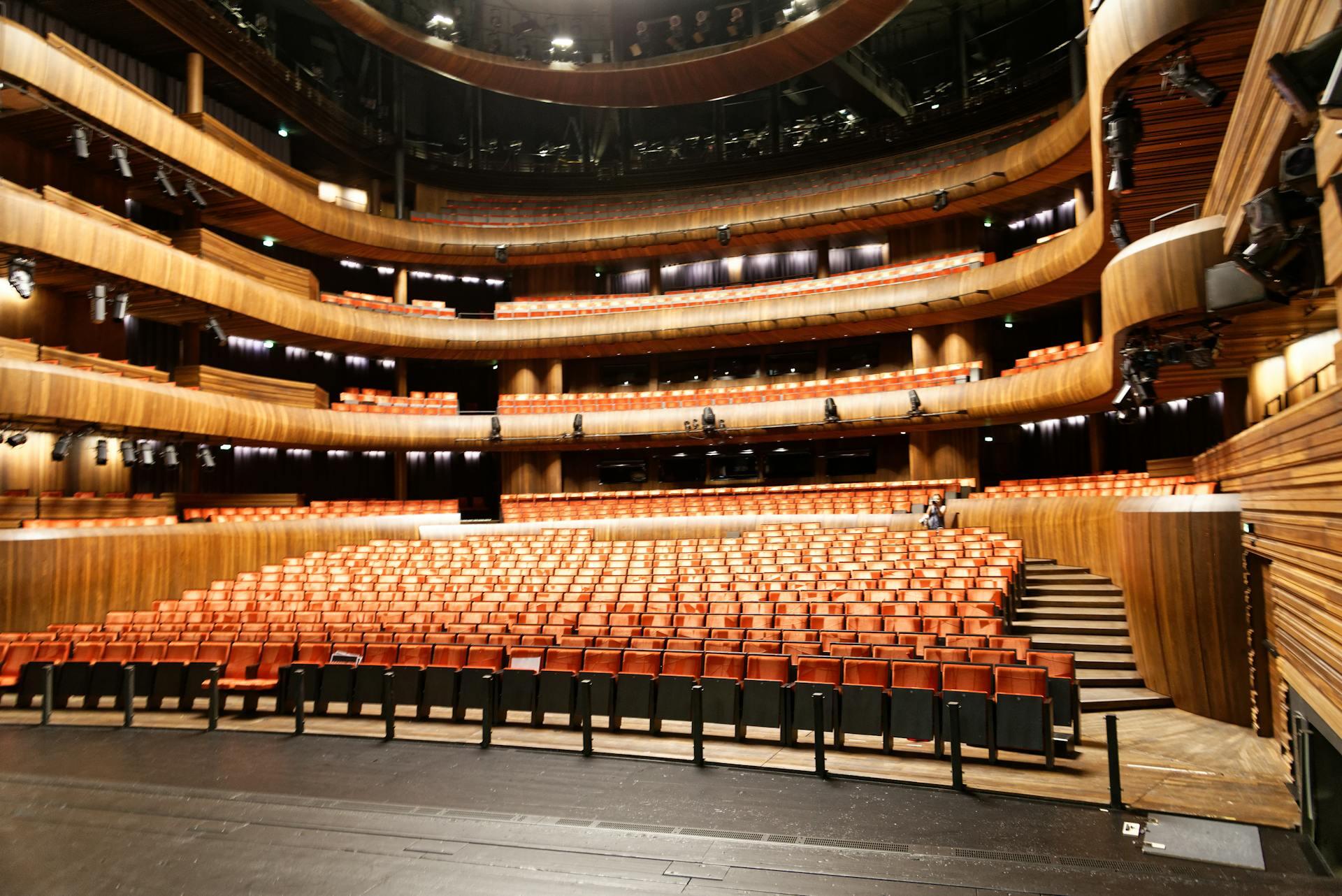
Brechtian theatre is a style of performance developed in the early to mid-20th century that moves away from traditional, illusion-based theatre. Instead of encouraging the audience to suspend disbelief and become absorbed in the story, it keeps them aware that what they're watching is a constructed performance.
In traditional theatre, the goal is often to draw the audience into the story so the performance feels natural and complete. Brechtian theatre takes a different approach by interrupting that sense of flow. Scenes may feel more self-contained, and greater emphasis is placed on how the audience responds to each moment rather than on building emotional tension across the entire play
Key Characteristics of Brechtian Theatre 🎭
Episodic structure 📖
Scenes are presented in sections rather than as one continuous narrative. Each moment functions as a separate episode, often showing a different situation or stage in the story.
Exposed staging 🔦
Elements such as lighting rigs, props, and scene changes may remain visible. Stage machinery can be seen in use, and transitions often take place in full view.
Detached viewing 👀
The audience is encouraged to observe and not emotionally connect with the characters. Instead, attention is directed towards the wider circumstances surrounding each scene.
It is important to note that epic theatre is very different from dramatic theatre. Dramatic theatre has the purpose of entertaining, has a plot or a storyline that the audience can follow and resolves all the issues presented in the end.
👤 Who Was Bertolt Brecht?
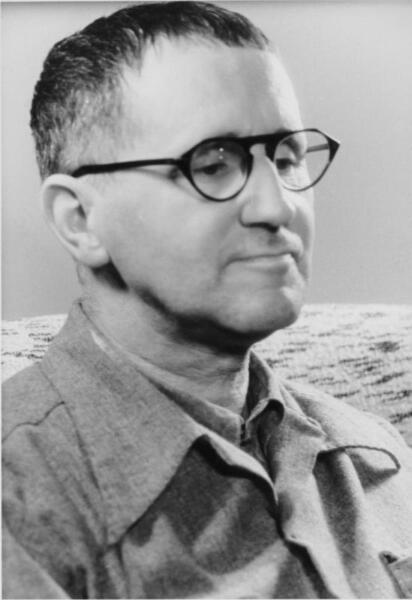
Bertolt Brecht was born in Germany, eventually going on to become one of the most important figures in twentieth century theatre. Much of his work was penned during a time of great political unrest, which led him to use theatre as a way of exploring many of the social and political issues he encountered1.
He's best known for developing epic theatre, a style that presents events in a way that encourages the audience to think about what they are watching.
📅 Brecht’s Life and Career Timeline
1898
Born in Germany
Brecht was born in Augsburg, growing up in a period of rapid change across Europe that would later influence his overall outlook on society and politics.
1920s
Early writing and theatre work
During this period of his life, he began writing plays and experimenting with new ideas - gradually moving away from traditional storytelling and developing his own style.
1933
Forced into exile
As the nazi regime began to take a hold on Germany, Brecht was forced to flee his home country. His work was seen as politically dangerous, leading him to move between several European countries.
Late 1930s–1940s
Time in the United States
Brecht eventually found refuge in the U.S, where he settled and continued his writing. Many of his most well-known plays were developed during this time.
1949
Return to Berlin
After the war, Brecht returned to East Berlin and founded the Berliner Ensemble, a theatre company that became central to staging his work.
1956
Death
Brecht died in East Berlin in 1956 at the relatively young age of 58. By then, the Berliner Ensemble was up and running, and his plays were already being performed beyond Germany.
🎬 Key Brechtian Techniques on Stage
The theatre must not make its audience forget that it is in the theatre
Bertolt Brecht
Now that we've talked about what Brechtian theatre is, it's time to take a look at the many varied and interesting techniques that bring it to life on stage. Attend a Brecht-style performance like Mother Courage and Her Children or The Threepenny Opera, and you’ll probably notice how commonly these methods appear.
Verfremdungseffekt (Alienation Effect) 🎭
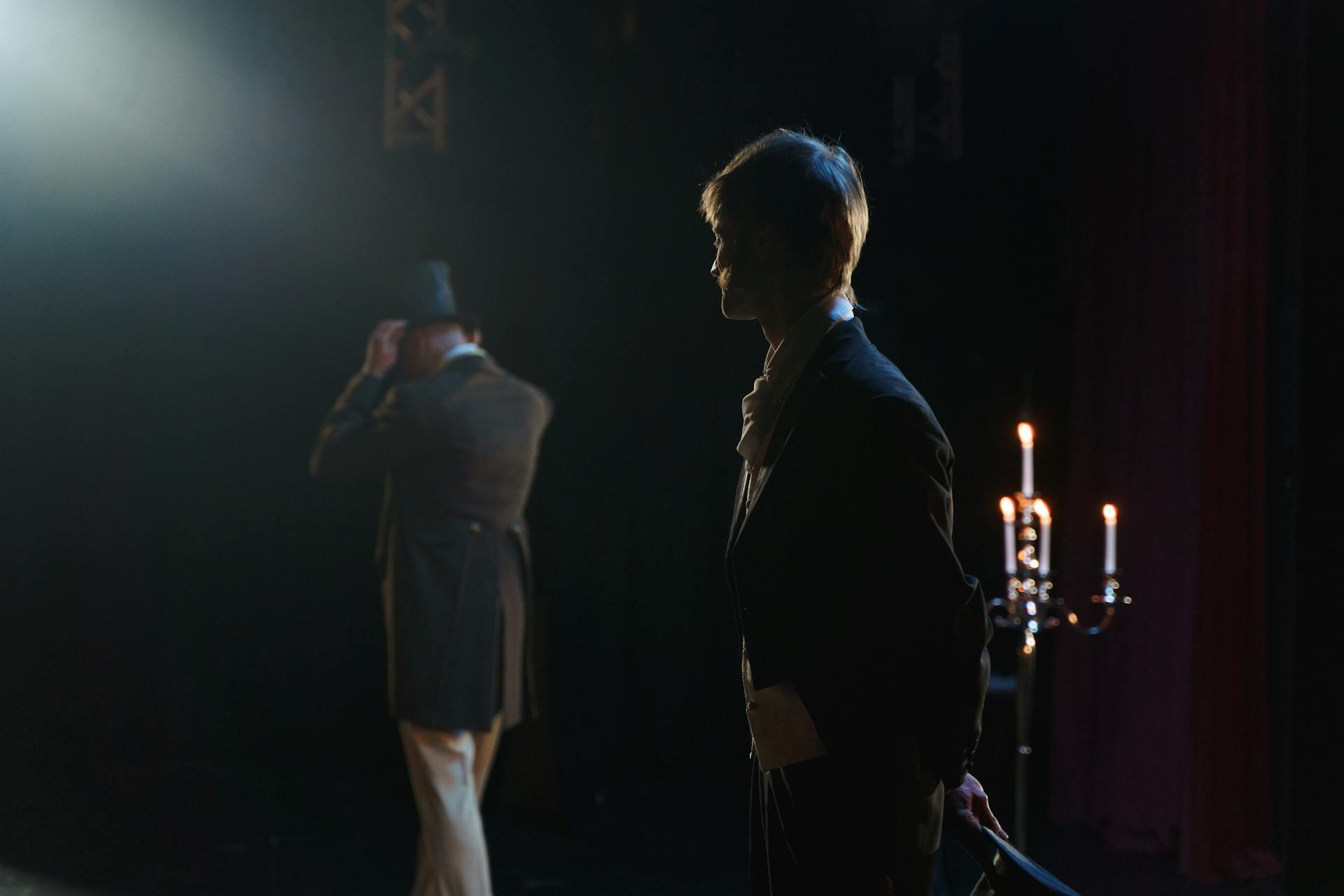
Often translated as the alienation effect, this technique is used to prevent scenes from feeling natural or immersive. Instead of allowing the action to flow unnoticed, moments are presented in such a way that draws attention to themselves2.
On stage, this might look like:
Gestus 👤
Gestus is a technique that uses a character’s body to show what’s going on in a scene. The way they stand, move, or react should give you a clear idea of their position and attitude without needing much explanation. The movement is usually deliberate rather than subtle, so it’s easy to read what’s happening between characters.
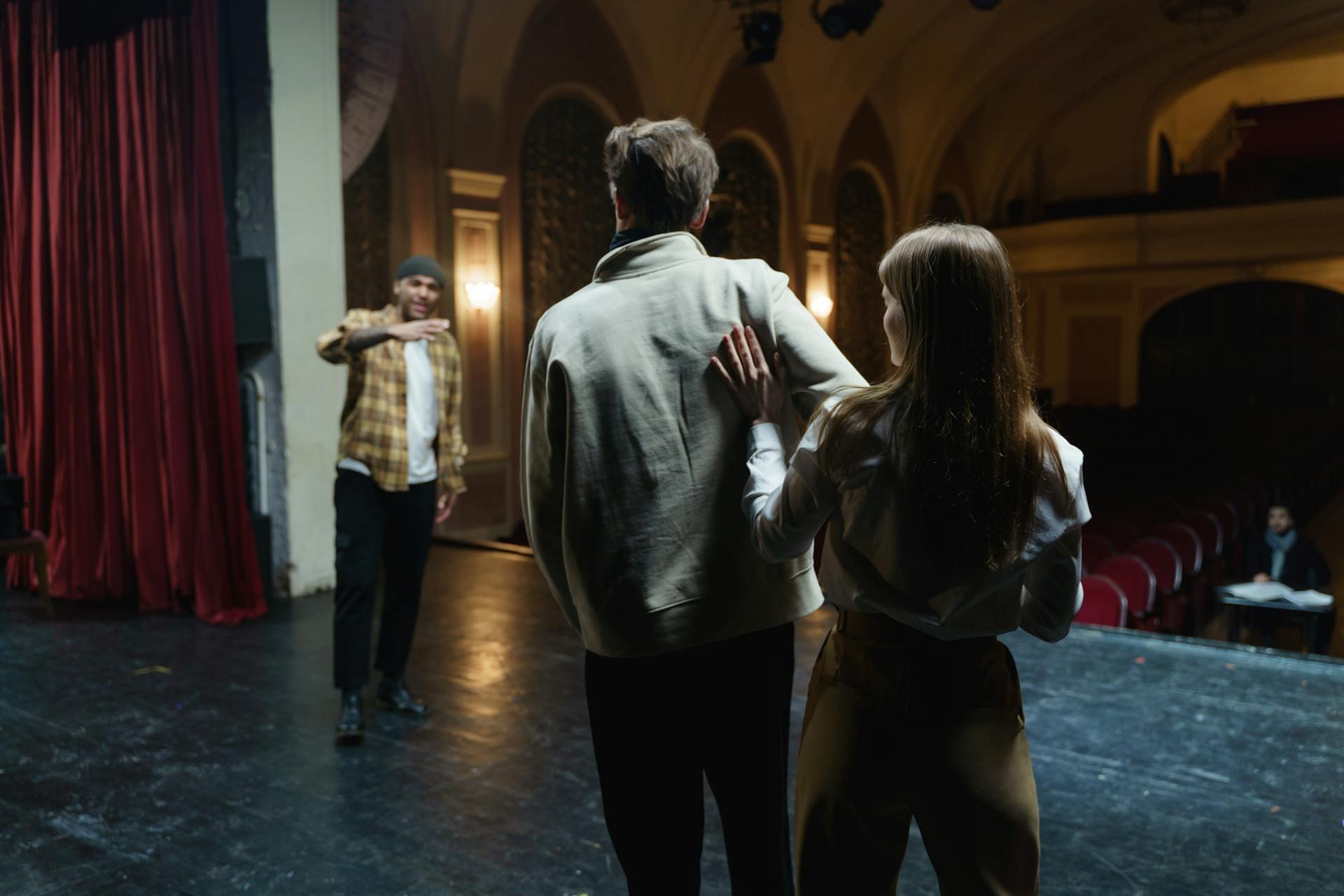
Pay attention to how characters stand and move around each other. Who looks comfortable? Who seems unsure? You should be able to tell what the relationship is with these clever visual clues.
Take a look at the list below for a better idea of how Gestus works in action:
Direct Address (Breaking the Fourth Wall) 🗣️
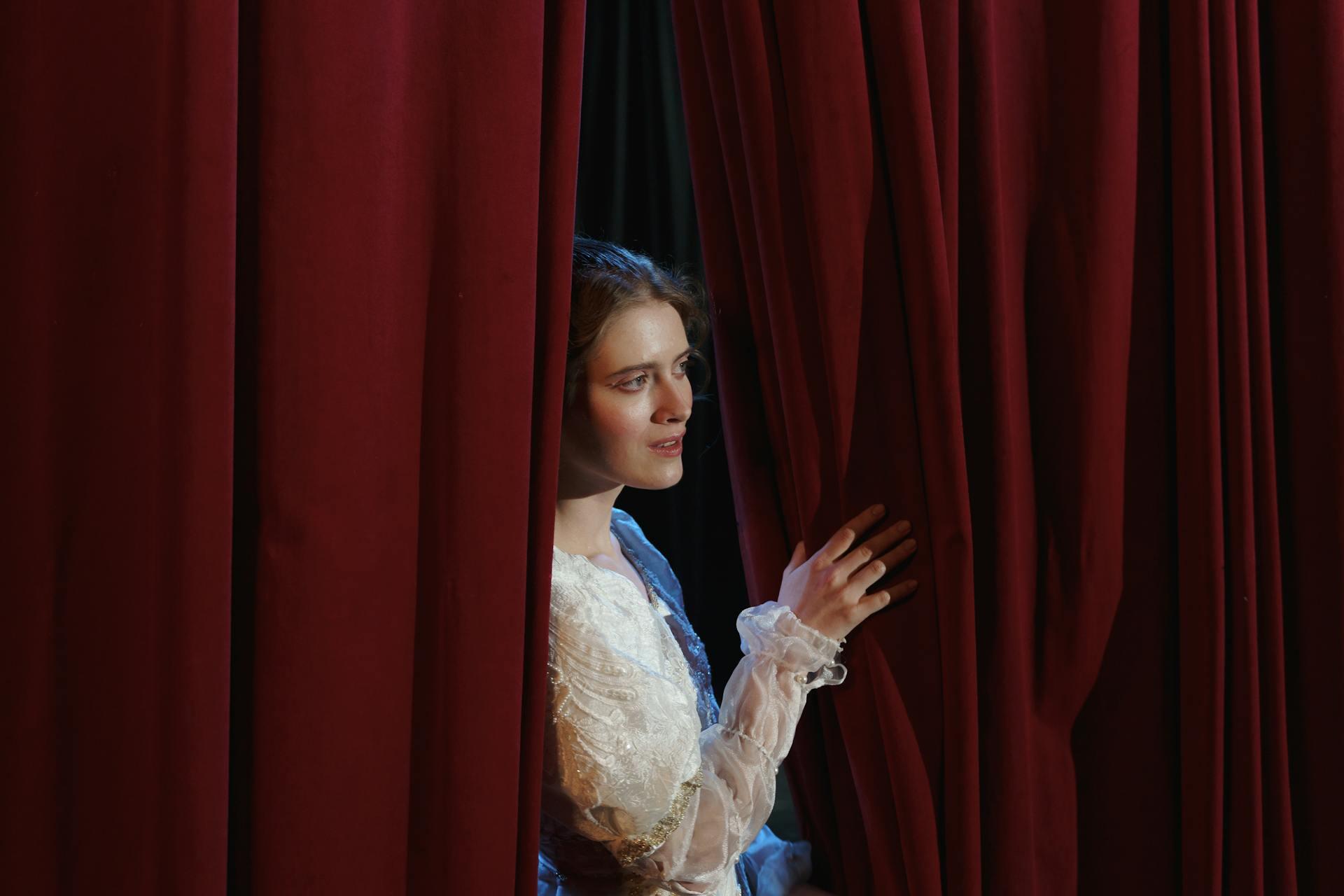
If you're at all familiar with plays or have ever been to one in your life, you may have seen direct address being played out with your own eyes. In simple terms, it's when a character turns and speaks straight to the audience.
For instance, on stage this could look like:
Narration 📖
Additionally, narration is a technique where parts of the story are told out loud instead of being fully acted out (the clue is in the word). You'll commonly see it being used to introduce a scene or quickly explain what’s going on.

Here are some examples of narration in action:
Songs and Music 🎵
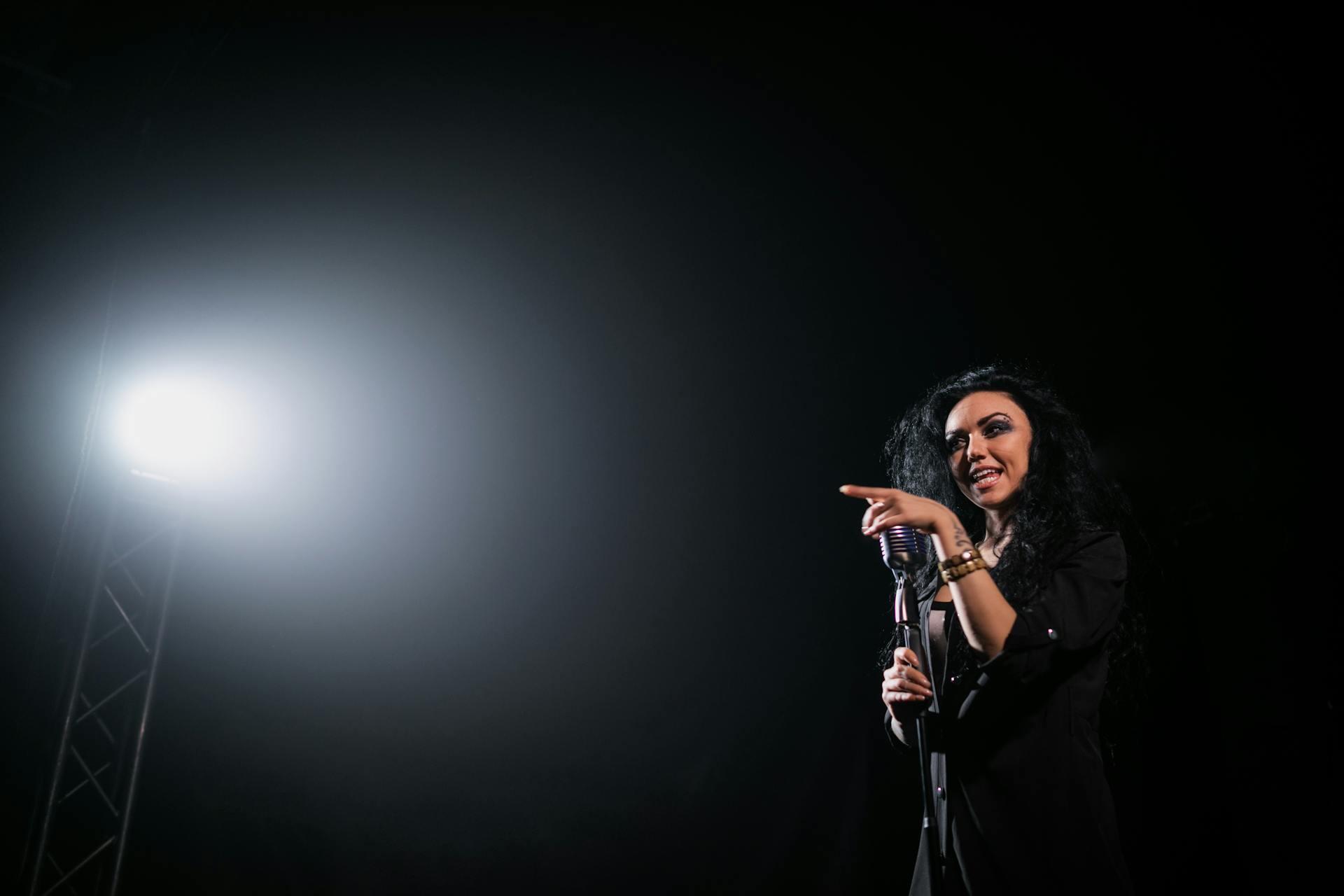
Lastly, songs and music are also used in such a way that they stand slightly apart from the action taking place on stage. For example, a song might suddenly kick into action mid-scene - disrupting the natural flow of the play and drawing attention away from what would normally happen next.
The lyrics in these songs tend to focus directly on what’s just happened in the scene. They're there to draw attention to things like characters' decisions, the drivers behind their behaviour, or to bring the situation they’re in into sharper focus - things like money, survival, or power.
On stage, this may happen like so:
All of these techniques can still be seen in modern theatre today, often appearing in the work of different directors and playwrights. In many cases, they sit alongside more naturalistic approaches like Stanislavski’s system or the Meisner technique, which focus on more realistic and instinctive performances.
Examples of Brechtian Theatre
Some of the best examples of these techniques can be seen in Bertolt Brecht’s own plays, as they regularly appear throughout the performances. Check the table we've put together below for more information about this.
| Play | What You See on Stage | What It Makes the Audience Notice |
|---|---|---|
| Mother Courage and Her Children | Scenes jump forward in time with little warning. Major events, including deaths, happen quickly and without much focus on emotion. Songs often follow straight after these moments | The consequences of decisions and how survival can come before morality |
| The Threepenny Opera | Songs introduce characters and describe their actions. Actors sometimes speak directly to the audience instead of staying fully in the scene | How characters behave and what drives them, rather than encouraging sympathy |
| Life of Galileo | Long sections of dialogue where characters explain ideas and decisions openly. Events are discussed rather than shown in a dramatic way | The impact of choices and the responsibility that comes with knowledge |
| The Good Person of Szechwan | One character switches between two identities depending on the situation. The change is clear and often quite obvious to the audience | How difficult it is to remain good under pressure from society |
| The Caucasian Chalk Circle | A narrator guides parts of the story, with clear breaks between scenes. The story is presented rather than acted out in a fully natural way | That the story is being shown for a reason, encouraging the audience to think about justice and fairness |
🌍 Influence of Brecht's Techniques on Modern Theatre
Art is not a mirror held up to reality but a hammer with which to shape it
Bertolt Brecht

The impact of Bertolt Brecht’s work can still be seen in how many plays are put together today. His approach opened the door for productions to move away from fully realistic storytelling and experiment more with how a performance is presented.
🎭 Theatre as a Tool
Brecht helped establish the idea that theatre can be used to explore real-world issues in a purposeful way, rather than existing purely for entertainment
✍️ Focus on Meaning
Likewise, writers and directors nowadays aren't worried about placing importance on what scenes represent, thanks in part to Brecht
🎓 Influence on Education
Brecht’s ideas are also taught in drama classrooms all over the world. This includes techniques like “Not/But” exercises, where actors pause and consider different ways a character could act.
| Practitioner | Example Work | Where the Influence Can Be Seen |
|---|---|---|
| Lars von Trier | Dogville (2003) | Uses a bare stage with minimal props and visible markings, rejecting realistic settings and presenting the story in named sections. |
| Jean-Luc Godard | Pierrot le Fou (1965) | Breaks narrative flow with direct address, abrupt editing, and music used in unexpected ways to remind viewers they are watching a film. |
| Peter Brook | Mahabharata (1985) | Uses simple staging and symbolic performance rather than detailed realism, focusing attention on ideas rather than illusion. |
| Augusto Boal | Theatre of the Oppressed | Encourages audiences to become participants ('spect-actors'), engaging directly with social issues rather than passively watching. |
| Complicité Theatre Company | Various productions | Blends narration, physical theatre, and visible staging to emphasise storytelling as a constructed process. |
| Kneehigh Theatre | Various productions | Uses music, narration, and stylised performance to interrupt realism and highlight key themes within the story. |
References
- Bertolt Brecht – a brief background - Epic theatre and Brecht - GCSE Drama Revision - WJEC - BBC Bitesize. (2023, October 19). BBC Bitesize. https://www.bbc.co.uk/bitesize/guides/zwmvd2p/revision/1
- Ltd, B. C. U. (n.d.). Bertolt Brecht | Techniques and Facts |. © 2012 DramaClasses. https://www.dramaclasses.biz/bertolt-brecht-techniques-and-factsbertolt-brecht-techniques-and-facts
Summarise with AI:
Did you like this article? Leave a rating!


 Loading...
If I ref you’re blog in an article can I have your surname
Hi Cathy,
Thank you for getting in touch. You can use Superprof UK as the reference instead of the name.
Wishing you all the best!