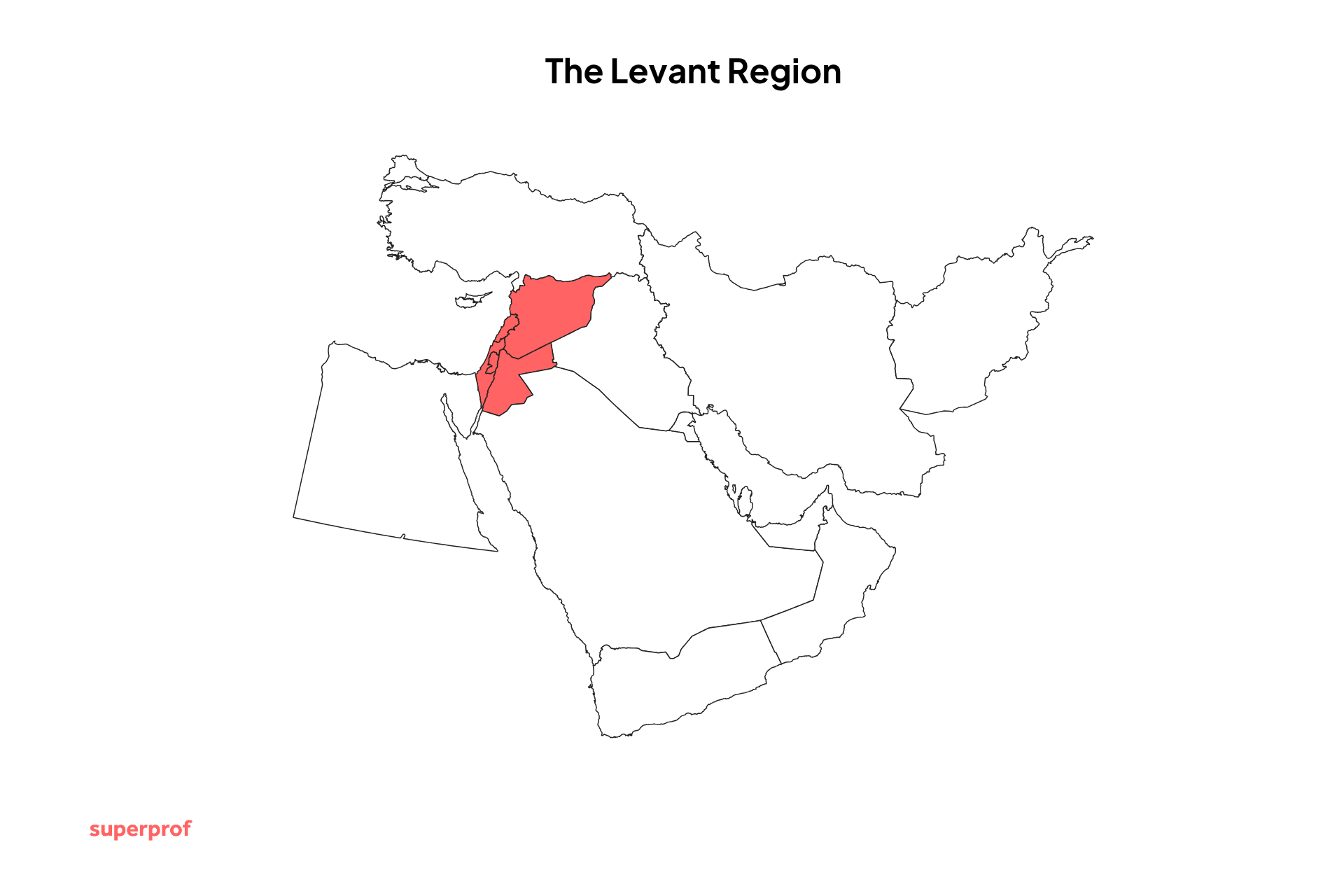
The Levant is a historical and geographic region in the eastern Mediterranean, generally referring to the area around modern-day Lebanon, Syria, Jordan, Israel, Palestine, and sometimes parts of Turkey, Cyprus, and Egypt. The term comes from the French word 'levant', meaning “rising”, referring to the direction of the sunrise in the east. Today, “the Levant” is used to describe a region with deep historical, cultural, religious, and geopolitical importance.








Levant Meaning: What Does “Levant” Mean?
As mentioned, the word Levant comes from the French "levant", the present participle of the verb lever, "to rise", which is rooted in the Latin levare, "to raise". The term entered English in the late 15th century through Venetian and other European trading networks, which used it to describe "the lands where the sun rises" as seen from Western Europe, the eastern Mediterranean coast. Words from the same root carry a similar "rising" or "east" meaning in Italian, Spanish, Catalan, and Hungarian.
The Origin of the Levant Term
Does "Levant" come from Arabic?
Some sources claim "Levant" itself comes from an Arabic word for "east", but the word is of French-Latin origin. What's true is that Arabic has its own, separate term carrying the same "sunrise/east" meaning: Mashriq (from the root sh-r-q, "to rise, shine"), which refers to the wider Arab East and overlaps with the Levant geographically. French, Arabic, and even ancient Greek (Anatolia, "land of the rising sun") independently landed on "the east = where the sun rises" as a naming logic, definitely a coincidence of meaning across languages, not a shared word origin.
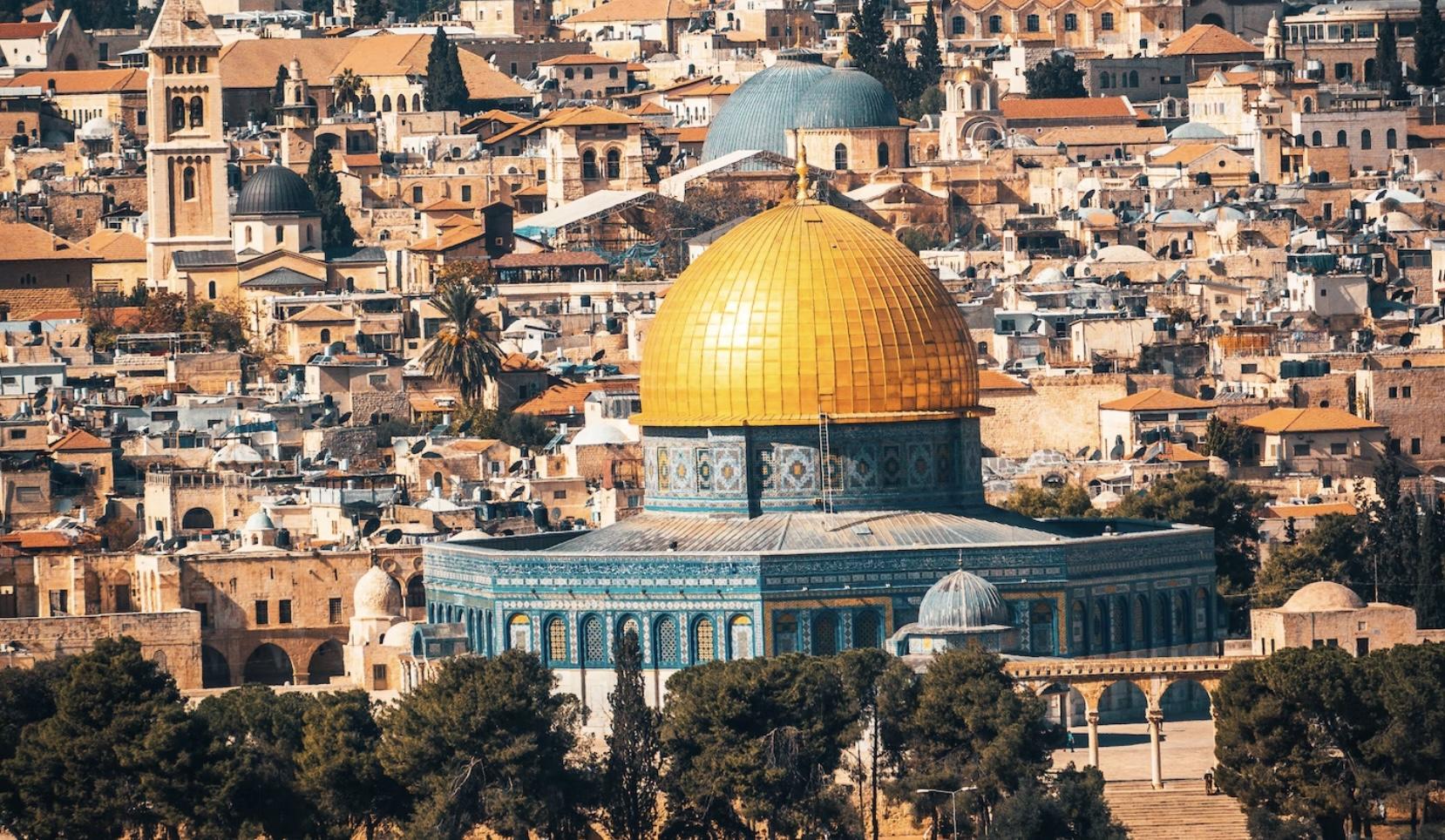
The term most Arabic speakers use for this specific region is Al-Sham, which centres on Damascus and the interior, while "Levant" leans toward the coastal strip.
To understand the Levant and Levantine people, it helps to know the origin of the term in English.
When was the term " Levant" coined?
"Levant" was never coined by the people who lived in the region; it's mostly a European, outsider's name. That's why the term is historical, geographic, and cultural rather than a fixed political entity: it describes a zone of shared history and trade, not a nation-state with defined borders.
The term first appeared to be widely used in the 1500s, when ships from English merchants were arriving in the region. The word "Levant" first appeared in English around 1497, when England and France had each chartered trading companies focused on commerce with the region: the Levant Company (1581) and France's Compagnie du Levant (1670); the Ottoman Empire's trading links were a major part of the term's origin. At the time, the further eastern regions of Asia were also referred to as the "Upper Levant".
Where Is the Levant Region?
The Levant sits on the eastern rim of the Mediterranean Sea, where Europe, Asia, and Africa converge. The Mediterranean generally bounds it to the west, the Taurus Mountains and Anatolian plateau to the north, the Syrian and Arabian Deserts to the east and south, and, in broader definitions, the Sinai Peninsula toward Egypt.
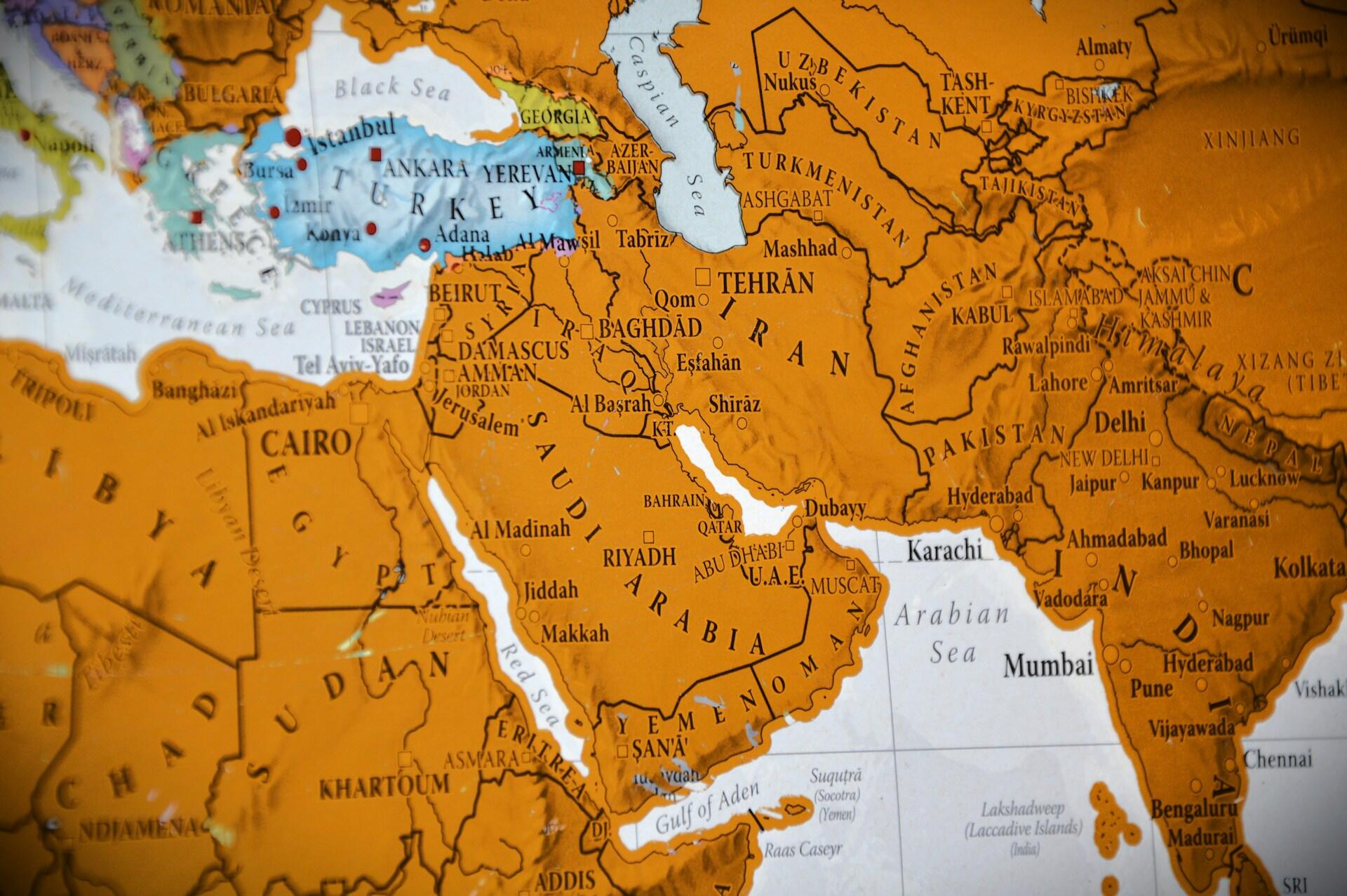
A narrow, often discontinuous coastal plain runs its length; a short distance inland, the terrain rises into hills and mountains parallel to the Afro-Arabian Rift Valley, beyond which the land turns arid.
This corridor has functioned for millennia as a trade route linking Egypt, Anatolia, and Mesopotamia (the ancient Via Maris passed directly through it).
Levant Countries: Which Countries Are in the Levant?
Although it's one of the most useful and most inconsistently defined terms in Middle East geography, the Levant is a historical and geographical term for the lands along the eastern shore of the Mediterranean Sea. At its core, in its most widely used sense, it covers:
Lebanon
Syria
Israel
Jordan
Palestine (the West Bank and Gaza Strip);
Broader definitions extend it to Cyprus, southern Turkey, and Egypt's Sinai Peninsula.
Many people also consider Iraq to be part of the Levant. The south of Turkey, where the country borders Syria, is particularly close, and some people consider it part of the Levant. Generally, Iraq is more likely to be included on a list of countries in the Levant due to its closer cultural ties to the region. Cyprus and Turkey are culturally closer to Europe. The list of "Levant countries" changes depending on whether you're using a core, broad, or historical definition.
| Definition | Countries/territories commonly included |
|---|---|
| Core Levant | Lebanon, Syria, Jordan, Israel, Palestine |
| Broader Levant | Cyprus, southern Turkey (Hatay province), Sinai/Egypt, sometimes parts of Iraq |
| Historical Levant | Eastern Mediterranean lands under ancient, medieval, Ottoman, or European trade usage |
One specific definition of the Levant region comes from archaeology. Specifically, The Oxford Handbook of the Archaeology of the Levant: c. 8000–332 BCE. This book defines the boundaries of this region, at least in the study of archaeology.
- The northern boundary at the Plain of 'Amuq
- The eastern boundary at the eastern deserts, Mesopotamia and the North Arabian Desert
- The southern boundary at the Wadi al-Arish river in Sinai
- The western boundary at the Mediterranean sea
Despite these definitions, there is no single, official boundary for the Levant region. Nowadays, historians, archaeologists, and geographers all draw the line slightly differently depending on the period and purpose they're studying.
No. The Levant is a subregion within the broader Middle East, not a synonym for it. The Middle East also includes the Arabian Peninsula, Iraq, Iran, and Egypt, while the Levant refers specifically to the eastern Mediterranean coastal strip and its immediate hinterland. The Levant is not the same as "the Arab world" or "the Mediterranean region" as a whole; both are broader categories reaching well beyond the Levant's boundaries.
Why Do Definitions of the Levant Vary?
"Levant" was never a modern country or an official political region, and no one ever drew its borders. An archaeologist or a geopolitical analyst, and a journalist, all might use the term for slightly different, if overlapping, purposes, and look at the region through three lenses on the same region:
🌊 Geographic:
The Eastern Mediterranean coastal strip and adjacent highlands.
🗻 Historical:
The wider cultural zone from southern Anatolia to the Sinai.
🗣️ Cultural:
Shared cuisine, Arabic dialects, and traditions across Lebanon, Syria, Jordan, Israel, and Palestine.
A Brief History of the Levant
The Levant's importance stretches far back in time: it was home to some of humanity's earliest experiments with agriculture during the Neolithic period. Over the following millennia, it became a mosaic of Semitic-speaking cultures:
🟡The Canaanites
🟢 The seafaring Phoenicians (Tyre, Sidon, Byblos)
🔵The Israelites
🔴The Arameans
From the 8th century BCE onward, the Levant was absorbed into a series of larger empires: Neo-Assyrian, Neo-Babylonian, and Achaemenid Persian, then, after Alexander the Great's conquests (Tyre fell after a seven-month siege in 332 BCE), the Hellenistic Seleucid kingdom.
Rome annexed the region as the province of Syria in the 1st century BCE, later passing to the Byzantine Empire. In 636 CE, the Rashidun Caliphate's victory at the Battle of Yarmouk ended Byzantine rule and opened nearly 1,300 years of Islamic rule (through the Umayyad, Abbasid, and Ayyubid dynasties), interrupted for roughly a century by the Crusader states established after 1099.
The Mamluk Sultanate then controlled the Levant until the Ottoman Empire's victory at the Battle of Marj Dabiq in 1516 brought Syria, and soon Egypt, under Ottoman rule for the following four centuries.
Why Was the Levant Historically Important?
The Levant's importance rests on two pillars that reinforced each other for thousands of years:
People, Languages, and Religions of the Levant
The Levant is remarkably diverse; with cities such as Jerusalem and Damascus, the region holds immense cultural and religious significance for many ethnic groups. As well as Levantine Arabs, popular ethnic groups in the Levant include Jews, Maronites, Turks, Turkmens, Greeks, Assyrians, Yazidi, Kurds, and Armenians. As for languages:
- 🇸🇾 Levantine Arabic, a major dialect group with regional variations, is the dominant everyday language across Lebanon, Syria, Jordan, and Palestine.
- 🇮🇱 Hebrew is the main language of Israel
- 🇹🇷 Broader definitions of the Levant, add Turkish (Hatay) and, historically, Greek (Cyprus).
- 🇦🇲 Armenian- and Kurdish-speaking communities are also present, alongside heritage languages such as Aramaic and Phoenician, the latter of which is foundational to the alphabet used today.
Religiously, the Levant is just as layered. Sunni Islam is the predominant tradition, but the region also holds the core historical population centres of the Druze, Alawites, Maronite and Melkite Christians, Twelver Shia Muslims, Armenian Orthodox Christians, and Jewish communities.
The biggest religious group in the area are the Muslim Arabs. In the 7th century, the Muslim conquest of the Levant meant that a huge number of people in the region still follow the Muslim religion. The Levant region was annexed and brought under the rule of the Rashidun Caliphate. It became the region Bilal-al-Shame, and Muslim troops were present mainly on the southern borders of the levantine.
The Battle of Mutah was fought in 629 and this was the start of the Arab and Byzantine wars, but the conquest was not complete until later in the century. During the period, Khalid ibn al-Walid was a famous leader of the army.
In this day and age, Muslims belonging to the Shia, Sunni, and Alawi groups are present in the region. If you visit the Levant, expect to abide by local customs and respect religious beliefs, such as observing Ramadan.
Levantine Culture
Today, "Levant" is used across several fields: historians and archaeologists treat it as a technical term for a shared cultural zone; analysts use it as regional shorthand; chefs use "Levantine cuisine" as a recognised culinary category; and travel writers use it for a shared historical itinerary across various countries mentioned above.

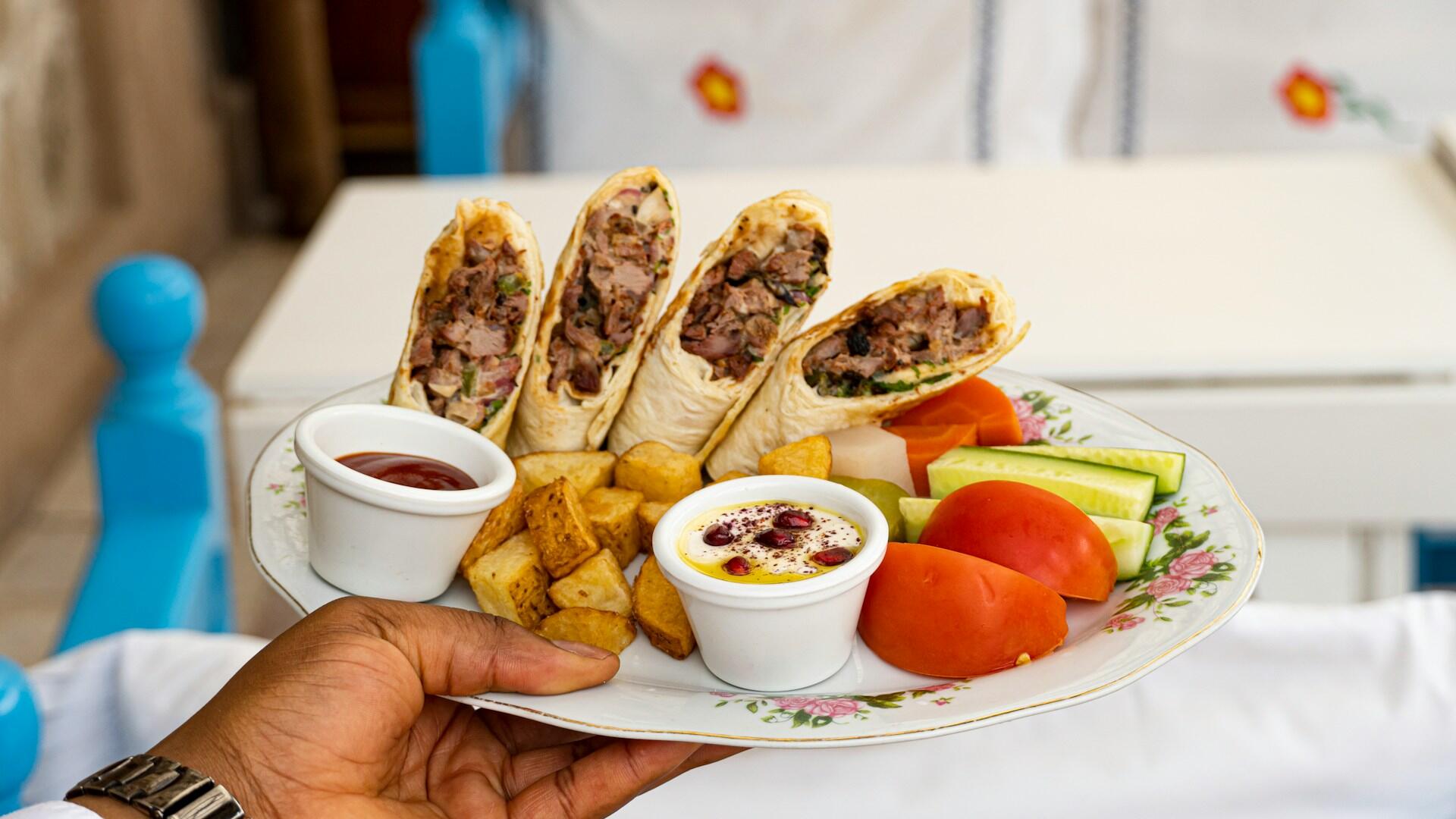
Levantine cuisine is one of the region's best-known cultural exports: hummus, falafel, tabbouleh, manakish, and grilled kebabs appear in local variations across Lebanon, Syria, Jordan and Palestine.
Beyond food, the region shares a strong tradition of hospitality, centuries of urban and mercantile life in port cities, and a dense layering of religious heritage site, while Levantine Arabic, spoken with local inflexions from Beirut to Amman to Gaza, is a unifying thread.
| Category | Examples |
|---|---|
| Languages | Levantine Arabic, Hebrew, Turkish (Hatay), Armenian, Kurdish, Aramaic, Greek (historically, Cyprus) |
| Religions | Sunni Islam, Christianity (Maronite, Melkite, Armenian Orthodox, and other communities), Judaism, Druze, Alawite, Twelver Shia Islam |
| Cultural features | Levantine Arabic dialects, shared cuisine traditions, hospitality customs, ancient port-city heritage |
Major Cities of the Levant
There are many different culturally-significant cities in the Levant known among travellers. There are also some of the most stunning historical sites that the world has to offer in the region. For instance, may people know about Jordan, and how beautiful some of the attractions are in the area.
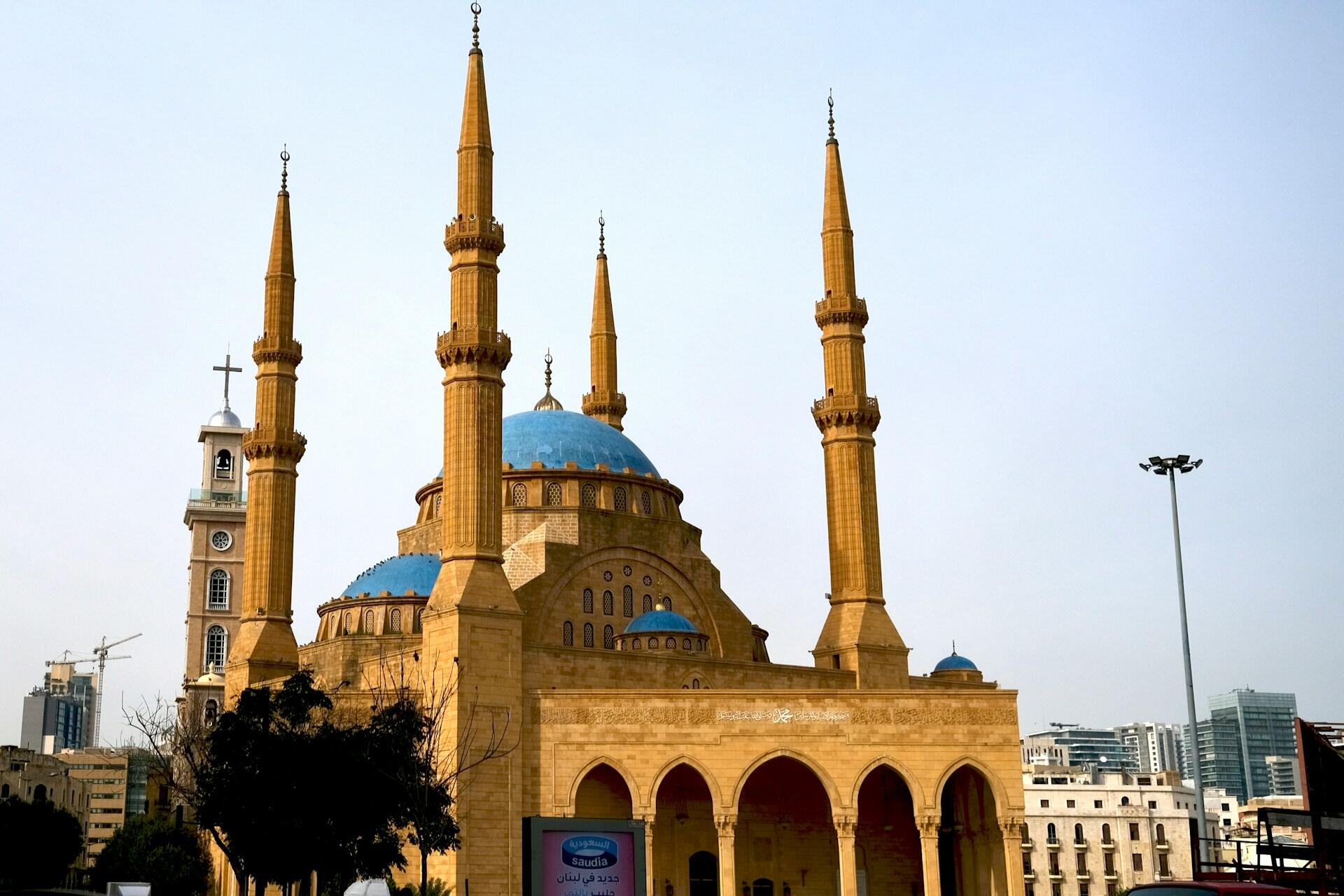


These are just some of the best-known cities in the Levant; there are a number of other amazing locations. The Red Sea and the ancient city of Petra are among the most popular tourist destinations.
Petra is half-built, half-carved into the rock, and is surrounded by mountains riddled with passages and gorges. It is one of the world's most famous archaeological sites, where ancient Eastern traditions blend with Hellenistic architecture.
UNESCO
Is The Levant Safe For Tourists?
Safety varies by country, city, and even neighbourhood, and can change quickly. As of this article's publication, the UK Foreign, Commonwealth & Development Office (FCDO) advises against all or all-but-essential travel to specific areas of Lebanon, Syria, the Palestinian territories, and parts of Israel and Jordan, citing armed conflict and fast-changing security conditions.
Always check your own government's official travel advisory shortly before you travel, since conditions in this region can shift with little notice; it is also a good idea to take out insurance before travelling to protect yourself.
Summary: What Is the Levant Region?
References
- Britannica Editors. (2026). Levant. Encyclopaedia Britannica. Available at: https://www.britannica.com/place/Levant (Accessed: August 2026).
- Harper, D. (n.d.). Levant (etymology). Online Etymology Dictionary. Available at: https://www.etymonline.com/word/Levant (Accessed: August 2026).
- Dictionary of the Israeli-Palestinian Conflict. (n.d.). Mashriq. Encyclopedia.com. Available at: https://www.encyclopedia.com/politics/dictionaries-thesauruses-pictures-and-press-releases/mashriq (Accessed: August 2026).
- National Geographic. (2022, January 26). Ancient City of Damascus — World Heritage Site. Available at: https://www.nationalgeographic.com/travel/world-heritage/article/ancient-city-damascus (Accessed: August 2026).
- UNESCO World Heritage Centre. Tyre. Available at: https://whc.unesco.org/en/list/299/ (Accessed: August 2026).
- Encyclopedia Britannica. Aleppo. Available at: https://www.britannica.com/place/Aleppo (Accessed: August 2026).
- GOV.UK Foreign, Commonwealth & Development Office. Foreign travel advice: the Occupied Palestinian Territories. Available at: https://www.gov.uk/foreign-travel-advice/the-occupied-palestinian-territories (Accessed: August 2026).
Summarise with AI:
Did you like this article? Leave a rating!

 Loading...