Poetry is one of the most appreciated arts of expression, allowing poets to convey their emotions and ideas in ways that somehow exceed the words they have written on a page.
Unlike a book that gives the author hundreds of pages to depict their internal monologue, a poet is convinced to tell their story to their reader in a select number of lines, making the inclusion or exclusion of each word all the more meaningful.
Like most creative endeavours, poetry can take a number of different forms, each with its distinct form and cultural heritage. The aim of this article is to provide descriptions for the various forms of poetry, and hopefully, by the time you finish reading, you’ll have found a couple that you’d like to explore more by adding some poems to your reading list!


Classical Forms of Poetry
Throughout your exploration of the world of poetry, you’ll likely see the term ‘Classical Poetry’ thrown around. This typically concerns older poems that possess more traditional structures with plenty of emotive language sprinkled into the mix.
For the most part, this is going to be sonnets, epics and ballads, all proven formulas for effective expression, evident from their ability to stand the test of time, used by poets through time.
The sonnet, epic, limerick and ballads are among the traditional forms of poetry.
Limericks
We’ll start with the fun quirky limerick. A limerick is a light-hearted poem that is usually around five lines long and follows an AABBA rhyming scheme.
Edward Lear was known for using this form of the poem back in the 1800s. Here’s an example of one he wrote:
There was an Old Person of Dean
Edward Lear - Old Person of Dean
Who dined on one pea and one bean;
For he said, “More than that would make me too fat,"
That cautious Old Person of Dean.
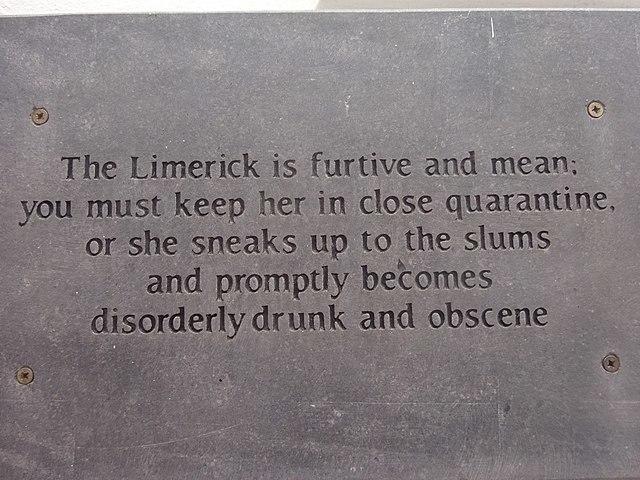
Limericks are in accentual verse, which means that the construction of a line is determined by the number of accents, no matter how many syllables there are.
Because the syllables aren’t counted, limericks also present poets a certain flexibility.
Sonnets
So, how do you know whether the poem you just read is a sonnet or whether it's an entirely different form of poetry?
A sonnet is a poem that is 14 lines in length and has been one of the more popular forms of poetry since it originated in Italy back in the 16th century. The word sonnet is derived from the Italian word “sonetto,” which means a “little song” or sound and is written in iambic pentameter.
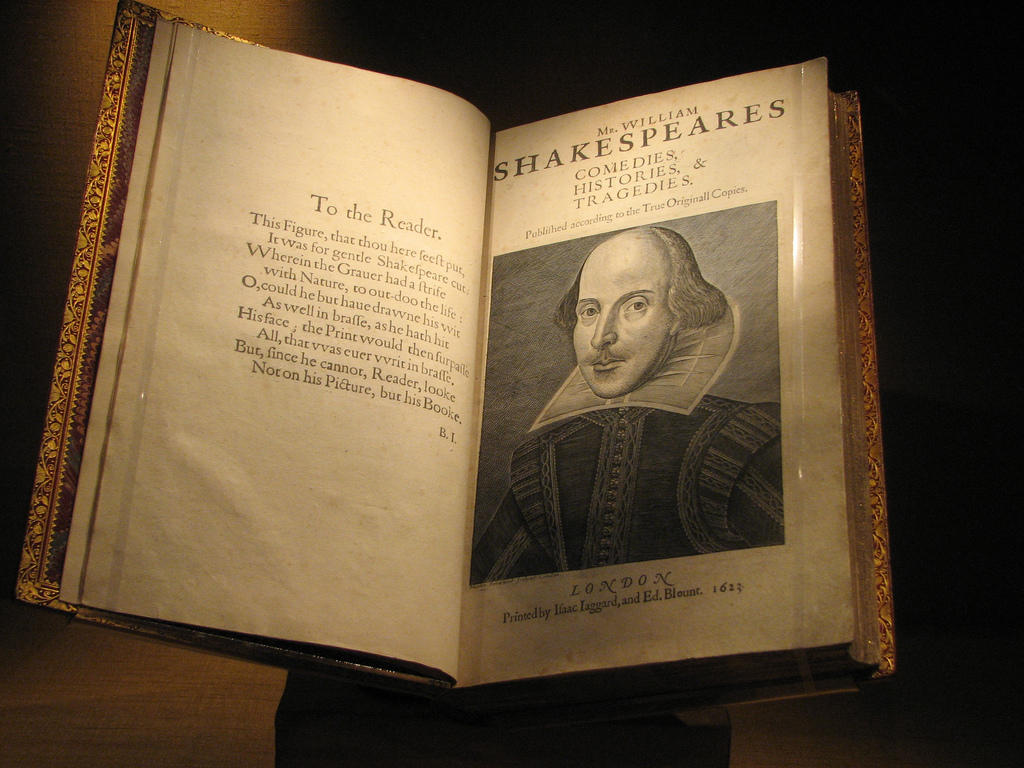
Sonnets gained an awful lot of traction in a very short span of time, largely thanks to them being used so frequently by the literary genius William Shakespeare.
The Shakespearean sonnet follows a rhyme scheme of ABAB CDCD EFEFGG and is composed in pentameter.
In most cases, you’ll also find that Sonnets typically explore strong emotions and adhere to a defined rhyme scheme through profound themes such as love and nature.
So thou through windows of thine age shalt see,
Shakespeare - Sonnet 3
Despite of wrinkles, this thy golden time.
But if thou live, remembered not to be,
Die single and thine image dies with thee.
Epics
The next form of classic poetry that we’re going to touch on is the grand and majestic Epics. This is a peculiar style of poetry that really resonates with readers and narrates the acts and journeys of heroes in a larger-than-life manner.
So the next time you find your nose buried in a poem that centres around the adventures of a character that has played a crucial role in shaping literature or society, you’ll now be able to distinguish it by its correct label.
Some of the most renowned epics to have been contributed include Homers' epics, The Iliad and The Odyssey, which tell stories of heroes from ancient times.

It’s also rather common for this form of poetry to depict the interplay between heroes, supernatural beings and destiny.
This makes for an insightful read and certainly gives you a sense of why poetry enthusiasts have enjoyed it throughout time.
Here's book one of the famous Paradise Lost by John Milton, a long read but worth it to really understand what epic poems are like:
Of man’s first disobedience and the fruit
Paradise - John Milton
Of that forbidden tree whose mortal taste
Brought death into the world and all our woe
With loss of Eden till one greater man
Restore us and regain the blissful seat...
Ballads
We all love a good narrative-style poem, and Ballads make for an all-the-more enjoyable read that often dramatises emotional stories.
This classical form of poetry also comes with its own rich history in European literature, having originally been passed down orally and set to music.

You’ll be able to tell if the poem that you’re reading is a ballad by its structure and the rhyme scheme. In most cases, a typical ballad will consist of stanzas that contain a quatrain, or four poetic lines stanzas and follow an ABAB or ABCB rhyme scheme.
The meter or rhythm of each line is usually iambic, which means it has one unstressed syllable followed by a stressed syllable.
When I died, love, when I died
A Western Ballad by - Allen Ginsburg
there was a war in the upper air:
all that happens, happens there;
there was an angel by my side
when I died, love, when I died.
The simplicity of ballads makes them all the more accessible, exploring love, adventure, or historical events and often being turned into songs!
Free Verse Poetry
Free verse is a literary device that can be defined as poetry that is free from limitations of a regular meter or rhythm and does not rhyme with fixed forms.
Such poems are without rhythm and rhyme schemes, do not follow regular rhyme scheme rules, yet still, provide artistic expression.
In this way, the poet can give his own shape to a poem however he or she desires.
However, it still allows poets to use alliteration, rhyme, cadence, and rhythms to get the effects that they consider are suitable for the piece.

Here's an example of free verse:
I now delight
Free Verse - Robert Graves
In spite
Of the might
And the right
Of classic tradition
Eastern Poetic Traditions
What really makes poetry so interesting is the various approaches that the literary communities across the world take to the literary medium.
Poets from Asian cultures brought their own respective styles with them, drawing inspiration from a whole world of other influences and crafting a range of poetic styles that have enthralled audiences throughout time.
When you see the term Eastern poetic forms being thrown around, it’s most likely referring to Haiku, tanka or ghazal poems; let’s dive in and uncover what each of these forms brings to the literary table.
Haiku
So, one style that you’ll likely come across from the beginning of your exploration of Eastern poetry is Haiku. This is a style of poetry that has greatly impacted global literature over time with its rather simple and elegant style.
In order to spot if what you’re reading is Haiku, you’ll want to keep an eye out for a syllable pattern of 5 in line 7 in the second line and another 5 in the third line, a defining characteristic of the form.
An instance of this is a haiku penned by Matsuo Bashō. He is recognized as one of the authorities in this art form. It goes as follows; "A crow perches on a dried-up twig; Autumn dusk arrives."
They often explore nature scenes that reflect a season or moment in time in a short and sweet extract that conjures vivid images, resonating with readers. Here’s some examples of Haiku:
From time to time by Matsuo Basho
From time to time
From time to time - Matsuo Basho
The clouds give rest
To the moon-beholders
Tanka
The next form derives from Japan and brings its own unique set of story telling qualities that made it an attractive medium for so many poets.
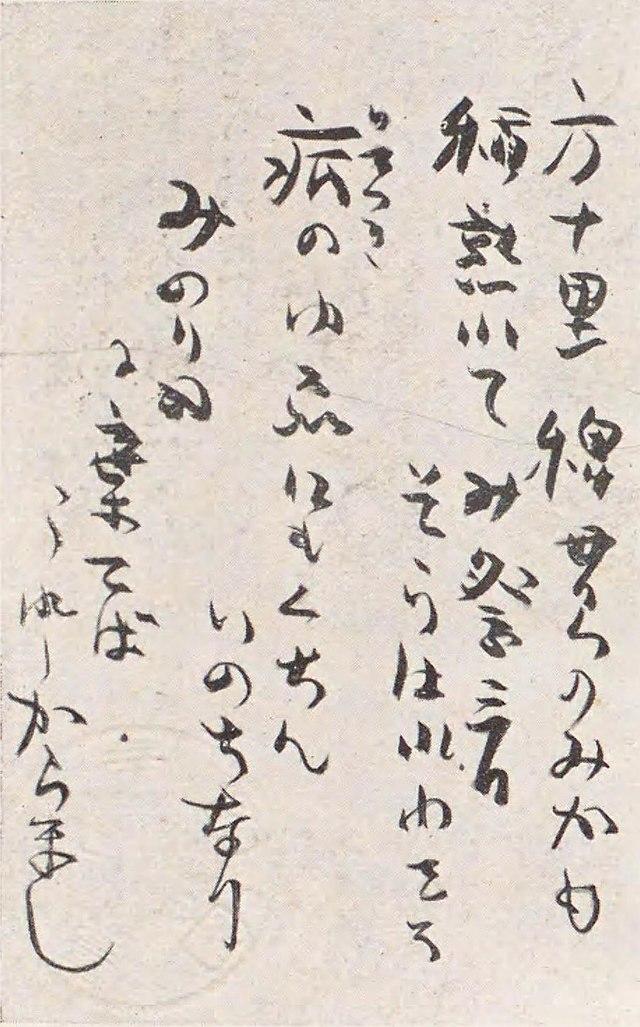
One of the defining features that will help you distinguish the form of poetry is its five-line structure with a 5-7-5-7-7 syllable layout.
Some of the themes that surface throughout the world of many Tanka poets delve into emotions and personal stories.
They’ve been around for centuries and are selected by wordsmiths as a vessel for conveying emotions and concepts while giving plenty of opportunity for crafting vivid imagery and sharing thoughts, unlike the more concise haiku form.
If you're interested in learning about Tanka poetry, try having a search for poetry classes near me and get covering some textbook examples alongside an experienced tutor.
Ghazal
Then we have Ghazal poetry, which gained popularity in various languages such as Persian and Urdu literature over time.
Each Ghazal comprises a series of couplets that stand alone but are linked by a shared theme or emotion.
Many of the storytelling characteristics of this form of poetry are also unique and inspired by a unique set of cultural influences, making it all the more insightful to engage with.
If you are a sucker for some romantic poetry, then ghazal poetry will be right up your street, often delving into realms of love and affection!
There are so many different types of poetry that it can sometimes be hard to remember them all. But don’t worry we’re here to help!
Slam Poetry
Slam poetry is a form of competitive performance poetry in which participants perform works no longer than three minutes and are judged by audience members.
The winners then progress to further in the competition and perform a new piece each time. The winner is the poet with the highest score in the finals. The winner usually wins a cash prize.
You’ve probably seen many videos of slam poetry floating around online. They are particularly popular today because they are powerful ways to spread a message or bring attention to topics that are in the news.
Slam poets use their performances to get people’s attention. The dramatic ways in which their poems are performed evoke emotions in audiences and can really help to shed light on specific topics.
...I see a subcategory for myself
I see a dark room for me to shove my opinions
And I see a suggestion box that will never be opened...#Feminism by Crystal Valentine
So there you have it, our quick guide to different types of poetry. From old poems about God and evil to Feminist slam poetry, we think there’s something for everyone! Check out the Superprof blog to read about these different poetry forms in more detail.
Summarise with AI:
Did you like this article? Leave a rating!

 Loading...