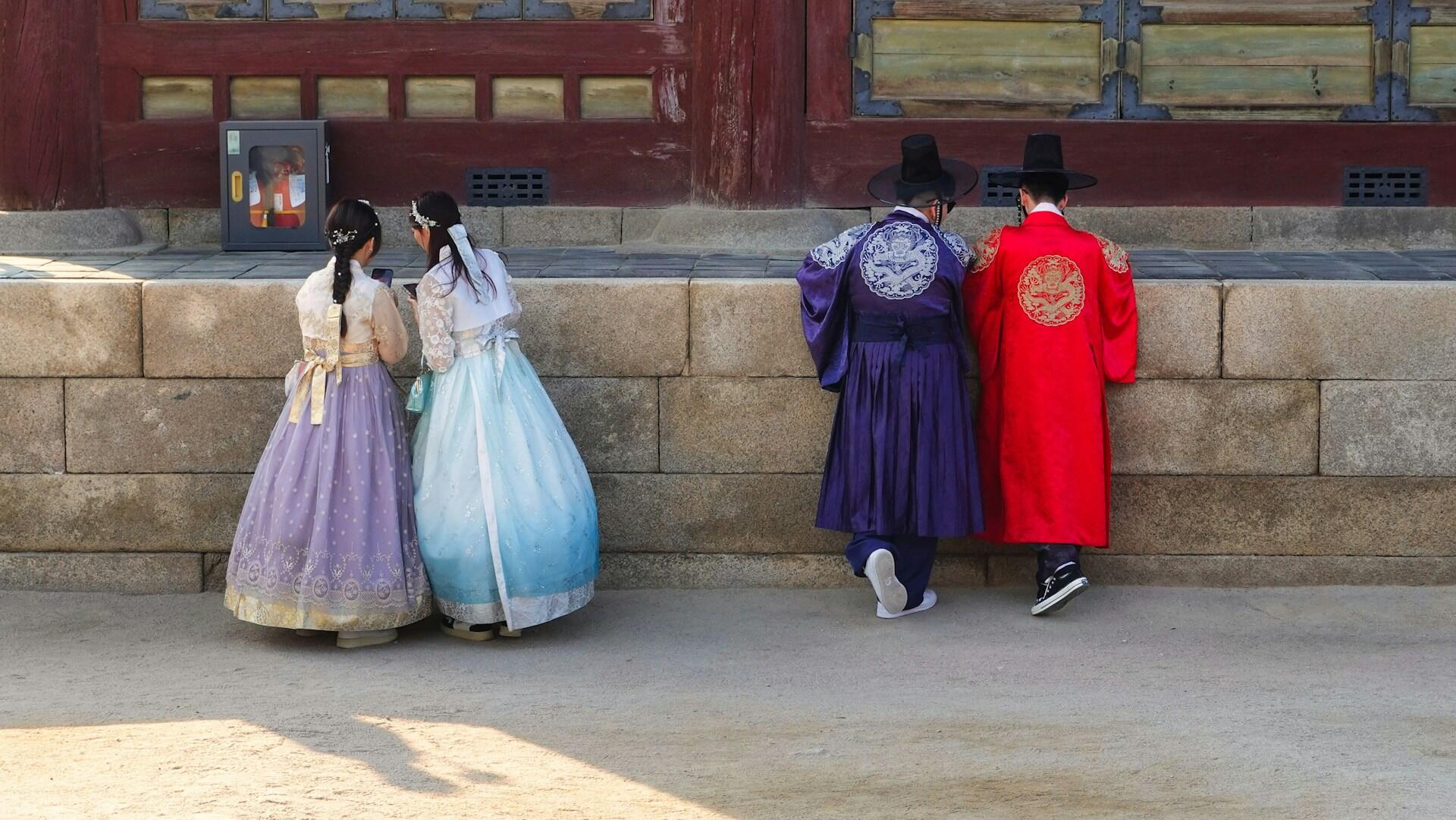

Korean culture is millennia old, tracing its traditions to 2333 BCE, to the ancient kingdom of Gojoseon. Tomb murals from that time feature art that shows top-and-bottom garments that we might call a hanbok. The hanbok we know today emerged during the Joseon Dynasty (1392 to 1897) and underwent several modifications during that time. This article traces the line from the hanbok's earliest depictions to the ceremonial garments worn today, detailing all its changes along the way.
5,000 years ago
Scythian nomadic tribes migrated from the Eurasian steppes to the Korean peninsula.
Surviving artwork depicts their clothing as top-and-bottom arrangements, featuring baji and jeogori.
57 BCE – 668 CE
Artwork from the Three Kingdoms period show men wearing separate upper and lower garments.
1392–1897
Today's hanbok lines emerge during this Joseon Era.
Women's clothing becomes distinct from men's.
1881
The term hanbok comes into use.
This distinction was meant to distance Korean clothing from Japanese clothing styles.
1950s
Korea begins to modernise and industrialise.
The hanbok was largely abandoned because it was impractical to wear hanbok in daily and working life.


The Origin of Hanbok: Where Did This Style Come From?
The only statement any historian can categorically make on this subject is that the term 'hanbok' emerged during the period of heavy Japanese influence in Korea. Seen through the historical lens, it's not hard to understand why Korean people would strive to insulate their culture from foreign influence. So, they established a word to describe their clothing style.
Signed in 1876, this treaty gave Japan access to Korean ports.
This Japanese inroad into Korea, initially only economic and diplomatic, soon allowed them to take over political and military systems as well.
Reaching further into the past, hanbok's history is a bit murkier. We know that the hanbok style we recognise today emerged during the Joseon Dynasty. It underwent many changes over the centuries.
We can also state that parts of the hanbok, chima and baji (skirt and trousers, respectively) existed long before the word 'hanbok' defined the dress style. We have proof of this from documents as well as artwork2.
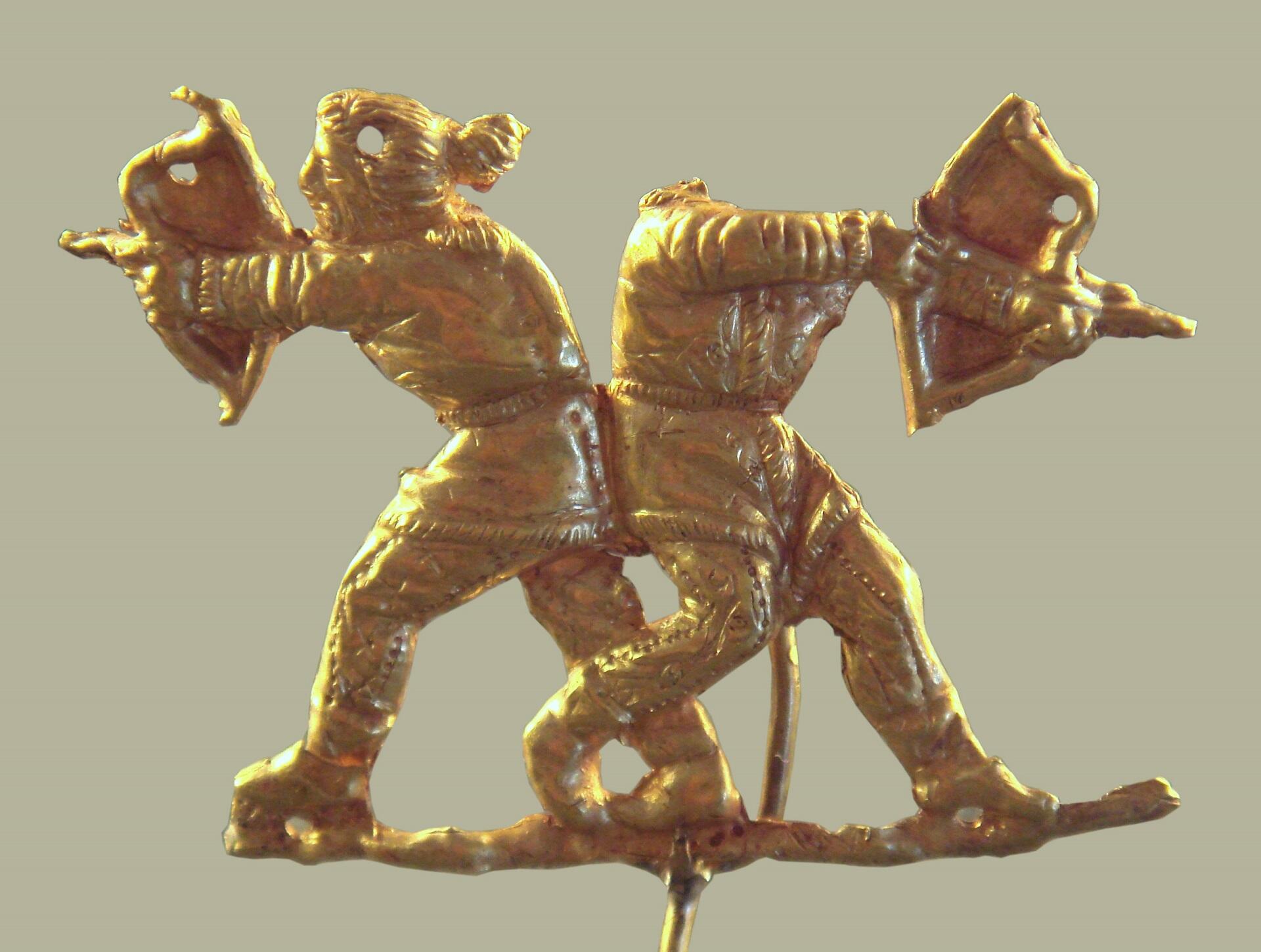
Beyond that, we have artefacts that have survived for millennia. They depict long dead civilisations wearing garments that look like the hanbok we're familiar with. This carving, which dates to between 475 and 450 BCE, proves as much. From examples such as these, we can trace the origin of hanbok.
Ancient Korean Clothing from the Three Kingdoms Period
Korea's Three Kingdoms era stretched from the 1st century BCE to the 7th century of the current era. That was a time when three rival states, Silla, Baekje, and Goguryeo, fought each other for dominion over Korea. And not just the entire Korean peninsula, but also parts of Manchuria.
Needless to say, they likely didn't consult one another on their clothing choices before meeting on the battlefield. However, they might have suffered some confusion, as their dress styles were similar3.
Baekje style
- trousers more flared, with wider legs
- jeogori was wider and reached the knees
- men wore tunics (boksam) and robes (po)
- women wore skirts (chima) and short jackets (banbi).
Goguryeo style
- trouser legs were more tapered
- jeogori length covered the hips
- considered the modern hanbok's forerunner
Silla style
- richer, more regal fabrics
- clothing colour marked social rank
- calf-length jeogori
- baji for men and chima for women, China-influenced
In all cases, the outfit's top garment, jeogori, fastened with a tie, typically worn as a belt and only later, as a part of the garment itself. Across the Three Kingdoms, men and women wore po, a long coat, to protect them from the cold.
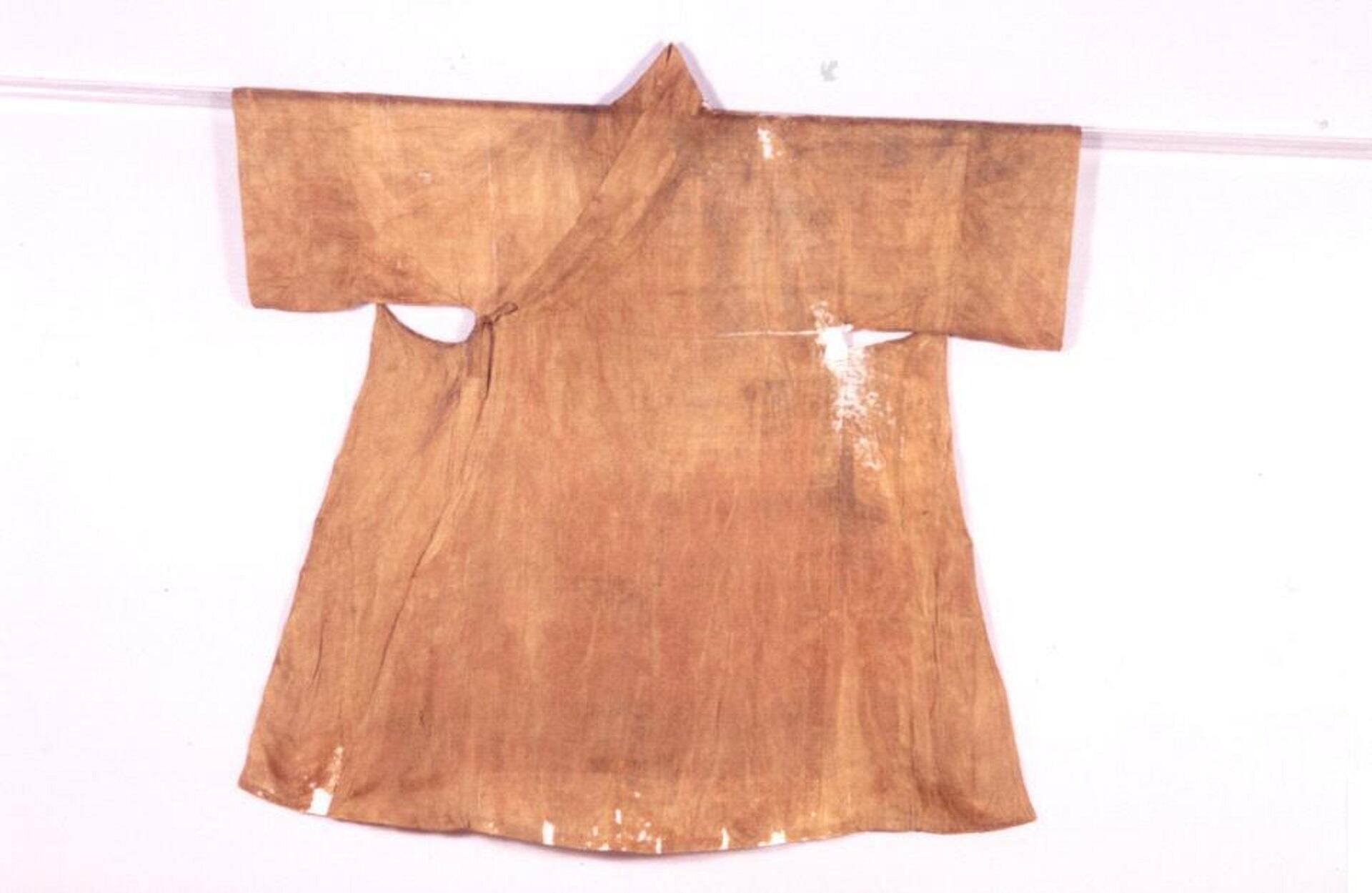
Hanbok Changes in the Goryeo Dynasty
The Goryeo Dynasty lasted just under 500 years, from 918 to 1392. In that time, Korean clothing benefited from outside influence. It came mainly during China's Yuan Dynasty (1271-1368), headed by a Mongol khan, with whom Korea had established a treaty4.
Mongols' reputation for horsemanship dictated one of the most profound changes. The jeogori became much shorter to keep it out of the way when climbing into the saddle. This shorter style caused the shift from wearing the top under the skirt, as was the style during the Goguryeo period.
During this era, the hanbok closure changed from a belt at the waist to the attached ribbons (goreum) at the breast.
Men added a Mongolian-type tunic to their attire. This cheollik featured a pleated skirt, which better accommodated riding on horseback. Their headwear changed too, becoming more of an indicator of social status.
New colouring methods and the introduction of silk changed textile production during this period. Fabrics became richer and more vibrant, and the silk made them more resilient. Soon, the colour of one's hanbok defined Korea's social classes.
Joseon Hanbok Style Changes
This ~500-year dynasty (1392–1897) saw the revival of neo-Confucian ideas on the Peninsula. Those that impacted hanbok designs were modesty and practicality. Men's hanbok changed little in its basic structure, though the silhouette slimmed down considerably.
The long, fluttery jungchimak, a Ming-Dynasty-influenced garment, was banned; the narrower durumagi, with its straight lines, took its place. Two further reforms had a substantial impact on men's dress styles.
The Gapsin Dress Reform (1884)
This reform banned hierarchical clothing features such as wide sleeves and ornate decorations.
The Gabo Reform (1894)
This reform mandated Western-style clothing for military and administrative personnel.
Those reforms had a revolutionary impact on women's hanbok, too. Earlier Joseon decrees mandated modest, restrictive clothing for women, particularly married women and women of status. By contrast, post-reform hanbok called for a wider chima that would not restrict movement. It also did away with status decorations on women's hanbok.
Early-Joseon hanbok reflected Goryeo-era class distinctions and social status symbols.
Late-Joseon hanbok did away with those aspects, essentially democratising clothing styles.
Today's hanbok reflect Late-Joseon sensibilities.
The jeogori, previously shortened to just under the breast, returned to its waist-length form. Also gone were the veils that covered the head and the jangot, an overcoat that functioned like a straitjacket. For women as for men, their hanbok could not signal their social status.
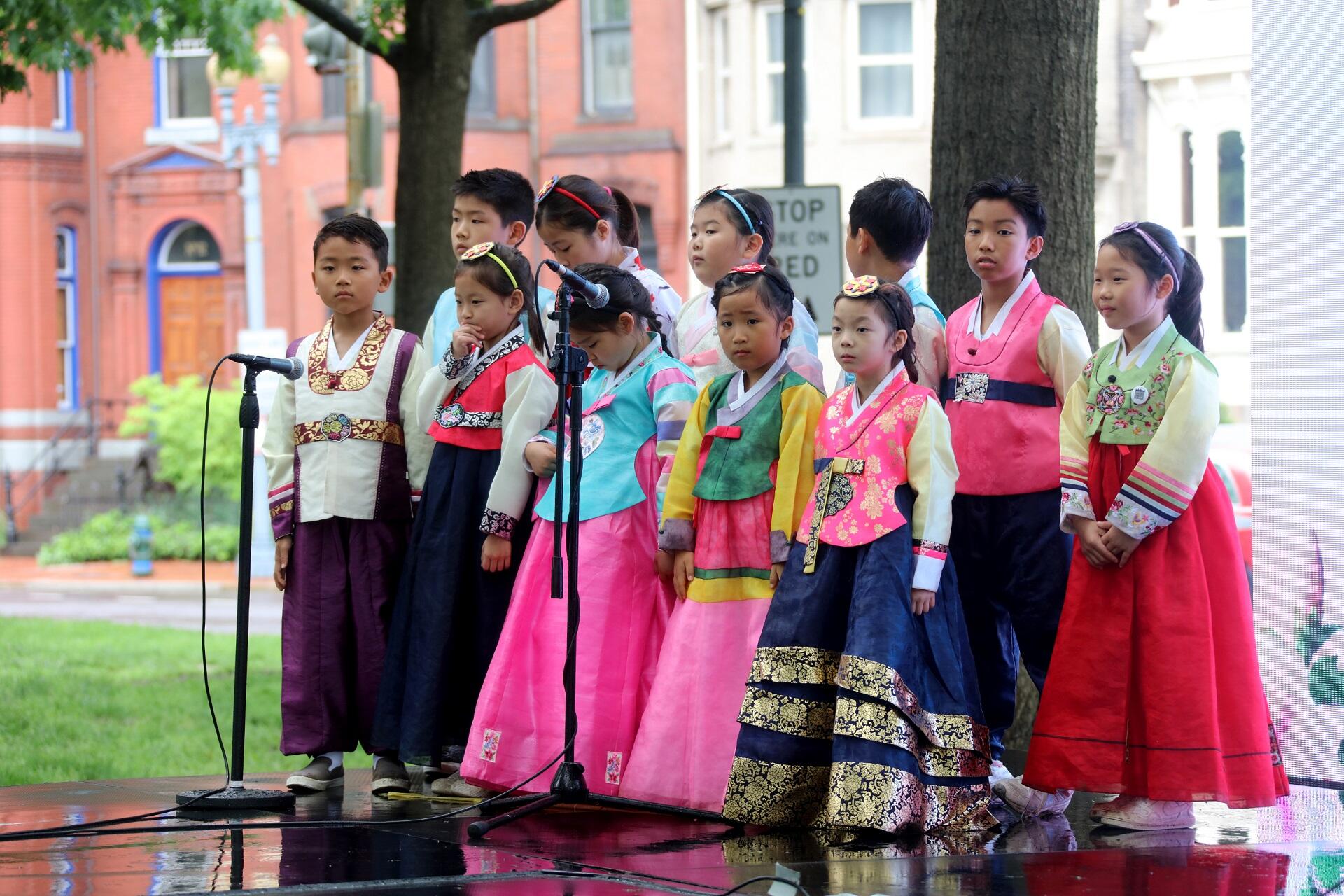
Late 19th - Early 20th Century Hanbok Changes
Joseon was Korea's last dynasty, but even in its final years. Foreign influence impacted Korean clothing. The late-Joseon mandate of Western-style military attire started what would become a wave of outsider demands on the way Koreans must dress.
This act combined the force of all previous treaties, giving Japan total sovereign control over Korea.
Japan had the greatest and most immediate influence on Korean dress. For one, it was the Japanese presence on the peninsula that forced the creation of the word 'hanbok'. Once the Japanese takeover was complete, in 1910, other clothing reforms came in quick succession.
Though wearing hanbok wasn't banned outright, wearing a white hanbok made the wearer a target for harassment and then punishment5. During the Japanese occupation, white hanbok symbolised resistance. Those wearing white would be denied food rations and barred from education.
This 1940 ordinance banned the wearing of white, ostensibly for sanitary purposes.
Despite increasing restrictions on Korean identity and cultural markers such as the hanbok, people found ways to preserve their cultural heritage. Once the occupation ended, in 1945, those practices would resurface, but embracing them wasn't universal.
Hanbok After the Korean War
By 1953, the year of the ceasefire that left Korea divided to this day, Western-style clothing had dominated the Korean landscape for more than 50 years. Crushing economic strain left the South Korean people with little choice; they wore the Western garb they had.
For many, Western clothing was a symbol of modernisation. During that period, South Korea underwent profound shifts at that time, becoming an industrial power. Suits with ties were the new symbols of progress and social advancement, qualities many were keen to advertise through their clothing choices.
Textile imports reinforced that decision. Synthetic fabrics were too hard to fashion into intricate hanbok layers, so the classic symbol of Korean identity fell out of favour completely.
From 1953 on, one hardly saw a hanbok-wearing person out and about.
In the 1970s, the hanbok re-emerged, but only for special occasions, such as weddings and New Year (seollal) celebrations. And then, in 1996, the South Korean Ministry of Culture instituted Hanbok Day, along with a guide to educate and encourage hanbok wearing.
Starting in the late 90s, South Korea began exporting films, music, and television series. Receptive audiences became the Korean Wave (hallyu) that eagerly snapped up new titles and acts. This phenomenon gave Korean studios more reasons to produce historical dramas with period costumes.
By the 2010s, streaming expanded Korean entertainment's reach even further. Now, everyone could watch 500 Years of the Joseon Dynasty (Joseonwangjo 500 nyeon), taking in the drama and the regal clothing. This led to a true revival of hanbok as a fashion icon, with style designers incorporating new fabrics, features, and lines to make them even more attractive.
References
- New World Encyclopedia. “History of Korea - New World Encyclopedia.” Newworldencyclopedia.Org, 2019, https://www.newworldencyclopedia.org/entry/History_of_Korea. Accessed 26 Sept. 2026.
- Service (KOCIS), Korean Culture and Information. “Hanbok Embodies Age-Old Philosophies : Korea.Net : The Official Website of the Republic of Korea.” Www.Korea.Net, 28 Jan. 2014, https://www.korea.net/NewsFocus/Culture/view?articleId=117325. Accessed 26 Sept. 2026.
- Nationalclothing. “History of Korean Hanbok. Evolution of Hanbok During the Last 2,000 Years - Nationalclothing.Org.” Nationalclothing.Org, 27 Sept. 2018, https://nationalclothing.org/asia/70-korea/361-history-of-korean-hanbok-evolution-of-hanbok-during-the-last-2. Accessed 26 Sept. 2026.
- GatsBeaN. “The Evolution of Hanbok: Korea’s Traditional Clothing Through Time - History of Korea.” History of Korea, 28 May 2025, https://coreaverse.com/2025/05/the-evolution-of-hanbok-koreas_01885817970.html. Accessed 27 Sept. 2026.
- Kickstart Korea. “Hanbok: The History of Korean Traditional Clothing and Its Modern Revival.” Korea Kickstart, 4 Aug. 2025, https://koreakickstart.com/hanbok-korean-traditional-clothing/. Accessed 27 Sept. 2026.
Summarise with AI:
Did you like this article? Leave a rating!

 Loading...