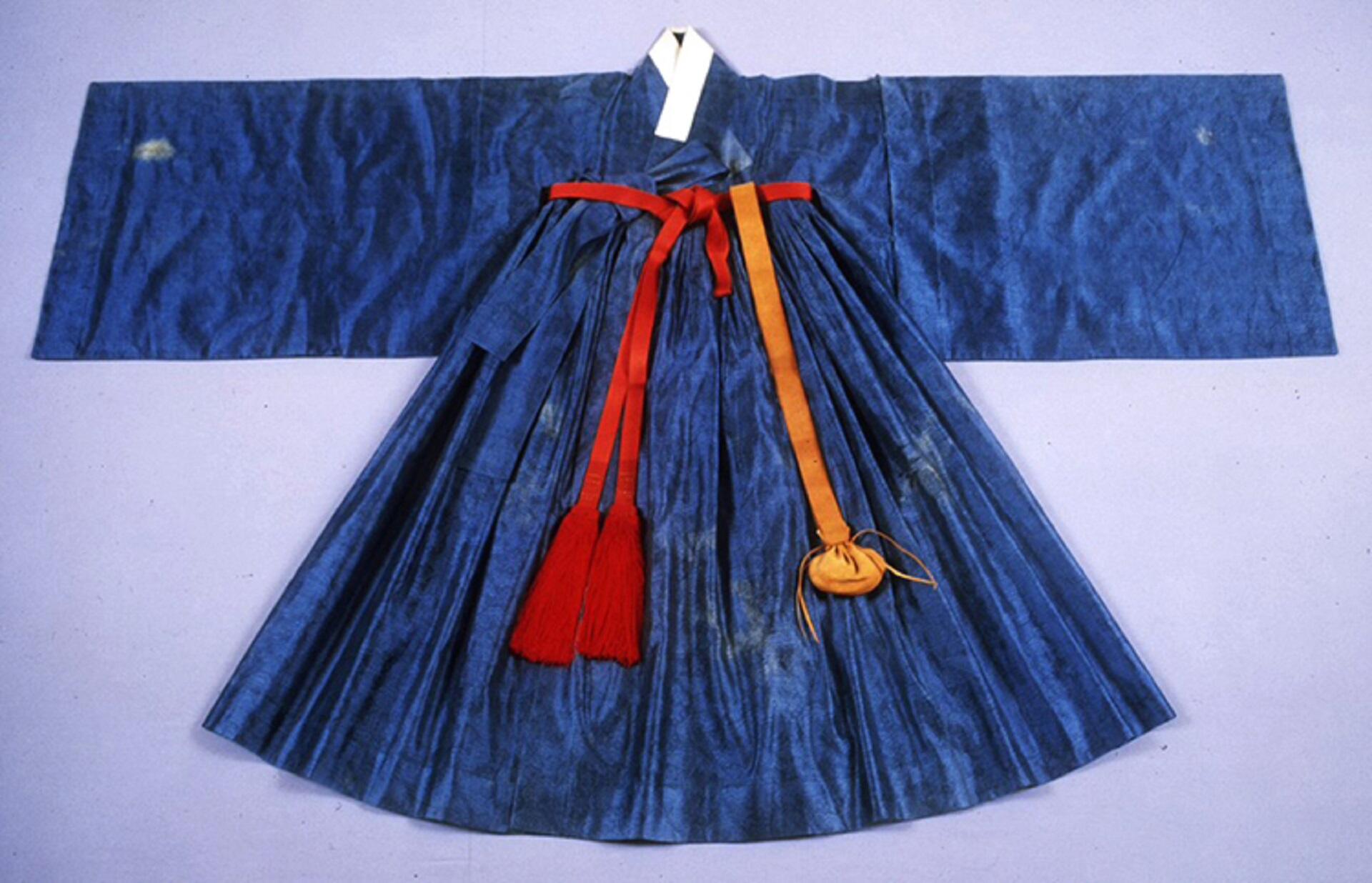

As a concept, clothing is simple. It consists of tops and bottoms, even one-piece garments like coveralls and dresses, and footwear and accessories. Hanbok parts are no different; trousers, jackets, and skirts have corresponding words in Korean. In this article, you'll learn the Korean names for parts of a hanbok, as well as for outer garments, traditional footwear, and accessories.
| 🧩 Hanbok part | 🇰🇷 Korean name | 🔠 Romanisation | 🔊 Pronunciation |
|---|---|---|---|
| hanbok (entire garment) | 한복 | hanbok | |
| jacket | 조고리 | jeogori | |
| skirt | 치마 | chima | |
| trousers | 바지 | baji | |
| long overcoat | 두루마기 | durumagi | |
| sleeveless vest | 조키 | jokki | |
| outer jacket | 마고자 | magoja | |
| socks | 버선 | beoseon | |
| shoes | 혜 | hye | |
| hat | 가드 조크두리 | gat (men) jokduri (women) |


What are The Main Parts of a Hanbok?
At the beach or swimming pool, we can get away with wearing a single garment. People who favour dresses can accessorise their frocks with various adornments before stepping out on a summer day. By contrast, in summer as in winter, the Korean hanbok is a complex, multi-layered garment.
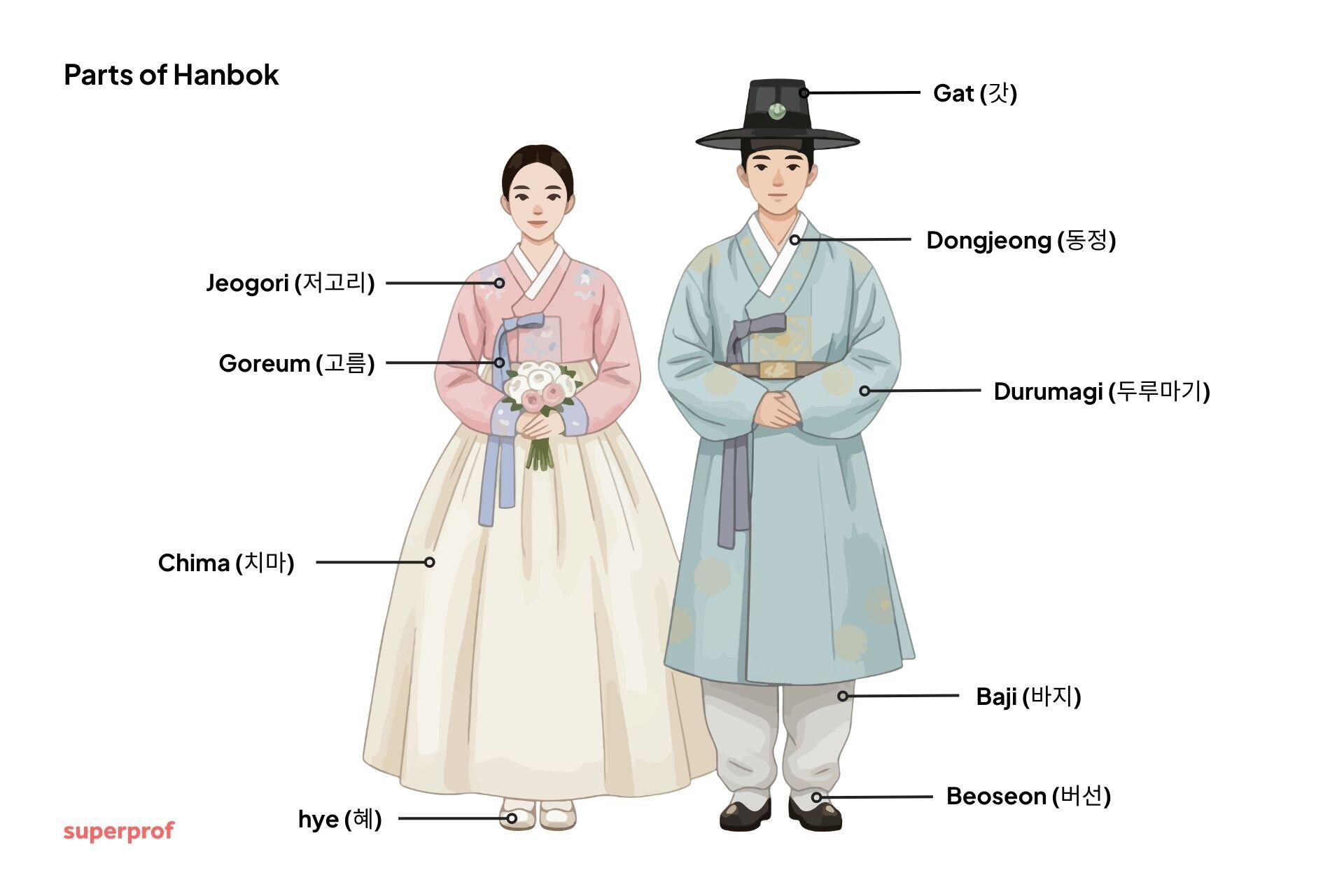
Regardless of whether the wearer is male or female, their hanbok will comprise an upper and lower part1. For either gender, the hanbok upper garment is called jeogori (조고리).
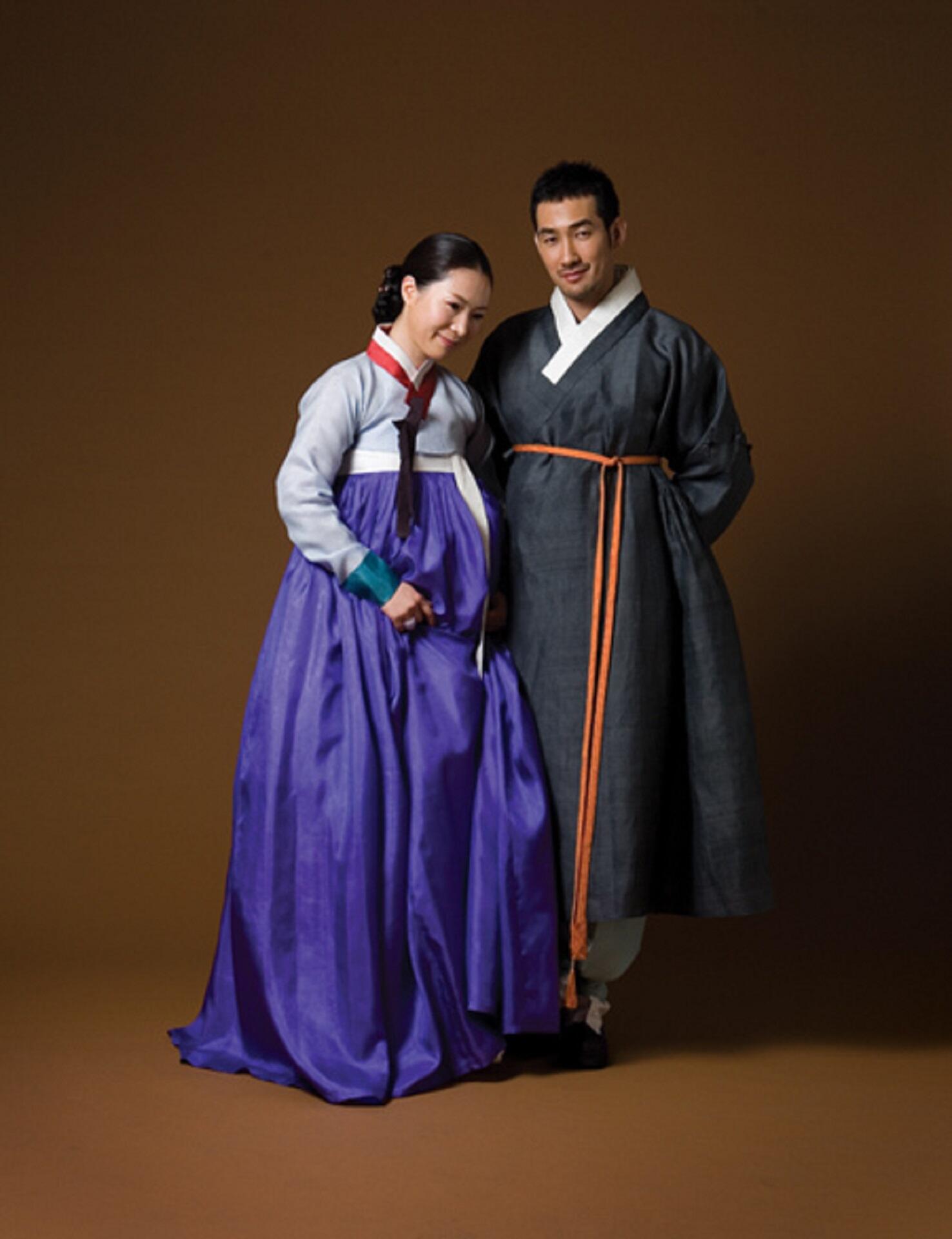
Women dress their lower halves in a long, flowing skirt (chima - 치마), while men wear trousers (baji - 바지). Those tend to be loose, wide-legged garments that gather at the ankle with a drawstring called daenim (대님).
Footwear is an essential part of the hanbok. The generic word for hanbok shoes is hye (혜).
In a later chapter, you'll discover the words for more decorative shoes one might wear for special occasions, as well as more functional shoes.
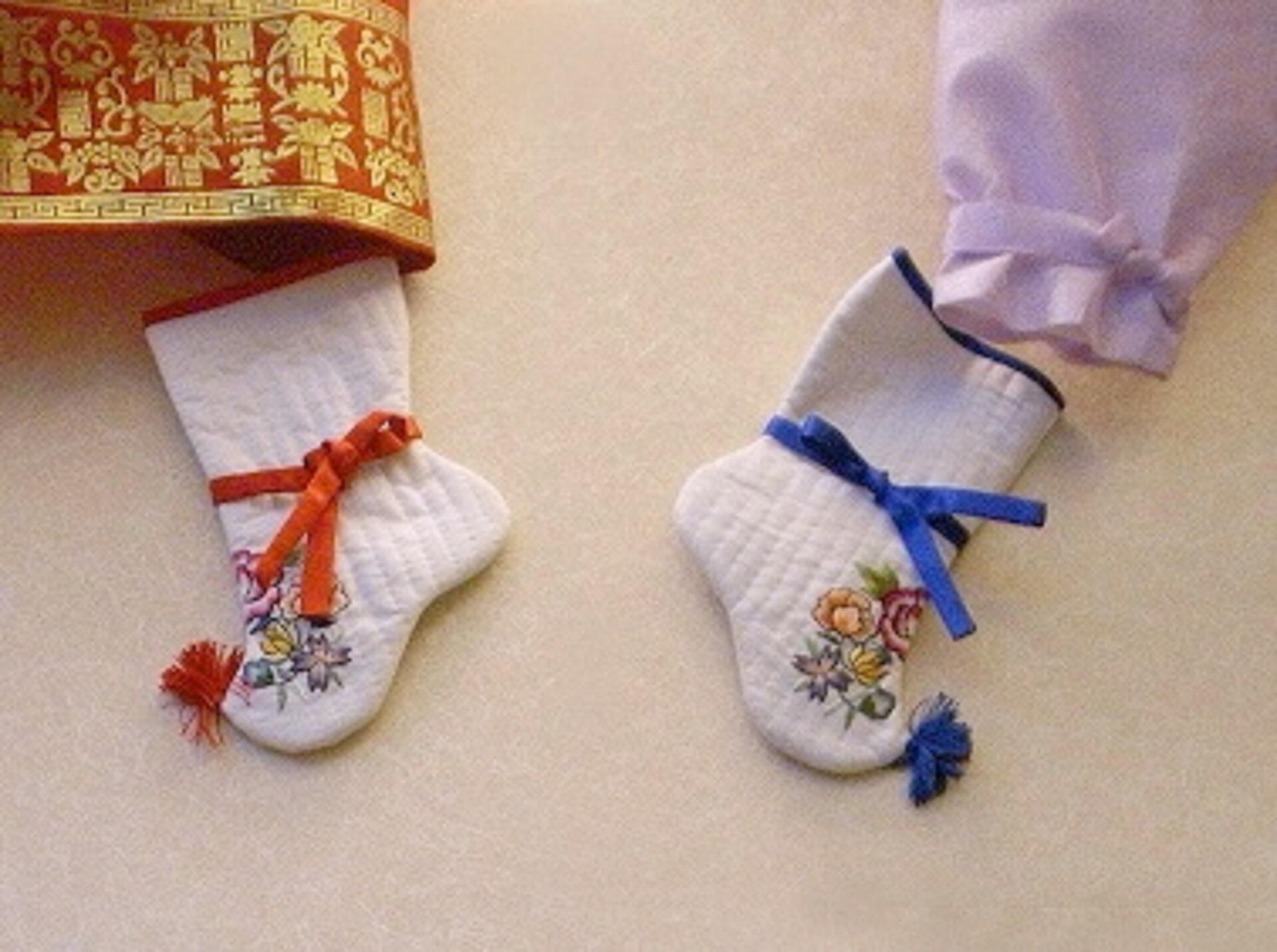
If you've ever watched a K-drama or Korean film featuring hanbok, you'll know that socks are a necessary component of the complete outfit. These are called beoseon (버선); they're either plain white or feature patterns in various colours.
When wearing a hanbok outdoors, it's customary to wear a head covering. Men typically wear a horsehair hat called gat (가드) while women have more options. The jokduri (조크두리) in the table above is the most ceremonial of them, typically worn for weddings and other special occasions.
These are the basic hanbok parts, minus adornments, accessories and outerwear. While some pieces, like the skirt or trousers, are relatively simple in their construction, the upper garment has many more parts.
Jeogori: the Hanbok Upper Garment
Women's hanbok feature a high-waisted jacket, while the men's jeogori may extend down to their hips. While the women's garment fits more snugly, the men's are much looser. Those differences aside, both the men's and women's jeogori feature the same components.
On the men's garments, the goreum tends to be narrower and closer in tone to the garment's overall colour2. By contrast, a woman's jacket may feature wide, contrasting ribbons, making them a decorative part of the top. Your Korean traditional clothing guide may state that those ribbons may be embroidered, but they look just as good plain.
More elaborately tailored jeogori may feature godae (고대), gussets sewn into the armpits to make it easier for the wearer to move their arms. Most tailors ensure the garment's front overlap (hwajang - 화장) is generous to ensure modesty. For comfort, the best-quality hanbok will have baerae (바에라), which is edging around the inner lining and collar.
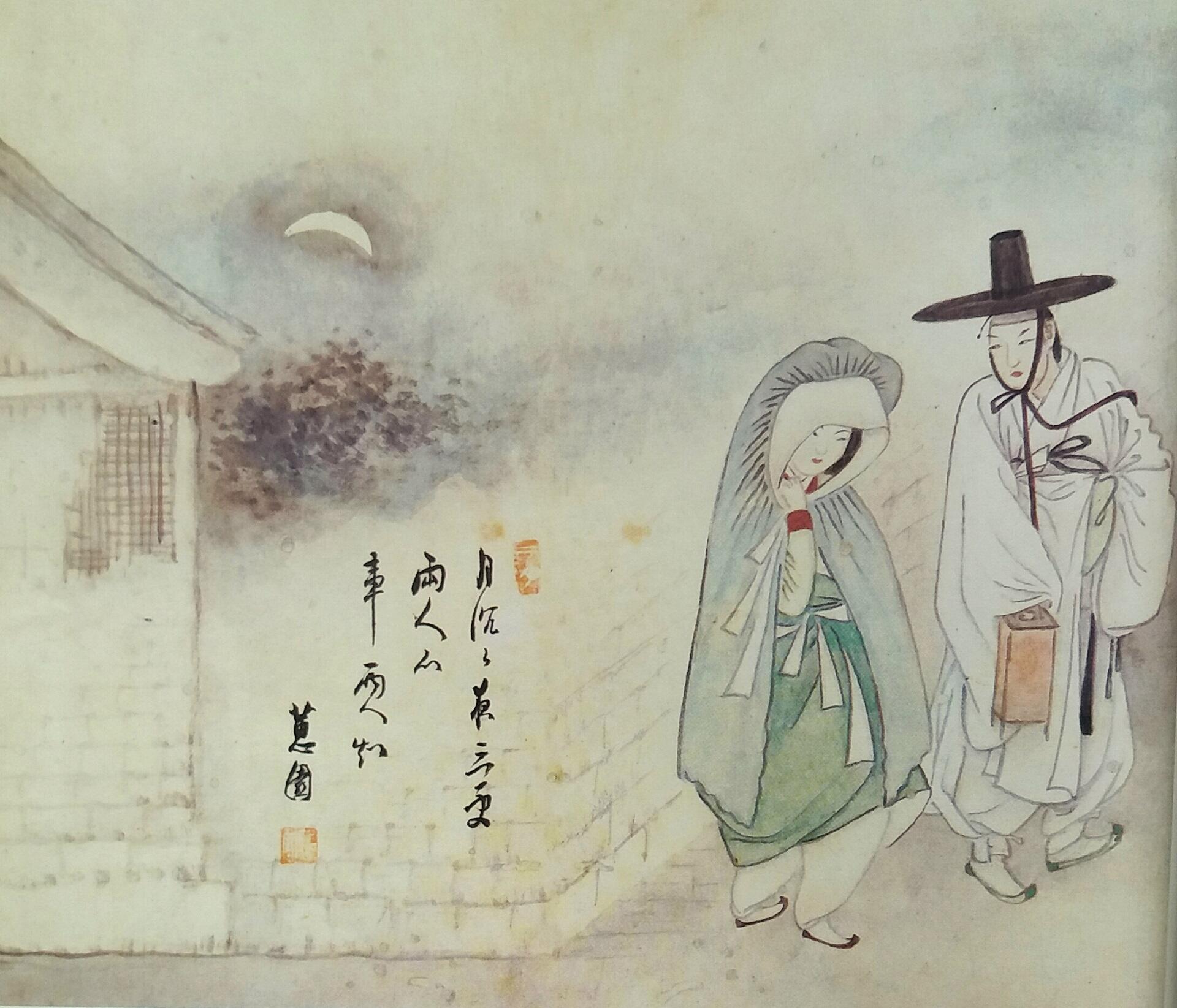
Chima, Hanbok Skirts
It's common to think that only Korean women have worn chima since forever. However, the truth is more nuanced. We'd do history a disservice if we believed that women always wore skirts and, later, the chima associated with hanbok.
At one time, Korean lower garments were trousers, the same for men and women. It was only during the Joseon Dynasty that women began wearing distinctively feminine-style clothing. However, women continued to wear trousers under their chima; they served as underwear and to provide extra warmth.
These voluminous skirts helped define gendered clothing.
The chima emphasised femininity and modesty; it also served to limit women's mobility.
Though length is a defining chima characteristic, these skirts come in several varieties. Summer skirts tend to be single-layered while those worn in the spring and autumn are usually double-layered. Winter skirts are typically quilted.
Chima may also have a separated back (pul-chima - 풀 치마) or a back that's seamed, called tong-chima (통 치마). The pul-chima is less restrictive of movement and easier to wrap, allowing the pleats to fall more naturally. The tong-chima is a bit more challenging to secure to the body and the wearer must limit their legs' range of movement.
The pul-chima is the traditional skirt for weddings in Korea. Naturally, it must be red, as that is the colour of both protection and passion. In Korea, hanbok colours have specific meanings tied to cultural values that stretch back thousands of years.
Baji - Hanbok Trousers
Where chima are elaborate and multi-faceted in their construction, baji are simplicity in fabric. Their wide legs and otherwise generous proportions allow for the greatest possible range of movement. The ties at the ankles restrict their flow, preventing them from catching on branches or other low menaces.
The words chima and baji are not limited to describing parts of a hanbok.
They are the words Koreans use to describe ordinary skirts and trousers.
Fighters, field workers, and men who engaged in strenuous activity may wear haengjeon (행전) under their baji. These tight-fitting garments hug the calves, similar to the gaiters we know in Western styles. They restrict baji's flowing qualities, making these trousers even more functional3.
Baji may feature an open crotch (gaedanggo - 가이당고) for greater comfort, or closed (hapdanggo - 합당고) for better styling and greater modesty. Gaedanggo feature a triangular insert to cover the crotch area while the seam between the legs remains open. As men typically wore several baji in layers, the gaedanggo often served as underwear, while the hapdanggo were the baji everyone got to see.
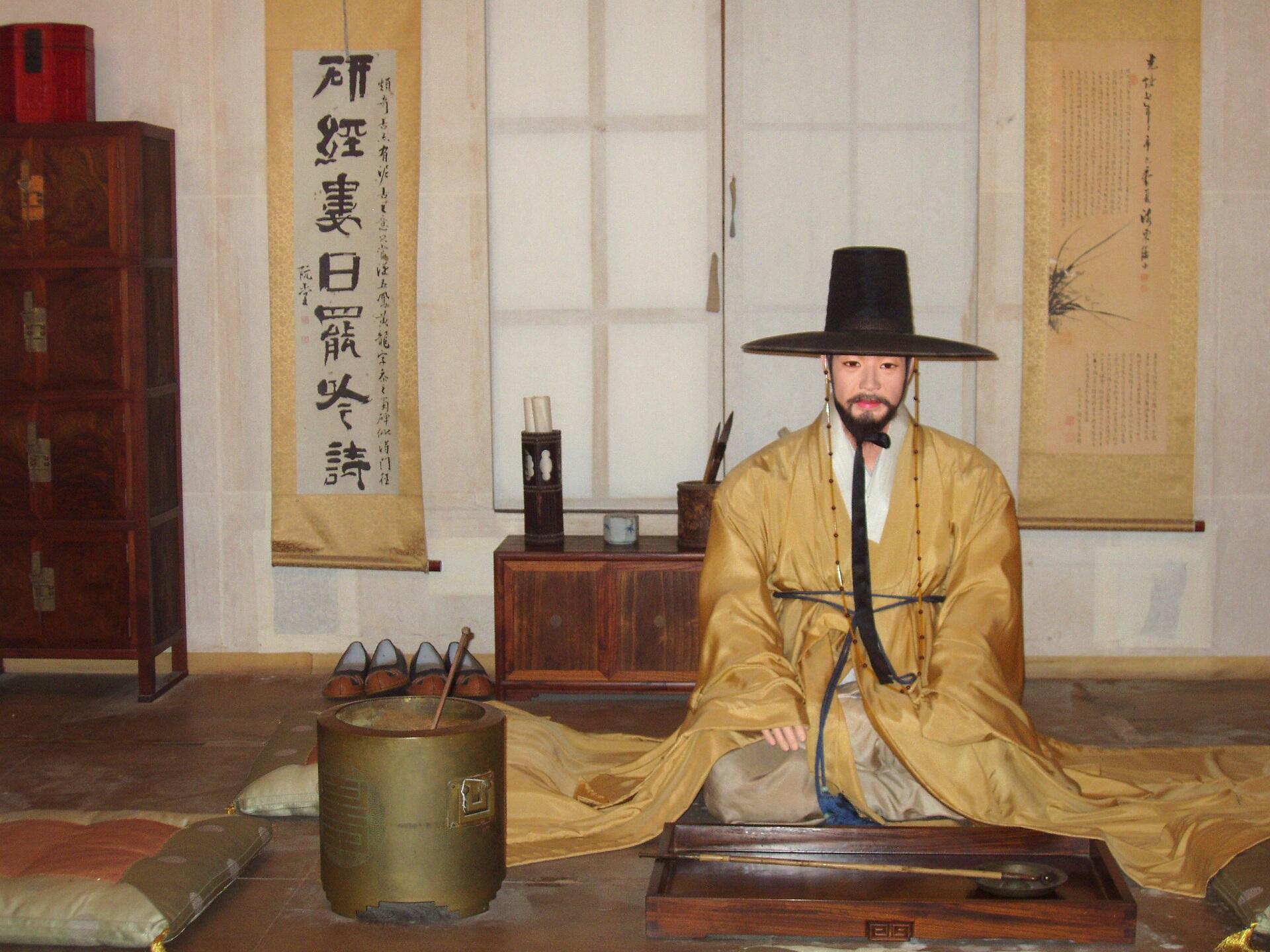
Outer Garments Worn Over Hanbok
As far north as Korea lies, brutal winters are a fact of life. Multi-layered as hanbok are, they don't provide enough warmth when the snow falls and the winds blow. This chart lists the garments hanbok wearers wear to shield themselves from frigid air blasts.
durumagi
(두루마기)
A long overcoat with no slit that closes with one goreum, worn by men and women.
jokki
(조키)
A sleeveless vest, slightly longer for men, that both genders wear.
magoja
(마고자)
The hanbok's outer jacket, featuring long sleeves, worn down to the thigh or knee.
Accessorising and Decorating Your Hanbok
On their own, hanbok are graceful, eye-catching garments. They even come with built-in decorations: the goreum to tie the garment closed and the kkeutdong at the sleeve cuffs. Still, hanbok wearers have more they can wear to set off their look4.
Headgear: an Essential Part of Hanbok Outerwear
Hanbok wearers must cover their heads and protect their ears during the winter. But convention dictates that heads should be covered at all times. The range of hats, veils, and other head coverings is broader for women than for men5.
Head coverings for women
- ayam (아얌) a formal headgear with simple lines.
- jobawi (잡와위) wraps around the ears and face.
- nambawi (남바위) typically fur-lined, covering the forehead, ears, and neck.
- sseugaechima (스게게치마) a long veil that high-society women wore to cover their heads and faces.
Head coverings for men
- gat (가드) a tall, wide-brimmed horsehair hat.
- jeongjagwan (정자관) the tight-fitting hat with curved layers.
- bokgeon (복건) the headband worn under the hat and indoors.
- satgat (삿갓) a conical hat commoners wear for travel, work, and to protect against the elements.
Hanbok Footwear
The Korean historical drama, Hwarang, took a lot of scorn for many reasons, including the footwear the characters wore. Indeed, those shoes were far too modern for the era the show was set it, but they fit rather well with the show's overall irreverence. To make your hanbok historically accurate, these are the shoes to wear.
- taesahye (태사혜): formal shoes, made of silk, worn with ceremonial hanbok.
- danghye (당혜): embroidered shoes for women of high status.
- hwa (화): a general term for boots, such as those the military might wear.
- mituri (미투리): everyday shoes woven from hemp fabric.
- jipsin (집신): a type of sandal made of woven straw, typically commoner footwear.
- namaksin (나막신): a wooden shoe to wear in the mud and rain, typically made of pine or ginkgo.
- Don't forget beoseon - the socks you must wear for your hanbok to be fully authentic. And now, with hats, accessories, and a selection of footwear to choose from, your hanbok is now complete.
References
- Jung, Il-woo. “Korean Traditional Clothing.” Jungilwoodelights.Com, 22 Feb. 2018, https://jungilwoodelights.com/korean-traditional-clothing/. Accessed 25 Sept. 2026.
- Muchadoaboutlove. “Hanbok for Men: Kim Boong-Do’s Style.” The Talking Cupboard, 20 June 2012, https://thetalkingcupboard.com/2012/06/21/hanbok-for-men-kim-boong-dos-style/. Accessed 25 Sept. 2026.
- Petrucci, Lorenzo. A 16Th Century Joseon Korean Man’s Hanbok Barony of South Downs Kingdom of Meridies. 2025. https://www.dellacivetta.org/lorenzo/wp-content/uploads/sites/2/2021/06/Hanbok-Documentation.pdf. Accessed 25 Sept. 2026.
- christinathepolyglot. “Korean Traditional Hanboks.” Christinathepolyglot, 25 May 2013, https://christinathepolyglot.wordpress.com/2013/05/25/korean-traditional-hanboks/. Accessed 26 Sept. 2026.
- Service (KOCIS), Korean Culture and Information. “Gat, Traditional Headgear in Korea [2]: Korea.Net : The Official Website of the Republic of Korea.” Www.Korea.Net, 5 Feb. 2014, https://www.korea.net/NewsFocus/Culture/view?articleId=117428. Accessed 25 Sept. 2026.
Summarise with AI:
Did you like this article? Leave a rating!

 Loading...