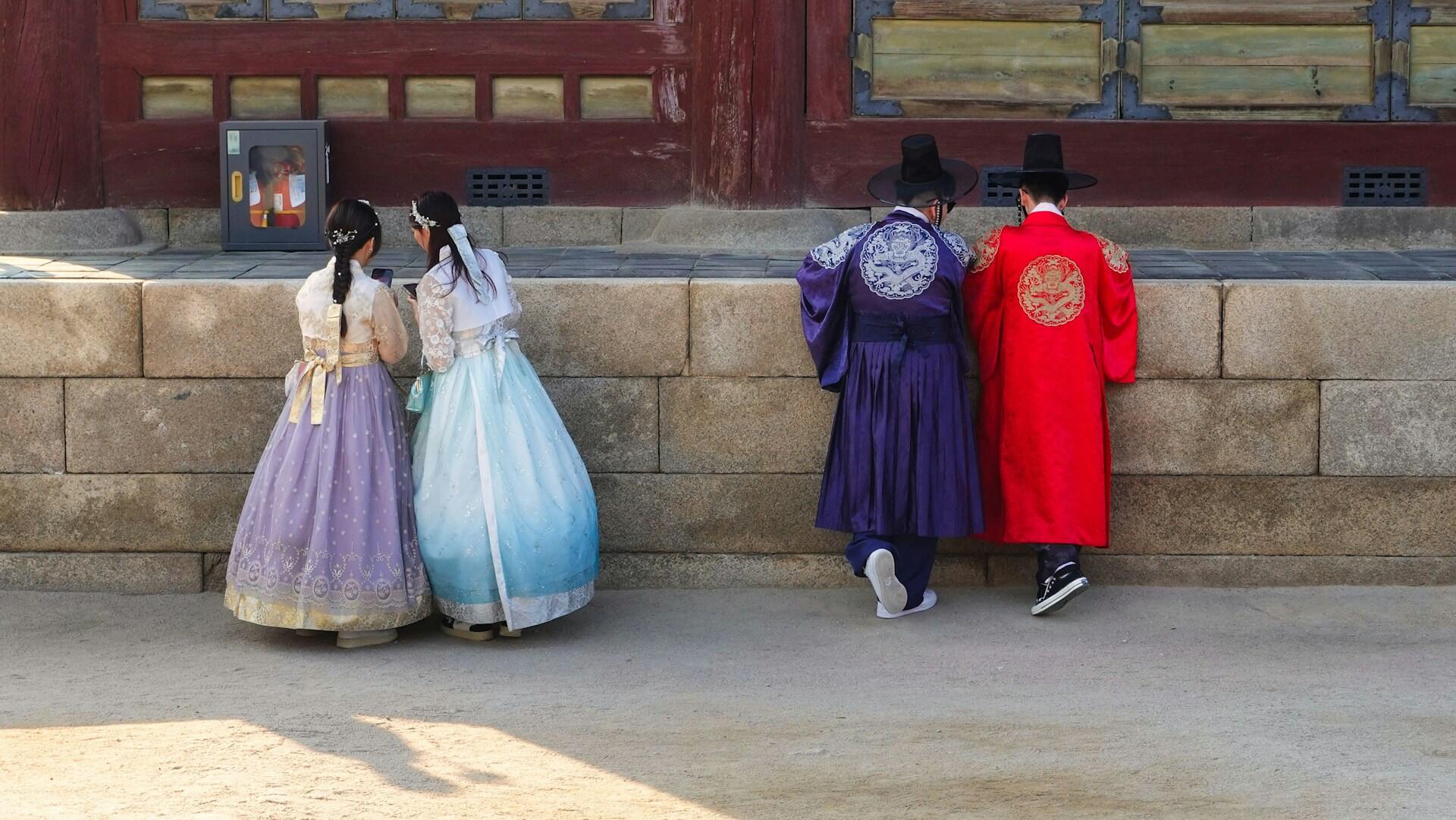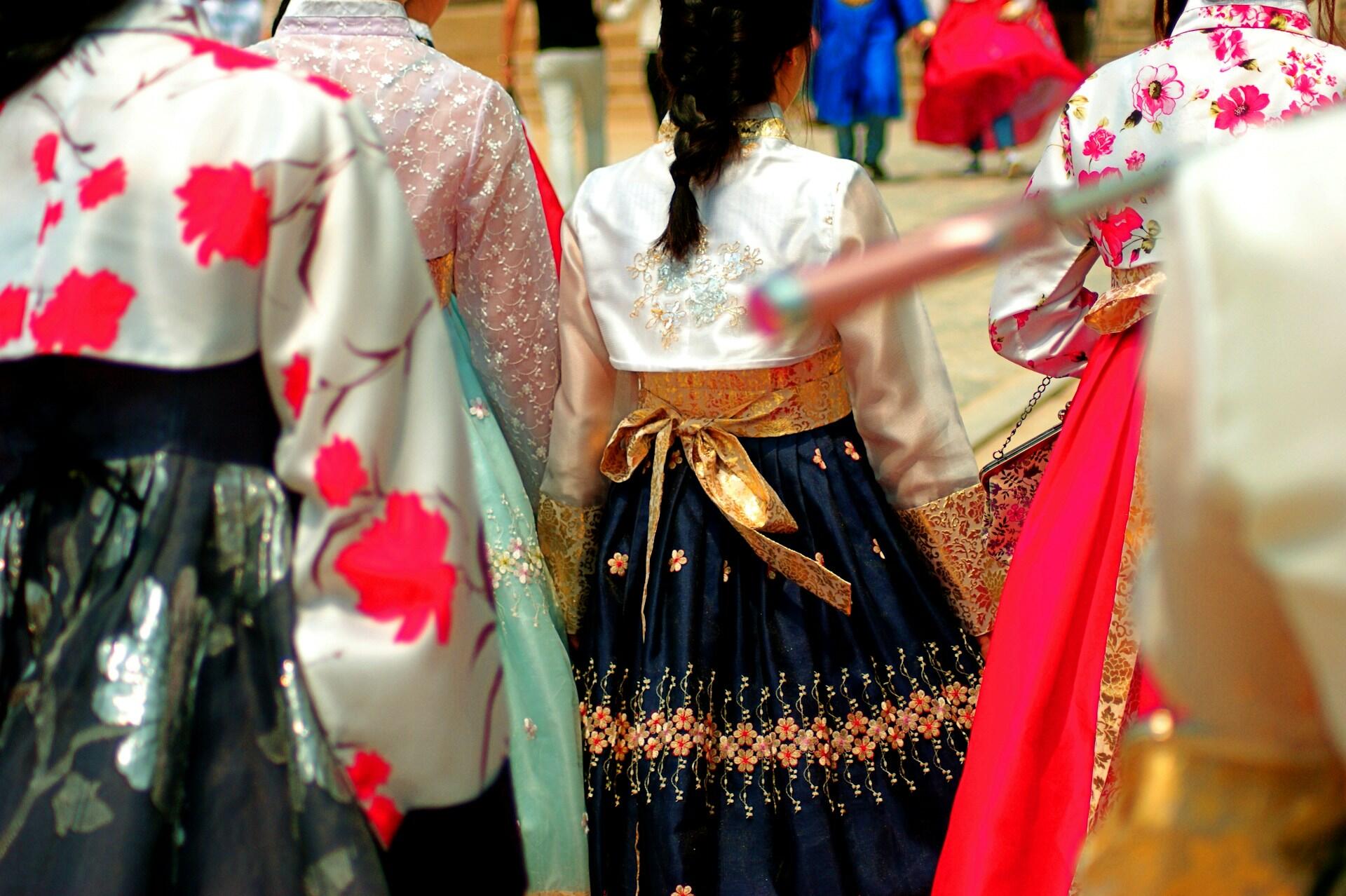

There’s something unmistakable about a Korean hanbok. Its flowing silhouette, beautiful colours, and elegant details make it one of the world’s most distinctive traditional styles, shaped by centuries of Korean history and culture.
You’ve probably seen hanbok in Korean dramas, traditional celebrations, or on K-pop idols in modern reinterpretations. But what does it really represent? This guide explores everything you need to know about Korean traditional dress, from its origins and symbolism to the ways it continues to inspire fashion today.
Korean Traditional Clothing Fast Facts
- Hanbok has ancient roots stretching back more than two millennia, with its early forms taking shape by around the fourth century BCE.
- Hanbok consist of an upper garment (jeogori) and a lower garment: chima for women and baji for men, as well as outer garments and accessories.
- The Korean hanbok underwent many changes through the centuries, mostly because of growing prosperity and foreign influence.
- Today, hanbok remains the dress of choice for celebrations, such as weddings, funerals, and significant holidays.


What Is Hanbok?
The term 'hanbok' (한복) literally means 'Korean dress'. It represents a multi-layered outfit defined by its upper and lower components. Besides its upper and lower pieces, hanbok wearers also don specialised undergarments and outer garments - especially in the winter. Socks, shoes, hats and other accessories complete the outfit. These are the Korean words for each part of the hanbok.
| 🧩 Hanbok part | 🇰🇷 Korean name | 🔠 Romanisation | 🔊 Pronunciation |
|---|---|---|---|
| hanbok (entire garment) | 한복 | hanbok | |
| jacket | 조고리 | jeogori | |
| skirt | 치마 | chima | |
| trousers | 바지 | baji | |
| long overcoat | 두루마기 | durumagi | |
| sleeveless vest | 조키 | jokki | |
| outer jacket | 마고자 | magoja | |
| socks | 버선 | beoseon | |
| shoes | 혜 | hye | |
| hat | 가드 조크두리 | gat (men) jokduri (women) |
Over the centuries, hanbok evolved in response to changing cultural and social influences. During the Goryeo period, Mongol fashions contributed to slimmer, more practical silhouettes, particularly in men’s clothing. Later, the neo-Confucian ideals of the Joseon era encouraged more modest forms of women’s dress and placed greater limits on movement. Yet despite these changes, the basic structure and distinctive character of Korean traditional clothing remained remarkably consistent.
What the Traditional Korean Dress Looks Like
What we accept today as traditional Korean dress is actually a blend of all previous modifications made to hanbok throughout the centuries1. Fundamentally, hanbok consists of upper and lower garments, with the main difference being skirts (chima) for women and trousers (baji) for men.
jeogori: the upper garment, called the same for men's and women's hanbok.
baji: men's trousers, featuring wide legs with cuffs tied at the ankles to restrict their flow.
chima: the voluminous floor-length skirt that defines women's wear.
Naturally, the Korean hanbok features many other parts, from socks and shoes to headwear and decorations. Among them, the ribbons (goreum) that hold the jacket closed serve both a functional and a decorative function.
Details, such as the length of the jacket (jeogori), the flare of the trousers' legs, and whether the skirt's back is open or closed, affect the hanbok's look. The one fact that remains concrete is that today's hanbok mostly follows Joseon Dynasty style elements.
Men's and Women's Hanbok: Similarities and Differences
For men and women, the hanbok upper garment is called jeogori. Men's tend to be longer than the women's, whose jeogori ends just under the breast. The main difference lies in how they clothe their bottom halves.
Women
jeogori + chima
Men
jeogori + baji
Beneath the hanbok parts we can see, today's hanbok wearers usually wear modern undergarments. However, male and female hanbok wearers historically wore baji under their lower garments. Baji comes in two styles: open- and closed-crotch. The visible baji are of the second variety, of course.
Baji worn as undergarments featured an open seam at the crotch with a V-shaped panel to insert in the front of the garment. The area between the legs remained open, making it convenient to perform bodily functions without having to completely disrobe.
Throughout history, jeogori sleeves were the most apt to change. For women, jeogori sleeves are moderately wide and typically featured wide cuffs (kkeutdong) in a colour that contrasted with the garment's colour. By contrast, men's cuffs were narrower and blended into their top's overall colour.
Throughout history, men's jeogori sleeves alternately widened and narrowed. Wider sleeves signalled the wearer was of high social status; narrower sleeves spoke of foreign influence.
We should not assume that women always wore chima. For much of Korean history, women wore baji, the same as men. Even after the chima became the garment for women, those of lower social status continued to wear their trousers. Especially if they worked in the fields or did other types of hard labour.
Hanbok Materials, Colours, and Patterns
The earliest hanbok were made with fabric woven from hemp and ramie, durable natural fibres that were easy to work with. Later hanbok styles were cut from cotton and silk, with the former typically meant for lower-class populations and silk reserved for the upper classes.
Industrial fabric production and wholesale dyeing are relatively new features of the clothing industry. Still, throughout most of hanbok's history, these aspects prevailed2.
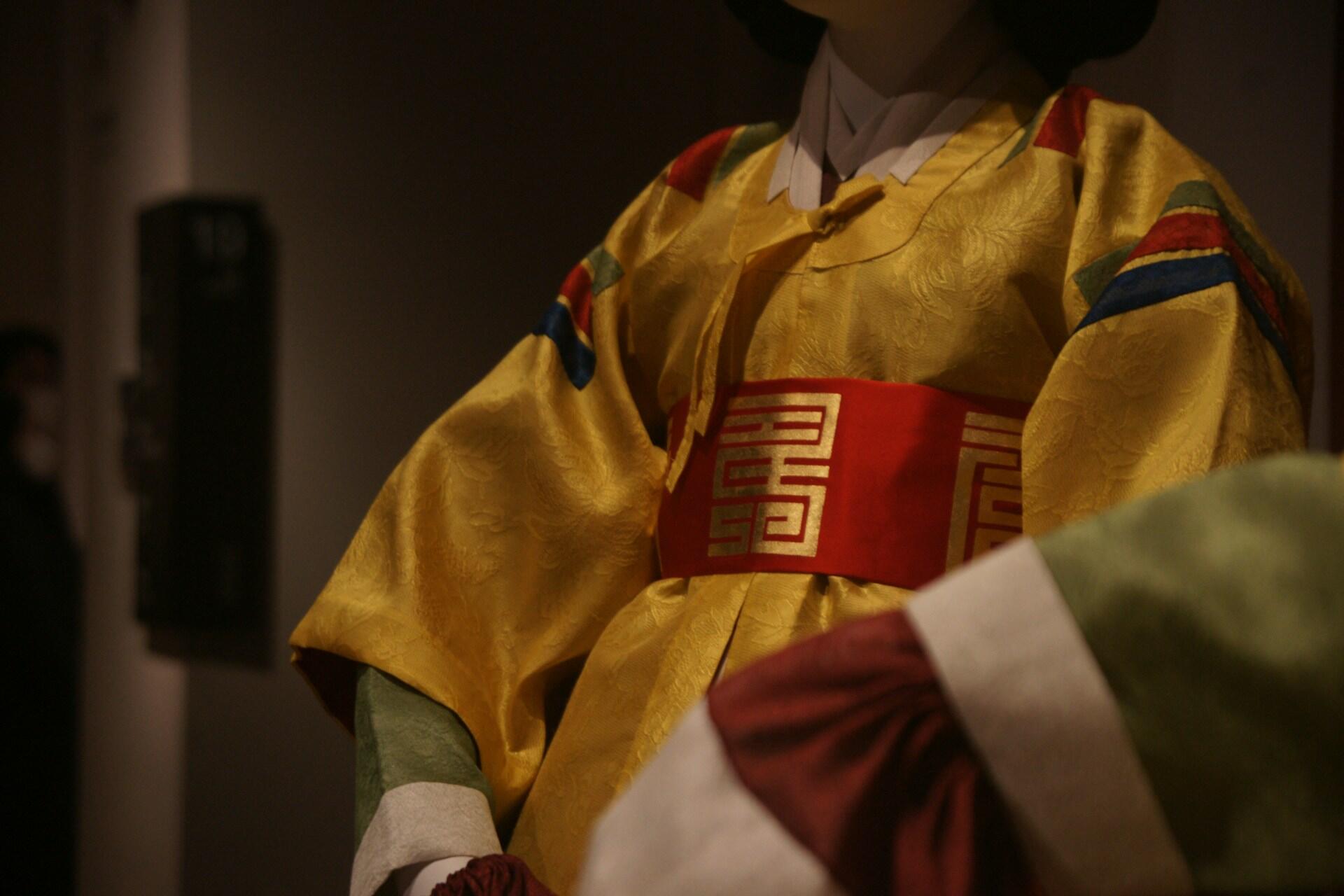
Silk garments didn't just define themselves by the fineness of the cloth, but also by its shimmering, flowing quality. Later, as improved dyeing techniques made this material even richer, silk hanbok took on a lustrous quality (myeongju), reserved for ceremonial occasions and high court appearances.
With improved colouring, those garments' hues became a way to distinguish social classes. One could tell your social station by the colour hanbok you wore. A white hanbok was a sure sign you were the poorest of citizens, while a shimmering yellow outfit proclaimed you to be royalty.
With improved prospects for wealth and more refined craftsmanship, people could decorate their hanbok in a variety of ways.
Decorative tassels called norigae became a standard part of women's wear, and long ribbons trailing down the front of the chima, called hyangdae, could be embroidered for extra effect.
Embroidery became one of the most distinctive features of men's and women's hanbok. A man might wear an elaborately embroidered dragon on his jeogori, while his wife's would sport a phoenix. They might further accent their upper garments with pins, brooches, and flowers.
How the Hanbok Has Changed Over Time
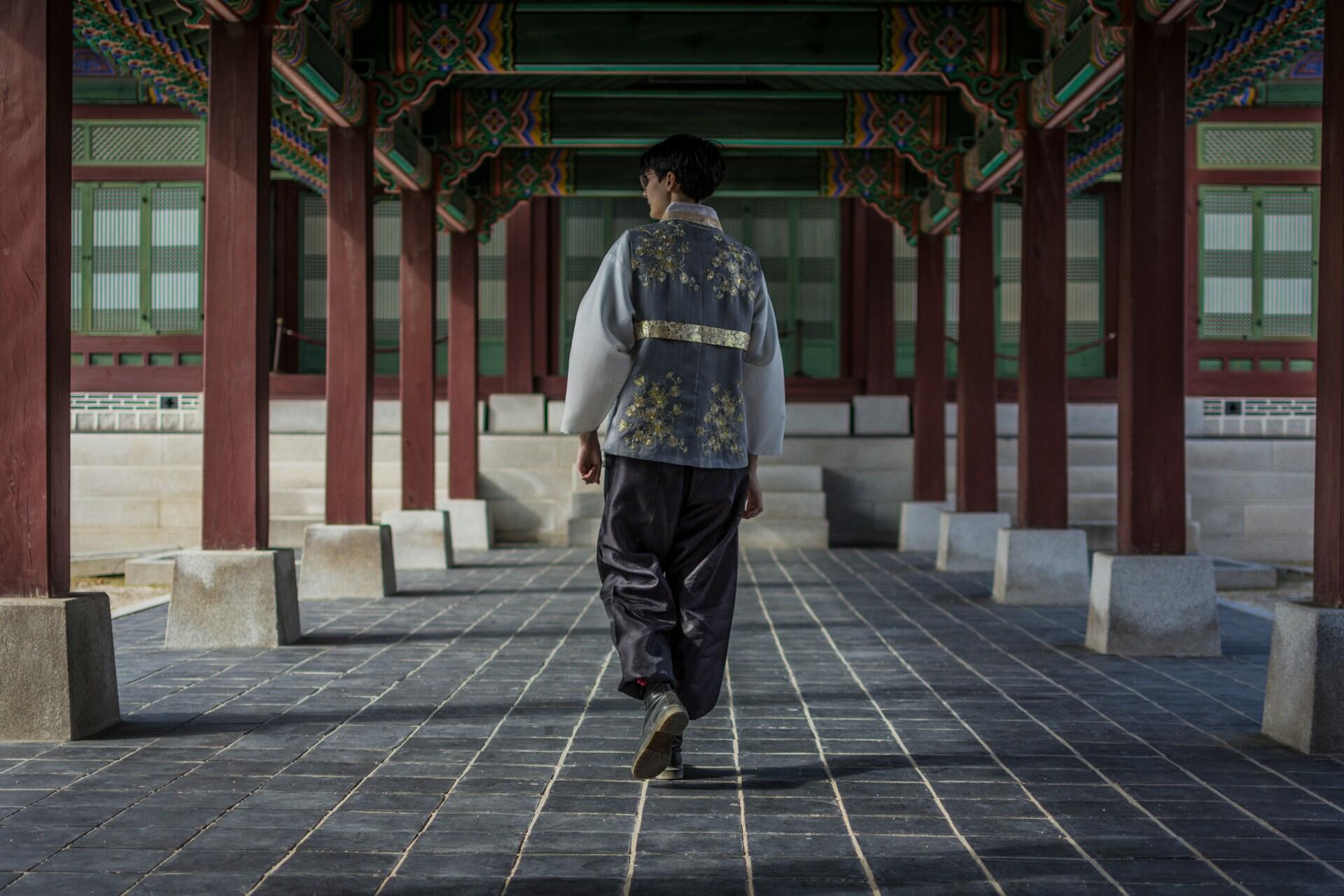
For most of the historical hanbok story, changes to this iconic dress style were due to monarchical preference, outsider influence, and/or practical concerns3. Three key periods mark the biggest changes to hanbok.
The post-war period - after both the Second World War and the Korean War, South Koreans embraced the Western style of dress. For one, because they were in economic dire straits and investing in traditional clothing was out of reach. For two, because the Western style of dress signalled progress and modernisation.
During the 70s, hanbok began making a comeback. At first, it was just the occasional family donning traditional garments for weddings and holidays. Soon, it became the cultural norm to wear hanbok for celebrations.
In 1996, Korea's Ministry of Culture, Sport, and Tourism proclaimed 21 October Hanbok Day as a part of the country's Hanbok Culture Week.
Around that time, Korean culture exports seeped into global markets. Soon, the whole world was enjoying Korean historical dramas and period films. This awoke in foreign audiences a curiosity about traditional Korean dress, an interest that Korean society welcomes.
When Do Koreans Wear Hanbok Today?
These days, Korean people don their hanbok for solemn and special occasions, ranging from funerals to weddings. Holidays such as New Year and Harvest Festival are also reasons to get the hanbok out of the closet.
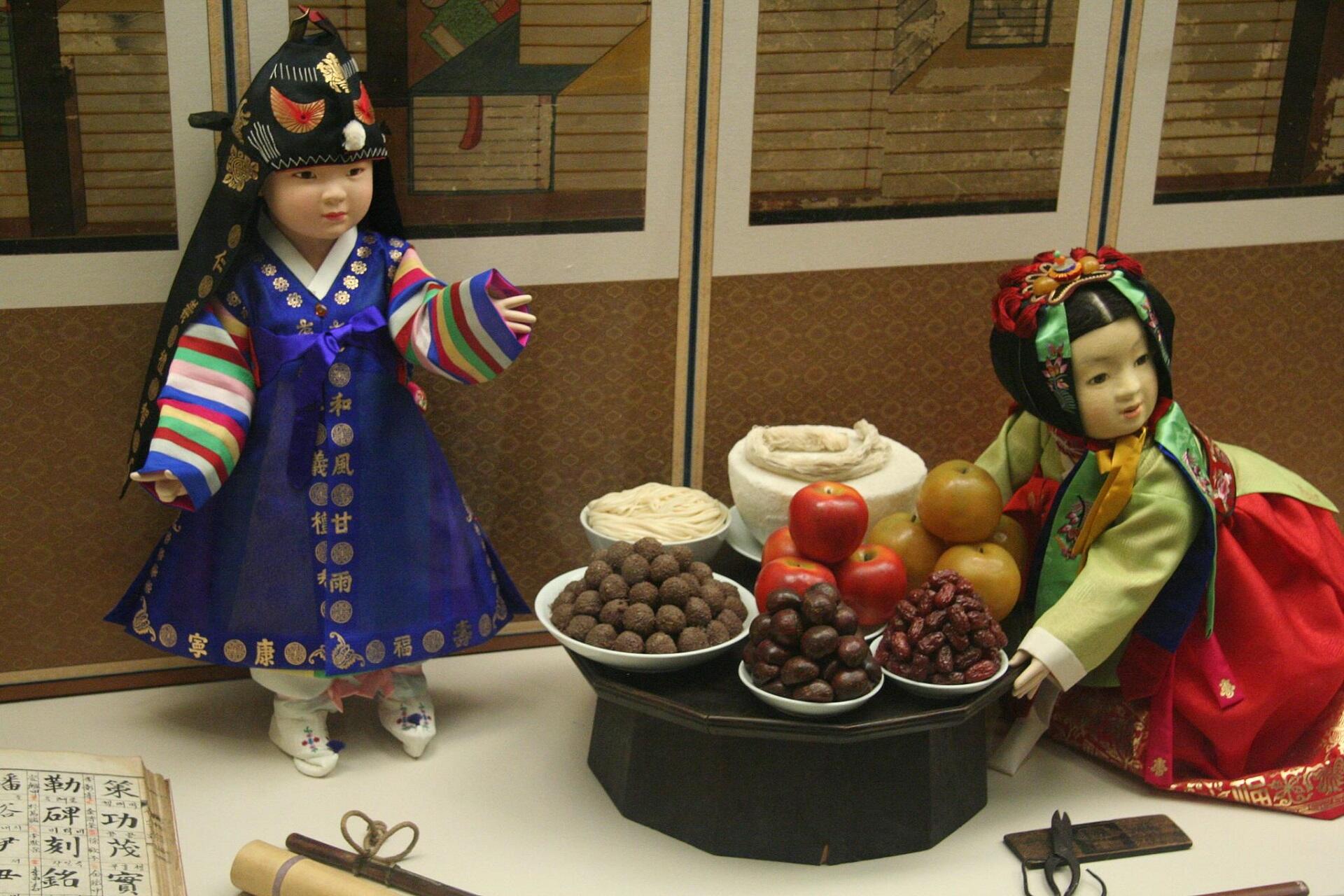
The custom is to dress the baby in hanbok, complete with its traditional hat.
Girls wear jobawi; boys wear bokgeon.
This birthday, called doljanchi (돌잔치) congratulates the baby on surviving its first year. As high child mortality isn't too far in Korea's past, this is a significant milestone, celebrated in lavish fashion. The hanbok serves to bring health, prosperity, and luck to the birthday boy or girl.
Hanbok in Korea Today
In South Korea, hanbok isn't merely a historical relic; it's a living part of today's culture. Korean idols wear updated versions of hanbok on their red carpet; politicians often wear hanbok to score political points4.
Besides the traditional garments we see in popular historical dramas, today's fashion designers have revamped the classic hanbok look along modern style lines. For instance, short jackets echo jeogori of old, while split-back skirts recall the chima that ancient Korean women wore with such grace.
References
- Kim, Jenny. “V&a · Hanbok – Traditional Korean Dress.” Victoria and Albert Museum, 2022, https://www.vam.ac.uk/articles/hanbok-traditional-korean-dress. Accessed 27 Sept. 2026.
- Sigiscar, Lindsay . “Hanbok | the Ultimate Guide to the Traditional Korean Clothing.” Flexi Classes Korean, 6 June 2022, https://flexiclasses.com/korean/hanbok/. Accessed 27 Sept. 2026.
- HOW KOREAN. “From Joseon to Runway: The Evolution of Hanbok.” Howkorean.Com, HOW KOREAN, 8 Apr. 2026, https://howkorean.com/en/blog/hanbok-evolution. Accessed 27 Sept. 2026.
- Hankeyoreh. “Hanbok Vs. Funeral Attire: Fashion Highlights Political Divide as Legislative Session Kicks Off.” Hankyoreh, 2025, https://english.hani.co.kr/arti/english_edition/e_national/1216564.html. Accessed 27 Sept. 2026.
Summarise with AI:
Did you like this article? Leave a rating!

 Loading...