
Avicenna, Medieval polymath
The world is divided into men who have wit and no religion and men who have religion and no wit.
In many ways, life in Modern Britain is nothing like its turbulent past, but in some respects, times are remarkably similar. Social hierarchy and degrees of privilege foment resentment and unrest. Then as now, the world is divided, though not just along the lines Avicenna suggests.
So, life in 21st Century England offers stark contrasts to the past. If you had money and the king's favour, life in Medieval England was pretty good. If you lacked those things, it was harsh (at best), and deadly, at worst. In fact, life in Medieval England was no picnic for anyone, as these events reveal:
- the violent, 40-year path to relative stability in England
- the Magna Carta and barons' grievances
- Black Death: the lethal pestilence
- the fight for the crown: the Wars of the Roses


Medieval England Timeline
In chronological terms, the Medieval period spans from the Western Roman Empire collapse, until just before Britain's Tudor Period. From the mid-5th Century - after the Romans left, until 793, our island was a collection of kingdoms, big and small. They fought each other for supremacy and resources, until the Vikings arrived.
The Medieval era covers that period, as well as Viking incursions and life under Norman rule. We detail Viking Britain's key events separately. This article covers the latter half of Medieval Britain's momentous happenings.
1087
William II rules England
A time of violence and unrest
1100
Henry I receives his crown
He brings a measure of peace and stability
1154
King Henry II receives his crown
He establishes the Plantagenet dynasty
1170
Thomas Becket murder
The King and the Church clash
1215
The Magna Carta
Limits on the King's powers; establishment of feudal rights
1265
Simon de Montfort's rebellion
Simon turns against the King
1272
King Edward I receives his crown
Launches wars against Scotland and Wales
1297
Scottish rebellion against English rule
William Wallace leads the charge
1348
The Black Death devastates England
social and economic chaos
1381
The Peasants' Revolt
for more rights and fewer taxes
1455
The War of the Roses
ushers in the Tudor Dynasty
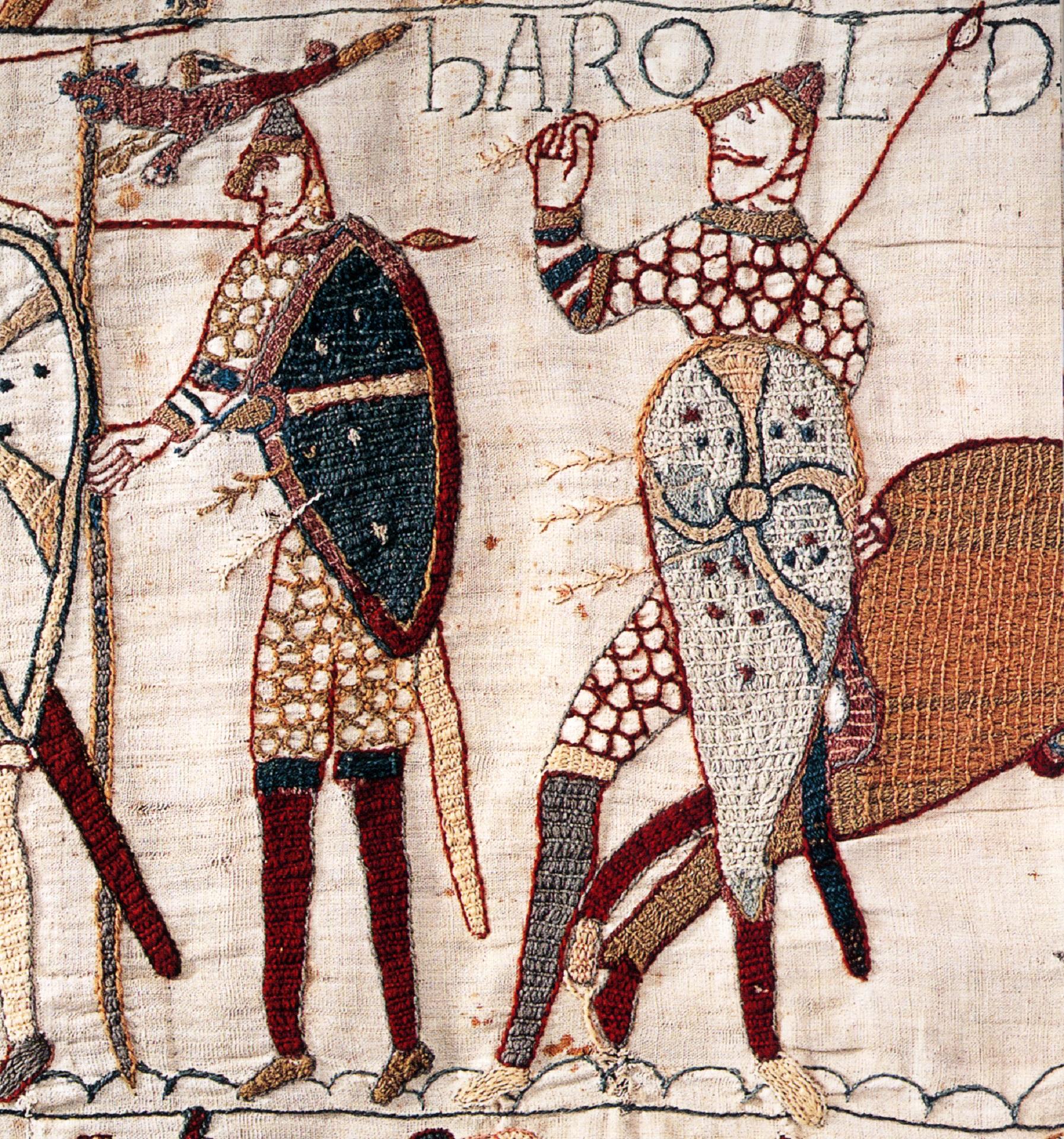
As the dust settled on the Battle of Hastings (1066), the Norman rulers began taking stock of their prize. Duke William - William the Conqueror, along with his knights, compiled their survey of England into the Domesday Book (1086). It describes the feudal nature of the English social structure at that time.
Doom - with the double-o, is this book title's original English spelling.
The 12th Century Cleric, Richard FitzNeal, wrote that it is thus-named because "its decisions were unalterable, like those of the Last Judgment, and its sentence could not be quashed."
Every social class owed a debt of service to the class above it. The upper echelons maintained the best of the land for themselves; 'forest laws' shielded hunting grounds from common access, for example. Punitive tactics first instilled, then maintained, the new laws. These and other edicts trace the comprehensive timeline of British history.
1100: Stability in Medieval England
The aftermath of William's conquest was by no means peaceful. Some had hoped that he would surrender the crown to one of the English leaders, but he expected them to submit to him. Instead, they chose Edgar II (Edgar the Ætheling) as their king, and denied William access to London.
He didn't mind taking the long way into town. Doing so gave him the chance to collect a few more submissions, and wage a few more battles. The English finally relented, once he reached Berkhamshead. They proclaimed him the King, and crowned him at Westminster Abbey on Christmas Day, 1066.
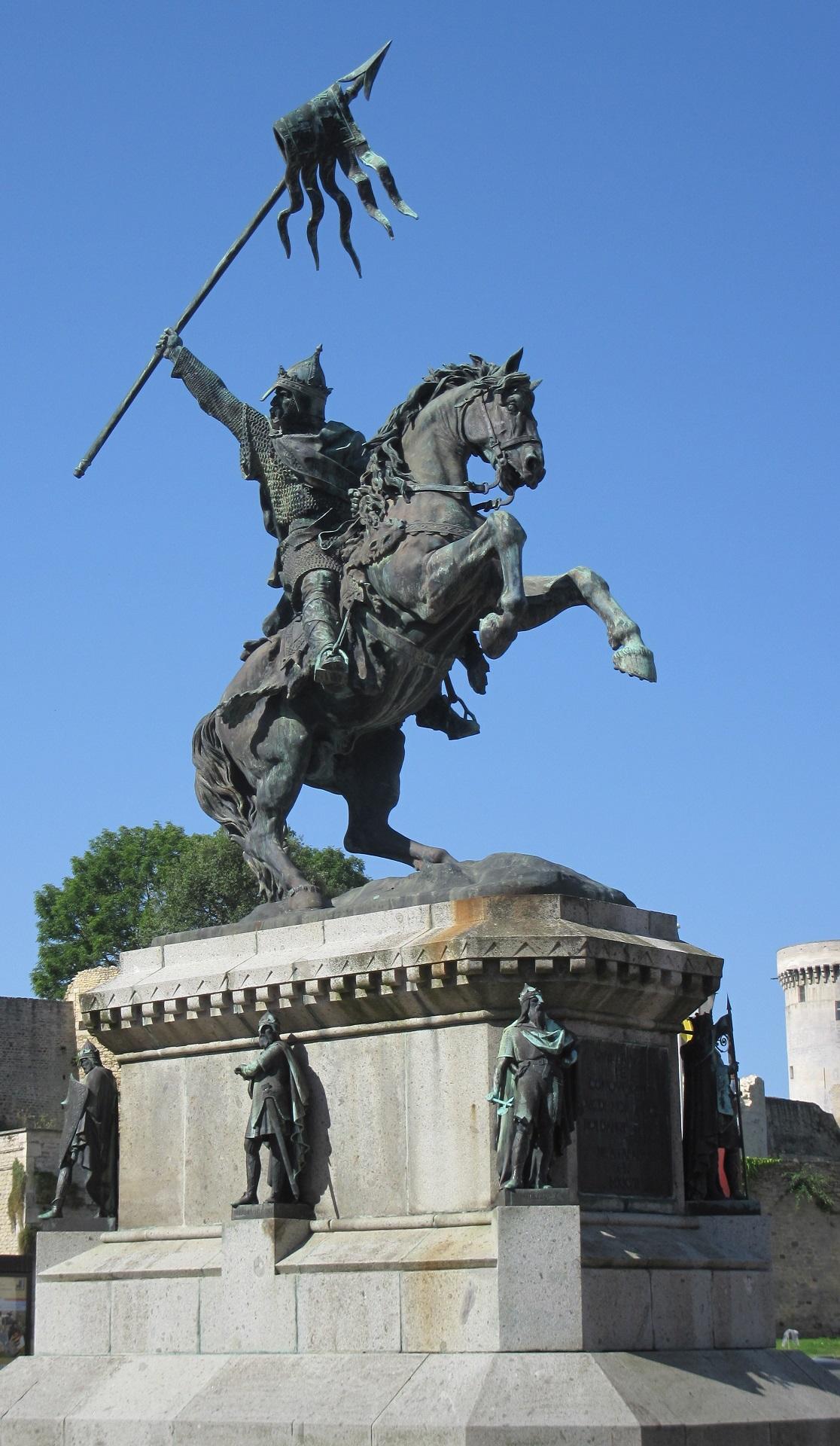
Historical records show they did so reluctantly. He reigned for just under 21 years, a period marked with rebellion and discontent. The king wanted a steady supply of men to fight, and money to fill state coffers. He spent lavishly - on castles, keeps and mottes.
His son and successor, William II, was even less popular, if such could be possible. Still, he proved to have keen instincts, as his father did, so the people tolerated him. His rule ended abruptly, after he caught an arrow while hunting. Plenty of circumstantial evidence points to murder, but that speculation has never found conclusive proof.
The king's younger brother, Henry I, quickly took the throne. He promised he would change the dead king's destructive policies, and implement more effective government agencies. He instituted the Royal Exchequer, a function that underpins our government today. In fact, during 20th Century Britain, this department was crucial to the British war efforts.
1215: The King-and-Baron Entente
Throughout their reign, Norman kings maintained their power and position in Normandy, as well. In itself, that was a bone of contention between the English and their monarchs. They didn't want their wealth - or their warriors, spent in France.
By the time Richard the Lionheart (Richard I) ascended to the throne (1189), they'd had about enough of that. He was always abroad, or on some crusade, leaving his regent in charge.
However, the polity lacked any mechanism to restrain their king. When Richard I's younger brother took the throne in 1199, they suffered more of the same.
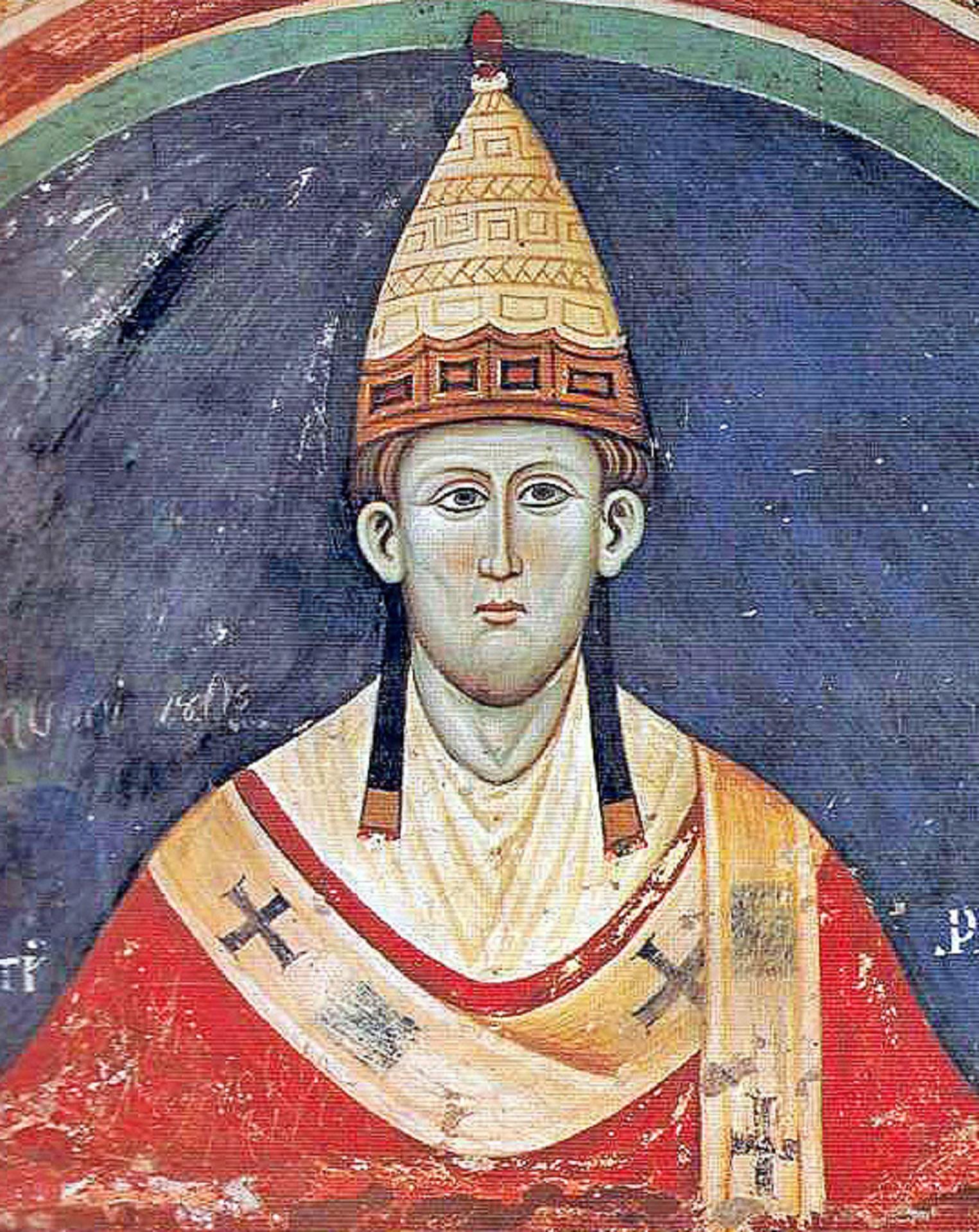
The barons revolted. They enlisted the Church to draft a charter that would protect them from imprisonment and seizure of their riches. This document also limited the amount of feudal tax they would pay, and delivered access to impartial justice to settle disputes. The Archbishop of Canterbury, who wrote the charter, made sure to include church rights as an added protection.
Barons forced King John to sign the Magna Carta in 2015 and then, ignored its mandates. The king did too, which led Pope Innocent III to nullify it, just months after its signing. The landowners grew incensed; thus started the first Baron's War (1215), which ended in 1217.
Monarchs are not accountable to politics or the Pope.
They are not subject to the will of the people, regardless of their social class.
Any attempt to restrict a king's power runs contrary to God's will.
The Divine Right doctrine explains why the Pope voided the document; we're left to guess why the barons ignored their hard-won protections. However, the record shows that, after King John died, his successor's regent reissued the charter (in 1216).
He had watered down most of the protections, and removed some of the more radical content. By the time Henry III came of age to take the throne (1227), the baronies were inflamed.
Simon de Montfort led a particularly brutal rebellion in 1265. Strangely enough, it gave rise to a passion for chivalrous heraldry, fuelled in no small part by legends of King Arthur.
1348: Medieval England's Black Death
Religion created an island of tranquillity amidst all that revolt. During the 12th and 13th Centuries, charity initiatives picked up the pace, offering the sick and poor some level of succour. This care encouraged society-building among the lower classes; soon, commerce flourished.
Towns and cities grew, thanks to these activities. As society thrived, order established itself. Unfortunately, those population centres became disease vectors. No instance of such proves that more than The Plague.
The seventh year after it began, it came to England and first began in the towns and ports joining on the seacoasts ...
Walter of Swinbroke
The Black Death first ravaged Europe, during the mid-14th Century. As Walter reports in the Chronicon Angliae, it took a few years to arrive at English shores. When it did, the devastation was immense. His account continues with: "... and finally it spread over all England and so wasted the people that scarce the tenth person of any sort was left alive."
Besides the loss of life, the greatest blow was economic. Commerce slowed, and the remaining workers demanded higher wages for their increased workload. Their resentment foreshadowed workers' ire during the period of Victorian inventions. That was another time when 'bosses' wanted people to work for little or nothing.
1455: The War of the Roses
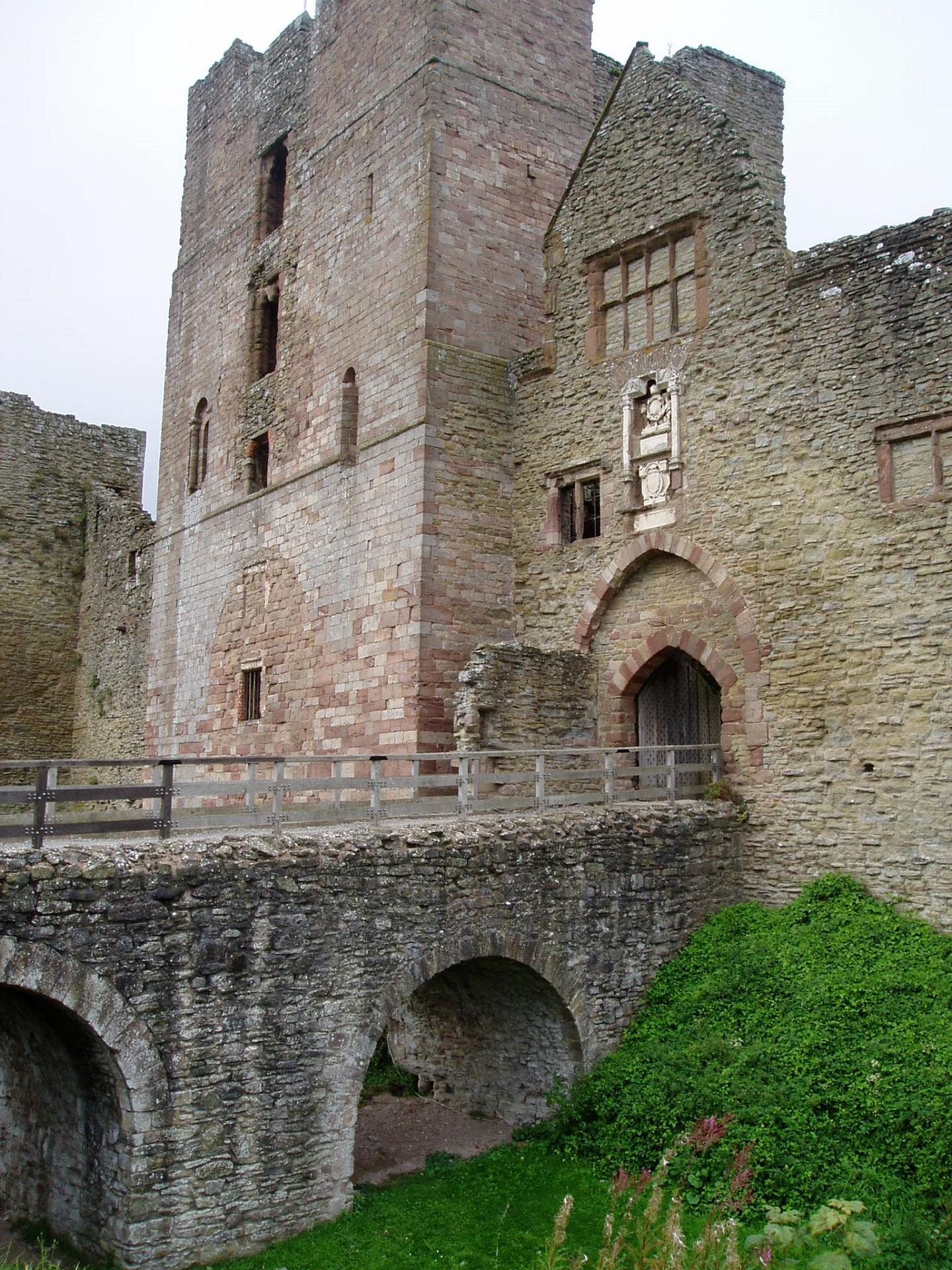
Resentment remained an ever-festering sentiment throughout Medieval England. Barons resented kings, serfs resented lords, and the monarchy and church resented everyone. Power rivalries were this ill will's most bitter flavour.
Incomplete records prevent today's historians from positively identifying seeming instances of regicide. Or, the writing is ambiguous enough to cast doubt on whether such was the case.
Still, our history is littered with enough questionable ends of kings to make murder plausible, at least sometimes. One unmistakable period of dissatisfaction with royalty spanned from 1455 to 1485.
The crown changed hands six times, with Edward IV finally emerging victorious. His first stint on the throne (1461-1470) ended with his brother's power-grab. He reclaimed it a year later.
These Wars of the Roses, the years-long fight between Yorkists and Lancastrians, closed out Medieval England. The conflict ended the Lancaster male-heir line, essentially ceding the throne to the rise of the Tudor Dynasty.
Summarise with AI:
Did you like this article? Leave a rating!

 Loading...