

Becoming a doctor is a long road, but every aspiring doctor in the UK has to start somewhere. For most students, that means earning a medical degree and spending several years learning the practical skills needed to care for a variety of patients.
All in all, learning medicine is rather different to most university subjects, with a sizeable chunk of the time spent learning hands-on in clinical environments, rather than solely listening to in-person lectures while preparing for exams. This guide takes you through the ins and outs of the whole journey, from choosing the right medical degree and meeting the entry requirements for applying for medical school and understanding where to go after graduation (like becoming a doctor).


What Is a Medical Degree?

If you've spent any time looking through UK university medicine courses, you may have noticed something slightly different: they don't all lead to a qualification with the same name.
Depending on your chosen university, you could graduate with an MBBS, MBChB, BMBS, or MB BChir. Despite the different letters, they're all forms of a primary medical qualification (PMQ) and can provide the academic qualification needed to enter the next stage of the UK medical pathway.
| Medical degree | Full title | Where you might see it |
|---|---|---|
| MBBS | Bachelor of Medicine, Bachelor of Surgery | Used by universities including Imperial College London and UCL |
| MBChB | Bachelor of Medicine, Bachelor of Surgery | Common at universities including Birmingham, Manchester and Edinburgh |
| BMBS | Bachelor of Medicine, Bachelor of Surgery | Used by universities including Nottingham and Southampton |
| MB BChir | Bachelor of Medicine, Bachelor of Surgery | Awarded by the University of Cambridge |
Is a Medical Degree the Same as an MD?
There's also another distinction worth knowing. In the UK, qualifications such as the MBBS and MBChb are primary medical qualifications. This means they aren't the same qualification as the Doctor of Medicine (MD) commonly associated with medical school in the United States.

Generally, the two countries have a pretty different approach to medical education as a whole. In the US, students normally have to complete an undergraduate degree before entering medical school for an MD. Meanwhile, here in the UK, students can enter an undergraduate medicine course as soon as they finish school or college - so long as they meet their chosen university's admission requirements.
The General Medical Council (GMC) oversees undergraduate medical education in the UK and determines which institutions can award recognised UK primary medical qualifications. If you're comparing medical schools, make sure you check the GMC status of the course alongside its entry requirements, teaching style and location.
Types of Medicine Study Routes in the UK

As a rule, there isn't a single route into medicine. Generally, your options are going to differ a little depending on things like your overall level of education, as well as the subjects you've studied for, and your personal and educational circumstances too. Let's take a look at the most common routes UK students take below:
Want to study medicine in the UK but come from abroad? Fortunately, international students can apply to many UK medical degrees through the same routes listed above. That being said, make sure you check your chosen university's requirements for overseas qualifications and English language ability, as you may need to provide evidence through a test such as IELTS.
Medical Degree Entry Requirements in the UK
Getting onto any sort of medical degree in the UK is super competitive, and obtaining good grades is only one small part of the picture. So, what else do you need to land a place at medical school?

✅ Medical Degree Entry Requirements Checklist
- Good academic results - medical courses commonly ask for high grades at A-level, Scottish Higher/Advanced Higher, IB, or an accepted equivalent qualification
- Suitable GCSEs- typically at least 5 to 8 GCSEs at grade 7 or above, including English language, mathematics, and sciences. Though this is highly variable depending on your place of study1
- Work experience/insight into medicine - volunteering or working in a caring role can give you a better idea of what a career in medicine is actually like
- UCAT - many UK medical schools also use the University Clinical Aptitude Test as part of their admissions process
- Interview - shortlisted applicants normally go through the medical school's interview process, which may include an MMI or another interview format.
What Is the UCAT?
The University Clinical Aptitude Test (UCAT) is one of the main admissions tests you'll come across when applying for medicine in the UK2. If your chosen university requires it for 2027 entry, you'll need to take the test during the 2026 testing period.
But don't panic, you aren't expected to know a degree's worth of medicine before you've even applied! Instead, the UCAT looks at:
The BMAT was discontinued in 2023, so you'll still see it mentioned in older medical-school advice even though it is no longer part of current UK admissions. Universities that previously used the BMAT have moved to other arrangements, with Oxford now using the UCAT for Medicine.
List of Medical Schools in the United Kingdom
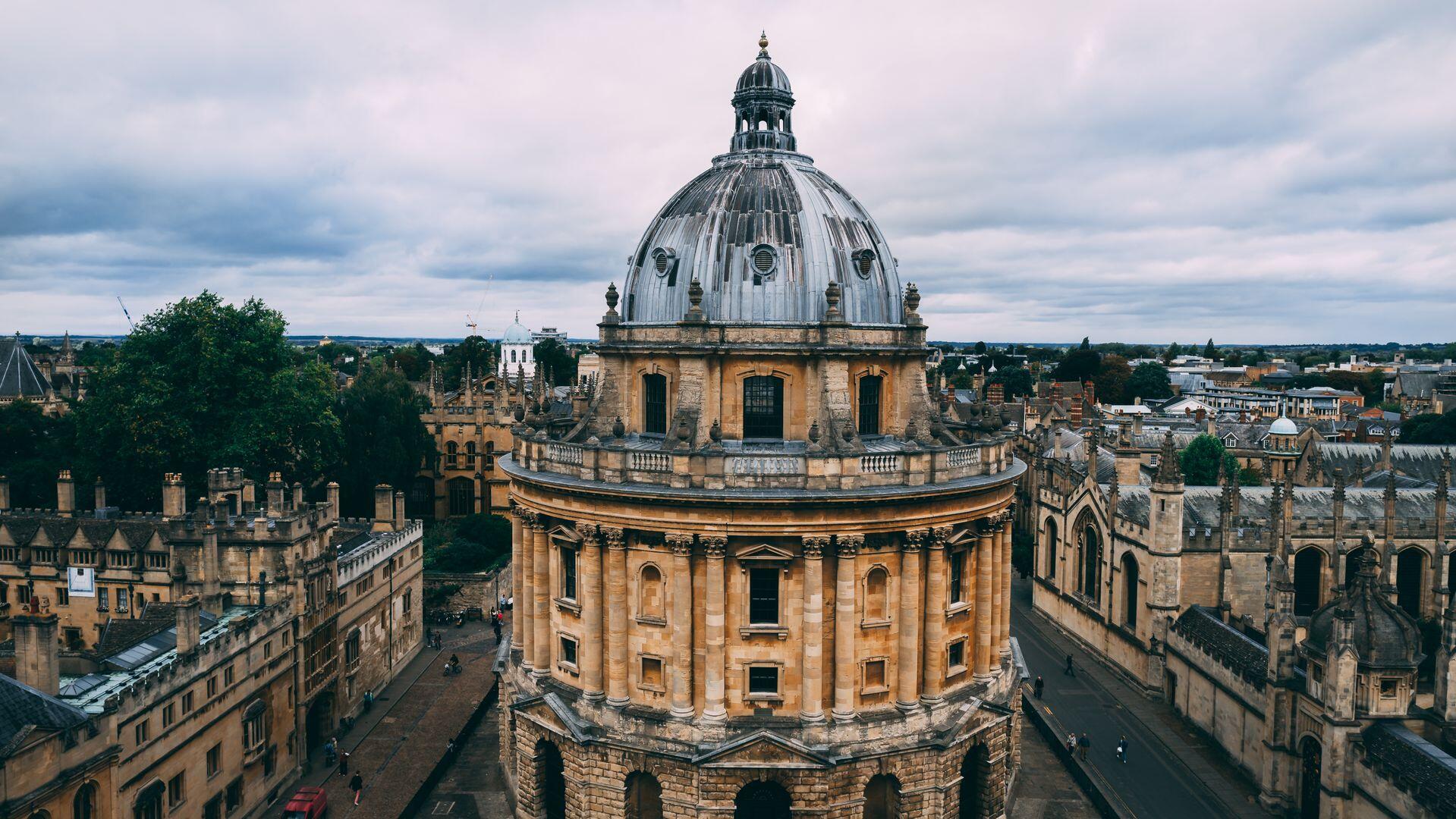
With medical schools being spread far and wide across not only England, but also Scotland, Wales, and Northern Ireland, there's a long list of places to consider when deciding where to study.
England
England has by far the widest choice of medical schools in the UK, ranging from long-established courses at Oxford and Cambridge to newer medical programmes. There's also plenty of variety in course length, with most undergraduate degrees lasting five or six years and several universities offering separate graduate entry options.
| Medical school | Location | Degree | Length | Admissions test |
|---|---|---|---|---|
| University of Cambridge | Cambridge | MB BChir | 6 years | UCAT |
| University of Birmingham | Birmingham | MBChB | 5 years | UCAT |
| King's College London | London | MBBS | 5 years | UCAT |
| University of Manchester | Manchester | MBChB | 5 years | UCAT |
| University of Nottingham | Nottingham | BMBS | 5 years | UCAT |
| University of Oxford | Oxford | BM BCh | 6 years | UCAT |
Scotland
Head north, and the choice becomes a little smaller, with medical degrees available at Aberdeen, Dundee, Edinburgh, Glasgow and St Andrews. Course structures aren't identical either: Edinburgh's standard medical degree runs for six years, while Aberdeen, Dundee and Glasgow offer five-year programmes. Scotland is also home to ScotGEM, its graduate-entry medicine programme.
| Medical school | Location | Degree/course | Length | Admissions test |
|---|---|---|---|---|
| University of Aberdeen | Aberdeen | MBChB | 5 years | UCAT |
| University of Dundee | Dundee | MBChB | 5 years | UCAT |
| University of Edinburgh | Edinburgh | MBChB | 6 years | UCAT |
| University of Glasgow | Glasgow | MBChB | 5 years | UCAT |
| University of St Andrews | St Andrews + partner medical school | MBChB Medicine pathway | 6 years | UCAT |
Wales
Wales currently offers medicine through Bangor, Cardiff and Swansea. Swansea stands out a bit because its main medicine programme is aimed at graduates, while Cardiff and Bangor provide undergraduate routes.
| Medical school | Location | Degree | Length | Admissions test |
|---|---|---|---|---|
| Bangor University – North Wales Medical School | Bangor | BMBS | 5 years | UCAT |
| Cardiff University | Cardiff | MBBCh | 5 years | UCAT |
| Swansea University | Swansea | MB BCh | 4 years | UCAT / GAMSAT / MCAT |
Northern Ireland
There are two main universities to consider in Northern Ireland: Queen's University Belfast and Ulster University. They offer quite different routes, with Queen's providing a five-year undergraduate medical degree and Ulster focusing on four-year graduate entry medicine.
| Medical school | Location | Degree | Length | Admissions test |
|---|---|---|---|---|
| Queen's University Belfast | Belfast | MB BCh BAO | 5 years | UCAT |
| Ulster University | Derry~Londonderry | MBBS | 4 years | Graduate-entry admissions requirements |
Don't forget to check the current GMC status of the course you're looking at, especially if it's a newer medical programme. The GMC keeps an up-to-date list of organisations that are able to award medical degrees, as well as new schools still going through its quality assurance process
How to Apply for a Medical Degree
If you're hoping to start a medical degree in 2027, the application process is already underway. Most applications are made through UCAS, but medicine has an earlier deadline than the majority of undergraduate courses, so leaving everything until the autumn isn't a great idea.
📅 Medical Degree Application Timeline for 2027
September 2026
Sit the UCAT
If your chosen medical schools require the UCAT and you haven't taken it yet, there's still time. Testing finishes on 24 September, although you'll need to have booked your test by 15:00 on 16 September 2026.
1 September 2026
UCAS submissions open
Although you can work on your application beforehand, 1 September is the first day completed applications for 2027 undergraduate entry can be submitted to UCAS.
September - October 2026
Finalise your choices
Medicine applicants can choose up to four medicine courses. You can then use your fifth UCAS choice for a different subject if you want an alternative option.
15 October 2026
Medicine application deadline
Your application for most 2027 medicine courses must reach UCAS by 18:00 UK time on 15 October to guarantee equal consideration. This is also the deadline for applications to Oxford and Cambridge
Late 2026 onwards
Interviews begin
If you're shortlisted, you'll usually be invited to an interview. Many medical schools use Multiple Mini Interviews (MMIs), while others use panel interviews or their own interview format.
✍️ Preparing Your Medicine Personal Statement
For 2027 entry, the UCAS personal statement has now been split into three questions.
- 1. Why do you want to study this course or subject?
- 2. How have your qualifications prepared you for this course or subject?
- 3. What else have you done to prepare outside formal education, and why are these experiences useful?
These three answers share an overall limit of 4,000 characters, and each answer must contain at least 350 characters. If you're keen to impress, avoid just listing your grades or work experience. Instead, explain in detail what you've learned from these experiences and how they've helped you prepare for studying medicine.
What You Study During a Medical Degree
As mentioned earlier, a medical degree rarely involves simply sitting in lecture halls or being buried in textbooks. As your course progresses, you should spend more and more time working with actual patients in clinical settings.

Bear in mind that when exactly this clinical experience begins rests entirely on the shoulders of your university and course. Some medical degrees introduce patient contact pretty early on while others prefer putting a greater emphasis on scientific study initially.
🧠 Learning the science
Early medicine takes a magnifying glass to the science behind the human body and disease. You'll learn the ins and outs of things like anatomy, physiology, pathology and pharmacology. All of which will help you with speaking with and examining patients.
🏥 Clinical experience
During clinical placements, you'll find yourself working in places including hospitals and GP practices. Here, you'll be under the wing of experienced doctors and other healthcare professionals like nurses.
🗣️ Becoming a safe doctor
While knowing how the body works is obviously a crucial part of being a doctor, having great communication skills and practical clinical skills is just as important too. During your course, you'll learn about medical ethics and professionalism as well.
How Are Medical Students Assessed?
Don't expect one huge exam at the end of your medical degree. Generally, universities use a mixture of assessments throughout the duration of the course, which can include written exams, portfolio work, practical and clinical assessments, and OSCEs.
An OSCE (or Objective Structured Clinical Examination) is a hands-on-assesment where students move through a number of timed stations. At each one, you might be asked to examine a patient, take a medical history, explain something to a patient, or demonstrate a clinical procedure. At the same time, an examiner will be there to assess how well you do.
How Are Medical Degrees Taught?
| Teaching style | What does it mean? |
|---|---|
| Integrated | Medical science and clinical learning are taught alongside each other, so you can start connecting what you learn in class with patient care from relatively early in the course. |
| Traditional | The earlier years focus more heavily on the scientific side of medicine, followed by more clinical training later in the course. |
| Problem-based learning (PBL) | Students learn through medical cases or problems, often working in small groups to research the topic, discuss the case and work through possible solutions. |
What Happens After a Medical Degree?

Graduating with a medical degree under your belt is a major step, but there's still further training to go before you're allowed to practice independently. After graduating, eligible UK medical graduates normally apply for provisional GMC registration with a licence to practise, which allows them to begin FY1. This is the first year of the two-year UK Foundation Programme
FY1 - Foundation Year 1
During FY1, you're working as a doctor under supervision and gaining experience through different clinical placements. After completing FY1 successfully, doctors can become eligible for full GMC registration.
FY2 - Foundation Year 2
During FY2, you'll take on more responsibility for assessing patients and planning their care. You'll still have senior doctors to turn to for support while gaining experience in different clinical areas and dealing with a wider range of cases.
After FY2 - Further training
From here, doctors can apply for GP or specialty training. There are plenty of directions this can take you, including surgery, hospital specialties and careers combining clinical medicine with academic work.
For a standard route into medicine, it can take up to seven to eight years: most students are looking at around five to six years at medical school followed by the two foundation programme years. Becoming a doctor in the UK isn't easy, and getting a place at medical school is only the first hurdle. The difficulty isn't only academic either. Medical students and junior doctors need to cope with long days, responsibility for patients and learning in busy clinical environments.
References
- British Medical Association. (2024, November 14). Applying to medical school. The British Medical Association Is the Trade Union and Professional Body for Doctors in the UK. https://www.bma.org.uk/advice-and-support/studying-medicine/becoming-a-doctor/applying-to-medical-school
- Mind, M. (2026, April 16). Medical school entry requirements. Medic Mind. https://www.medicmind.co.uk/medicine-ucas-guide/medical-school-entry-requirements/
Summarise with AI:
Did you like this article? Leave a rating!

 Loading...