

"Musicals don't get enough credit for being so surreal. It's like an alternate universe." -Ezra Koenig
In the world of musical theatre, not all shows follow the familiar path of a straightforward narrative with catchy songs and predictable plots. Concept musicals break this mould, prioritising a central theme or idea over traditional storytelling.
These innovative productions invite audiences to engage with deeper, often abstract themes, offering a unique and thought-provoking theatrical experience. In this article, we’ll dive into what defines a concept musical, its origins, and why it continues to captivate audiences and creators alike.
A concept musical is a type of musical theatre where the show's theme, message, or concept takes precedence over a traditional narrative or plot. In these musicals, the story is often secondary to the exploration of a central idea or theme, with the structure and presentation of the musical elements being more experimental and abstract. Examples include "Company" and "Cabaret", where the focus is on thematic exploration rather than a linear storyline.
But, why did concept musicals become popular, and how did they develop? Here's a quick overview of concept musicals. You'll find more details about concept musicals and examples throughout the article:
| Aspect | Description |
|---|---|
| Definition | A type of musical where the central theme or concept is more important than the plot or story. |
| Focus | Thematic exploration, ideas, and abstract concepts rather than a linear narrative. |
| Structure | Often non-linear, fragmented, or episodic; can include unconventional storytelling techniques. |
| Examples | "Company", "Cabaret", "Assassins", "A Chorus Line", "Follies". |
| Origins | Emerged prominently in the 1960s and 1970s, with roots in experimental theater and the changing social landscape. |
| Audience Experience | Engages viewers intellectually and emotionally, often challenging conventional expectations of musicals. |
| Notable Creators | Stephen Sondheim, Kander and Ebb, Bob Fosse, Harold Prince. |
| Impact | Expanded the boundaries of musical theater, influencing contemporary productions and the development of new theatrical forms. |
Take acting classes on Superprof here.


How and Why Did Concept Musicals Develop?
Before the middle of the 20th century, you could say that concept musicals were not talked about or even conceptualised. But, according to historians and lovers of the theatre, concept musical shows emerged as a genre in the 1960s. The 1960s in the United States, where all Broadway productions originate from, was a time of great social upheaval, injustice, and civil turbulence.
You could say that writers and composers had a lot to write about during that time!
In the middle to the latter half of the 20th century, audiences were growing tired of the ever-more formulaic fare offered up by the likes of Rodgers and Hammerstein. As a result, they developed significant musicals such as The Sound of Music and The King and I.
Likewise, Learner and Loewe, the brilliant minds behind My Fair Lady and Camelot, made a name for themselves by setting stories to music, generally with the same topics of love and righteousness and the same happy, feel-good mood. At the time, the works of Learner and Lowe and Rodgers and Hammerstein were greatly praised and helped people escape from their harsh versions of reality; they will forever be recalled as pillars and legends in the musical theatre world.
However, as a result of seemingly repetitive storylines, theatre attendance went on a slow decline. When The Fantasticks debuted off-Broadway, it wasn't until 1961 that interest in such theatrical performance was renewed.
In the same year, audiences were treated to Stop the World – I Want to Get Off!, the oddly prescient tale of Littlechap, a man who is never quite satisfied with his life. For both of these shows, the theme was reaching emotional maturity… if such a thing is even possible when discussing loud and flamboyant musicals!
Stop the World - I Want to Get Off! and The Fantasticks did not narrate a story as much as they presented a series of anecdotes strung together, bringing a new flavour to the musical stage that audiences hadn't seen before. And, well, they loved it.
While these two shows firmly established the term "concept musical" as a legitimate formula for the American musical, the genre didn't truly take off until nearly a decade later, with the production of Hair, which we will discuss in further detail later on this article.
The introduction of the concept musical was a revolution in stage shows that broke away from the traditional "shiny", "always happy", "I don't have a care in the world" style of musical theatre that was commonly seen in shows like Singin' In The Rain or Mary Poppins.
Concept musicals also opened the door to a new generation of playwrights such as Bob Fosse and Stephen Sondheim; these men have greatly influenced 21st-century musical theatre composers.
In the following paragraphs, we'll take a look at some of the most widely recognised examples of concept musicals to jog our memories and educate ourselves.
Search for some of the most effective acting classes in Birmingham here.
To better categorise musicals, you need our companion article, wherein the differences are all laid out.
What Is The Difference between Book Musicals and Concept Musicals?
Since different types of musicals are present in theatres around the world, some of you might ask yourself, what is the difference between book musicals and concept musicals? Arguably two of the most common genres of musicals, book musicals and musical concept shows, are structured uniquely and have their origins from distinct places.
Book musicals and concept musicals are two distinct types of musicals with different structures and creative approaches.
Book musicals focus on a cohesive narrative, where songs and musical numbers are integrated into the plot to advance the story. The structure is linear, with a clear beginning, middle, and end. Examples include Showboat, Guys and Dolls, and Oklahoma!.
In contrast, concept musicals prioritise a central theme or idea over a traditional narrative. The structure can be non-linear, often using metaphors and abstract elements to explore the theme. The plot, if present, may be fragmented or non-chronological, as seen in shows like Company and Cabaret.
The key difference is that book musicals are plot-driven with a linear structure, while concept musicals focus on thematic exploration, often with a non-linear or experimental approach.
Concept and book musicals remain popular yet are at the threat of being replaced by jukebox musicals that audiences from the 21st century adore since they can sing along and move to the beats.
How does the concept musical differ from revue musicals?
Concept Musical Examples
| Musical | Year | Composer/Lyricist | Notable Themes/Concepts |
|---|---|---|---|
| Company | 1970 | Stephen Sondheim | Marriage, relationships, and urban loneliness |
| Cabaret | 1966 | John Kander, Fred Ebb | The rise of Nazism, the illusion of freedom, decadence |
| A Chorus Line | 1975 | Marvin Hamlisch, Edward Kleban | The lives and struggles of Broadway dancers |
| Assassins | 1990 | Stephen Sondheim | The motivations and stories of those who attempted to assassinate US presidents |
| Follies | 1971 | Stephen Sondheim | Nostalgia, the passage of time, and the illusion of past glories |
| Pacific Overtures | 1976 | Stephen Sondheim | The Westernization of Japan and its impact on culture |
| Chicago | 1975 | John Kander, Fred Ebb | Corruption, celebrity culture, and the American justice system |
| Pippin | 1972 | Stephen Schwartz | The search for meaning and fulfillment in life |
| Hair | 1967 | Galt MacDermot, Gerome Ragni, James Rado | Counterculture, anti-war sentiment, and the 1960s youth movement |
| Cats | 1981 | Composer: Andrew Lloyd Webber Lyricist: T.S. Eliot (based on his book Old Possum's Book of Practical Cats) | Identity, memory, the nature of life, death, and rebirth |
| West Side Story | Leonard Bernstein, Stephen Sondheim | Love, prejudice, gang violence, cultural conflict, tragedy |
To get a better idea of the genre of concept musicals, the best thing is to identify them and see how they are conceptual. Let's take a look in more detail at some of the most lauded concept musicals of all time.
You can discover some of the best acting classes in Nottingham here.
Hair: The First "Concept Musical"
First brought to life on the off-Broadway stage in 1967 and then on Broadway in 1968, the musical Hair is considered the first significant concept musical by many experts.

Hair was a rock musical that explored common themes during the hippie counterculture and sexual revolution of the 1960s. In addition, many of the songs in Hair came from the anti-Vietnam War peace movement that was sweeping the United States in the late 1960s.
Conceptualised and transformed into a book and lyrics by Gerome Ragni and James Rado, Hair was highly controversial at the time and the subject matter and use of profanity in the songs' lyrics, which were developed by Galt MacDermot, made it a musical like no other.
Hair is considered a concept musical because it doesn't follow a plotline but instead features a lot of metaphor and symbolism and depicts the everyday angst and experiences during the "peace and love" movement.
Improve yourself with children's drama classes near me here on Superprof.
Sign up for acting classes here on Superprof.
A Chorus Line: The Quintessential Concept Musical
One of the most popular and adored musicals to ever hit the Broadway stage has got to be A Chorus Line. None only are the songs well-written, the music beautifully composed, and the acting superb, but the stage show, A Chorus Line, sticks so close to the rules of concept musicals that it has been called by many the most "quintessential" concept musical.
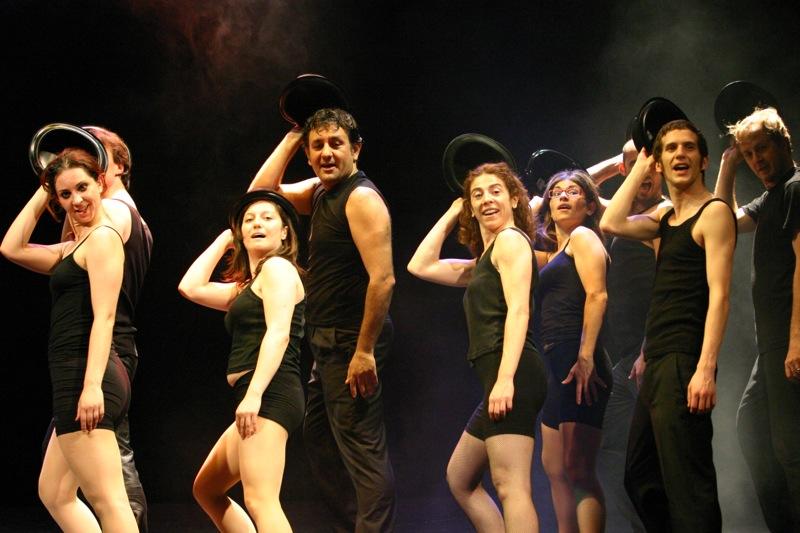
A Chorus Line premiered on Broadway in 1975 and was composed by Marvin Hamlisch and written by Edward Kleban.
The musical centres on 17 Broadway dancers auditioning for spots to be part of the chorus line. The idea of the stage play and its metaphors make it a perfect example of a concept musical. A Chorus Line is significant to many 20th and 21st-century performers since the plot discusses the events that shaped the dancers to want to work in the performing arts and be on stage in front of large audiences.
The 1975 Broadway musical won nine Tony Awards and a Pulitzer Prize for Drama. A Chorus Line was a huge box-office hit and has been shown on plenty of renowned stages worldwide.
Check for exceptional acting classes in London here.
Cabaret: A Political Statement
Set in 1931 Germany, Cabaret explores the seamy underside of life at the Kit Kat Klub, underscored by a doomed romance between a Gentile and a Jew as the Nazi party strengthens its hold on Germany.
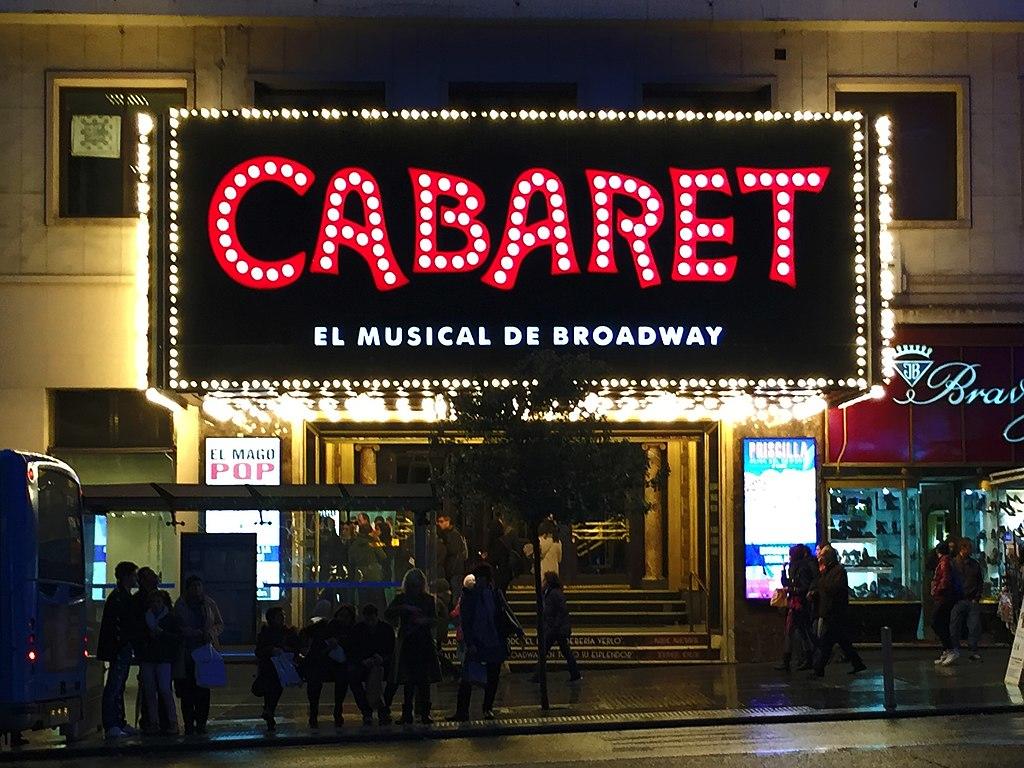
This musical's origins are convoluted. John Masteroff found inspiration for his book in a play titled I Am a Camera and The Berlin Stories, written by Christopher Isherwood.
Isherwood melded both stories into a show with rather dark undertones, for which John Kander wrote the music and Fred Ebb wrote all of the song lyrics.
While the narrative focuses on American Cliff Bradshaw and his relationship with British cabaret singer Sally Bowles, happenings at the Kit Kat Klub serve to remind the audience of the chilling political developments of the time.
Cabaret was made into a critically acclaimed and highly popular film in 1972 that exponentially boosted Bob Fosse and Liza Minelli's name recognition.
Book musicals go by many names; see how many you know!
Chicago: Celebrity Criminals on Centre Stage
Set in Chicago during the Roaring Twenties, the original story was written by beat reporter Maurine Dallas Watkins. She had been assigned to cover the courthouse and report on the cases decided there, and her satirical play drew on some of the most famous issues she had written about for the newspaper.
By the time Chicago made its way to Broadway, director and choreographer Bob Fosse was well-entrenched in musical theatre circles and well-known by many for his artistic abilities.
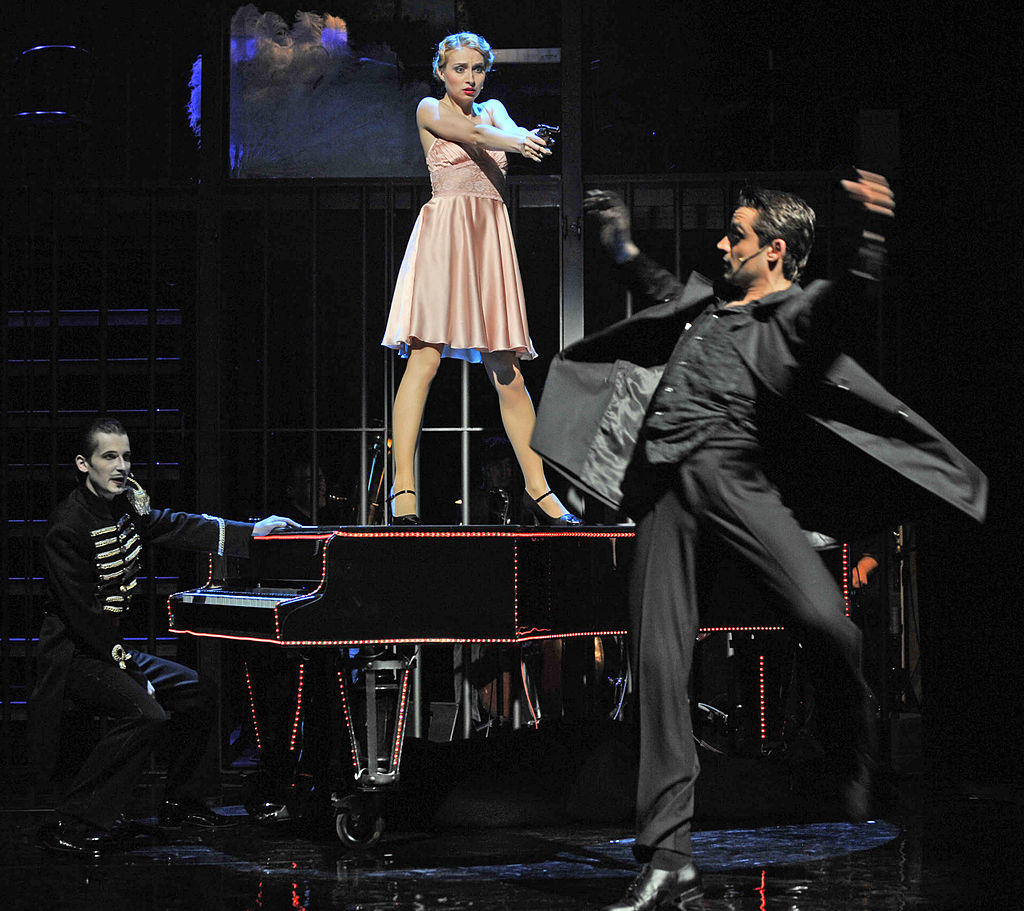
The Broadway production of Chicago that initially commenced in 1975 and was revived in 1996 holds the record for the longest-running musical revival in Broadway history. In addition, it has won multiple awards, among them Tony Awards for best direction and acting.
Ironically, as much as the concept musical was meant to overthrow the formula of previous musical genres, Chicago established a recipe for future concept shows. Therefore, Chicago was a turning point for concept musicals in the mid-1970s. The main characters would fulfil double roles, contributing to the narrative through discourse but revealing their inner selves through song.
The film version was also an award winner since it took the Best Picture award from the Oscars in 2002 and the one for Best Musical at the Golden Globes the same year.
Join acting classes here on Superprof.
Now learn more about film musicals.
Is West Side Story a Concept Musical?
Although this musical predates the vogue era of concept shows, West Side Story is considered one of the earlier forays into this genre.
Inspired by Romeo and Juliet, Arthur Laurents wrote the story in 1957. It came to the attention of composer Leonard Bernstein, and soon the great Stephen Sondheim was recruited to write the lyrics for all of the songs.
Gangs were a relatively recent social phenomenon, as were open expressions of malcontent and resentment of immigrants; therefore, West Side Story brilliantly reflected the social issues in certain cities during the 20th century in America.
While the team had proposed a collaboration a few years before that ultimately fell through, now all of the elements were coming together to tell a story that would satisfy all of its creators. So the group set out to work, and West Side Story was created.
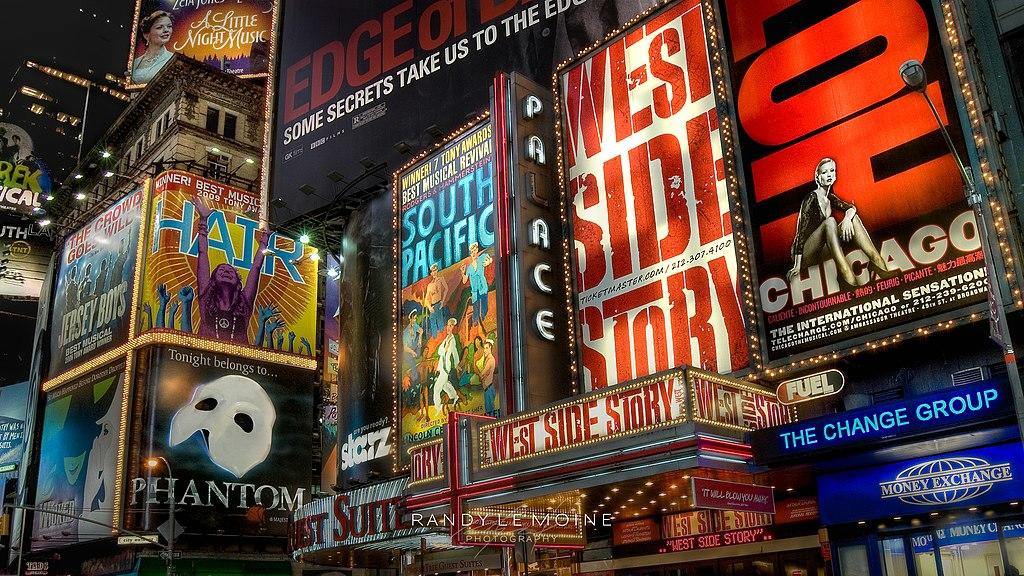
The resulting show remains a standout among Broadway musicals, winning multiple awards and having played on the most illustrious stages worldwide.
Ironically, for a story that was meant to be of forbidden love between members of rival ethnicities, fans and critics alike consider the affair between Tony and Maria only incidental to the overall message that people should get along and have compassion for one another.
Did you know that the original show, choreographed by Jerome Robbins, had a longer run in London than Broadway?
Learn more about jukebox musicals.
Is Cats a Concept Musical?
If ever there was a Broadway musical that reflected the spirit of the 80s, Cats would be it. But, of course, when people think of Broadway musicals, the first titles that come to mind are Cats or The Phantom of the Opera.
In the 1980s, the world was finally shaking off the shackles of austerity, especially in the UK and the US. There was a return to laissez-faire economics, big government was out, and agencies had more latitude to function as they intended. The 80s represented a time of freedom, experimentation and the excitement of new horizons for most people.
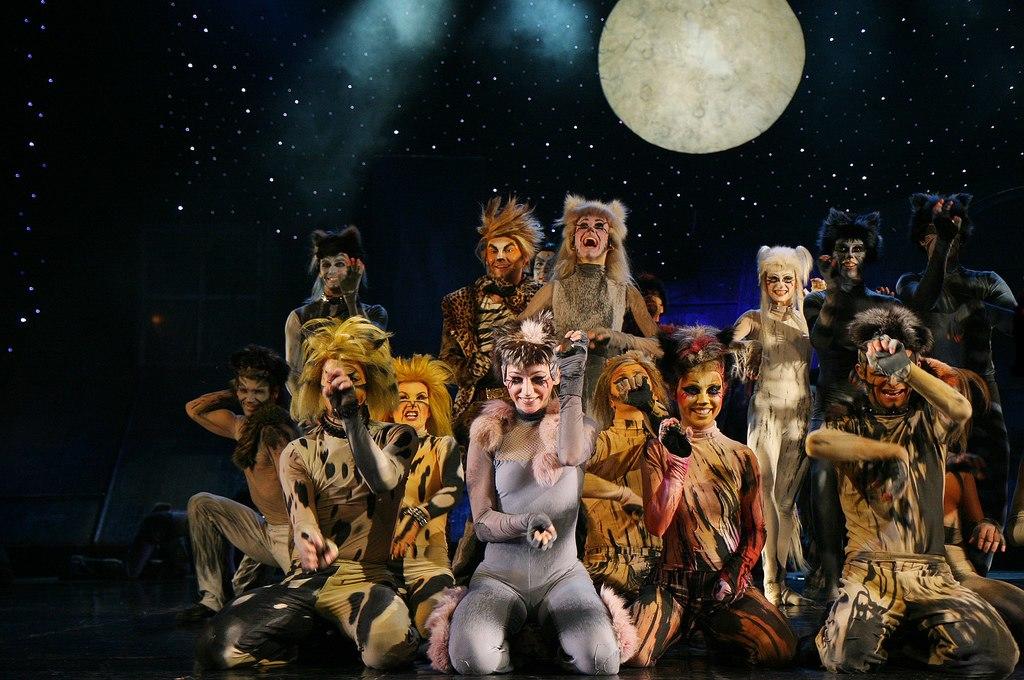
So, it's only logical that a bizarre musical such as Cats found its place in the 1980s. The plot? On a massive heap of junk, a pack of cats play out their fantasy. Then, under the moonlight, they gather for the Jellicle Ball to see who will be granted that precious extra life.
Andrew Lloyd Webber conceived of a fantastic show based on a series of poems by T.S. Eliot, the likes of which had never been seen before. Cats were everywhere, even in the audience!
Lloyd Webber, who is now considered one of his generation's geniuses, was already renowned for shows such as Jesus Christ Superstar and Evita, both of which told stories of persons who had existed. With Cats, he ventured into the realm of fantasy, giving us arguably one of the world's most popular Broadway songs of all time, the majestic Memory.
He would write other blockbusters such as The Phantom of the Opera – which premiered even as Cats still commanded large audiences worldwide.
Most importantly, we should note that, of all of Baron Lloyd Webber's productions, Cats arguably changed musical theatre. How's that? Although Cats can be considered a concept musical that doesn't focus on a linear plot, many theatre critics claimed it was the start of a new type of musical: the megamusical.
Audiences were sick of being preached to and didn't want to find a metaphor in everything they watched. Once again, like during the 1930s and 1940s, audiences wanted big entertainment that featured soaring music and poignant lyrics they could relate to.
As of 2021, the Lloyd Webber mega-musicals are the productions to outdo, though Lin Manuel Miranda's Hamilton might be the new favourite of Millennials.
In conclusion, after reading today's article, you are much more prepared to answer the question, what is a concept musical? Along with a correct response, you can highlight some of the examples of concept musicals that have shaped the current productions of musical theatre around the world.
Now find out how pop-rock musicals have to offer their audiences.
What's your favourite concept musical?
Summarise with AI:
Did you like this article? Leave a rating!


 Loading...
Well-meaning article unfortunately riddled with misinformation. “In the middle to the latter half of the 20th century, audiences were growing tired of the ever-more formulaic fare offered up by the likes of Rodgers and Hammerstein.” This could not be less true. R&H’s shows were all startlingly different. Far from being “feel good”, CAROUSEL for example takes in domestic abuse, murder, and a tragic ending. SOUTH PACIFIC deals with war and racial prejudice. You call this: “the same topics of love and righteousness and the same happy, feel-good mood.” As for audiences growing tired, R&H’s last show was their most successful.
If you want someone who repeats the same themes over and over — not to mention the same musical tropes — try Sondheim.
Yes, Broadway writers started preaching political and social clichés at audiences in the 60s, but this was hardly a positive change. R&H and L&L had liberal political views but they respected their audiences too much to feel they were uninformed idiots who needed to be lectured and bullied into agreeing with them. The idea that an artist’s job is to broadcast his or her political views come from the Victorian era — it’s why the only Victorian play that still gets done is THE IMPORTANCE OF BEING EARNEST, Wilde’s hilarious retort to his humorless, didactic peers.
Nowadays “artists” who dropped out of school in 6th grade insist on “educating” the rest of us by ranting about something they caught on CNN at the airport. Everyone is getting sick of all this sermonizing.
Woke entertainment is being rejected by audiences everywhere. If my plumber regaled me with his politics, I’d say shut up and fix the sink. And he undoubtedly knows more about society and real life than the people who make pop songs, movies and musicals today who feel their immense wealth and fame entitles them to lecture us little people about racism and climate change.
What “seemingly repetitive storylines?” MY FAIR LADY repeats PAINT YOUR WAGON? GYPSY repeats OKLAHOMA? FOLLIES is a lot more repetitive of COMPANY than any of the shows you dismiss as repetitive.
THE FANTASTICKS was only significant because it was so cheap to produce and thus ran forever in a tiny theatre. It’s deadly dull today. HAIR was only important because Walter Kerr proclaimed that rock was the future of musical theatre. (It wasn’t.) And because its producers inserted a brief nude scene to sell more tickets. Both shows were heavily discussed in the media but neither had any lasting effect on musical theatre. Rock music proved unsuitable to musical theatre because its emotional range is so limited and you usually can’t hear or understand the lyrics. “Stop the World” produced one Top 40 hit and then sank without a trace.
“…that broke away from the traditional “shiny”, “always happy”, “I don’t have a care in the world” style of musical theatre that was commonly seen in shows like Singin’ In The Rain or Mary Poppins.” First of all, both of those are movies, not shows. (Though they were adapted to the stage decades later.) “Singin’ in the Rain” is actually one of the first jukebox musicals; it contains no original songs.
“…a new generation of playwrights such as Bob Fosse and Stephen Sondheim.” Neither one was a playwright! Fosse: director/choreographer. Sondheim: music and lyrics or just lyrics. Unlike Hammerstein, Lerner, Ebb, Larson, Miranda, etc, Sondheim never managed to write the book for any show, and all of “his” shows but one were created by others and then he was brought in to add songs.
“…popular film in 1972 that launched the careers of Bob Fosse and Liza Minelli.” Really??? Minnelli won a Tony Award for starring in a Broadway musical in 1965. Fosse was already a famous Broadway director and choreographer in the 1950s.
You’re better on later musicals, although I would say the only interesting thing about a bunch of dancers dressed like CATS singing awful songs is that its mega-success showed that the main Broadway audience was now tourists, many with limited English, so they gravitated to CATS, which had no dialogue, no story, and was basically a 3 hour music video.
We both love musicals, so I’m sorry if I got too negative here, but you do repeat some persistant misinformation, e.g. R&H shows being all sweetness and light. Take care!!
Thanks so much for your detailed response, Steve. You make a lot of good points, particularly about Liza Minelli’s career only taking off in the early 70s. We will change that to ‘exponentially boosted their name recognition’. That would certainly be more apt.
However, you can’t deny that R+H followed a certain formula, no matter their subject matter. The male lead was invariably a baritone, the female lead sang in a dainty soprano. Other singing voices were cast to complement the leads. Also, regardless of the underlying story’s gravity, it was presented in an acceptable, palatable manner. Perhaps nowhere is this better demonstrated than in The Sound of Music. Nazi atrocities were barely suggested, making it seem that the new regime simply didn’t suit the Captain and his new wife. And this work does not even come close to exposing their true circumstances or Maria von Trapp’s anger and dismay at practically being ordered to marry. Seeing as R+H wrote their musical based on her memoirs, don’t you think those would have made for a far more compelling story? Likewise with The King and I. Far from being lovestruck, Mrs Leonowens resented the king’s dominion over her. Yet the musical makes it appear as though she’s contemplating forbidden love.
Hence the contention that R+H sanitised many of their stories to make them more audience-friendly. Indeed, many critics hold to this day that they were masters of the formula musical. And one might rightly say that audiences were looking for more diverse fare, considering that the R+H formula was not copied.
Still, as with any other art form, what one gets out of musical theatre is subjective. Please don’t apologise for sharing your views. We welcome our readers’ engagement; it’s the best way to grow a strong community and learn from one another.