


Story is metaphor for life
Robert McKee
Creativity is a tool that gives us freedom. It allows us to fly and travel within our minds to create new worlds. However, to be able to write a novel or a short story or a poem we must take into account some features of creative writing.
The elements of creative writing have been identified and described. This way we are allowed to learn from them and, eventually, to give shape to all the great flow of creativity that arises in our mind.
When we talk about creating writing elements we talk about characters, story, plot, dialogue, and conflict. But we also talk about how we can use all these tools.
The better we use these elements the better quality and improvement of our creative writing will be.


Elements of creative writing in prose
Why are the elements of creative writing so important? As we had said, the features of creative writing provide a framework in which to place all the stories that emerge from our human creativity.
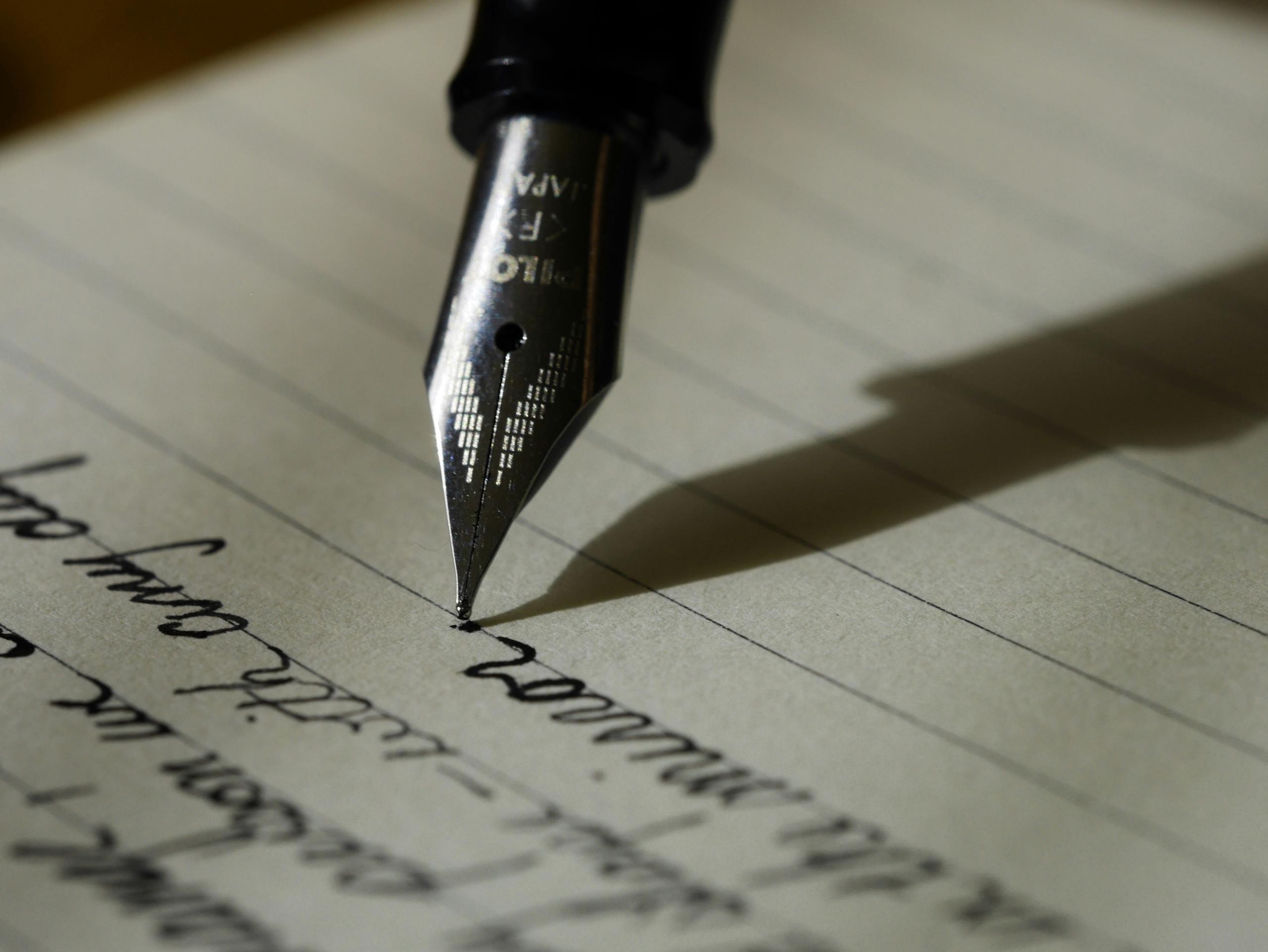
Also these elements of creative writing allow the author to engage the reader's attention, create empathy, let the viewers get deep into the story, transmit an idea; in other words, all these elements of creative writing allow us to communicate and transmit that idea (or emotion) we have about life.
Learning these features of creative writing is a great way of being introduced to the art of writing and the intricacies that come with it!
Characters
Characters play a key role in storytelling: through their eyes, we see the world, with their feelings we live as they do, and we emotionally accompany them throughout the story.
However, for a character to be fully “alive”, we must work on it, creating and developing all its components carefully. For example, among these elements, we can find his or her visual appearance, life story, strengths, weaknesses, contradictions, decisions he or she makes, etc.
Plot development
In the same way that it is hard to imagine a person without a skeleton, it is impossible to conceive of a book without a plot. Plot is one of the key features of creative writing. When it comes to creating a coherent text, the plot plays a crucial role.
Any plot is based on a conflict, and this conflict, at the same time, develops gradually through well-established stages. In literature, these stages are exposition (prologue), plot, development of the action, resolution (climax) and epilogue.
The plot is the great thread that guides the reader through the story. As the plot unfolds, the reader imagines, feels, understands, and thinks. A good writer can create complex plots that allow the reader to understand perfectly the message the author wants to deliver.
Narrator
In every book we read, there exists a narrative voice. This voice narrates the story by adopting a particular position towards the events. We, the readers, can share that position or not. But whether we agree or not, this voice or narrator will always be the one who guides us.
For creating writing elements such as the narrator, we have to know that its essential mission is to present the events and the points of view of the characters. However, the narrator does so from its own perspective.
Types of narrators are:
- First-person (can be protagonist or witness).
- Second person
- In the third person (omniscient or limited)

Dialogue
Dialogue can be a conversation. However, a conversation can be very different from a dialogue. Conversations in real life are long, information-heavy and lacking in structure. In a conversation, you can jump from one idea to another with no connection between the first one and the second one. On the other hand, dialogue requires special attention and careful work. The most important condition for a quality dialogue is the absence of unnecessary content. A dialogue must be to the point and express very well what the characters want to say. Dialogue is without a doubt one of the most important elements of creative writing. An English tutor can help you to refine dialogue for clarity.
Subgenres of prose
Among the great genres of prose, we can identify several subgenres. These include the novel, the novelette, the short story, the essay, the chronicle, the micro-story, the memoir, among others.
Type of novel Definition Example Novelette A novelette is a short novel that is between 7,500 and 17,500 words. It is longer than a short story but shorter than a traditional novel. “The Man in the High Castle”-Philip K. Dick (1962)
Novella It is a brief novel that has approximately 17,500 and 40,000 words. “The Metamorphosis” - Franz Kafka (1915) Novel A novel is a longer work of fiction that explores in depth and detail its characters, plot and setting. “Cien años de soledad”- Gabriel García Márquez (1967) Long novel An long novel, or extended novel, is distinguished by its significant length in terms of pages or words. Over 300 pages. "War and Peace" - León Tolstoy (1869)
Short story
The short story is a subgenre of prose distinguished by its brief form and the presence of a single event around which the plot develops. Among the elements of creative writing, this subgenre is one of the most popular.

The events described in the story take up a short period of time since the plot of the short story focuses on a single episode, usually a situation significant for the character's development. The unfolding events prepare the reader to understand the central intent of the work.
The short story has a small number of characters, usually one or two main characters. The description of the secondary characters (who are usually mentioned in a very superficial way) is aimed at revealing the characteristics of the main character.
Type of short story Definition Example Micro story The micro-story is a very short story, which can be up to 1000 words at most. It is just a moment, or situation, that regularly produces an impact. "For Sale: Baby Shoes, Never Worn." - Ernest Hemingway.
Short story A short story is a prose piece of brief length, that narrates an event involving one or two protagonists. “The black cat”- Edgar Allan Poe Novelette A novelette is a brief story, which is longer than a short story and shorter than a short novel.
“The Man in the High Castle”-Philip K. Dick (1962)
Elements of Creative Writing in Stage Writing
The features of creative writing in Theater are unique. Although they share some general features with other literature forms, their elements of creative writing have their own characteristics.
Stage Action
The stage action is all the physical acting that actors do on stage. But we are not just talking about the placement of the characters in the scene. We also refer to the actors' entrances and exits, their interaction with objects and their different body postures.
Act and Scene Structure
Creative freedom in the theatre is wider. That is why creating writing elements can be more challenging expressively than other more linear arts. In theatre, every scene is specific and unique. The audience must put the parts together in order to understand the narrative structure.
If you are sitting there wondering where can I find English tutors near me, Superprof is a great place to start your search.
Monologue and Soliloquy
The monologue is a speech delivered by a single character. Usually, the character speaks straight to the public. And while the actor speaks, all his deepest ideas and inner emotions come out. Monologues and soliloquies are elements of creative writing ideal for revealing a character's psychology.
Text and Subtext
Subtext is the hidden meaning of the text. This linguistic term refers to the idea that is implied, but not explicitly expressed. It is the truth that the reader must decipher. According to Ernest Hemingway, a literary work is much like an iceberg.
This means that only a small part of the story is on the surface, which would be the text. All the rest of the content remains hidden between the lines. This would be the subtext. Therefore, sometimes the author has to suggest a particular situation or event instead of giving all the information.
Text and Subtext perhaps is one of the most difficult aspects of creative writing to master. As a prospective writer, enrolling in a creative writing course can be a great aid when it comes to finding your voice and navigating the subtleties of text and subtext.
Elements of creative writing in poetry
Poetry is a literary expression that puts on paper the most intimate feelings of a person, his or her values and the emotions that accompanied him or her at the time of writing. Poetry allows us to immerse ourselves more deeply in human beings, and their experiences, even in the historical period in which the work was created.
A person reading poems from the past today can see him or herself reflected in those works. Poetry has no age. It allows us to understand our own experiences and how emotions are eternal. Often, poetry helps to express our deepest emotions: those feelings that we notice inside us but for which we cannot find words.
Poetry has different elements of creative writing. Among these we can find:
Name Definition Example Images and Feelings Thanks to these literal figures we can create images and sensations by appealing to the senses. "The sun glides across your skin like eternal honey” Metaphors It is a comparison that allows the expression of an abstract idea by placing it in another context. “Your eyes are two moons that guide me in the gloom.” Rhyme These are alliterations that help create a musical effect.
"The river flows and the sky is bright,
The sun slips away, and the cold takes flight." Tone and Voice It is the mood and point of view of the writing. It is a mood that helps to understand the emotion of the poem. “In the square of my window, my loneliness and poise is reflected.”
Other Creative Writing Skills You Need to Know
All of the above are elements that you will need to decide on with the form of your creative piece – whether a prose poem or a selection of personal essays.
However, there are elements of creative writing that go unseen in the finished work. These are the processes of research, planning and editing, which hold the book together and bring it into existence. These skills are very much needed if you are interested in jobs in creative writing as they play a major role for example when being part of a writers' table.
Crucial in creative writing as it provides a clear framework for building tension and resolution. It divides the narrative into setup, confrontation, and resolution, ensuring character development, and keeping readers engaged with a satisfying arc.
Research
Research is everything that happens to a text before it is written into words. It is the ideas, the inspirations, the considerations of style, the factual details and descriptive phrases that you need to pin down and be sure of.
No novel is possible without research.
Planning
Planning brings together the research with the framework you will create. How is one event or idea going to follow the next one? And why? And is that the best way to do it? For additional support, an English tutor can offer valuable insights on structure. If you prefer flexible learning, an online English tutor can help you plan and refine your work from anywhere.
Editing
Once you have finished your writing, you still have more writing to do. That writing is what we conventionally call editing.
In conclusion, the elements of creative writing featured in this art form are a great way to answer the question What is creative writing? since they give us a notion and a sight of what goes in when writing.
Summarise with AI:
Did you like this article? Leave a rating!

 Loading...
Quite informative and highly beneficial contents