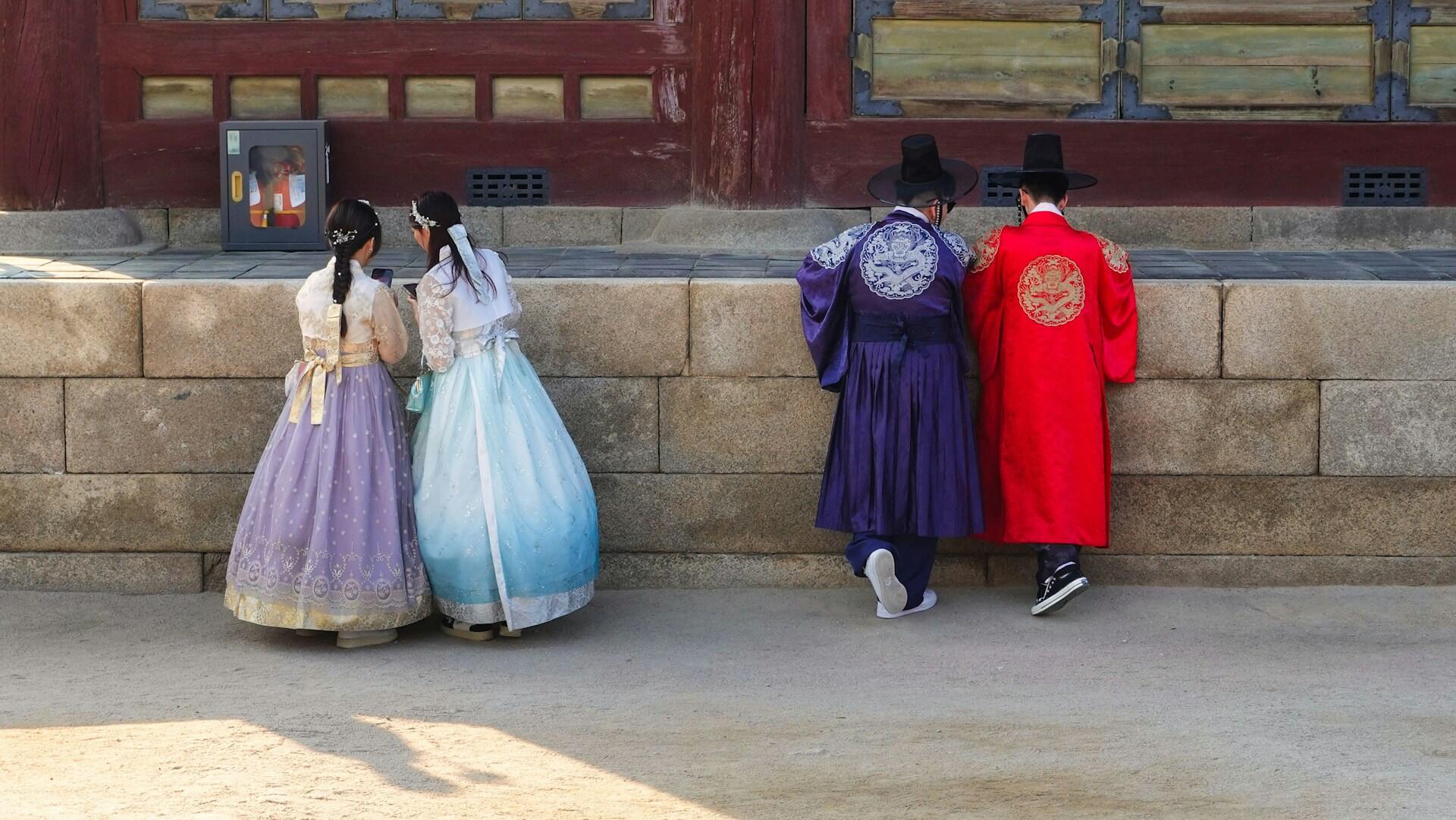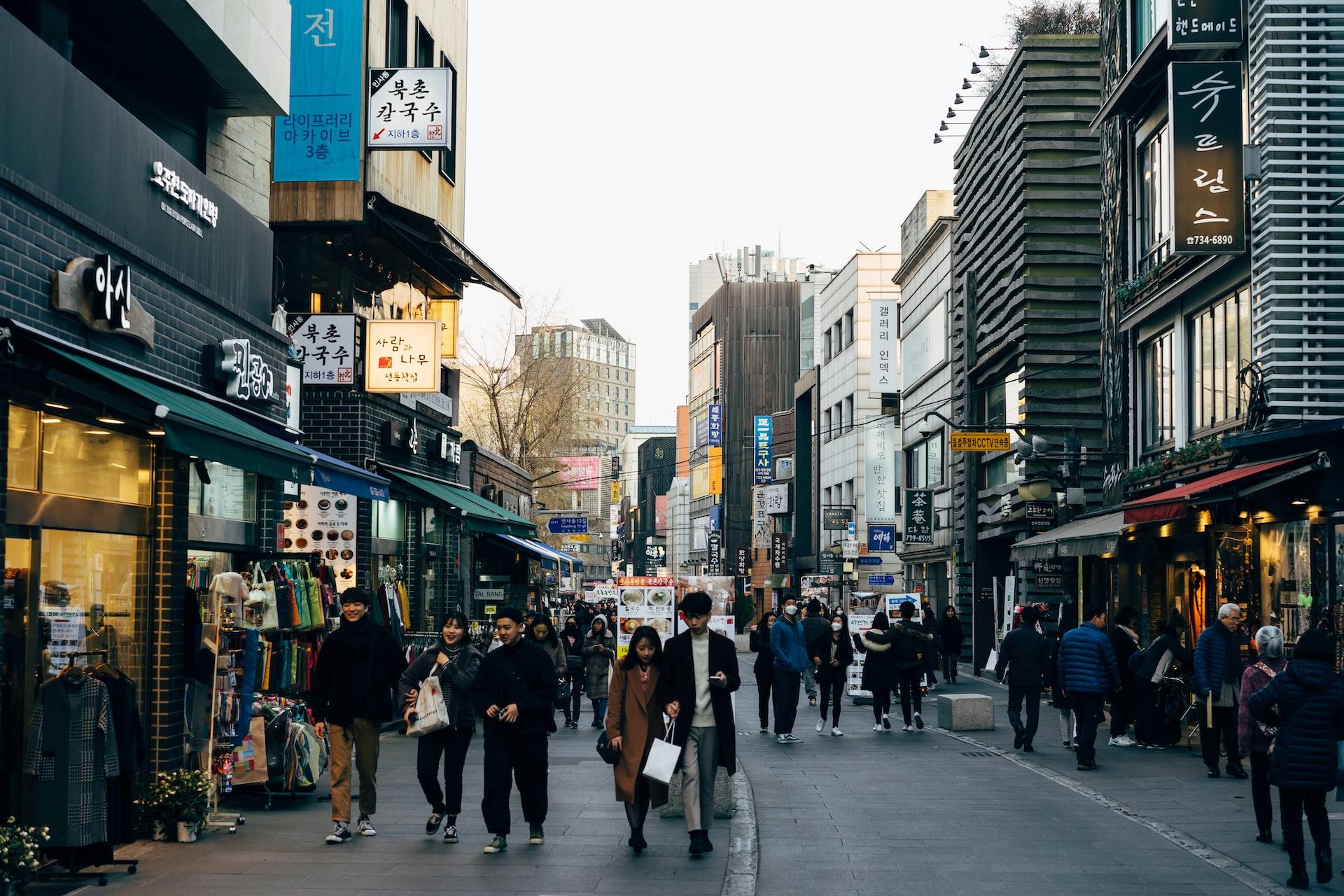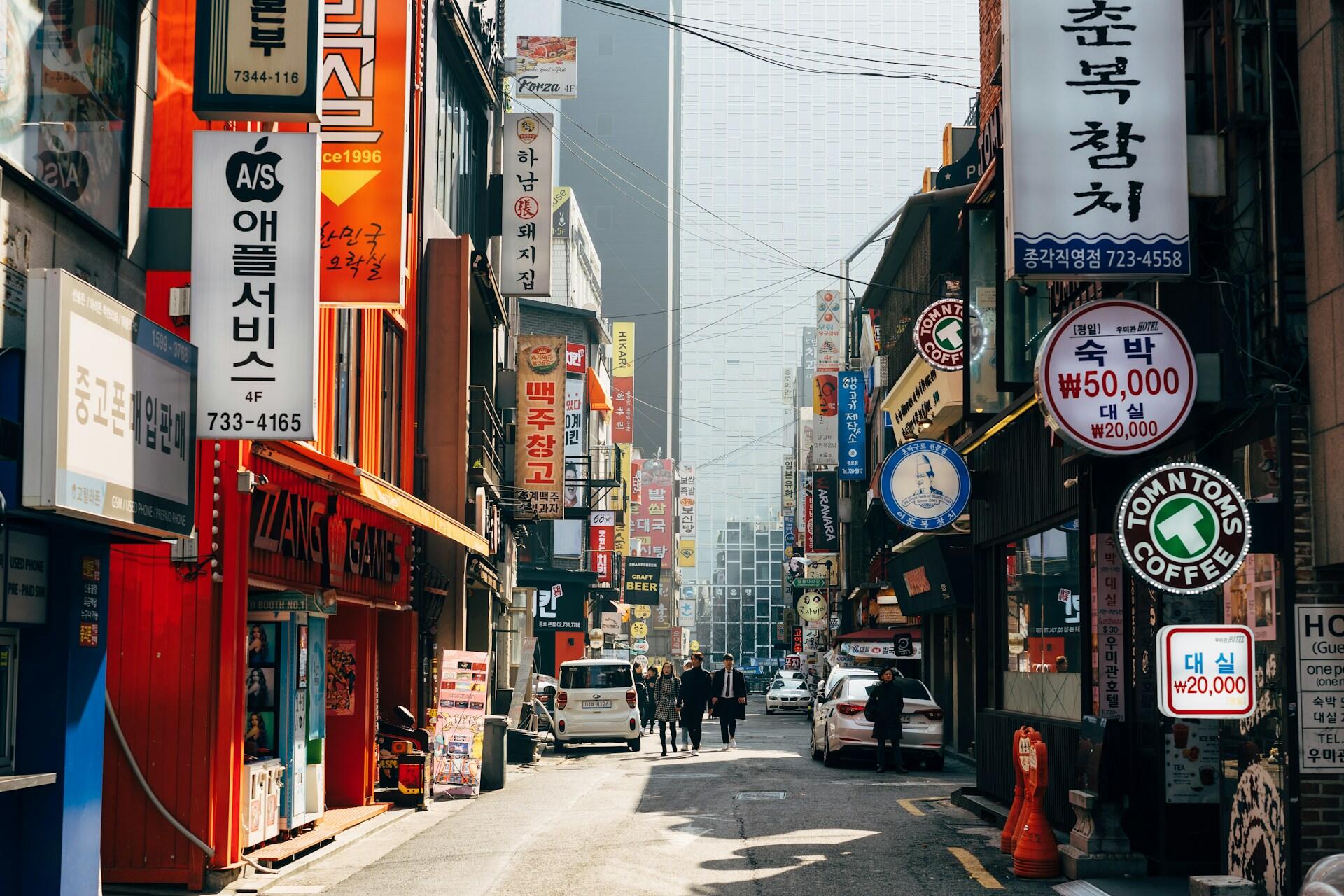

For around 30 years, people around the world have enjoyed South Korean cultural exports: K-Dramas, K-Pop, food, fashion, and beauty products. This phenomenon, called Hallyu - literally 'Korean wave', attracts ever more people to its country of origin. Whether you're preparing for your first visit there or simply want to learn basic Korean words to follow your favourite shows, these are the expressions to know.


Greetings and Polite Phrases
No matter where in the world you land, mastering 'please', 'thank you', and 'hello' go a long way to prove your traveller bona fides. However, using good manners isn't necessarily enough to make the right impression in Korea.
Basic Korean Words for Greetings
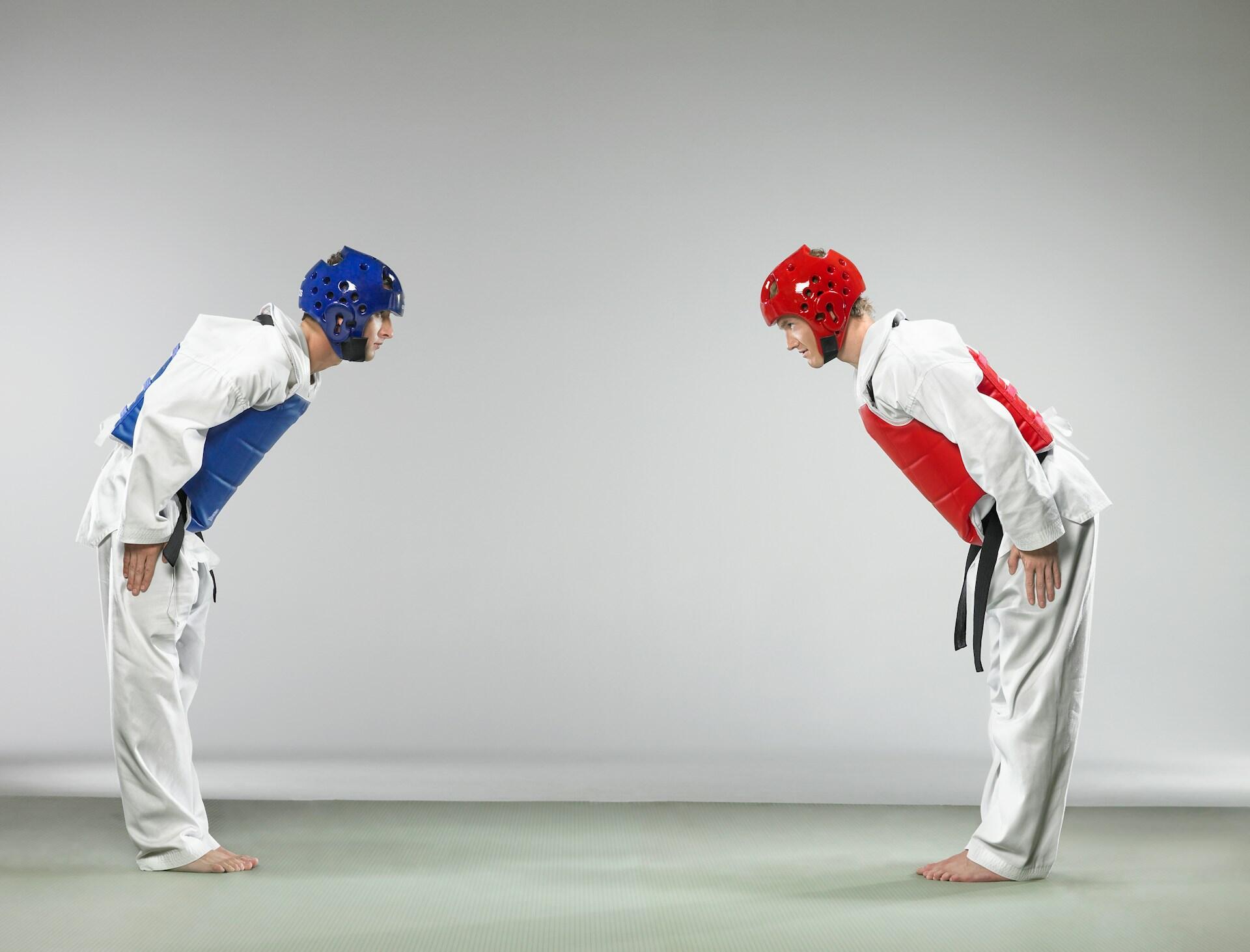
All the top sites for learning Korean emphasise that Korean society runs on three levels of formality. A casual "Hi, could you help me, please?" is the wrong form of address for a Korean person who might be your age or older. These are the ways to say "Hello" to ensure you hit the right note1.
Formal
- 안녕하십니까
- an nyeong ha sim ni kka
Polite
- 안녕하세요
- an nyeong ha se yo
Casual
- 안녕
- an nyeong
Unless you're headed to South Korea for business, you'll likely not have an occasion to use the most formal 'Hello'. So, consider the polite greeting your default unless you're greeting someone obviously younger than you. In that case, the casual greeting is the one to say.
In South Korea, people expect greetings when entering shops and restaurants, when approaching street vendors, and before addressing anybody for anything, including directions.
Polite Expressions to Know
In many countries, lost travellers could get by with "excuse me" as a greeting but that won't fly in Korea. As noted above, you must first say "Hello", and then excuse yourself and ask your question. Knowing how to say "Hello" is a good start, but you have more Korean expressions to master to prove yourself culturally competent.
| 📖 Word or phrase | 📝 Written in Korean | 🔠 Romanisation | 🔊 What it sounds like |
|---|---|---|---|
| Nice to meet you | 만나서 반가워요 | mannaseo bangawoyo | |
| Formal 'thank you' Polite 'thank you' | 감사합니다 고마워요 | gamsahamnida gomawoyo | |
| I'm sorry | 죄송합니다 | joesonghamnida | |
| Excuse me to get past someone to get someone's attention | 실례합니다 저기요 | sillyehamnida jeogiyo | |
| It's okay (I'm fine) | 괜찮아요 | gwaenchanayo | |
| You're welcome | 천만에요 | cheonmaneyo | |
| Yes No | 네 아니요 | ne aniyo | |
| Please speak slowly | 천천히 말해 주세요 | cheoncheonhi malhae juseyo | |
| I can't speak Korean well | 한국말 잘 못해요 | hangukmal jal mothaeyo | |
| Goodbye If you're leaving If someone else is leaving | 안녕히 계세요 안녕히 가세요 | annyeonghi gyeseyo annyeonghi gaseyo |
Korean Expressions for Family Relations
Unfortunately, the COVID pandemic put the kibosh on homestays for travellers in Korea. That's quite a shame because staying with a Korean family gave outsiders a glimpse of Korean home life.
The opportunity still exists, but mostly for an overnight stay, not for an extended period. You might consider spending a night in a Korean home so you can practise addressing family members in Korean.
Immediate Family
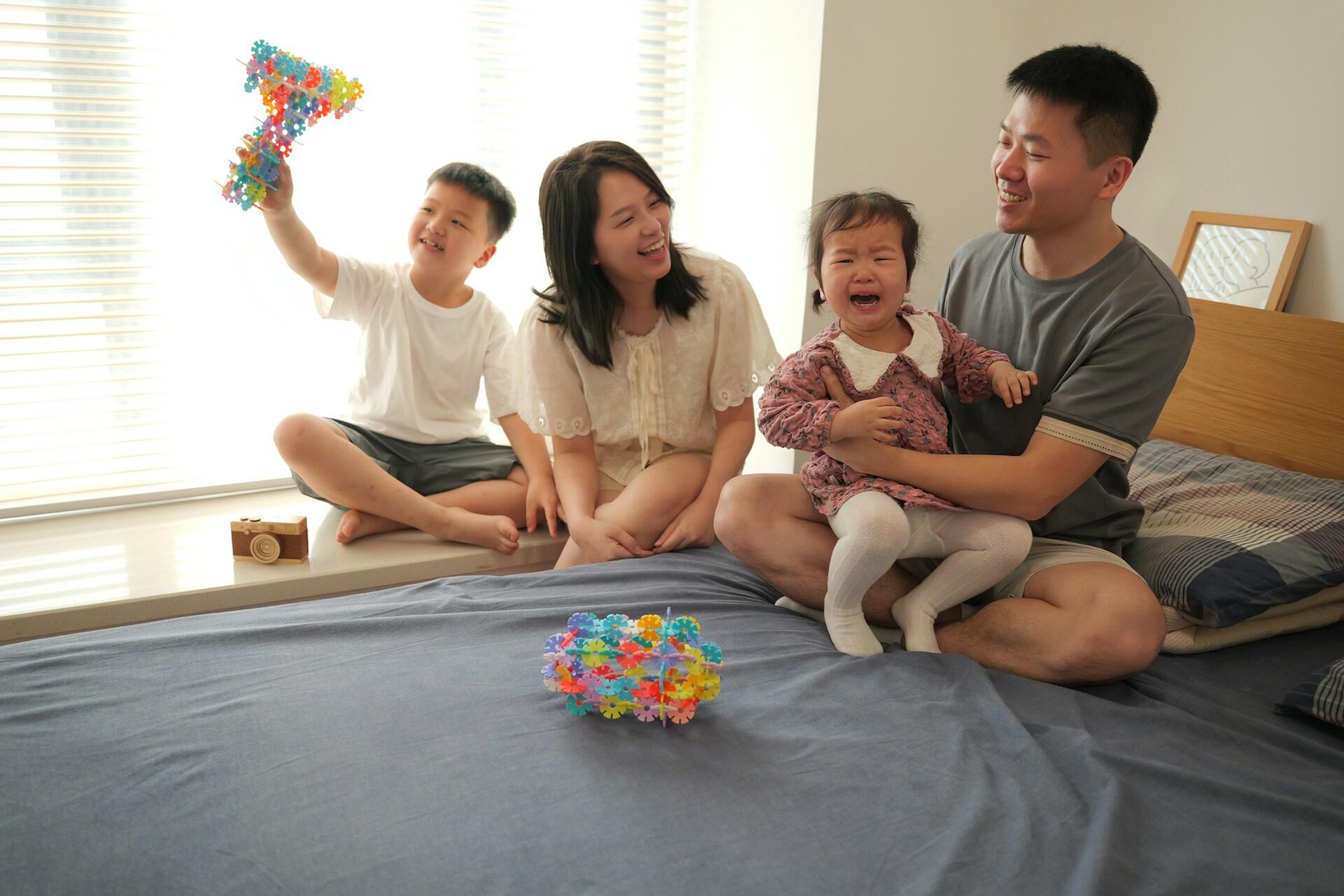
The vocabulary used to describe members of the Korean family (가족 - gajok) is among the most intricate in the world2. The words for 'Mum' and 'Dad' are arguably the most straightforward designations, though they too come with three layers of formality.
Formal
- 어머님 eomeonim
- 아버님 abeonim
Polite
- 어머니 eomeoni
- 아버지 abeoji
Casual
- 엄마 eomma
- 아빠 appa
Let's say you're visiting a home with three siblings: the eldest daughter, the middle son, and a younger daughter. These exacting descriptions matter, because how one addresses family members in Korean depends on these factors.
| 👨👩👧👦 Family member to family member | 📝 Written in Korean | 🔠 Romanisation | 🔊 How to pronounce |
|---|---|---|---|
| younger brother to older brother (also any younger male to older male) | 형 | hyeong | |
| younger brother to older sister | 누나 | nuna | |
| younger sister to older brother | 오빠 | oppa | |
| younger sister to older sister | 언니 | eonni | |
| older sibling to younger older sib to younger sister older sib to younger brother | 동생 여동생 남동생 | dongsaeng yeodongsaeng namdongsaeng |
In a typical household, family members address one another by their title rather than their name. That's to reinforce family bonds and hierarchy. When a family member uses another's name, it usually means they're in a lot of trouble!
Extended Family
In our culture, we don't mind calling all of our aunts and uncles 'Aunt' and 'Uncle', regardless of whether they're from Mum's or Dad's side of the family. That's not the case in Korean society, where vocabulary exists for specific family roles on both sides. Here, we list a sampling of both.
If that brother isn't married: 삼촌 - samchon
Note that designating 'sides of the family' also has specific words. The word to describe 'mother's side of the family' is 외가 - oega; 'father's side of the family' is 친가 - chinga.
It's generally fine to call any man you know casually, such as your postman, 'samchon'.
Ajumma typically represents an older woman who does manual work.
We understand ajumma to mean something like 'auntie', while samchon is literally and figuratively 'uncle'. That 'uncle' designation is generally acceptable, but women tend to resent the 'ajumma' designation. So, it's best to stay away from it, no matter what the K-Dramas say.
Korean Basic Words to Use While Shopping
As noted in this article's introduction, Korean cultural exports include food, fashion, and sublime beauty products. Surely, when you're in Korea, you'll want to buy those things from the source. These are key Korean expressions to master before hitting the stores.
| 📖 Shopping expression | 📝 Write it in Korean | 🔠 Romanisation | 🔊 How to pronounce |
|---|---|---|---|
| How much is it? | 얼마예요? | eolmayeyo? | |
| Can I pay with credit card? | 카드 돼요? | kadeu dwaeyo? | |
| Throw away the receipt | 영수증은 버려 주세요 | yeongsujeungeun beoryeo juseyo | |
| Put it in a bag | 봉투에 넣어 주세요 | bongtue neoeo juseyo | |
| Please wrap it for me | 포장해 주세요 | pojanghae juseyo | |
| Please give me a refund | 환불해 주세요 | hwanbulhae juseyo | |
| Please exchange this | 교환해 주세요 | gyohwanhae juseyo | |
| Please give me a discount | 좀 깎아 주세요 | jom kkakka juseyo |
Korean Number Systems
Korean family vocabulary isn't the only intricate word set in the Korean language. This country is one of the very few that uses two numbering systems: native Korean numbers and Sino-Korean numbers. They are not used interchangeably; each has specific functions3.
Native Korean Numbers
- to count things
- to tell time
- for hours, but not minutes and seconds
- anytime a measure word is used
Sino-Korean Numbers
- for days, months, and years
- for dates
- for phone numbers
- for any discussion of money
Notably, native Korean numbers only count to 99. If you need to count in Korean beyond that value, you must revert to Sino-Korean numbers. Also, the native system doesn't reflect the same logic as its counterpart, which may further confuse Korean learners. This table charts both numbering systems.
| 🔢 Number sampling | 📝 Write it in Korean | 🔠 Romanised | 🔊 How to pronounce |
|---|---|---|---|
| Native Korean, 1-10 | 하나, 둘, 셋, 넷, 다섯, 여섯, 일곱, 여덟, 아홉, 열. | hana, dul, set, net, daseot, yeoseot, ilgob, yeodeol, ahop, yeol. | |
| Sino Korean, 1-10 | 일, 이, 삼, 사, 오, 육, 칠, 팔, 구, 십 | il, i, sam, sa, o, yuk, chil, pal, gu, sip | |
| Native Korean, counting by tens | 스물, 서른, 마흔, 쉰, 예순, 일흔, 여든, 아흔 | seumul, seoreun, maheun, swin, yesun, ilheun, yeodeun, aheun | |
| Sino-Korean, counting by tens | 이십, 삼십, 사십, 오십 ... | isip, samsip, sasip, osip | |
| 10,000 | 만 | man | |
| 100,000 | 십만 | simman | |
| 1,000,000 | 백만 | baengman | |
| 10,000,000 | 천만 | cheonman |
Unlike the way we group our numbers - by the hundreds, the Sino-Korean system groups numbers by 10,000 (만 - man). You'll note in the table that each 10,000 grouping ends in 'man', making it easy to track counting increments.
Chinese culture had an outsized impact on Korean society, particularly on government and civil service, commerce, and writing. The Sino-Korean numbering system comes from China; it works the same way today's Chinese numbering system does.
Korean Expressions for Food Transactions
Street food is a huge part of Korean popular culture, a must-do for every visitor4. Equally not to be missed is restaurant food, from Korean barbecue to fancy, high-end establishments. These are the Korean expressions to get the most out of your dining experiences.
Menu Selections
Fortunately, most Korean menus feature pictures of the dishes the restaurant serves. As for vendor carts, they tend to specialise in one or two dishes, so you only need to point and say how many you'd like to have. After saying 'hello', of course! The clip above shows the fare you must try while in-country.
Useful Phrases
Sampling the best of Korean cuisine isn't as simple as sitting down and tucking in. As ever in this formal culture, you must know the necessary phrases to make the most out of your experience. These are the basic Korean words you might need to make your dining excursions most satisfying.
Korean dining culture is so expansive that we could write a mile-long list of phrases you might use in a restaurant situation. Though far from an exhaustive list, these phrases are a good start to mastering food-related Korean expressions.
Those small dishes of radish, kimchi, soy sauce, and spring onion that feature at every sit-down meal are collectively called banchan. If you need more of one or the other, you must ask for it specifically; you cannot say "More banchan, please!"
Basic Korean Words to Get Around
The phrase 'getting around' can mean anything from riding the subway to asking where the bathroom is. As always, formality takes precedence, followed by the correct Korean expression for what you want to ask. These phrases are among the most common when visiting Korea for the first time.

The Right Way to Ask for Directions
We can't stress enough the degree of formality that cloaks even the most mundane of transactions in South Korea. In other parts of the world, you might get away with "Excuse me, can you tell me how to get to [this destination]?"
However, in Korea, such directness might be considered rude, even if you're obviously not Korean. To make the best impression, follow these steps.
…로 가려면 어떻게 해요? (…ro garyeomyeon eotteoke haeyo?)
A final note on formality: anyone you approach, no matter where, you must follow cultural norms. Top on that list is bowing. Not the deep bow you've likely seen in K-Dramas, but a slight head tilt downwards as you say 'Hello'. This relatively casual bow is called mokrye (목례).
In all cases, avoid contact, including eye contact. It's rather common in our culture to give a light arm touch as we say thank you, and eye contact shows us to be trustworthy. In Korean culture, the exact opposite is true: both eye and physical contact are considered aggressive and rude.
Korean culture revolves around Confucian values of harmony, humility, and respect. You'll get the most out of your visit when you follow Korean society's unwritten rules such as these.
References
- MangoLab. “How to Say Hello in Korean: The Complete Guide to Korean Greetings (2026).” Getchingu.Com, Chingu, 14 Mar. 2026, https://getchingu.com/blog/how-to-say-hello-in-korean. Accessed 10 July 2026.
- Sándor Bogyó. “Korean Family Words: 25+ Essential 가족 Vocabulary with Pronunciation.” Wordy, 27 Dec. 2025, https://wordy.info/blog/korean-family-words. Accessed 10 July 2026.
- HangeulMate Editorial Team. “Korean Numbers: Complete Guide to Native and Sino-Korean Systems.” Hangeulmate.Com, HangeulMate, 25 Jan. 2026, https://www.hangeulmate.com/blog/korean-numbers. Accessed 10 July 2026.
- ZenKimchi. “14 Must-Eat Korean Foods in Seoul and Where to Eat.” ZenKimchi, 23 Aug. 2023, https://zenkimchi.com/tour-tips/must-eat-korean-food-in-seoul-and-where-to-eat-it/. Accessed 10 July 2026.
Summarise with AI:
Did you like this article? Leave a rating!

 Loading...