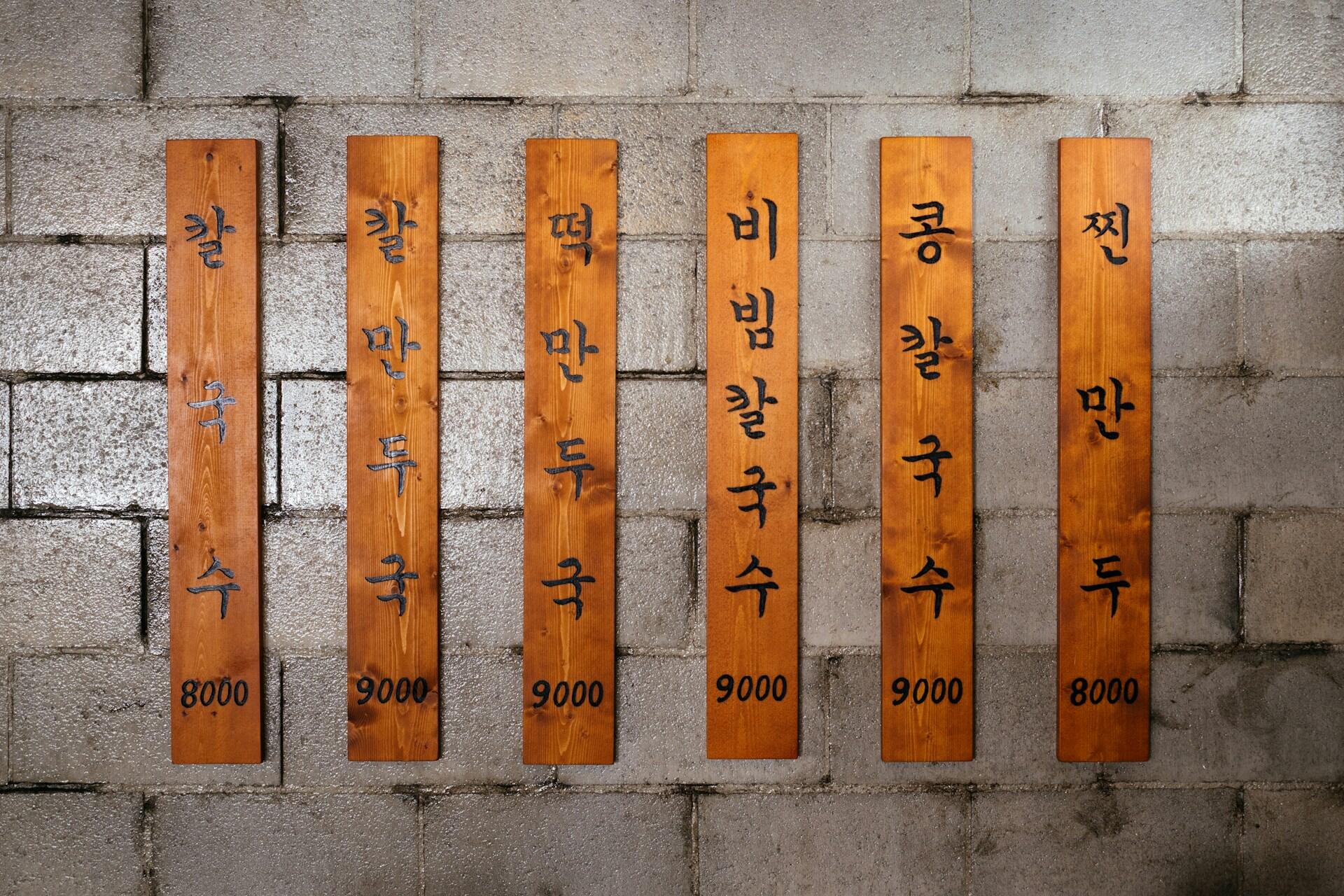

Lots of countries use different systems to assign values to various things, but very few use dual numbering systems, as Korea does. In this country, if you're conducting official business - say, at the bank or tax office- you must use the Sino-Korean numbering system. Conversely, if you're shopping for vegetables or asking someone their age (to use the proper honorifics), you'd revert to the Native Korean counting system. The table below shows how profound the difference between the Korean numbering systems is.
| Numbering system | 📝 Written in Korean | 🔠 Romanisation | 🔊 How to pronounce |
|---|---|---|---|
| 1-10 Native Korean System | 하나, 둘, 셋, 넷, 다섯, 여섯, 일곱, 여덟, 아홉, 열. | hana, dul, set, net, daseot, yeoseot, ilgob, yeodeol, ahop, yeol. | |
| 1-10 Sino-Korean System | 일, 이, 삼, 사, 오, 육, 칠, 팔, 구, 십 | il, i, sam, sa, o, yuk, chil, pal, gu, sip |


The Two Systems of Numbers in Korean
Korean history is dotted with periods of occupation, some beneficial and others not so much. We can count its periods of Japanese and Mongol rule in the latter column. However, Chinese influence on Korean culture is centuries-old and far-reaching1. It touches on every aspect of life, including numbered transactions.
Sino-Korean Numbers
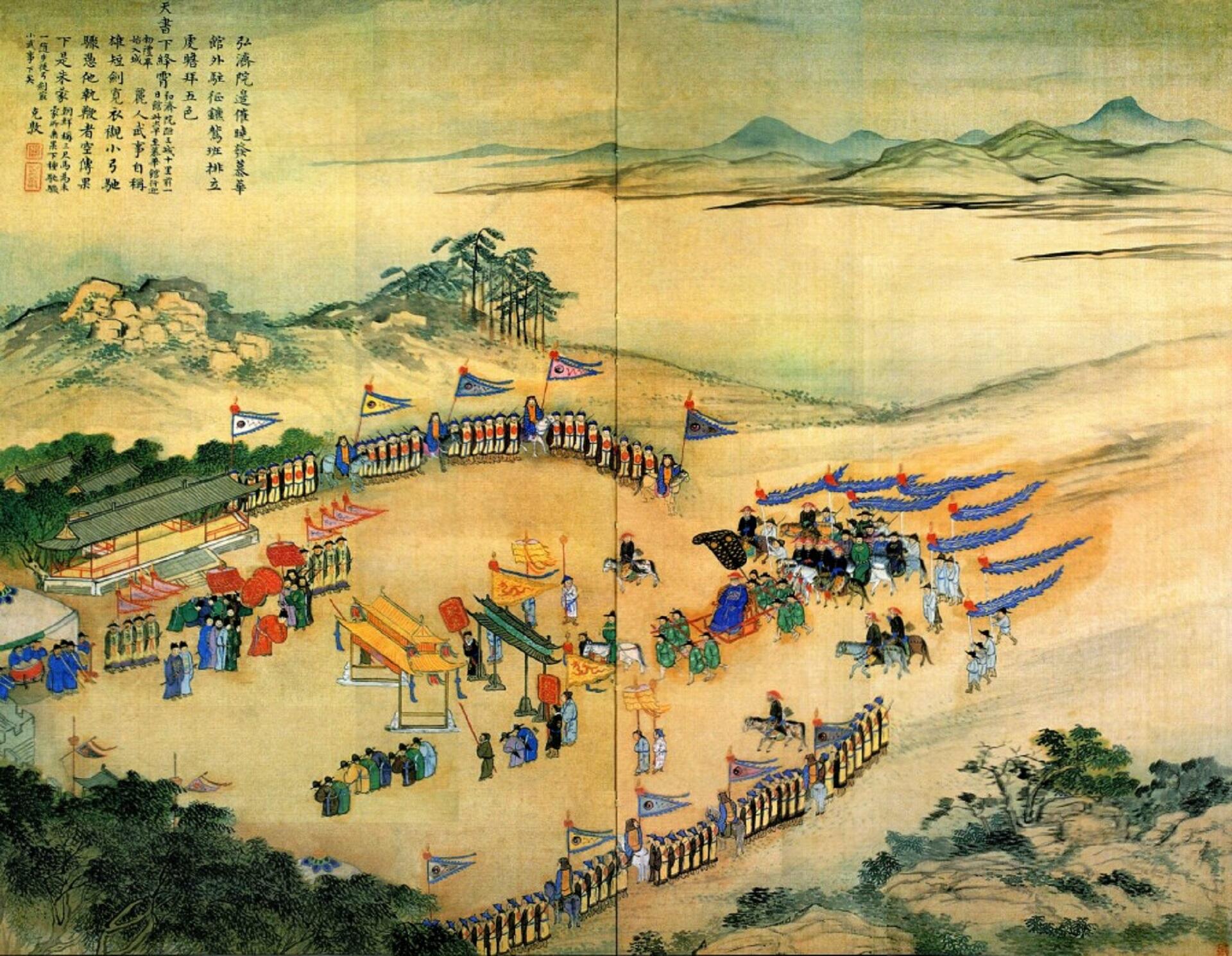
Establishing a unified government system ranks among the most important influences the Chinese had on early Korean society. They brought Confucian teachings to politics and social structures, an effect we see today in the way Koreans address each other.
China and Korea interacted for centuries. China had its greatest influence on Korea during the Silla, Goryeo, and Jeoseon Dynasties (668 - 1897).
The Chinese also brought their writing system, including written numbers, which prevailed for centuries. And then, in 1443, Korean King Sejong the Great established the Hangul writing system, converting numbers written in Chinese to the native Korean writing system.
However, the Chinese numbering system was well-entrenched in official business, and nobody saw any point in changing things. So, the Sino-Korean numbering system remained, while their writing was converted to the new Hangul system.
To anyone who understands Mandarin, Sino-Korean numbers sound like numbers in Chinese spoken with a Korean accent.
Not only do they sound alike, but they group in the same way, too. The numbering system we use groups numbers by the hundreds (100, 100,000, and so on). However, Sino-Korean numbers group by the ten-thousands. For instance, our 100,000 is 'ten ten thousand' in Korean.
This chart shows the full Sino-Korean numbering system, starting with 20. As we've already covered 1-10 above, you only need to remember that each multiple of ten is the unit number + 10. Also, note how, towards the end of the table, 'man' (만) marks each new grouping.
| 🔢 Number | 📝 How to write it | 🔠 Romanisation | 🔊 How it sounds |
|---|---|---|---|
| 20, 30, 40, 50 | 이십, 삼십, 사십, 오십 | isip, samsip, sasip, osip | |
| 100, 200, 300, 400 | 백, 이백, 삼백, 사백 | baek, ibaek, sambaek, sabaek | |
| 1,000 | 천 | cheon | |
| 10,000 | 만 | man | |
| 100,000 | 십만 | simman | |
| 1,000,000 | 백만 | baengman | |
| 10,000,000 | 천만 | cheonman |
Native Korean Numbers
Native Korean numbers existed long before Chinese influence revolutionised Korean society and government. However, native Koreans did not yet have a writing system, so numbers were only an oral quantity.
Furthermore, counting was only possible to 99; the existing numbering system did not account for higher values. To this day, that remains the case2. If you have to count beyond 99, you must revert to the Sino-Korean numbering system (see above).
| 🔢 Number | 📝 Written in Korean | 🔠 Romanisation | 🔊 How to pronounce |
|---|---|---|---|
| 20 | 스물 | seumul | |
| 30 | 서른 | seoreun | |
| 40 | 마흔 | maheun | |
| 50 | 쉰 | swin | |
| 60 | 예순 | yesun | |
| 70 | 일흔 | ilheun | |
| 80 | 여든 | yeodeun | |
| 90 | 아흔 | aheun |
You might have noticed that the native system for counting in Korea is nowhere near as logical or predictable as the Sino-Korean system. But don't discount them just yet! It's only their pronunciation that makes things difficult. Their usage follows roughly the same pattern as Sino-Korean numbers.
Using the Right Numbering System
Having two numbering systems ranks high among the many aspects that make Korean culture distinct. As you read above, each numbering system serves specific functions, and their purposes are rooted in history.
However, the 'Sino-Korean numbers for official purposes' versus 'native Korean numbers for whatever else' breakdown doesn't go far enough. That leaves open the question of what counts as official. Here, we lay out when to use each system3.
Count in Korean With Native Korean Numbers
Limited as it is when compared to infinite numbers, native Korean numbers still have plenty of uses.
Measure words specify uncountable amounts; you use them all the time in English without thinking about them. Measure words play an important role; for instance, imagine leaving out 'pieces' when you describe the 20 chickens you ate!
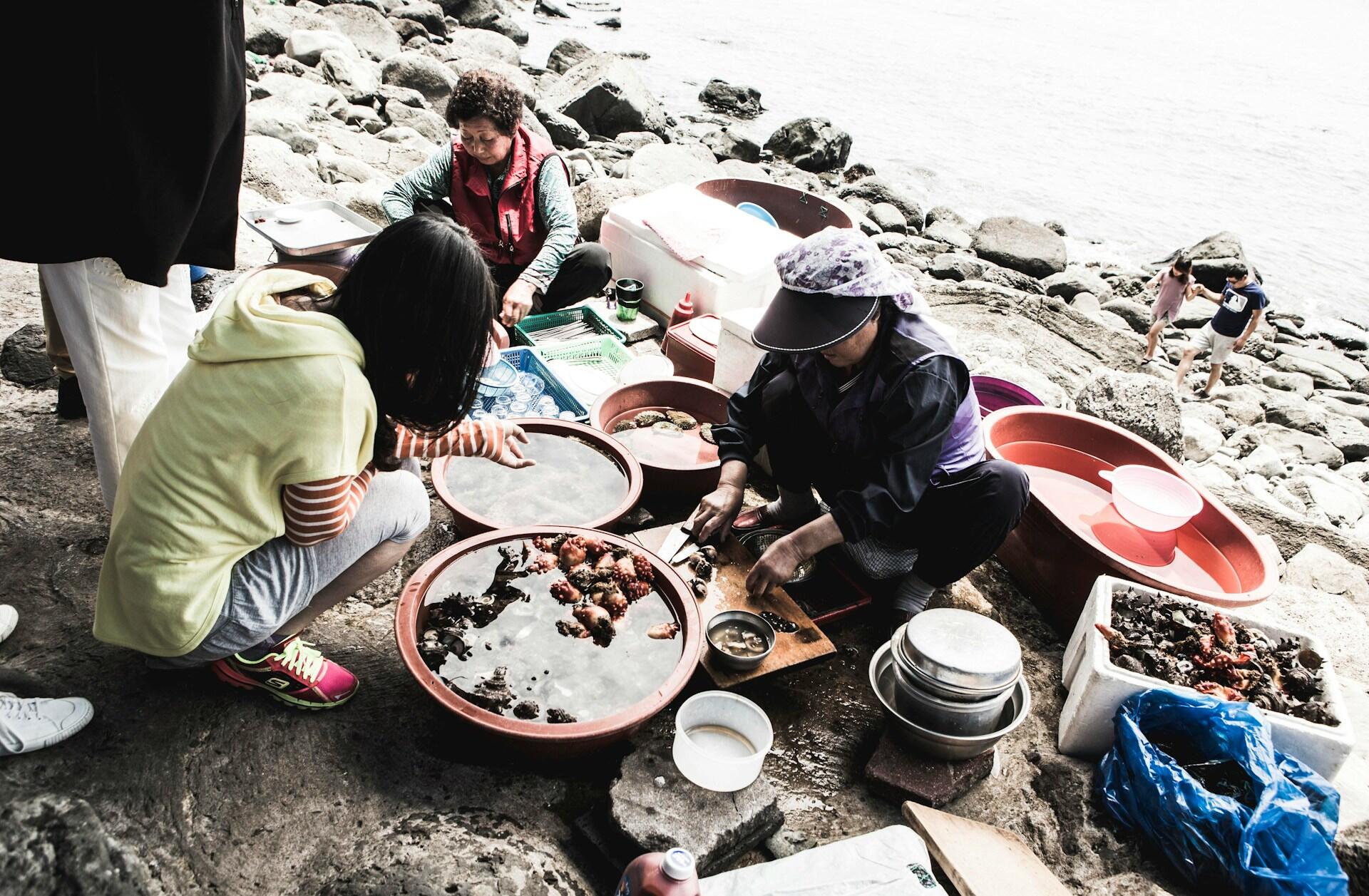
Sino-Korean numbers also require measure words, but not as often as when using native Korean numbers. That's because native Korean numbers are more often used in countable transactions: when shopping, telling time, and in general conversation.
Counting in Korea Using Sino-Korean Numbers
As you might have guessed from the short history lesson above, the Sino-Korean numbering system is far more flexible and finds many more uses. It's not simply because this system has been entrenched for centuries. It's because it's more systematic, logical, and more expansive.
You likely don't need a reminder that you must use Sino-Korean numbers to express any value greater than 99. That and other 'rules' for using numbers in Korean cause a curious phenomenon in which Korean speakers must use two numbering systems at all times.
Everyday Applications of Numbers in Korean
As a student of Korean, mastering a dual numbering system presents a challenge. However, for people growing up in Korea, meshing them is a matter of course.
The word for ritual bowing that Koreans practise in formal settings has a Sino-Korean number: sambae (삼배).
Of all the Korean greetings, this is the only one that involves a number. It should come as no surprise that it features a Sino-Korean number, as the formality echoes the officialdom of times past.
However, it's interesting to note that discussing the 'three times bowing' ritual does not include any Korean numbers. The phrase se beon jeol-hagi (세 번 절하기) describes the ritual. The term 'se beon' means 'three times'.
Telling Time
You'll remember reading that hours are expressed using native Korean numbers, while minutes and seconds must be said with Sino-Korean numbers4.
Hours (si - 시)
- 1 o'clock - han si (한 시)
- 5 o'clock - daseot si (다섯 시)
- ten o'clock - yeol si (열 시)
- 12 o'clock yeoldu si (열두 시)
Minutes (bun 분)
- 15 minutes - sibo bun (십오 분)
- 25 minutes isibo bun (이십오 분)
- 30 minutes samsip bun (삼십 분)
- 45 minutes sasibo bun (사십오 분)
You have occasion to use either hours or minutes, of course. "I have a class at 1 o'clock", perhaps, or "I'll be there in 20 minutes." That allows you to use one system or the other, but to tell time, you must use both.
Note that ohu and ojeon are optional; they represent AM and PM. If somebody asks you what time it is, you likely won't need to tell them it's morning or afternoon. Still, as a student of Korean, it's best you know about those words as you'll likely use them from time to time.
Disclosing Age
After the complexity of telling time, you'll likely be relieved to learn that telling someone your age involves only one numbering system. Somebody might ask you how old you are so they can use the proper honorifics when addressing you. When they do, rely on the native Korean numbering system to give your answer.
Give your age in native Korean numbers. If needed, give your birthdate in Sino-Korean numbers.
Objects and People
Here, too, the rule is straightforward. Use native Korean numbers to describe how many of something you have or how many people were present at an event you were at. Note that you must use measure words when talking about these quantities5.
The general measure word: gae (개) serves in most cases; it's roughly equal to 'each' in English. Other top measure words include:
- For people: myeong (명)
- For books: gwon (권)
- For clothing: beol (벌)
- For machines, including cars: dae (대)
- For animals: mari (마리)
- For shoes: kyeolle (켤레)
- For buildings: chae (채)
- For a bowl of something: geureut (그릇)
Money and Prices
Here, we have another clear-cut instance where one numbering system takes precedence. Anything to do with money gets the Sino-Korean treatment, whether setting prices or asking about them. Use this system when counting the money in your wallet, too, and be sure to attach the proper measure word (won - 원).
Counting in Korean: Tips to Learn and Remember Korean Numbers
Knowing that this language features two numbering systems might tempt you into learning first one way to count, and then the other. But, as you can see, these two numbering systems are intimately intertwined and rely on each other.
So, the best way to learn how to count in Korean is to study both systems at the same time, just as you learn other basic Korean expressions. You might consider creating a deck of flashcards or simply writing various number combinations when you would normally doodle.
While practising writing numbers, consider adding measure words to your doodles.
Of course, you won't learn to count in Korean in a vacuum; you'll most likely study Korean numbers during your Korean language courses. If so, you'll have plenty of opportunity to practise using Korean numbers. If not, you might consider finding a conversation partner, perhaps a native Korean speaker, to challenge your language skills.
References
- IvyPanda. (2018, June 28). Chinese Influence on Korea: Compare and Contrast the Silla and Tang Dynasties. https://ivypanda.com/essays/chinese-and-korean-civilizations-comparing-areas-of-influence-and-divergence-during-tang-and-silla-dynasties/. Accessed 7 July 2026
- Jang, Aejee. “Korean Numbers | How to Count in Korean.” LingoDeer, 2 Aug. 2020, https://blog.lingodeer.com/korean-numbers/. Accessed 7 July 2026.
- Armstrong, Joe. “Sino-Korean Numbers: A Comprehensive Guide for Beginners.” 90 Day Korean, 4 Mar. 2024, https://www.90daykorean.com/sino-korean-numbers/. Accessed 8 July 2026.
- OptiLingo. “Telling Time in Korean: Simplified.” OptiLingo, June 2020, https://www.optilingo.com/blog/korean/telling-time-in-korean/. Accessed 8 July 2026.
- “Korean Counters - Essential Words to Use with Numbers.” 90 Day Korean®, 8 June 2020, https://www.90daykorean.com/korean-counters/. Accessed 8 July 2026.
Summarise with AI:
Did you like this article? Leave a rating!

 Loading...