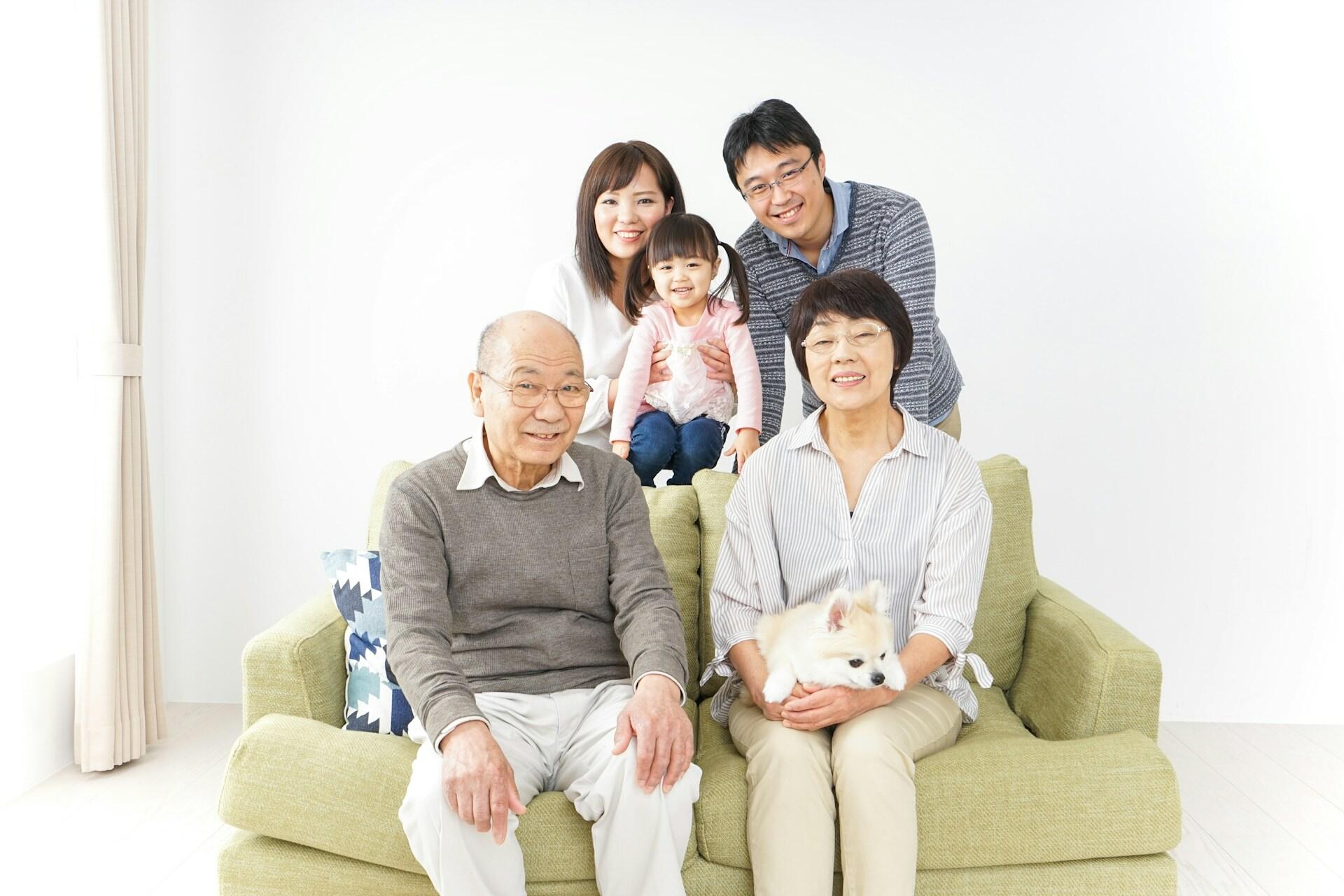

In our culture, we typically address our siblings by their given names and our elders by their titles: mum, dad, auntie, and so on. It would be awkward if we addressed a sibling as 'younger brother' or 'older sister', but that's exactly how family dynamics work in Korea. Family members don't call each other by their names unless they're truly angry with them. Instead, they use role-specific vocabulary to address the family member they're speaking to.
| 📛 Title | 🔊 How to say it | 🔍 What it means | 👨👩👧👧 Who uses it |
|---|---|---|---|
| 형 - hyeong | older brother | younger brother to older brother. | |
| 남동생 - namdongsaeng | younger brother | older brother or sister to younger brother. | |
| 오빠 - oppa | older male (older brother) | younger sister to older brother | |
| 누나 - nuna | older female (older sister) | younger brother to older sister | |
| 언니 - eonni | older sister | younger sister to older sister | |
| 여동생 - yeodongsaeng | younger sister | older sister to younger sister | |
| 어머니 - eomeoni 엄마 - eomma | mother mum | children to mother | |
| 아버지 - abeoji 아빠 - appa | father dad | children to father | |
| 아들 - adeul | son | parents to male children | |
| 딸 - ttal | daughter | parents to female children | |
| 남편 - nampyeon | husband | wife to husband | |
| 부인 - buin | wife | husband to wife |


Immediate Family Members: How to Say Brother, Sister, Father and Mother in Korean
In Korean, the word for 'family' is gajok (가족). The first character, 가, may represent 'border', the concept of 'end', 'side', or 'edge'. The second character, 족, has several meanings, with 'tribe' being among them. Thus, we can say that, in Korea, a family is an 'encircled tribe'.
As in many societies, the nuclear family forms the foundation of families in Korea. Typically, dad and mum head up this unit. Just as in English, Korean children have more than one way to address their parents.
Formally
- 아버지 - abeoji
- 어머니 - eomeoni
Informally
- 아빠 - appa
- 엄마 - eomma
Meaning
- father, mother
- dad, mum
These words' usage falls along the same lines as our usage of 'father' versus 'dad'. If you're in trouble, you'd better respond to the inevitable scolding with 'Yes, Father' or 'Yes, Mother'. But if you want to ask a favour, the endearing 'mum' and 'dad' work better.
Besides these, Korean culture offers yet a higher level of formality: 어머님 - eomeonim and 아버님 - abeonim. Their rough equivalent in English would be 'Mrs Mother' and 'Mr Father'. The -nim suffix adds a layer of decorum reserved for the most solemn or serious of occasions. If you're truly sorry for the great trouble you caused, that's a chance to flex the '-nim' designation.
When discussing family inside or outside the family circle, it's common for people to precede the designated person with 'uri' (우리), meaning 'our' or 'we'.
We do the same in English: "our Sally" or 'our John', for example. Native Korean speakers typically do so more for their parents: 'our mother' (uri eomma - 우리엄마), meant more in the sense of 'my mum'. However, you can use 'uri' when talking about any family member2.
The Siblings
Despite their three layers of formality, addressing mums and dads in Korea is pretty simple. In fact, it's arguably the easiest Korean relationship to define. That won't be the case going forward.
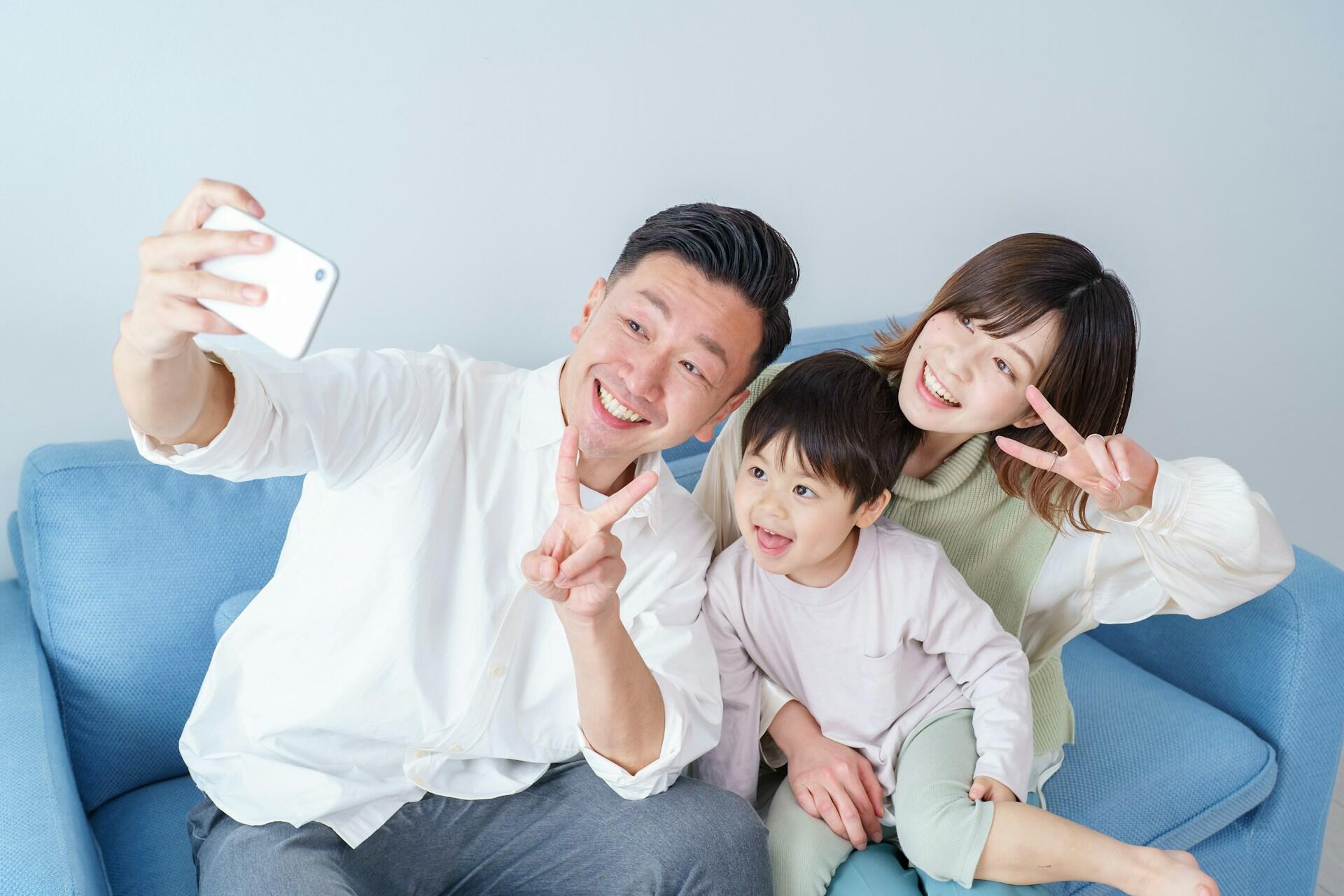
In most cultures, including ours, it's uncommon to define one's sibling as older or younger unless it's necessary to do so. For instance, you might need to specify that your older brother is still at university while your younger brother already has a job.
By contrast, siblings in Korean families call each other by their family role as a matter of course. More precisely, they address their siblings by their place in relation to their own roles within the family. And each sibling's designation depends on their and their sibling's gender.
If you're the youngest daughter, you call your older brothers 'oppa'.
Your older sisters are all eonni.
Everyone calls you dongsaeng (younger sibling) or, because you're a girl, yeodongsaeng.
Your parents call you ttal.
Granted, parents call all their daughters ttal. However, they reserve special pet names like ippeuni (이쁜이 - 'pretty girl') and gangaji (강아지 - 'puppy') for their last-born girls. Other forms of address include aga (아가 - baby) and gongju (공주 - princess). Older siblings may lovingly refer to their youngest that way, too, but how do they address each other?
For people who grew up outside of the Korean culture, this must all sound so confusing! But the mechanisms are very simple. Where we learn our siblings' names as we learn how to talk, Korean children learn their siblings' titles. "That's oppa!" a parent might coach, or "There's your nuna!"
However complicated this system might seem, it serves the fundamental purpose of reinforcing the family hierarchy. In Korean culture, social roles are of preeminent importance, and nowhere is that more plain than in the family structure. As a bonus, it helps children find their place within the family dynamic and places them in context with their siblings.
Extended Family Words in Korean
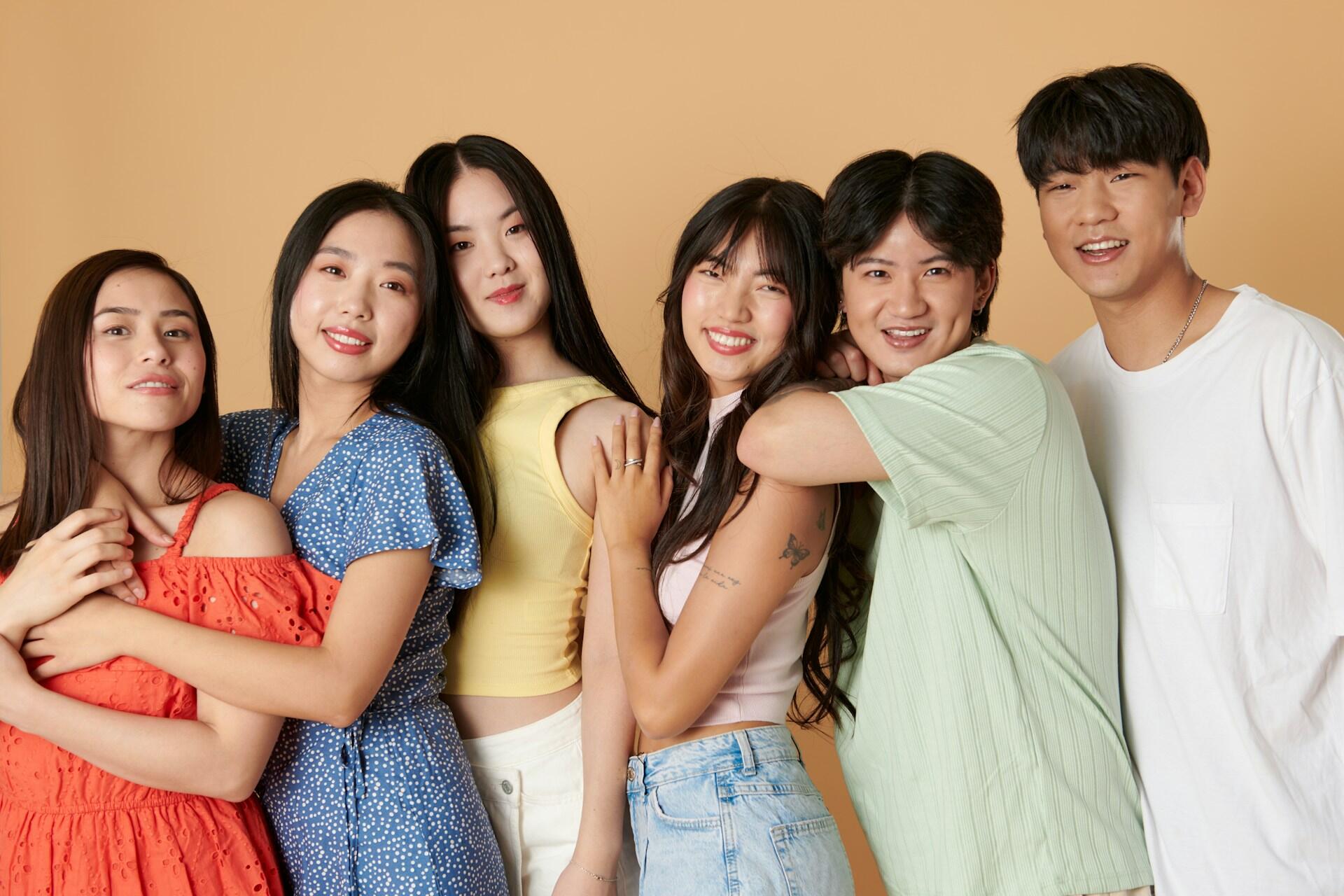
If you've ever watched any Korean dramas, you've likely heard the word samcheong. It means 'uncle' in the same sense that the people in India use it: an older male who's not directly related. A street sweeper or binman can be samcheong, for example.
But in Korean culture, 'samcheong' also represents a specific family role. These family members merit specific greetings in Korean meant especially for them. That's because, like the siblings, their position in the family hierarchy makes all the difference in how they're addressed.
Father's Side of the Family
The precision of the Korean family vocabulary is astounding. Families have aunts, uncles, and grandparents on both sides, just like families the world over. But Koreans address relatives on dad's side differently than they do their mum's side.
| 📛 Family role | 🔊 How to say it | 👬 Relationship |
|---|---|---|
| 친가 - chinga | 'father's side' | |
| 작은아빠 - jageunappa | father's younger brother | |
| 큰아빠 - keunappa 백부 - baekbu | father's older brother | |
| 삼촌 - samchon 숙부 - sukbu | father's unmarried younger brother | |
| 고모 - gomo | father's sister |
Mother's Side of the Family
As with dad's side of the family, so too with mum's. These are the words that distinguish mum's relatives from dad's.
| 📛 Family role | 🔊 How to say it | 👭 Relationship |
|---|---|---|
| 외가 - oega | 'mother's side' | |
| 외할머니 - oehalmeoni | maternal grandmother | |
| 외할아버지 - oeharabeoji | maternal grandfather | |
| 외숙부 - oesukbu | mother's brother | |
| 이모 - imo | mother's sister |
Once again, we must marvel at the precision of family words in Korean. Nobody needs to wonder whose sister that auntie is. Convoluted phrases like "My grandfather on my mum's side" are equally unnecessary because the vocabulary identifying family members makes all that clear.
Beyond Blood Family: Korean Family by Marriage
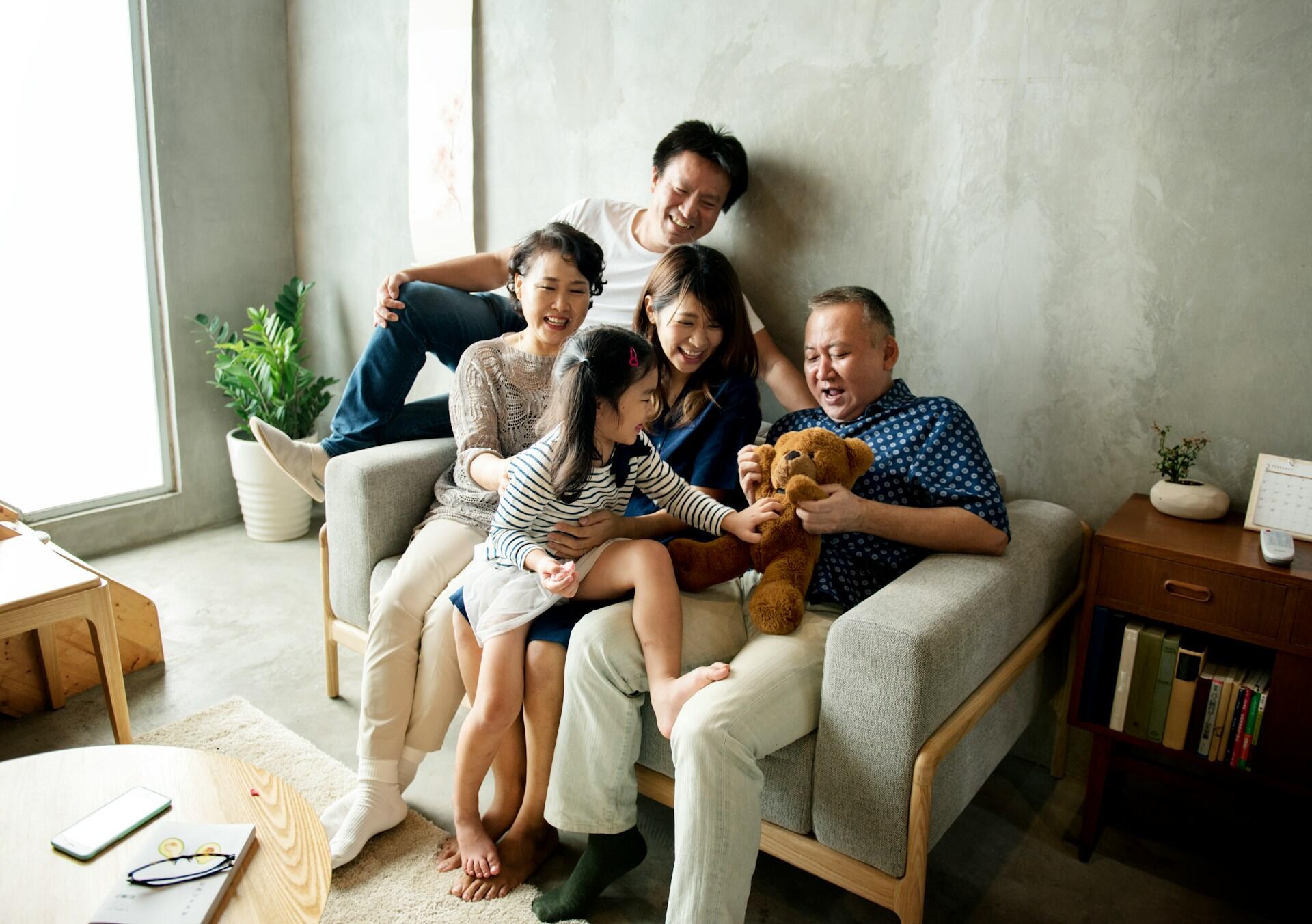
Keeping in mind that defining family relationships in Korean is so precise, it's no wonder that there's no need for second cousins thrice removed and so on. In fact, once you know all the words, defining family relationships is as simple as counting in Korean.
Following the pattern already established, we can move away from blood relatives to define in-laws. Here too, the titles come from 'sides of the family', organised by their place in their own family's hierarchy.
| 📛 Family role | 🔊 How to say it | 👨👩👧👧 Relationship |
|---|---|---|
| 아버님 - abeonim 장인 - jangin | father-in-law (husband's father) father-in-law (wife's father) | |
| 어머님 - eomeonim 장모님 - jangmonim | mother-in-law (husband's mother) mother-in-law (wife's mother) | |
| 형님 - hyeongnim 동서 - dongseo | wife's older sister's husband wife's younger sister's husband | |
| 서방님 - seobangnim | husband's older sister's husband husband's younger sister's husband | |
| 아주머님 - ajumeonim 처남댁 - cheonamdaek | wife's older brother's wife wife's younger brother's wife | |
| 형님 - hyeongnim 동서 - dongseo | husband's older brother's wife husband's younger brother's wife | |
| 형님 - hyeongnim 동서 - dongseo | sister-in-law (husband's older sister) sister-in-law (husband's younger sister) | |
| 처형 - cheohyeong 처제 - cheoje | sister-in-law (wife's older sister) sister-in-law (wife's younger sister) | |
| 아주버님 - ajubeonim 시동생 - sidongsaeng | brother-in-law (husband's older brother) brother-in-law (husband's younger brother) | |
| 형님 - hyeongnim 처남 - cheonam | brother-in-law (wife's older brother) brother-in-law (wife's younger brother) |
The Cultural Importance of Family Words in Korean
Let rulers be rulers, ministers be ministers, fathers be fathers, and sons be sons.
A summary of Confucian thought
Looking beyond the logic and precision of family words in Korean, you might wonder why these terms exist. In fact, they are rooted in traditional Korean culture, which revolved around gender roles, age differences, social hierarchy, and philosophy.
For the most part, the first three factors aren't so different from how many other societies functioned. For most of recorded history, men claimed the lion's share of social power and responsibility, and the well-to-do always claimed precedence over other members of society.
How the elderly were treated varied from Eastern to Western cultures; in Eastern cultures, elder veneration persists still today. So far so good, but what are the Five Relationships mentioned above?
By order of social importance:
1️⃣ Ruler and subject
2️⃣ Father and son
3️⃣ Husband and wife
4️⃣ Elder brother and younger brother
5️⃣ Friend and friend
Today, Korean culture reflects these layers of social rank. With clearly defined roles, each member of society knows their place and their function within the whole. This system applies as much outside the family as within.
Even if the younger brother is smarter or more favoured, he will still defer to his older sibling, just because of his place in the family hierarchy. If one's in-laws are richer than one's own family, the less advantaged family will exercise an extra measure of deference due to their status.
Knowing One's Place
For most Korean people, properly addressing someone in their family circle is automatic. They grew up identifying their mothers' sisters as imo and their fathers' as gomo. Calling those relatives anything else would make no sense. But all these titles go far beyond sense and habit.
Addressing family members by their correct titles accords them the respect their position within the family earns them.
In English, the phrase "Know your place!" gives off negative vibes because, usually, the one who says it thinks they're better than everyone. But more importantly, our rules for 'places' aren't as clearly defined as they are in Korean culture. Or, more accurately, our culture has unspoken rules for 'places' while, officially, 'places' don't exist.
By contrast, in Korean culture, 'places' are well-defined and instilled from one's youngest years. With everyone 'knowing their place', harmony tends to prevail. Not to say that no family friction exists, of course. Siblings will fight, and kids will forever push back against their parents.
Still, growing up in a system of instilled social hierarchy tends to lead to a more harmonious society. Across Korean expressions and phrases, we see evidence of this harmony. Younger people address elders in formal language, using honorifics even with friends a few months older than they are.
References
- Torabi, Sara. “Family in Korea: 7 Fundamental Insights.” Civilisable, 5 Nov. 2024, https://civilisable.com/family-in-korea/. Date accessed: 5 Jul. 2026
- Korean, 90 Day. “How to Say ‘Mother’ in Korean - Ways to Address Moms.” 90 Day Korean, 8 July 2016, https://www.90daykorean.com/mother-in-korean/. Date accessed: 5 Jul. 2026
- muchadoboutlove. “Korean Family and Kinship Terms.” The Talking Cupboard, 11 May 2013, https://thetalkingcupboard.com/2013/05/11/korean-family-and-kinship-terms/. Date accessed: 5 Jul. 2026
- Quaresma, Milena. “Family Members in Korean [Beginners Guide].” The Blog for Language Lovers | Lingopie.Com, 4 Apr. 2024, https://lingopie.com/blog/family-members-in-korean-beginners-guide/.
Summarise with AI:
Did you like this article? Leave a rating!

 Loading...