“If it is true that the violin is the most perfect of musical instruments, then Greek is the violin of human thought.” - Helen Keller
The violin, viola, and cello are famous for the demanding technique they require in order to be played. A good number of Brits have taken at least one lesson on how to play a musical instrument in their life. Most people say the guitar is their favourite string instrument while very few seem to have a soft spot for the violin or fiddle. That said, there are actually plenty of people interested in learning to play the violin, they just either think it's too difficult or too expensive to do. Especially with the instrument accessories that you have to invest in too. There's some truth to this. The violin can be really tricky to play and it's almost impossible to learn it for free. However, with the right resources and planning, you can make learning much easier and cheaper than you probably first thought. In this article, we’re going to look at exactly how to play violins right-handed.
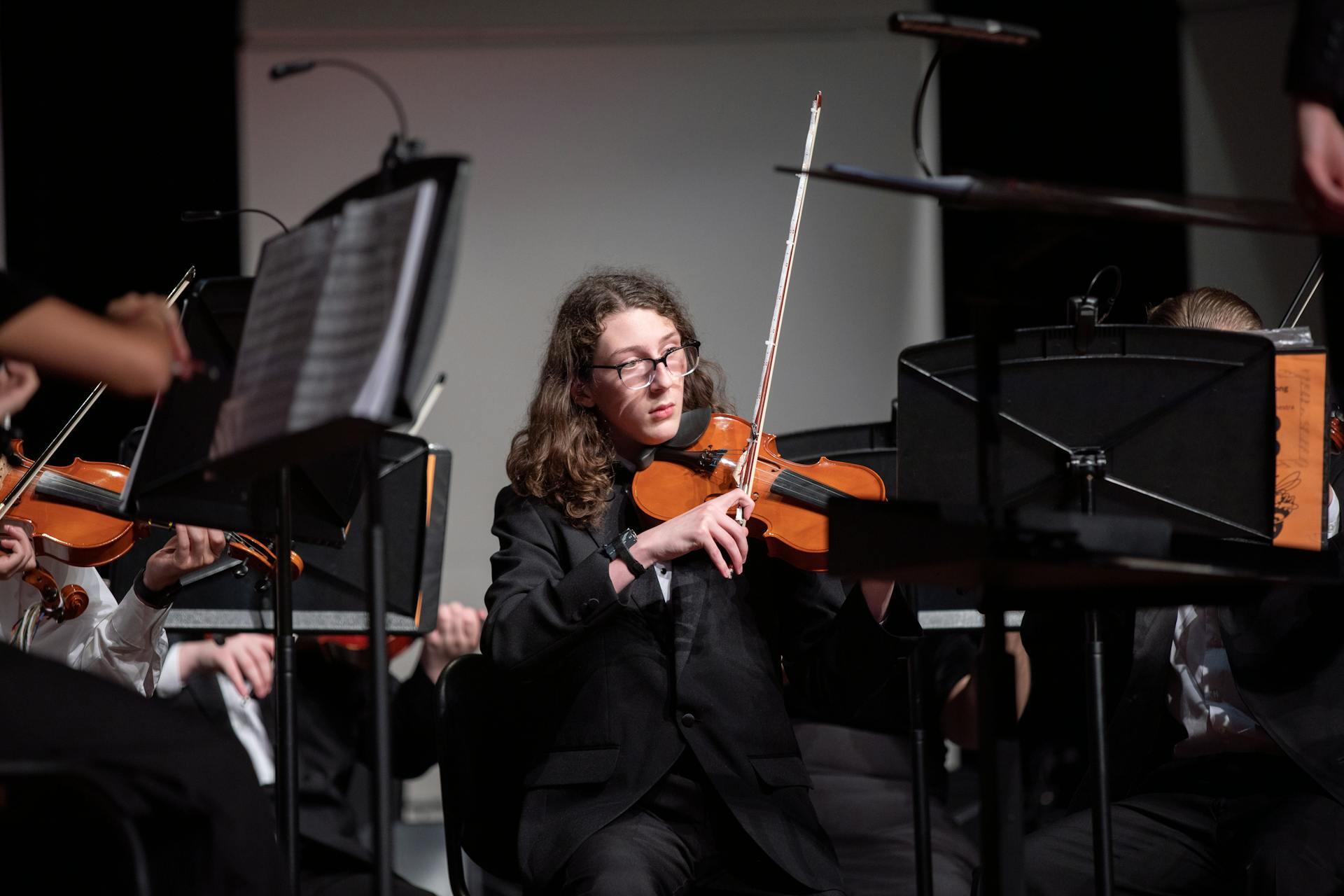
Generally speaking, if you’re right-handed, you’ll place your violin on your left shoulder and hold the bow in your right hand as your left hand manipulates the neck in order to produce the notes. You'll notice that you rarely see an orchestra with a lot of left-handed violinists. (Source: YannaZazu) You need your right arm and right hand in order to correctly play the violin strings with dexterity, flexibility, and musicality. Learning to play the violin is an arduous task, especially if you’re trying to teach yourself. It’s recommended that you take violin lessons because there are a number of things that a budding violinist will have to do:
Avoid picking up bad habits
Adopt the right posture
Learn music theory
Learn to read sheet music
Correctly hold the violin, etc.
When you start playing violin, you run the risk of becoming demotivated as the violin is very difficult at the beginning. The main goal of violin tutorials is to ensure that you enjoy playing violin music while also providing musical training for beginners. Your bowing technique will determine how good a violinist you’ll become. You’ll probably have noticed when watching symphony orchestras that all the bows are pointing the same way. In fact, conservatoires often refused to accept left-handed violinists unless they agreed to play right-handed. A left-handed violin is a mirrored version of its right-handed counterpart; the strings are in the opposite order, and the bridge, nut, and bass bar are all reversed, too. In this case, private violin tutors will have to adapt their teaching style to their left-handed students (unless they’re left-handed themselves). This can be difficult as they’ll have reverse every movement they see in order to produce a good sound or play a violin piece.You’re far more likely to see a left-handed person playing a right-handed violin than a right-handed person playing a left-handed violin since around 1 out of every 10 people is left-handed. With fewer lefties about, manufacturers and luthiers make fewer left-handed versions of their instruments. That said, being left-handed has never held back virtuosos and some of the greatest musicians of all time (including Schumann and Beethoven) were left-handed. In order to play a note correctly, the bow has to be guided by the forearm and the wrist. You’ll also need to work carefully on holding the violin bow. You can take violin lessons here.
How Do You Hold a Violin Bow?
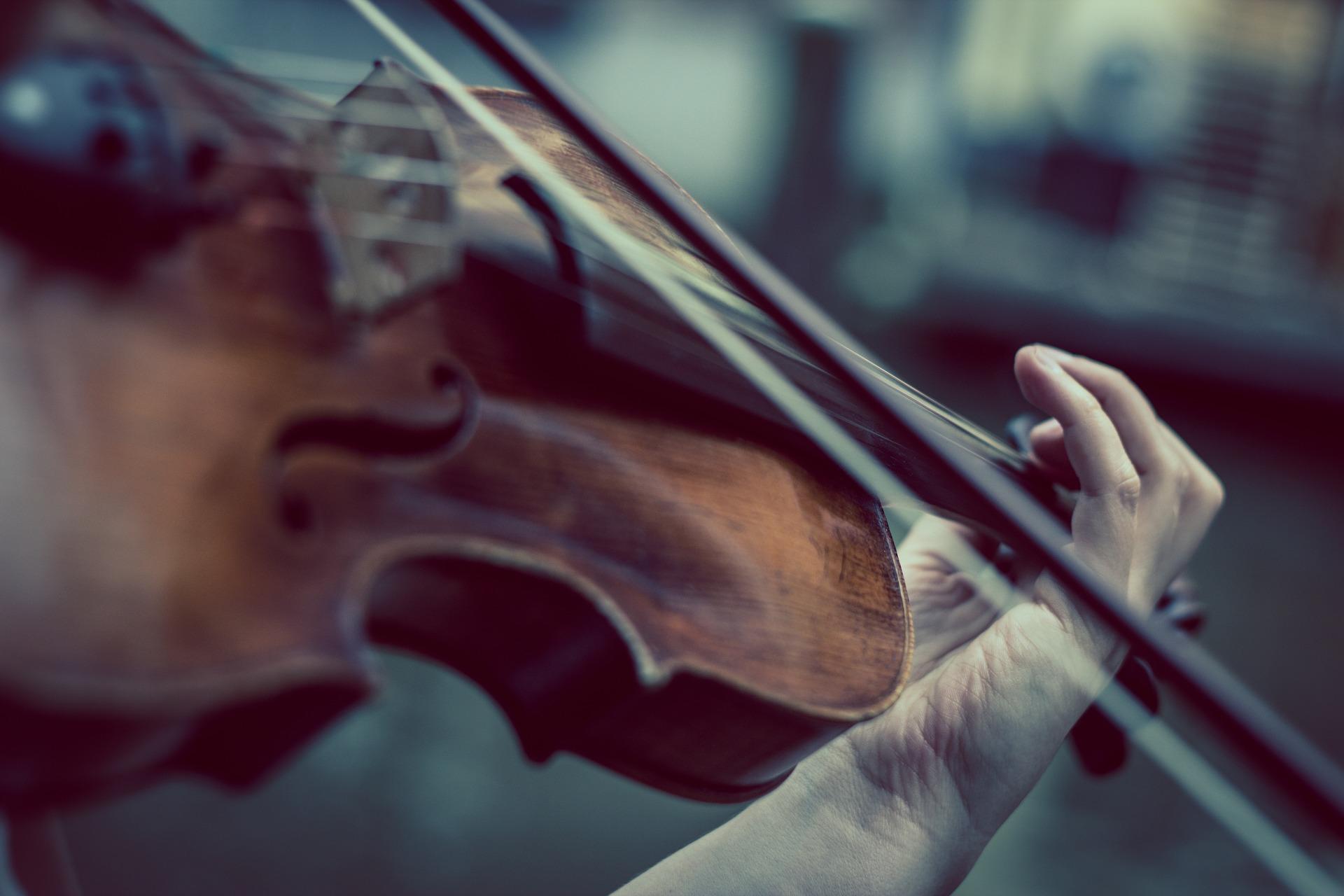
After you’ve tuned your instrument and applied rosin to the bow, you’re going to have to learn how to use the bow. I don't think any of these are your new violin bow. (Source: Pexels) We’ve said it once and we’ll say it again, correctly holding the bow is fundamental to producing quality notes. How you hold a violin bow is both a science and an art. Holding the bow itself isn’t the most difficult thing to do. However, holding whilst accurately moving it in order to produce notes is rather complicated. You need to place the bow with the middle of your index finger just by the pad next to the screw. Then place your pinky on the flat part at the base of the bow while keeping the finger curved. The index and pinky will naturally envelop the top of the bow and now you can place your thumb underneath. Your hand needs to be relaxed yet rigid as if you were holding onto a small rock on a climbing wall. Achieving a good sound and nuance will come from the speed of the bow, the pressure you apply on the strings with the bow, and how the bow is positioning in relation to the bridge. This is what we call resonance. You then need to learn how to move the bow through the air. The ideal way is to trace figure eights in the air rather than circles. There are tonnes of great videos on YouTube explaining this technique.
How to Loosen Up Your Right Hand
So you’re in the right position to play the violin with the instrument between your collarbone and your chin. You just have to start playing with your right hand. A physiotherapist could help with those aches and pains. (Source: whitesession) We recommend playing open strings first just so you can get the hang of holding the bow. Above all, make sure you stay in the right position. Place the hair of the bow halfway between the bridge and the neck so that the bow is directly over the soundbox. Move the bow straight across the strings in a smooth and fluid motion. Don’t forget that the more pressure you apply to the bow, the louder you’ll play. This will be useful for nuanced playing (fortissimo, forte, mezzo forte, piano, pianissimo, etc.). Normally, you won’t remove the bow from the strings as they’ll need to produce a continuous sound. If they don’t, you might need to add some rosin. Getting the sound right is all down to how you move the bow. There are a lot of exercises you can do with just open strings. Once you get the hang of one string, you can move onto another string to make sure you’re used to the different heights. You can then start playing notes by bringing your left-hand into play. Once you can correctly play a note, you can start by placing your middle finger a bit further up from your index, and then your ring finger, all while playing one string with the bow.
What Violin Techniques Are There?
You can’t just stop there doing basic techniques. Just like playing the guitar or the piano, you won’t become a master in just one day.Your technique will dictate how your violin sounds. (Source: Pexels) Mastering violin bow technique can take a lot of practice. There are also plenty of different techniques, too:
Détaché
Collé
Legato
Louré
Martelé
Staccato
Jeté
Sautillé
Spiccato
Vibrato
Whatever type of attack you use, here’s some advice:
Position your elbow as if you were playing the D string
Move your elbow straight when you change from one string to another
Lower your elbow for the reverse motion
Give the impression that the bow is horizontal
Move the bow down when you move to the G string
Keep your elbow at the same height when playing a single string
Would you like to learn to play the violin at a conservatoire or music school? Or are you looking for a violin teacher near me? You can also get private violin tutorials at your house! There are plenty of violin tutors from all over the UK on Superprof. Many of the tutors on Superprof offer the first hour for free so you can see if you get along, the type of tuition they offer, and organise the details of your tutorials, such as the rates, schedule, and what techniques you'd like to focus on. With private tutorials, you're the only student in the class. This means that the lessons are tailored to you and what you want (or need) to learn. If you're just playing for fun, your tutor can teach your some of your favourite songs. If you're preparing for an audition for a music school or conservatoire, they can help you to focus on techniques that are going to impress! Don't forget there are also online tutorials via webcam if you live rurally or can't schedule tutorials with local tutors! When you first start, you should consider an electric violin or a try to practice with the violin mute accessory so you don’t upset your neighbours with your playing. It would be a shame to get complaints just as you’re getting started with the violin. Stick with it! You’ll soon be making progress.
Summarise with AI:
Did you like this article?Leave a rating!
5.00 (1 rating(s))
Loading...
Joseph
Joseph is a French and Spanish to English translator, language enthusiast, and blogger.
The Best Songs to Play on Violin Whether just starting with the violin or wanting to advance, your repertoire is essential. The right violin songs or pieces will help you improve your playing. Here, we've picked pieces for beginner, intermediate, and advanced violinists. Before You Start: Knowing Your Level Your mileage may vary, but throughout […]
Violin Exams & Grades – Complete Guide If you’re a keen violinist, sooner or later you will have to take a violin exam. As with many other instruments, your proficiency with it is rated by a system of grades. Each assessment you take will allow you to pass up to the next grade. It’s worth […]
What Are The Instruments In the Violin Family? Even if you've never stepped into a concert hall in your life, chances are you can probably recognise the sound of a violin. It's iconic and often stands out during a performance with its ability to pull listeners in. However, what most people don't know is that […]
How to learn Violin - For Aspiring Musical Professionals in the UK's Top Conservatoires A conservatoire is the ideal place to hone violin skills. Those who are already living in the UK and looking for violin teachers near me to take them to an elite level, or even musicians further afield who just want to […]
Learn More about the Violin’s Great History Buying a violin or fiddle is good, knowing your instrument is better. As both a 16th-century invention and a musical instrument, the violin is an amazing object and full of history. From Mozart to Vivaldi via Lully, the violin underwent several changes and luthiers like Stradivarius (one the most […]
What You Should Know Before Buying Your First Violin If you're in any way familiar with the Monterey Jazz Festival, you've surely heard of Jean-Luc Ponty. Many credit this French-born jazz violinist with pioneering violin technique in jazz music; others accord him the loftier title of Father of the Jazz Fusion genre. It's not like […]
Which Works Of Art Are Inspired By The Violin? Culture is not only food for the soul - Renaud Donnedieu de Vabres The violin is one of the most famous instruments in our contemporary society. Piano, clarinet, double bass, oboe, guitar, every note of these instruments, even played with genius, does not resemble the violin, […]
How Do Violinists Play Around the World? “If it is true that the violin is the most perfect of musical instruments, then Greek is the violin of human thought.” - Helen Keller The violin, viola, and cello all originated in Europe and Italy, in particular. So does that mean that the violin is played in […]
Playing The Violin Takes Lots Of Practice The only way to raise your proficiency in the violin is to practice. In the world of the string instruments more than any other, practice makes perfect. There is so much to learn and so many ways to learn the violin. You will need to employ targeted focus […]







 Loading...