

“Of course the most difficult thing on the violin is always intonation. The second one is rhythm. If you play in tune, in time with a good sound that's already high level. Those three are the main things.” - Ruggiero RicciIn 2018, a pawnshop in Massachusetts bought a stolen violin. It turned out the violin was from a collection ade by Fernando Gagliano in 1759 and valued at $250,000. While you won’t pay this much for your first violin, it just goes to show that violins aren’t necessarily cheap! In addition to all the practice you have to do, learning to play the violin also means that you’ll have to buy a number of accessories. After the bow, rosin, chinrest, shoulder rest, and replacement strings, the practice mute is one of the most important accessories. In this article, we’re going to have a look at mutes for violins.

The best Violin tutors available


Sarah
£39
/h

1st lesson free!

Kiki
£62
/h
1st lesson free!

Iona catherine
£55
/h
1st lesson free!

Tim
£32
/h
1st lesson free!

Syntyche
£34
/h
1st lesson free!

Andrew
£39
/h
1st lesson free!

Maria
£40
/h
1st lesson free!

Naomi msm
£50
/h
1st lesson free!
Sarah
£39
/h
1st lesson free!
Kiki
£62
/h
1st lesson free!
Iona catherine
£55
/h
1st lesson free!
Tim
£32
/h
1st lesson free!
Syntyche
£34
/h
1st lesson free!
Andrew
£39
/h
1st lesson free!
Maria
£40
/h
1st lesson free!
Naomi msm
£50
/h
1st lesson free!
Why Should You Get a Violin Mute?
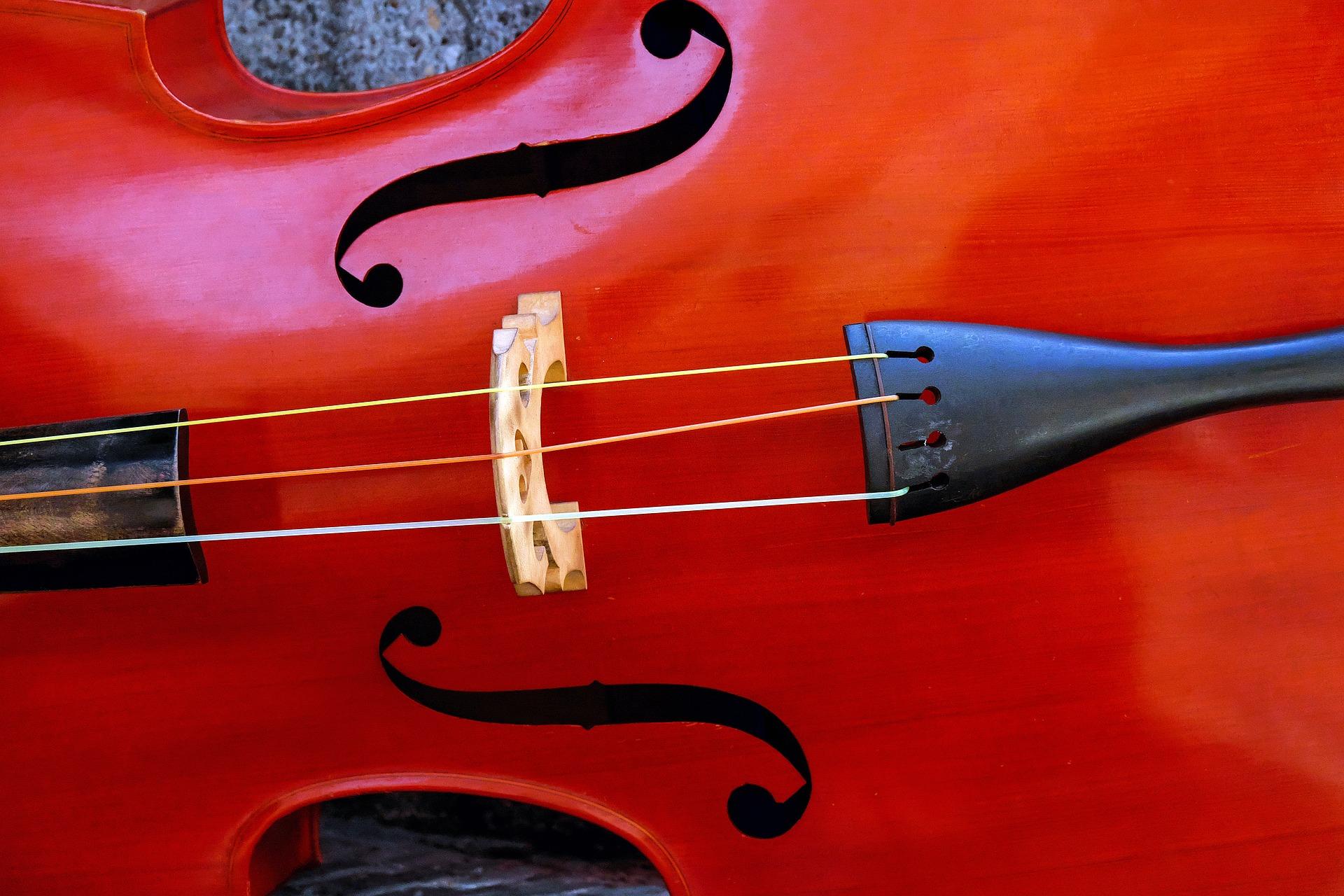
A mute is a device that dampens the sound of an instrument. You can also get them for a violin as well as violas and cellos. It attaches to the strings by the bridge of string instruments.
Why Install a Mute on a Violin?
So why should you install a violin mute? We’ve sort of already explained the answer: to allow other orchestral instruments and soloists to be heard more easily or to not bother your neighbours or flatmates.
Fitting an Orchestral Mute
Fitting a mute will increase the weight of the bridge. As a result, fewer vibrations will make it to the sound box. According to specialists, the less intense a violin sounds, the better its timbre is. This is one of the arguments for using a mute: you get a better timbre and therefore a better sound, something your listeners will greatly appreciate. It’s protection for both the musician and the audience. When a musician plays as part of an ensemble, the mute can be used so that the violin isn’t too prominent.Practice Mutes
There are plenty of reasons to buy a practice mute, too. Firstly, for your neighbours when you’re practising with the help of a Superprof private tutor, for example. When you’re getting started with violin scales and trying to improve, it can be an absolute nightmare for anyone living in the same building as you. A practice mute will allow you to stay in everybody’s good books. You might just be lacking in confidence and not want anyone to hear you playing until you’re good. With a practice mute, you can play and practise quietly. Additionally, you mightn’t be able to practise at acceptable times of the day because of work. A practise mute means you can play late at night or early in the morning without bothering anyone. Additionally, you won’t have anyone calling the police on you! Finally, it’s great if you live with others as you won’t wake them up when they’re sleeping or having a nap.Choosing the Right Mute for Your Violin
You can play an electric violin with headphones if you don’t want to bother your neighbours.
- Tourte shaped violin mutes: This is the most commonly used mute in orchestras. It’s made of rubber and has a magnet in the middle.
- Round tourte violin mutes: Just like the previous one, this can be used in chamber music and performances.
- Three-pronged practice mutes: These rubber mutes will drastically reduce the volume of a violin.
- Metal practice mutes: Similar to the previous mute but with a different tone.
- Wire practice mutes: This only slightly dampens the sound so it’s perfect for performances.
- Heavy muting
- Moderate muting
- Light muting
How Much do Mutes Cost?
So how much do they cost and where can I buy one?
Thomann
As you may have guessed, Europe’s largest music retailer sells violin mutes. They start at just under £2 and go all the way up to nearly £60.gear4music.com
Similarly, gear4music.com has violin mutes. Just like Thomann, they start at under £2. Keep in mind, that if you’re a beginner buying a mute, you probably want one that dampens a lot of the sound! Search for violin lessons now.Fair Deal Music
Birmingham’s largest independent music store also has a website where you can get a variety of violin mutes. Again, the cheapest is less than a couple of quid! Whether you play the violin or fiddle, viola, cello, mandolin, bass, guitar, piano, or drums, most of these stores have plenty of accessories for percussion and stringed instruments. You can get replacement violin strings, tuners, a metronome, violin bows, chin and shoulder rests, replacement parts like tuning pegs, a violin case for either an acoustic or electric violin, as well as resources for beginners. A chain is only as strong as its weakest link and a violin is only as good as the worst part on it. That means that in addition to being carved and made by a good luthier (a violin maker), your violin needs a good fingerboard, violin bow with horsehair, and violin rosin for your bow in order to improve the playability and tone of your musical instrument. Search for violin lessons London now. It's always a good idea to have a replacement violin string since you'd hate to be practising and have a string break. A violin string, especially the e string (as the thinnest), can snap at the worst possible moment, so make sure the next time you're in your local violin shop, you pick up an extra pack of strings. Don't forget that the other members of your orchestra or string quartet might need cello strings or viola strings, so you can pick some up for them in these stores, too. Popular string manufacturers include D'addario and Thomastik Infeld, but you don't need to buy really expensive violin parts and accessories if you're just a beginner. After all, a good sounding violin still won't sound good in the hands of a complete beginner. Right-handed musicians can learn the regular way, but left-handed musicians have different learning options. You can read more the violin in our other posts.Summarise with AI:
Did you like this article? Leave a rating!

 Loading...
