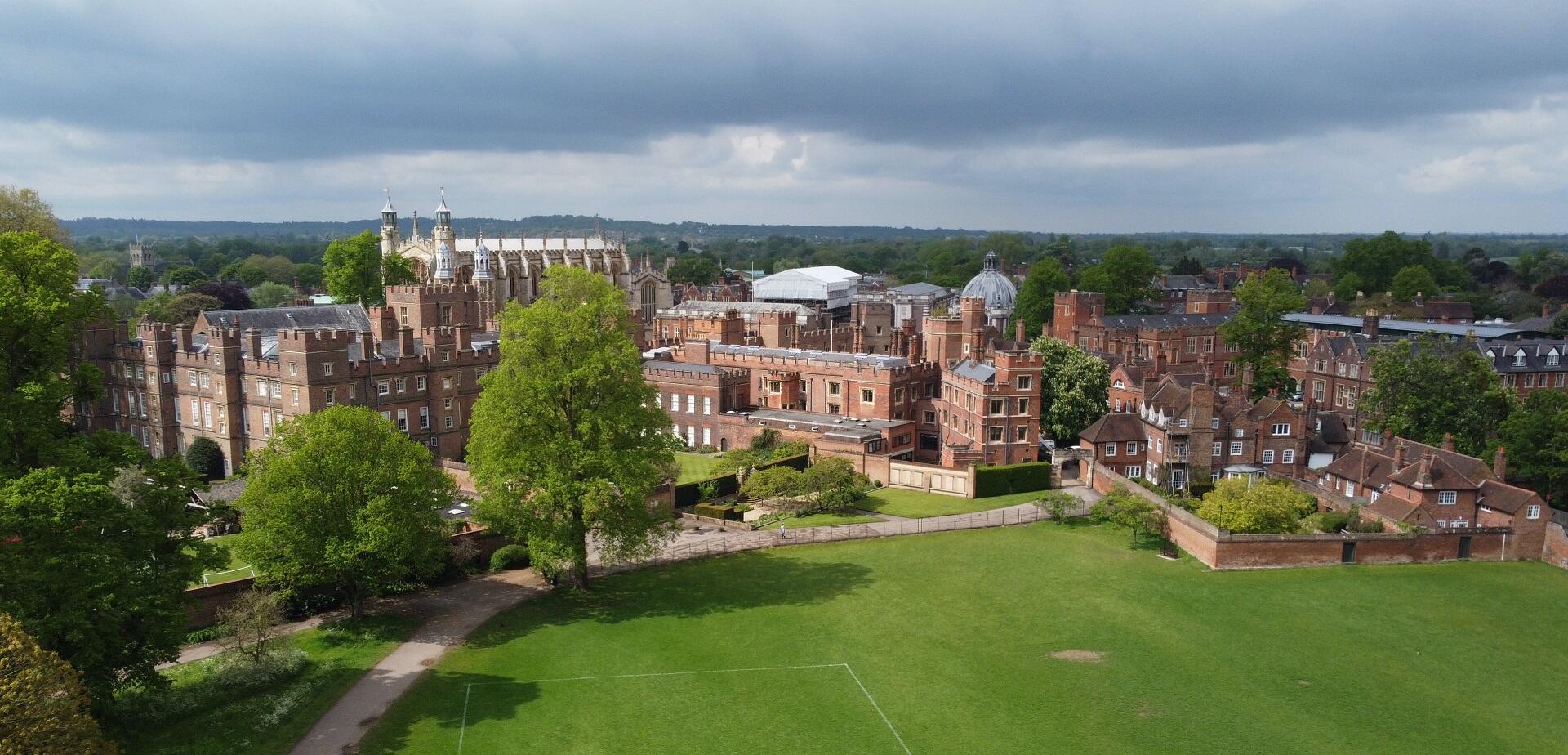

As all major British news outlets recently reported, Prince George began his secondary education at Eton College1. That illustrious all-boys' school has a long history of educating sons of royalty stretching back centuries. Before his Eton debut, Prince George attended Lambrook School in Berkshire, where his younger siblings currently learn. This article describes traditions of royal education and the schools that meet strict requirements for privacy as well as educational standards.
Royal Family Education Facts
- Historically, British Royal Family education consisted of homeschooling; Queen Elizabeth II was the last monarch to be educated at home.
- King Charles is the first British monarch to be educated in a civilian school; first Hill House, then at Cheam and Gordonstoun, and finally, at Trinity College, Cambridge.
- Princes William and Harry attended Wetherby, Ludgrove, and Eton College.
- Besides standard school subjects, most royal boys also study constitutional history and enlist in the military to round out their education.
- Royal girls' education tends to be less well defined.


What School Does Prince George Go To?
Much of the fanfare over Prince George's start at Eton College speculates over what his experiences might be like or how the school will ensure his privacy and safety2. Few pages discuss this venerable learning institution, if any. This article fills that gap.
Discovering Eton College
Founded in 1440, Eton is one of three public schools in England that retains the all-boys, boarding traditions it started with.
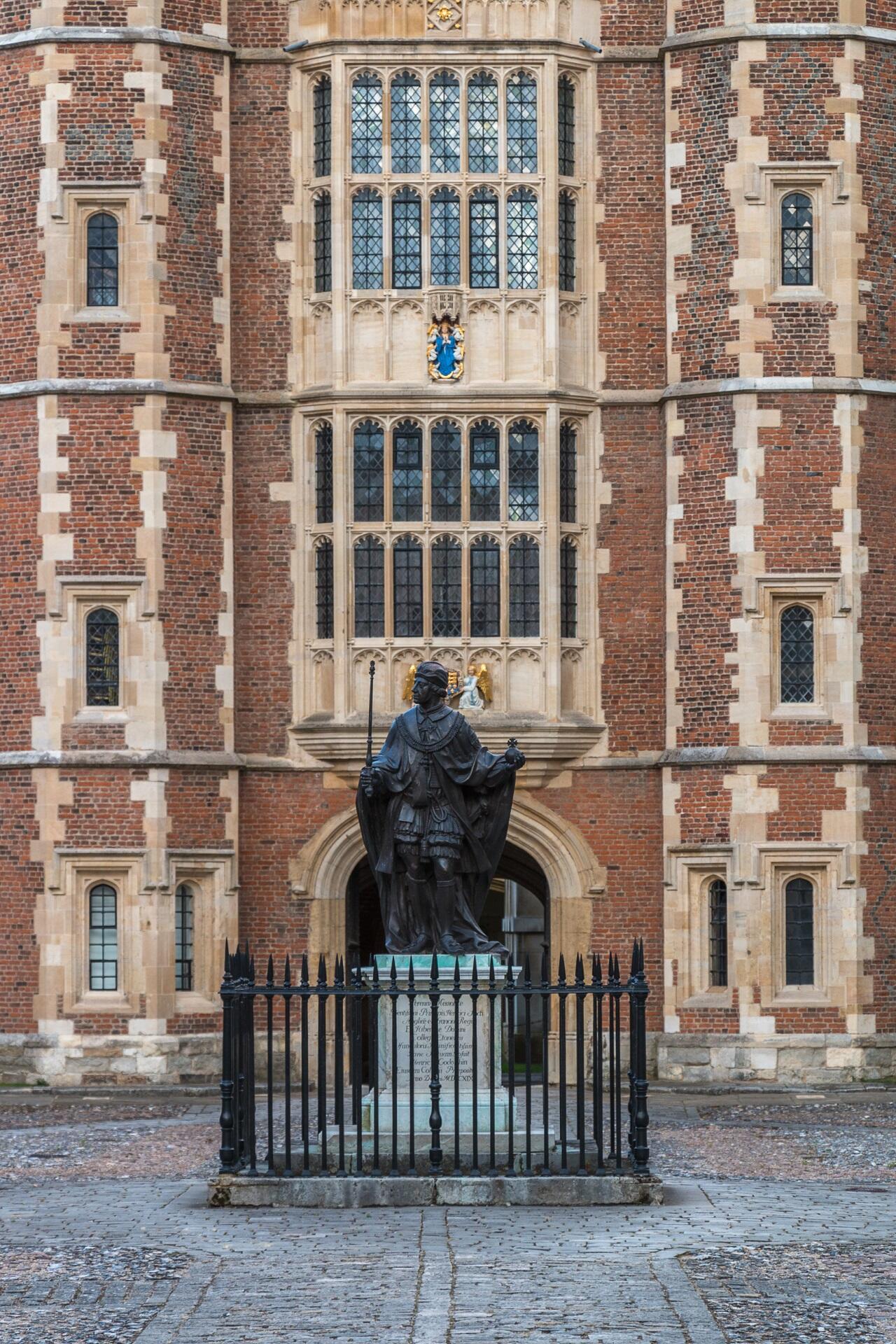
King Henry VI founded this college as a feeder school for King's College, Cambridge. As a royal charity venture, it welcomed '70 poor boys' to a fee-free learning experience, alongside boys whose families paid for their boarding.
Today, Eton College educates more than 1,300 boys; it's England's largest boarding school. Students learn across 25 houses, with the King's Scholars representing the initial 70 learners King Henry VI had envisioned. Besides the fundamental curriculum, students may participate in any of the 80 societies that further challenge and expand their intellectual skills.
Over the past half-century, Eton College has educated - and has been in the running to educate - British nobility and royals in the line of succession to the throne. Thus, it lives up to its "chief nurse of England's statesmen" reputation4.
Understanding the Type of School Eton Is
Boarding schools and boys-only schools exist around the world. Eton is such a school and, unlike other boarding schools, it does not offer a day-school option. Eton College is a public school whose students do not return home after the day's learning is done; they live at the school for the entire term. Prince George will, too.
A public school is an exclusive, historic, fee-paying learning institution.
An independent school is a fee-paying institution independent of central or local government.
State schools are what most other countries consider public schools: free and open to all students.
Eton is both an independent and a public school5, and a rather prestigious one, at that. It does not follow the National Curriculum that state schools teach, and it needn't consider local or central government mandates.
What's it Like to Board at Eton?
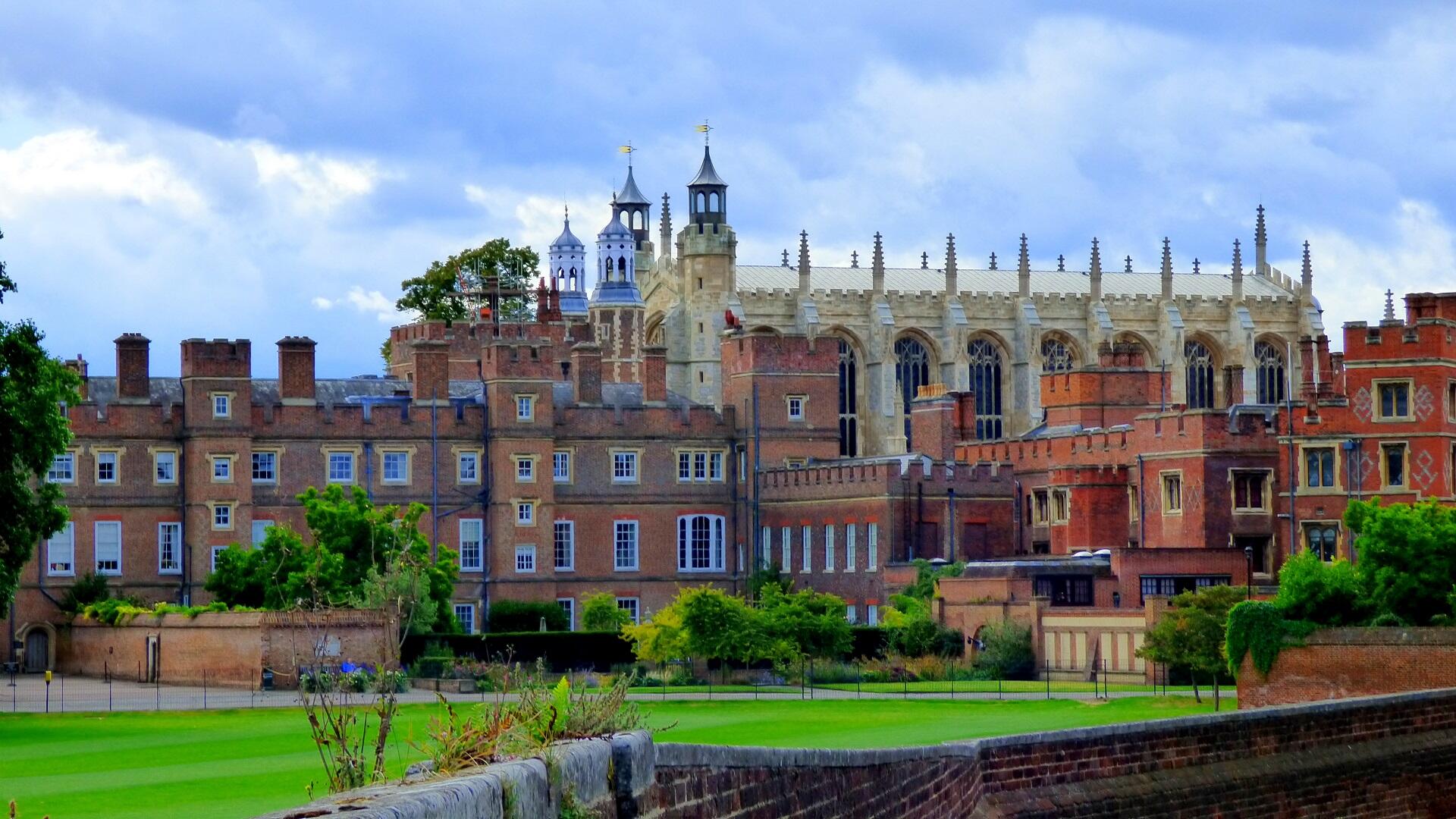
The 25 houses mentioned above are boarding houses, each of which accommodates around 50 boys. Each house has a House Master to oversee its daily operation and a Dame to help with pastoral care. All houses have a name, but only one identifies by its name rather than its housemaster's initials: College House, as the original home for King's Scholars.
Manor House is the traditional house for royal family members while enrolled at Eton.
Some houses have their own dining halls and kitchens; students in those houses take their meals there. Otherwise, Eton features a central dining hall, Bekynton, where members of houses with no dining facilities eat.
House life is like living with an exceedingly large family. Nightly gatherings called 'prayers' give the boys time to touch base and, perhaps, air grievances. Older boys mentor new students, and house captains, the most senior of the boys, encourage student participation and help maintain order.
Fagging was an unpleasant activity that called for younger boys to do the bidding of senior students. Fortunately, that practice was abolished in 1980.
Neither Prince George nor anyone in his cohort will fag for anyone.
What Will Eton College Teach Prince George?
Our prince will spend five years at Eton, and his schedule will be jam-packed throughout. Naturally, we can't know what members of the royal family study in school unless they tell us. Fishing out and publishing that information ahead of time would be serious privacy and security violations!
Still, we can imagine how Prince George will occupy himself by looking over the Eton prospectus. In general terms, these are the challenges he will face.
Those are the pragmatic, real-world things Eton will teach Prince George. However, the more important question is, what will our prince learn at Eton? Those lessons reach far beyond academic learning.
If his father and uncle are any indication, Prince George will learn to function in society. He will learn and appreciate a broader worldview than most schools teach, and he will master the art of diplomacy and compromise. As Britain's future king, those lessons will be invaluable to him.
Where Other Members of the Royal Family Went to School
Today's British Royal Family hews to tradition while actively modernising to meet today's demands. For instance, in the old days, girls didn't receive any higher education. Our late Queen and her daughter, Princess Anne, are two prime examples of inner monarchy workings that favoured boys.
But those days are past, and not a moment too soon! Catherine, Princess of Wales, is a well-educated woman, and she's seeing to it that her daughter becomes learned, too. Right now, Princess Charlotte attends Lambrook School in Berkshire, where her older brother recently studied.
Still, that leaves us mainly with royal boys' education to talk about - mainly, but not exclusively. As we've already spilt the beans on Princess Charlotte and Prince Louis's schooling, this table lists other royal family members in the line of succession.
| 👑 Royal family member | 👫 Relationship to the monarch | 🏫 Schools attended | 📝 Notes |
|---|---|---|---|
| King Charles III | Britain's reigning monarch | Hill House, London Cheam Prep, London Gordonstoun, Scotland Trinity College, Cambridge | His father attended Cheam and Gordonstoun. He is the first heir to the throne to earn his university degree. |
| Prince William | Heir apparent to the throne | Wetherby Pre-Prep, London Ludgrove School, Berkshire Eton College, Berkshire The University of St Andrews, Scotland | His father selected Eton because of his negative experiences at Gordonstoun. |
| Catherine, Princess of Wales | Future Queen Consort | St Andrews School, Berkshire Marlborough College, Wiltshire St Andrews, Scotland | Met Prince William at St Andrews. |
| Prince Harry | 5th in the line of succession. | Wetherby Pre-Prep, London Ludgrove School, Berkshire Eton College, Berkshire | Prince Harry opted for military training rather than higher education. |
| Andrew Mountbatten-Windsor | 8th in line to the throne | Heatherdown Preparatory School, Berkshire Gordonstoun School, Scotland | Andrew opted for a military career rather than higher education. |
| Princess Beatrice | 9th in the line of succession | St George’s School, Ascot Goldsmiths, University of London | Special educational needs kept Princess Beatrice out of traditional royal educational facilities. |
| Princess Eugenie | 12th in the line of succession | Marlborough College, Wiltshire Newcastle University | One of the royal family's top academic performers. |
| Zara Tindall | 23rd in the line of succession | Port Regis School, Dorset Gordonstoun, Scotland Exeter University, Devon | Princess Anne's daughter benefits from the education our Princess Royal did not receive. |
Other Royal Family Members' Educational Experiences
The British Royal Family is extensive; the table above lists only those immediately in the line of succession. Others, such as Lady Louise Windsor, granddaughter of Queen Elizabeth and 18th in the line of succession, also benefited from updated royal family educational norms. She attended St George's School (Windsor) and St Mary's School (Ascot) before studying at the University of St Andrews.
Overall, royal boys' education seems more formulaic6, with Eton, Gordonstoun, and St Andrews being the preferred learning facilities, by far. Peter Phillips, son of Princess Anne, is a rare exception. He attended Port Regis School in Dorset before pursuing higher education at Exeter University. He eschewed military service in favour of private sector work, putting him yet further outside of traditional royal lines.
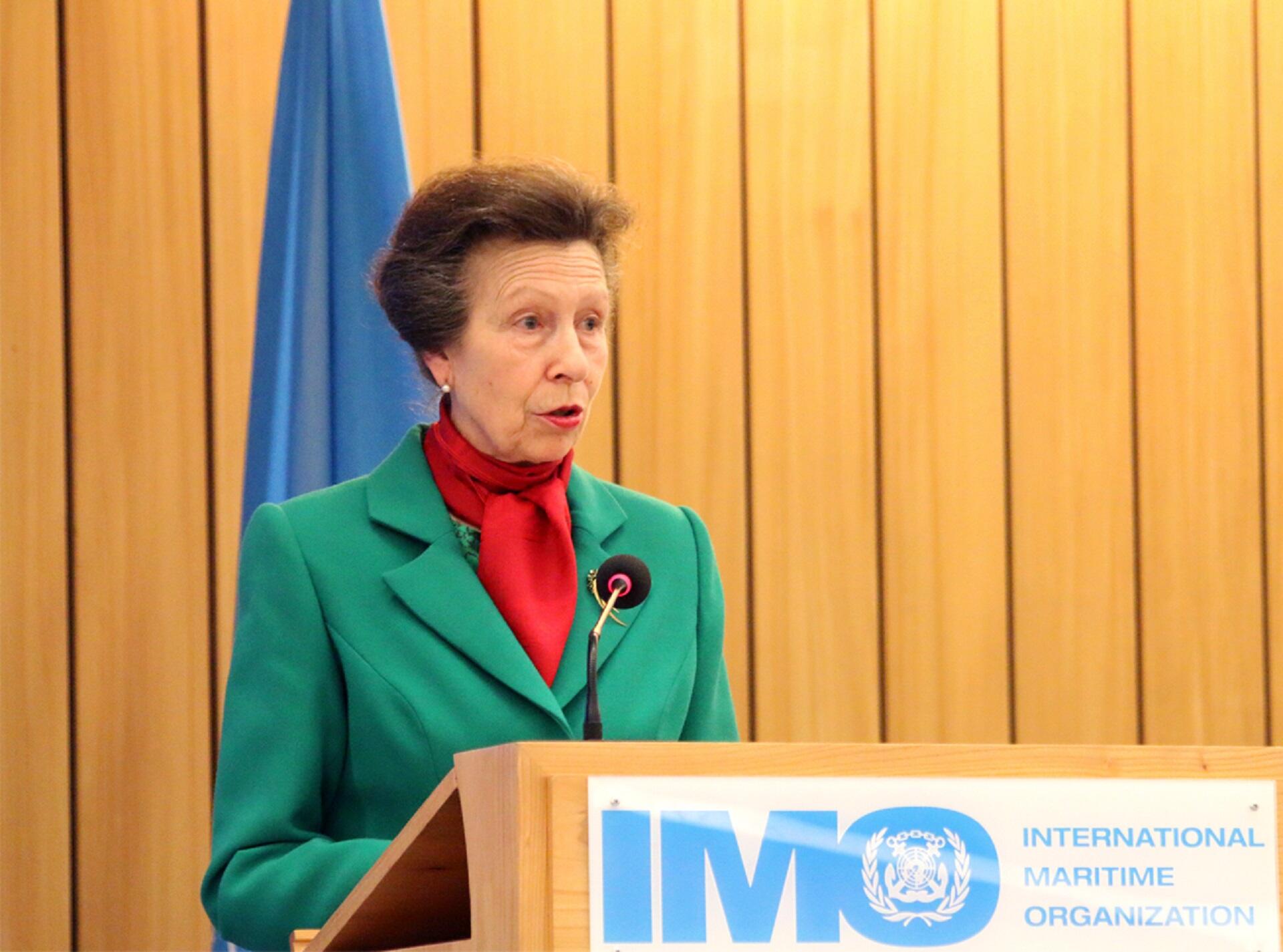
Traditional Royal Education for Girls
As noted above, today's female royals have all the access to education that royal males enjoy. However, that wasn't always the case. Though Queen Elizabeth graduated with honours from the University of Life and was awarded several honorary degrees, she never attended university. Neither did these two senior royals.
Camilla, Queen Consort
- primary school: Dumbrells in East Sussex
- secondary school: Queen's Gate in South Kensington
- finishing schools: in France and Switzerland
Anne, Princess Royal
- primary learning: at home, with a tutor
- secondary learning: Benenden School in Kent
- entered royal duties immediately after school, at age 18
Maybe it was these royals' choice to not pursue higher education, or perhaps it was still the norms of the late 60s that influenced their path. Finishing schools were still popular options for aristocratic girls in those days; besides, it might have been strange for them to study at university.
For women, including royal women, going to uni was pointless, as most unis in the UK didn't grant women degrees until the 1940s, which provoked much uproar.
Besides the uproar7, women's education remained unequal for many years. Still, Queen Camilla and Princess Anne learnt plenty throughout their lives. They make use of their knowledge to help shape today's monarchy for tomorrow's needs.
By the way, did you know that, besides being Britain's hardest-working royal, Princess Anne is the UK's only Princess Royal? Just seven British princesses have borne this unique title since King Charles I created it in 1642 for his daughter. It comes from French royal tradition, as many British royal titles do, but England's king put his own spin on it.
References
- Coughlan, Sean. “Prince George Begins First Day at Eton College.” BBC News, 8 Sept. 2026, https://www.bbc.com/news/articles/cwyzel3qjvzo. Accessed 23 Sept. 2026.
- Roger, Séraphine. “The New Rule at Eton College Ahead of Prince George’s Arrival.” Vanity Fair, 13 Aug. 2026, https://www.vanityfair.com/story/prince-george-eton-privacy. Accessed 23 Sept. 2026.
- Eton College. “Our History.” Eton College, 2026, https://www.etoncollege.com/about-us/our-history/. Accessed 23 Sept. 2026.
- BBC News. “BBC News | UK | Eton - the Establishment’s Choice.” News.Bbc.Co.Uk, 2 Sept. 1998, http://news.bbc.co.uk/2/hi/uk_news/162402.stm. Accessed 23 Sept. 2026.
- Britannica . “Public School | British Education | Britannica.” Encyclopædia Britannica, 2019, https://www.britannica.com/topic/public-school. Accessed 23 Sept. 2026.
- King, Rachel. “A Complete Guide to Where the Royals Went to School.” Town & Country, 6 Sept. 2026, https://www.townandcountrymag.com/society/tradition/a73357496/british-royal-family-schools-education-guide/. Accessed 23 Sept. 2026.
- Roberts, Stuart. “The Rising Tide: Women at Cambridge.” University of Cambridge, 14 Oct. 2019, https://www.cam.ac.uk/stories/the-rising-tide. Accessed 24 Sept. 2026.
Summarise with AI:
Did you like this article? Leave a rating!

 Loading...