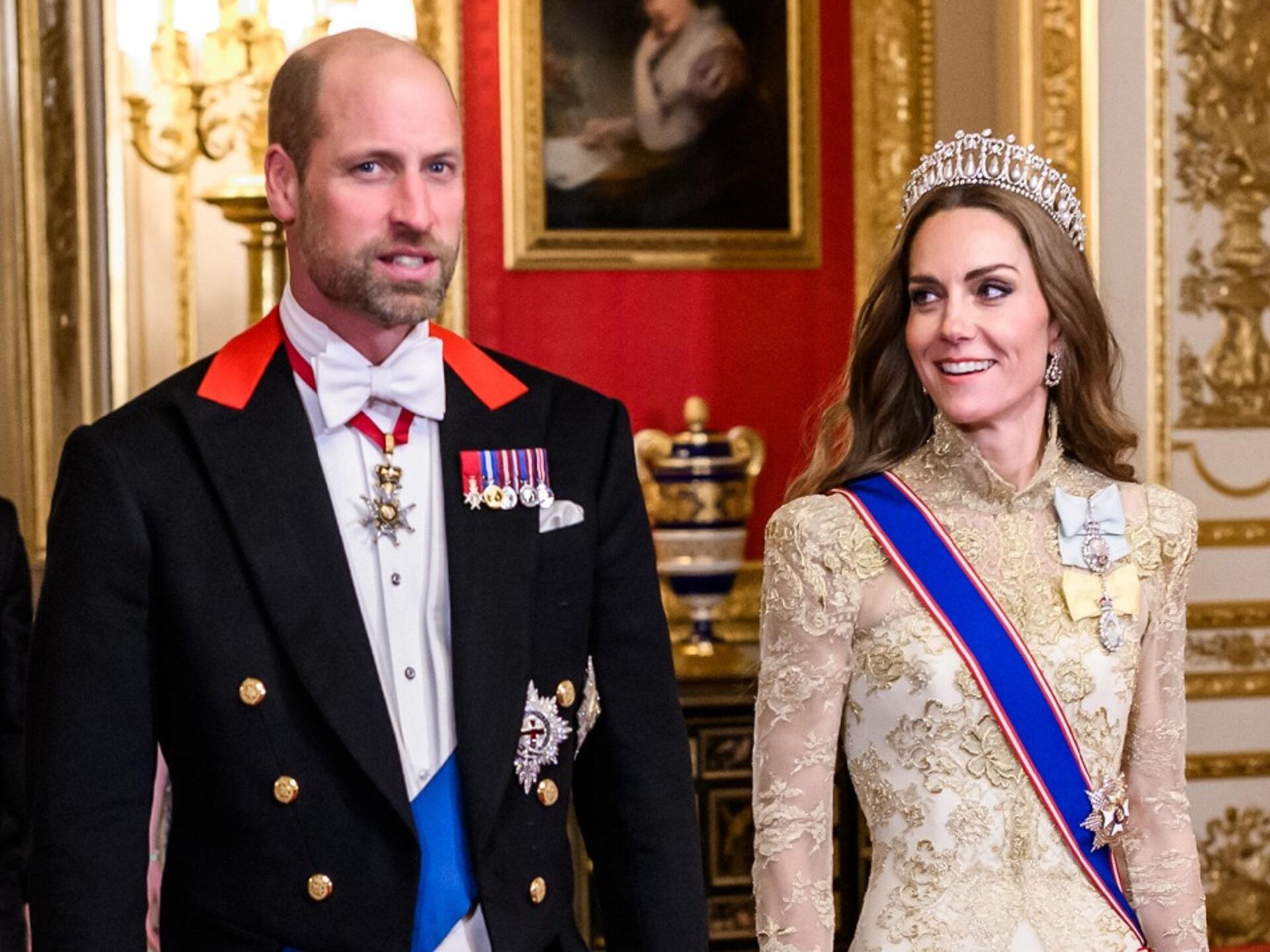

In the old days of monarchy, contenders for the throne eliminated their competition so they could claim the crown for themselves. Fortunately, today's laws of succession make it clear who's next to inherit the Crown, making elimination a thing of the past. This article examines how royal succession works in Britain, the laws that spell out who's to come to the throne next, and compares today's royal succession with the way things were before.
Facts About the Royal Family Line of Succession
- Britain is a constitutional monarchy, meaning Parliament sets the limits of royal power.
- The updated succession laws, the Succession to the Crown Act 2013, spell out which royal family members will inherit the Crown and in which order.
- Removing a royal family member from the line of succession takes an act of Parliament.
- Unlike the political side of British governance, royal succession does not require an election.


The UK Line of Succession: Who's Next in Line?
Our late Queen Elizabeth II passed away in 2022. The moment she passed, her firstborn son, Prince Charles, became King Charles III. That's because British constitutional law advances a principle that states that the king never dies, meaning that the throne must never be vacant, even for a second1.
For that reason, the line of succession to the throne is populated long before any monarch is in any danger of vacating the throne. Not just to one or two places beyond the current reign, but to more than 100 places. Here, we lay out the first 10 rows in the current line of succession.
1st in line
Prince William, the Duke of Wales, firstborn of King Charles III.
2nd in line
Prince George, firstborn of Prince William.
3rd in line
Princess Charlotte, second child of Prince William.
4th in line
Prince Louis, third child of Prince William.
5th in line
Prince Harry, second son of King Charles III.
6th in line
Prince Archie, first child of Prince Harry.
7th in line
Princess Lilibet, second child of Prince Harry.
8th in line
Andrew Mountbatten-Windsor, younger brother of King Charles III.
9th in line
Princess Beatrice, first child of Andrew Mountbatten-Windsor.
10th in line
Sienna Mapelli Mozzi, first child or Princess Beatrice.
Keep in mind that the British Royal Family tree and the British monarchy lines of succession represent two different concepts. For example, Princess Anne, King Charles' sister, is not at the top of the line of succession like her brothers are. However, she remains a member of the Royal Family and, indeed, is touted as the hardest-working royal.
Can Someone Be Dropped From the British Line of Succession?
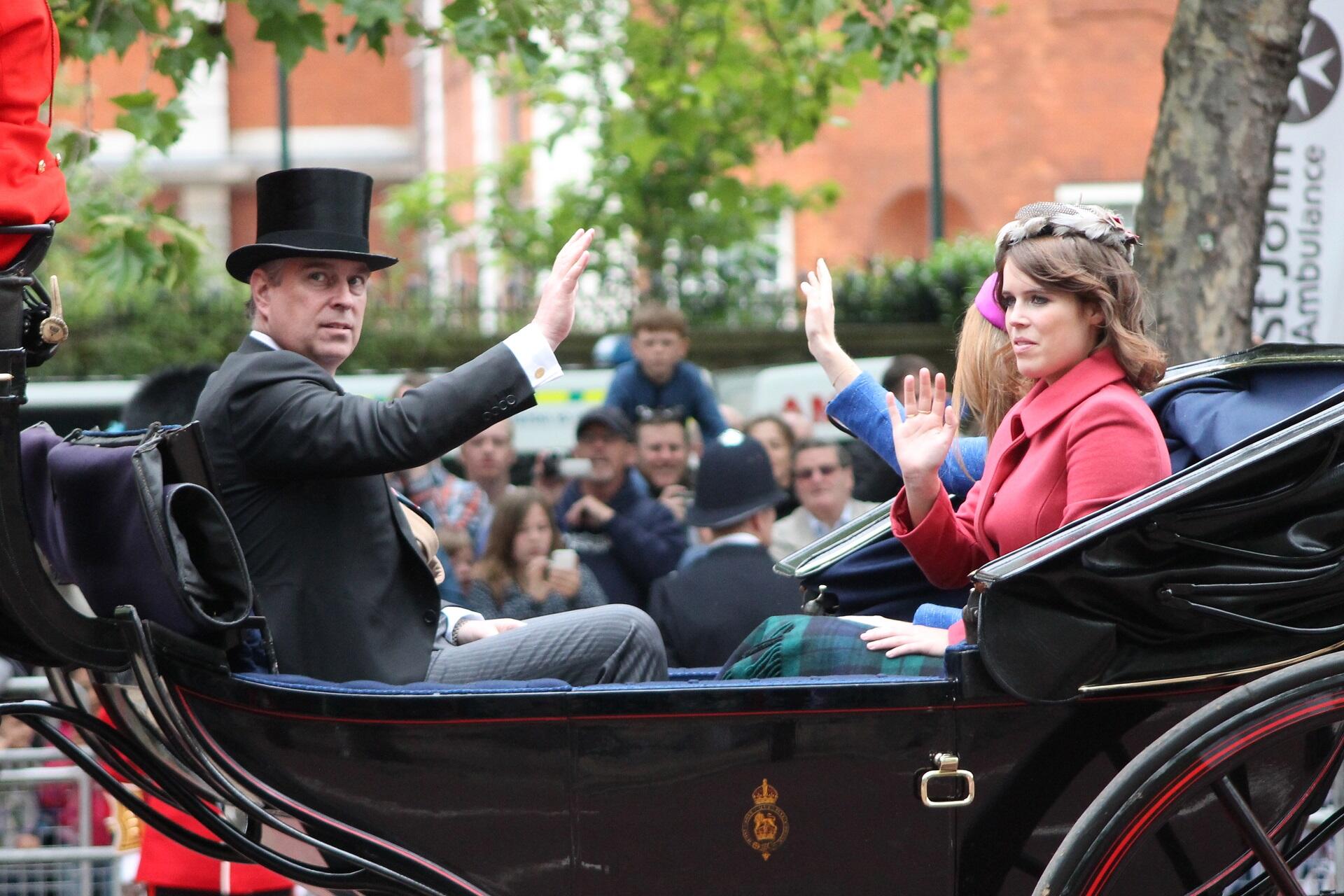
You might have raised an eyebrow at Andrew Mountbatten-Windsor's place in the line of succession after all the brouhaha that has surrounded his name of late. We needn't rehash all that noise; the press gave it plenty of coverage. Our narrative picks up on 30 October 2025.
King Charles III employed royal prerogative to strip Andrew of his royal titles, revoked his HRH (His Royal Highness) style, and cancelled all of Andrew's remaining royal orders, such as the Victorian Order.
Despite stripping Andrew of all the royal titles and honours he held, King Charles does not have the authority to remove him from the line of succession. That power lies with Parliament, which under the Act of Settlement 1701, must declare a royal family member ineligible for the throne2.
And that's still not enough to revoke his royal birthright. By law, all 14 Commonwealth nations must also consent to his removal, per the Statute of Westminster 1931. Throughout this lengthy process, Andrew Mountbatten-Windsor keeps his place in the line of succession.
Parliament is considering drafting legislation to remove him from the succession list.
If/when they pass that law, the monarchy must wait for all the Commonwealth Nations to approve the action. Unless they all do, Andrew remains on the succession list.
It's fair to wonder: "It's been a year; why hasn't Parliament acted on this?" Making legislative decisions costs a lot of time and money, and Parliament has far more pressing issues to manage. Besides, being in 8th place, it's not likely Andrew will ever grace the throne. So, removing him from public life and revoking financial support is enough to distance him from the monarchy.
Why Is Prince William First in Line to the Throne?
Though plenty of older royals occupy a place in the line of succession, King Charles's firstborn son became the heir apparent the second his father assumed the throne. In fact, he rocketed to the '2nd in line' position the moment he was born, displacing his uncle Andrew3.
It's not because someone likes him better; it's because the law says it must be so. The British monarchy follows the principle of hereditary succession. It states that the monarch's firstborn child becomes first in the line of succession, regardless of who was there before. Using our current royal family as an example, this is what it looks like.
If/when Prince George marries and has children, his siblings will drop lower in the line of succession, making room for Prince George's children. But all this 'firstborn' placing doesn't mean that the rest of the Royal Family are irrelevant.
Should a devastation happen that erases the entire current line, Prince Harry would ascend to the throne, followed by his descendants. This too is a historical legacy, from when monarchs failed to produce heirs before they left the throne.
How the Royal Line of Succession Works
The rules of succession have been in place for centuries, dictating who may - and who may not - claim the throne. They emerged in a time where becoming king was often a blood sport and, once on the throne, the king was not always fair.
The Bill of Rights 1689
- established the constitutional monarchy
- limited the king's power
- secured the rights of English subjects
The Act of Settlement 1701
- placed further limits on the Crown
- mandated Protestant rule
- assured judicial independence from royal interference
Together, these two acts reinforce the constitutional law that governs the UK line of succession. However, their limitations proved too extreme for modern times, mainly because of their exclusivity.
Succession to the British Throne: Sons Before Daughters?
Since Britain became Britain in 1707, the Crown has only graced three female monarchs' heads. None of them was initially slated to rule.
For most of British history, the preference for male leaders led to an actual legal mandate to that effect, included in the Act of Settlement 1701. In 2011, the 16 prime ministers of the Commonwealth Realms agreed to change their laws of succession to the shared throne. We know this from the Perth Agreement, which evolved into the Succession to the Crown Act 2013.
Enacted in 2015, this act updates the laws of succession to include daughters born after 2011 in the line of succession.
Before this law, Princess Charlotte would not stand ahead of Prince Louis in line to the throne. Today, she and any other royal daughter born from now on will have a legal claim to the throne, even if she has younger brothers. And if she's born first, no younger male in the family may claim her spot.

Marriage, Religion, and the British Line of Succession
... At the same time being Defender of The Faith, you can also be protector of faiths.
King Charles III
Marriage and religion are social constructs; these institutions nevertheless weigh heavily on the Crown. In Britain, the monarch has been the titular head of the Church of England5, as decreed in the Act of Supremacy 1558.
That makes matters of religion and marriage particularly sticky for the British Royal Family. Thankfully, the Succession to the Crown Act 2013 loosened restrictions on marriage and religion. Here's how the old and new laws compare.
Previous decrees
- No Catholic may claim the throne.
- No royal married to a Catholic may take the throne.
- Every royal family member needed permission from the sovereign to marry.
Updated laws
- This law remains.
- This law has been repealed.
- The first six in the line of succession must ask for permission to marry.
As the British monarch is legally required to enter into communion with the Church of England, it makes sense that they, and all royal family members, must be Protestant. Indeed, the schools that educate royal children are affiliated with the Anglican Church, further reinforcing the religious mandate.
As for asking permission to marry, that only applies if the person in question wishes to keep their position in the line of succession. Their marriage will be valid without permission, of course, but they will be disqualified from succeeding to the throne6.
References
- Government House, Queensland. “Becoming King.” Government House Queensland, May 2023, https://www.govhouse.qld.gov.au/government-house/office-of-the-governor/news-and-publications/latest-news/becoming-king-charles-iii. Accessed 20 Sept. 2026.
- Kaur, Brahmjot. “Why Prince Andrew Is Still in Line for the Throne After Getting Royal Titles Stripped.” E! Online, E! News, 26 Nov. 2025, https://www.eonline.com/news/1425576/prince-andrew-still-in-line-for-throne-after-royal-titles-stripped. Accessed 20 Sept. 2026.
- Burchfield, Rachel. “Who’s Next in the Line of Succession for the British Throne?” InStyle, 29 Mar. 2026, https://www.instyle.com/british-royal-family-line-of-succession-11929978. Accessed 20 Sept. 2026.
- Scott. “Succession to the Crown Act 2013 | Unofficial Royalty.” Unofficialroyalty.Com, 26 Mar. 2015, https://www.unofficialroyalty.com/succession-to-the-crown-act-2013/. Accessed 20 Sept. 2026.
- Morris, Bob. “King Charles, Defender of Faith: What the Monarchy’s Long Relationship With Religion May Look Like Under the New Sovereign.” The Conversation, 20 Sept. 2022, https://theconversation.com/king-charles-defender-of-faith-what-the-monarchys-long-relationship-with-religion-may-look-like-under-the-new-sovereign-190766. Accessed 21 Sept. 2026.
- Neira, Daniel. “Why Some Royal Weddings Can’t Happen Without the King’s Approval.” HOLA! USA, 31 July 2026, https://www.hola.com/us/royals/20260731915901/why-royal-weddings-need-kings-approval/. Accessed 21 Sept. 2026.
Summarise with AI:
Did you like this article? Leave a rating!

 Loading...