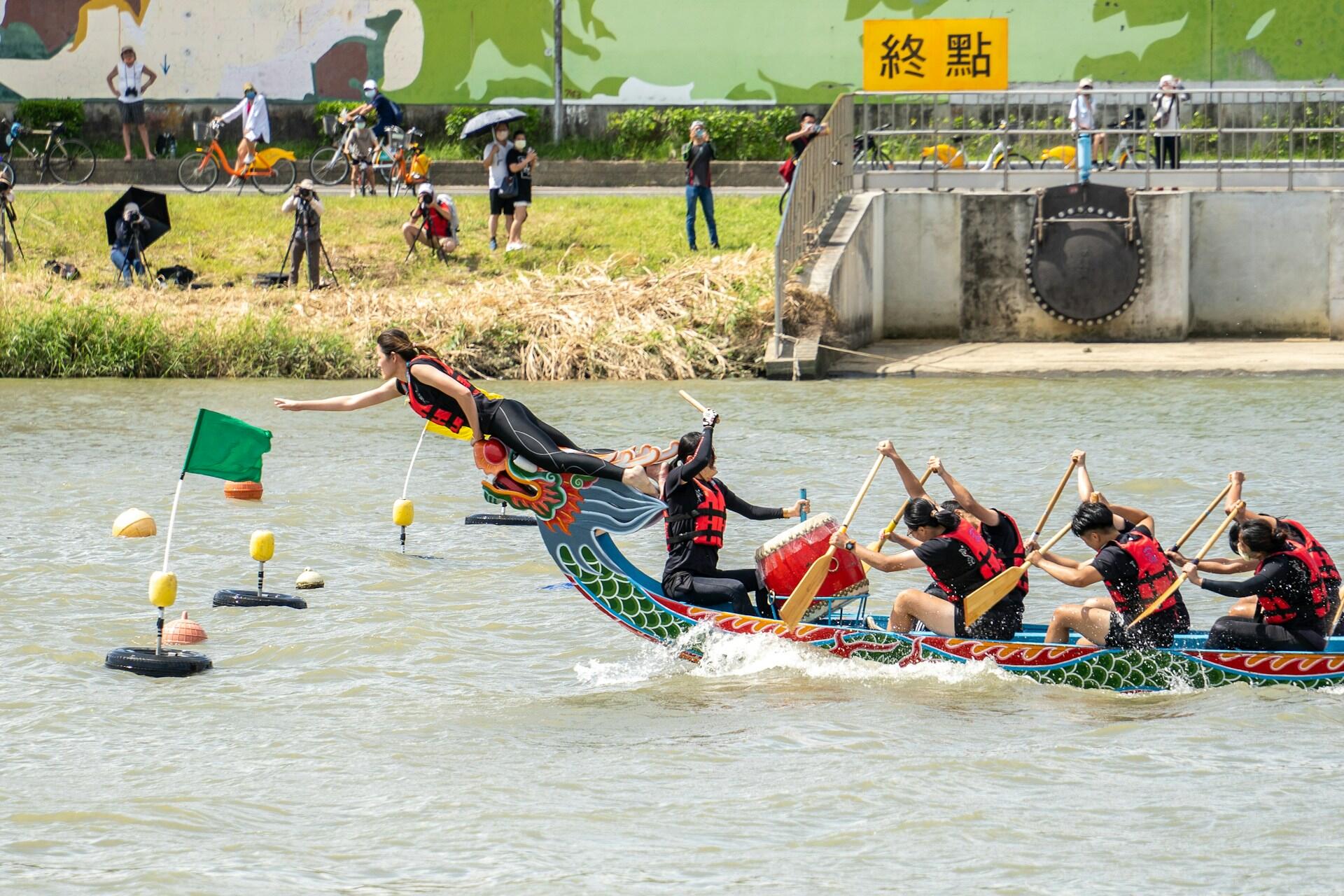

There's something so beautifully logical about celebrations in China. Basically, the pattern is: the first day of the first month, the second day of the second month, and so on. These observances accord with the lunisolar calendar, so they 'float' on the Gregorian calendar that Western cultures use. The Dragon Boat Festival falls on the fifth day of the fifth month and, of all the Chinese festivals, it's arguably the most athletic.
What is the Dragon Boat Festival?
- In practical terms, it is a rowing contest that takes place aboard boats with dragons as figureheads.
- It commemorates a loyal statesman driven to despair over the king's treachery.
- Other origin stories include a young girl's loyalty to her father and a different loyal statesman.
- Zongzi, a stuffed glutinous rice dumpling, is the signature food eaten on this day.


Dragon Boat Festival: Bad Luck?
Long before the Dragon Boat Festival (端午节 - duān wǔ jié) became a highly anticipated family event, the day it was celebrated was considered poisonous.
Traditional Chinese culture considers the fifth month evil, going so far as to call it 'evil month' (恶月 - è yuè).
The fifth day of the fifth month is particularly dangerous1. To ward off evil spirits, people place garlic and various herbs and plants with strong odours above their doors.
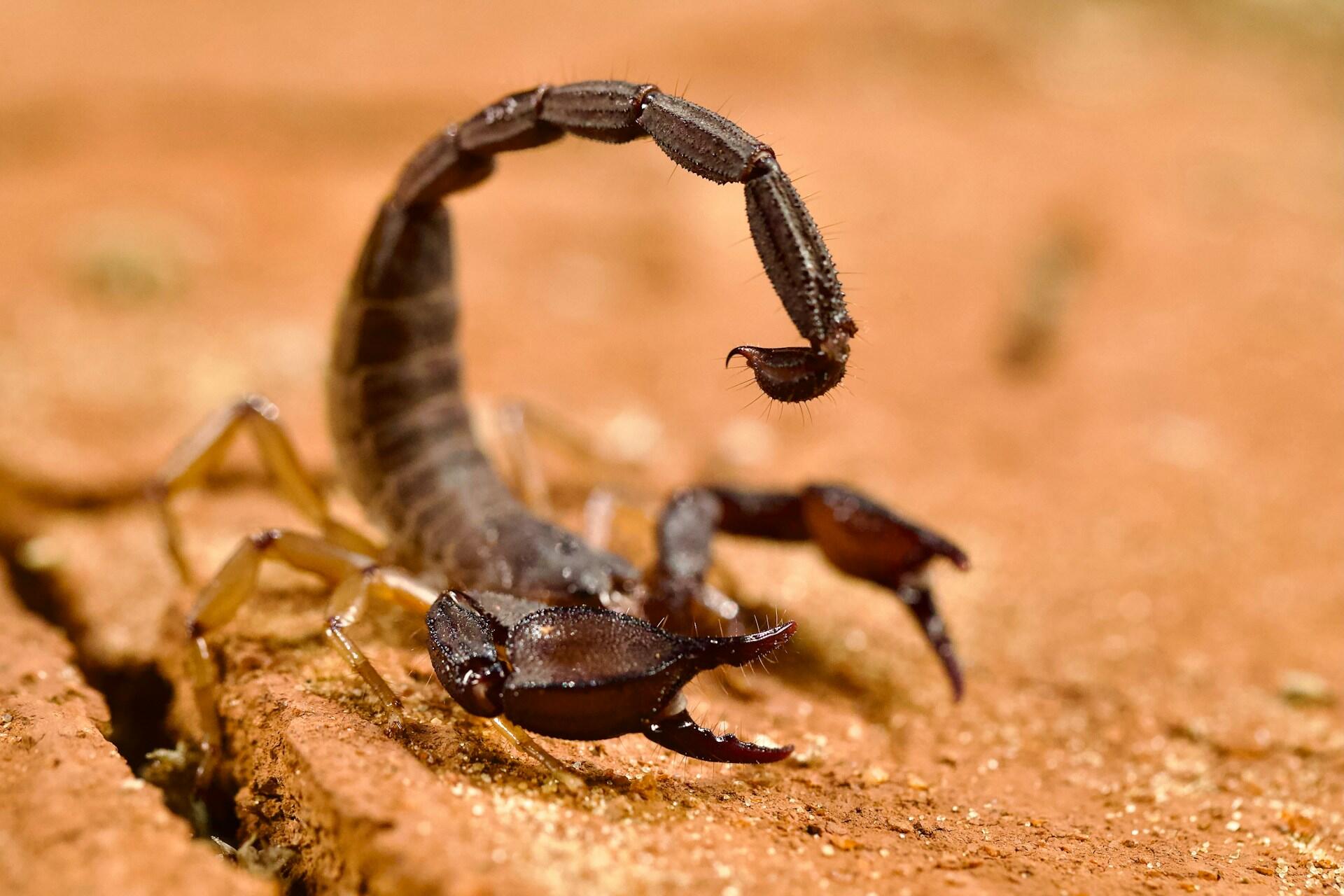
Around the fifth lunar month is also the time that pests manifest. People take great care to avoid bugs and other vermin, particularly poisonous ones. In China, the concept is so well defined that it has a name: The Five Poisons (五毒 - wǔ dú). Specifically, snakes, scorpions, centipedes, toads, and spiders are embodiments of these poisons.
The emergence of the Five Poisons right around the time of the festival is an unfortunate stroke of luck. But the clever Chinese have found ways to neutralise the threat. Besides pungent herbs over doorways, tacking pictures of the five poisons to the wall and sticking pins in them helps. Parents protect their children with arm wraps featuring images of the poisons to insulate them from harm.
Many people take the Dragon Boat Festival as an occasion to get rid of bad luck and disease. Cleaning house, visiting the temple, and other rituals serve that purpose.
The Festival's Name
English speakers call this celebration the Dragon Boat Festival or the Double Fives. Notably, its name in Mandarin does not feature the number five2. Written duān wǔ jié - 端午节, the name links the event to the Five Earthly Branches, which relates to the Chinese zodiac.
However, the wǔ particle is a homophone for 'five' (五); they even have the same tone. So, many have come to write 端五 rather than the festival's historic name. This writing makes sense, considering it is the 'double fives' festival, but Mandarin learners should stick with the festival's formal written name.
The Origins of the Dragon Boat Festival
The designation 'Warring States Period' gives us an idea of what times were like during the Zhou Dynasty (1046 to 256 BCE - before the current era). Despite everlasting skirmishes, the Chu kingdom ran well thanks to the dedication and loyalty of its public servants.
The aristocrat Qu Yuan (屈原) was such a servant. A member of the Chu Royal House, he grew alarmed when the King of Chu toyed with the idea of binding his kingdom to the aggressive Qin state. The king accused Qu Yuan of treason and banished him from the kingdom.
Eventually, the increasingly powerful Qin army captured the city of Ying, the capital of the Chu kingdom. In despair, Qu Yuan pitched himself into the Miluo River, much to the horror of passersby. They rushed to their boats to try and rescue Qu Yuan or, at least, retrieve his body. Unable to do either, they tossed rice balls into the river for the fish to eat, so they would leave his body untouched.
During his exile, Qu Yuan became a prolific poet. His writings survive to this day, as a part of the Chu Ci Anthology, also called Songs of Chu or The Songs of the South5.
Alternative Origins
Though the narrative of Qu Yuan dominates the festival, two other origin stories exist.
Wu Zixu
- a Wu Kingdom statesman alerted the king to a deception
- the king forces Wu to commit suicide
- he died in 484 BCE
- the kingdom disposed of his body in the river
Cao E
- her father was a shaman
- while honouring Wu Zixu, he fell into the river
- she searched the river for three days
- she and her father were found drowned. She died in 144 CE
Wu Zixu is celebrated in southeast Jiangsu province; Cao E enjoys more popularity in northeaster Zhejiang Province. Just like the Lantern Festival or any other celebration in China, the local culture influences how national commemorations are observed.
Dragon Boat Festival Zongzi
This festival's two main features trace a direct line to the legend of Qu Yuan.
Dragon boat racing
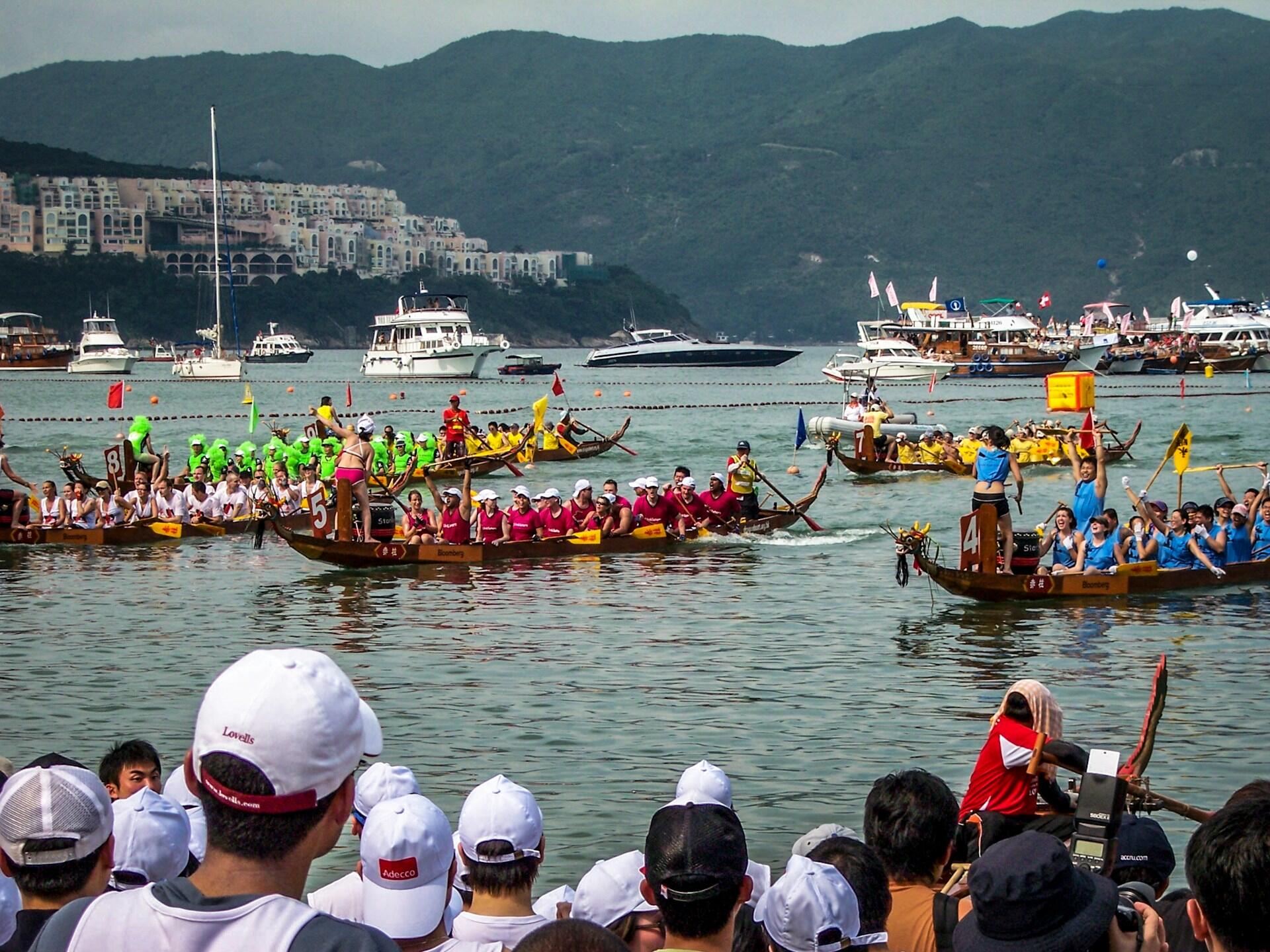
The race symbolises the people's speed and efforts to rescue the beloved poet.
Zongzi
These dumplings symbolise the rice balls that people threw into the river to keep the fish from eating the poet's body.
In a sense, you might say that the Dragon Boat Festival is a type of death-honouring ritual. But it's an indirect one, unlike the tomb-sweeping festival called Qing Ming, which is much more obvious a rite.
Dragon Boat Festival Activities and Traditions
As noted above, cleaning house is an integral part of festival activities, which helps rid the home of 'poisons'. Some people may head to the temple to burn incense and pray, but nearly everyone makes offerings of some type, even if their altar is at home.
Making zongzi is a staple activity on (or ahead) of festival day. Families gather to lay out the ingredients, prepare the large vat to boil water, and wash the bamboo leaves. Even little children get in on the fun, including slipping pudgy hands into bowls of soft, sticky rice.
Recipe for Zongzi
This is less of a recipe and more of an instruction hot sheet. That's because various regions and ethnicities across China all follow their traditional preparation methods. They also favour fillings indigenous to their region and culture, a lot like they do for their Qixi Festival treats.
In fact, you may try your hand at making zongzi and discover a flavour profile that's uniquely yours. With that bit of a culinary adventure to tantalise you, let's lay out the steps for making zongzi.
This guide gives you a starting point for zongzi-making. Beware that your fingers might fumble as you tie off your first few but, as always, practice makes better so keep at it! Besides, it might hearten you to know that making zongzi is less labour-intensive than food preparations for the Mid-Autumn Festival.
Drinking Realgar Wine
Realgar wine (雄黄酒 - xióng huáng jiǔ) has a Chinese liquor base, to which people add a yellow-orange arsenic sulphide mineral. If that sounds dangerous to you, you're on the right track. This is definitely not a drink one should binge on!
In fact, unlike making other Chinese wines, one cannot make this wine at home. Its toxic properties are too grave to risk it, so many people buy small (safe!) quantities just for the celebration. Typically, a tiny sip suffices to honour tradition.
This wine is said to repel evil. Even just a sip is said to keep the darkness away.
Usually, a family elder traces the 'emperor' idiogram (王) on children's foreheads to further protect them from the Five Poisons.
However, this wine's chemical formulation may even leach into tender skin, so this practice is under fire4 and may soon be banished. Of all the Chinese festivals I've experienced, this is the only one I know of that involves any kind of harmful ingredients.
Racing Dragon Boats
Opportunities multiply as they are seized.
Sun Tzu, Chinese military strategist and general
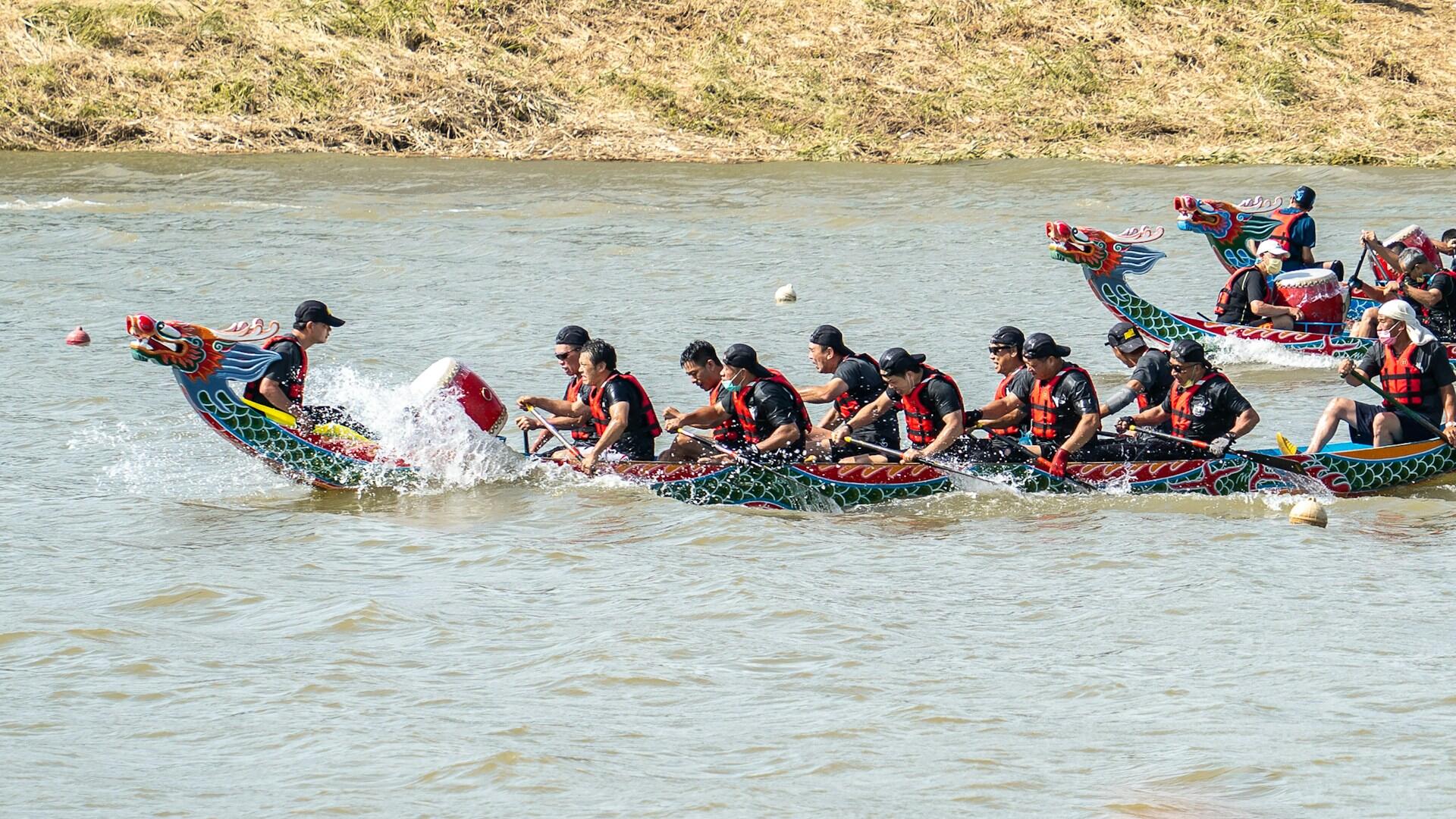
These races are, of course, the festival's highlight. Rowing crews train for months ahead of the big day, and several plan spectacular exhibitions. It's hard to do them and their performances justice without gushing about them at length. So, we leave you with this demonstration of Dragon Boat Races across China.
References
- Wei, Liming. Chinese Festivals. Cambridge ; New York, Cambridge University Press, 2011.
- “Do You Know the 10 Different Names of the Dragon Boat Festival? - Dim Sum Warriors.” Dim Sum Warriors, 30 May 2023, www.dimsumwarriors.com/blog/different-names-dragon-boat-festival/. Accessed 5 May 2026.
- Guo, Wei. “Zongzi: Chinese Sticky Rice Dumpling (粽子).” Red House Spice, 4 June 2019, redhousespice.com/zongzi-two-ways/. Accessed 4 May 2026.
- Qing, Ye. “Let’s Drink at the Dragon Boat Festival.” News.cgtn.com, 7 June 2019, news.cgtn.com/news/3d3d414e3151544d35457a6333566d54/index.html. Accessed 6 May 2026.
- “Chu Ci.” Academic Dictionaries and Encyclopedias, 2026, en-academic.com/dic.nsf/enwiki/839456. Accessed 6 May 2026.
Summarise with AI:
Did you like this article? Leave a rating!

 Loading...