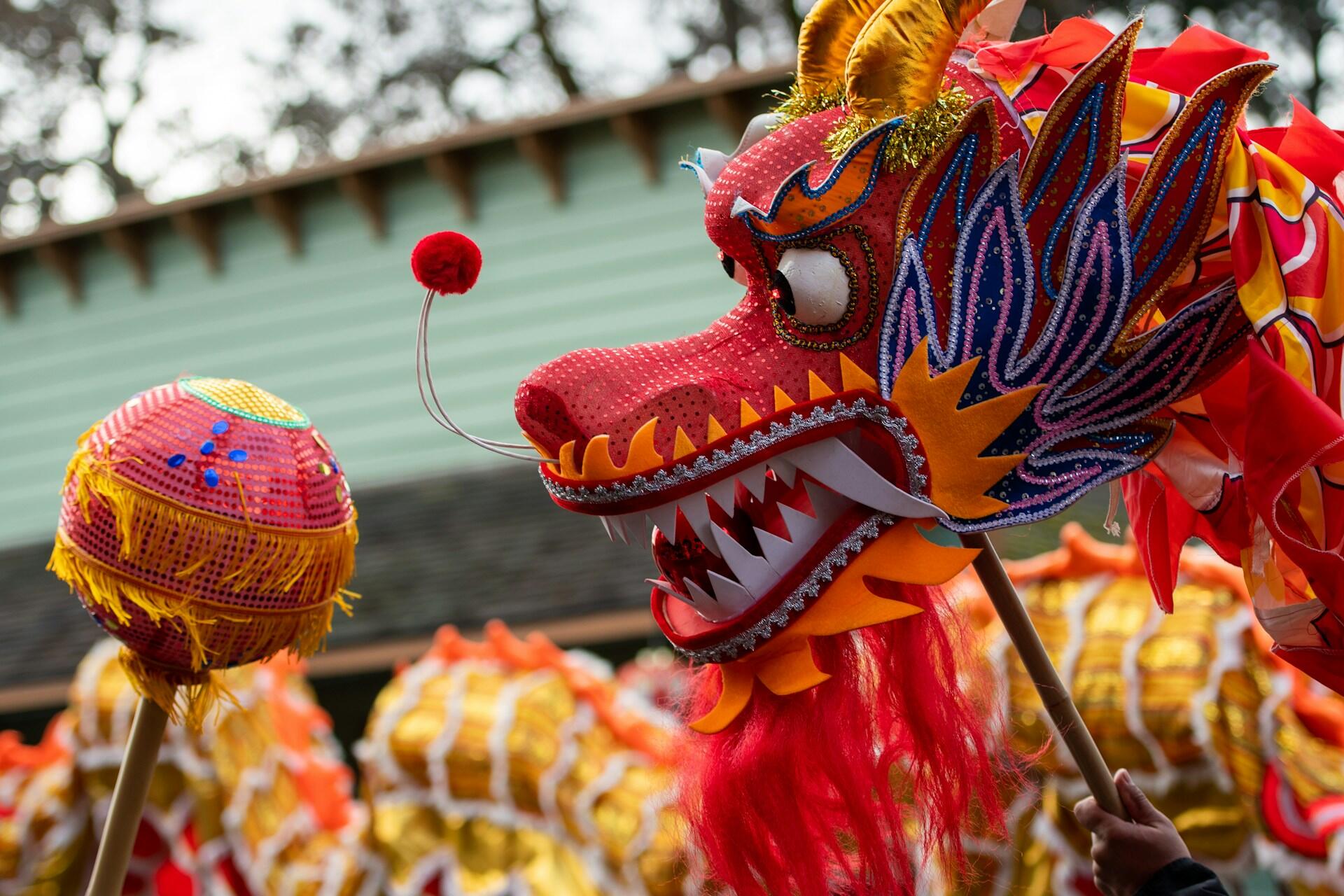

Compared to many nations, China's holiday calendar revolves less around commemorating wars won and past leaders' deeds and more around cultural values. Throughout the year, Chinese people have days reserved to venerate their ancestors, celebrate legends, and hail the promise of a bright future. The only wholly secular holiday coincides with the country's founding date, October 1, 1949. This chart previews China's main holidays: what they represent, the activities that people pursue, and when they are.
| 🎉 Festival | 🔍 What it celebrates | 🏮 Popular activities | 📆 When to celebrate |
|---|---|---|---|
| National Day | The establishment of China as a nation. | Travelling. Watching parades. Visiting cultural sites. Witnessing the flag raising in Tiananmen Square. | October 1, lasting up to 10 days. |
| Spring Festival | The start of the new lunar year. The imminent arrival of spring. | Returning home. Eating jiaozi (dumplings) Hanging couplets and lanterns. Lighting firecrackers. | The first day of the first month of the Lunar calendar. Generally between mid-January and mid-February. |
| Lantern Festival | The end of the New Year festivities. | Hanging and viewing lanterns. Answering riddles. Eating Yuanxiao. Enjoying family togetherness. | Early to mid-February, 15 days after Spring Festival. |
| Qing Ming | A day reserved for ancestor worship. | Cleaning relatives' graves. Bowing/praying to ancestors. Burning joss paper and sticks. Enjoying a big meal. | Early April. |
| Dragon Boat Festival | The life of the poet and statesman Qu Yuan. | Racing dragon boats. Making and eating Zongzi. Drinking realgar wine. Avoiding the '5 poisons'. | The fifth day of the fifth month of the Lunar calendar. Typically late May to early June. |
| Qixi Festival | The love between the cowherd and the weaver girl. (Zhinü and Niulang) | Star gazing. Puppet shows. Women pray for wisdom. | The seventh day of the seventh month on the lunisolar calendar. Typically mid-late August. |
| Mid-Autumn Festival | The end of a successful harvest. The love story of Chang'e and Hou yi. | Making and eating mooncakes. Releasing lanterns. Moon-gazing. | The 15th day of the eighth month on the lunisolar calendar. Typically between mid-September to early October. |
| Laba Festival | The impending New Year | Eating Laba congee. Beating drums. | The eighth day of the 12th lunar month. Typically between late December and mid-January. |


National Day of the PRC
Though this holiday is set for late in the year, we talk about it first because it stands apart from other Chinese holidays. The rest of the celebrations on our list have their roots in legend, millennia-deep into established Chinese civilisation and culture. But this one is only 77 years old.
Furthermore, the National Day (国庆节 - guó qìng jié) stands out as the only Chinese holiday based firmly on a historical event: the founding of the People's Republic of China in October 1949. As such, people abandon standard celebratory elements such as lanterns, special foods, and returning to one's hometown. Instead, travelling and tourism take precedence.
Golden Week (黄金周- huáng jīn zhōu) refers to major week-long national holidays when millions of people travel, shop, and take time off. These periods are known for massive domestic tourism, crowded transport, and boosted consumer spending. “黄金” literally means “golden,” symbolising the economic importance of the holiday period.
The two main Golden Weeks are:
Chinese New Year Golden Week (around January/February)
National Day Golden Week (starting October 1)
Around the world, the press typically calls the travelling around these periods one of the greatest annual human migrations on the planet1.
Tiananmen Square (天安门广场 - tiān ān mén guǎng chǎng) is the top destination for native Chinese and foreign tourists alike, particularly on 1 October. The atmosphere in that expansive plaza as the flag goes up on National Day is one of the most reverent one might experience.
Spring Festival
Spring Festival (春节 - chūn jié) is the one that starts the 'festival calendar'; of all the Chinese festivals, it is arguably the most important. It is the time when families reunite to welcome the New Year according to the lunisolar calendar. It also provokes a massive human migration as everyone, even migrant labourers, travels home for the holiday.
Returning to one's hometown and reuniting with family is the top priority.
Hanging couplets and lanterns around the entranceway is a must.
Making and eating dumplings (饺子 - jiǎo zǐ) is a family affair.
Venerating ancestors is an obligatory part of the celebration.
Lighting firecrackers - or, more recently, watching drone shows.
Watching galas and other televised celebrations.
Many liken China's Spring Festival to the Western Christmas holiday, but the comparison isn't necessarily accurate. In China, the emphasis is on family and culture with no religious overtones, and no gifts are exchanged. That is, other than older family members giving younger ones traditional red envelopes (红包 - hóngbāo).
These red packets containing money are given during Chinese New Year as symbols of good luck and blessings. Adults usually give them to children or younger relatives.
Lantern Festival
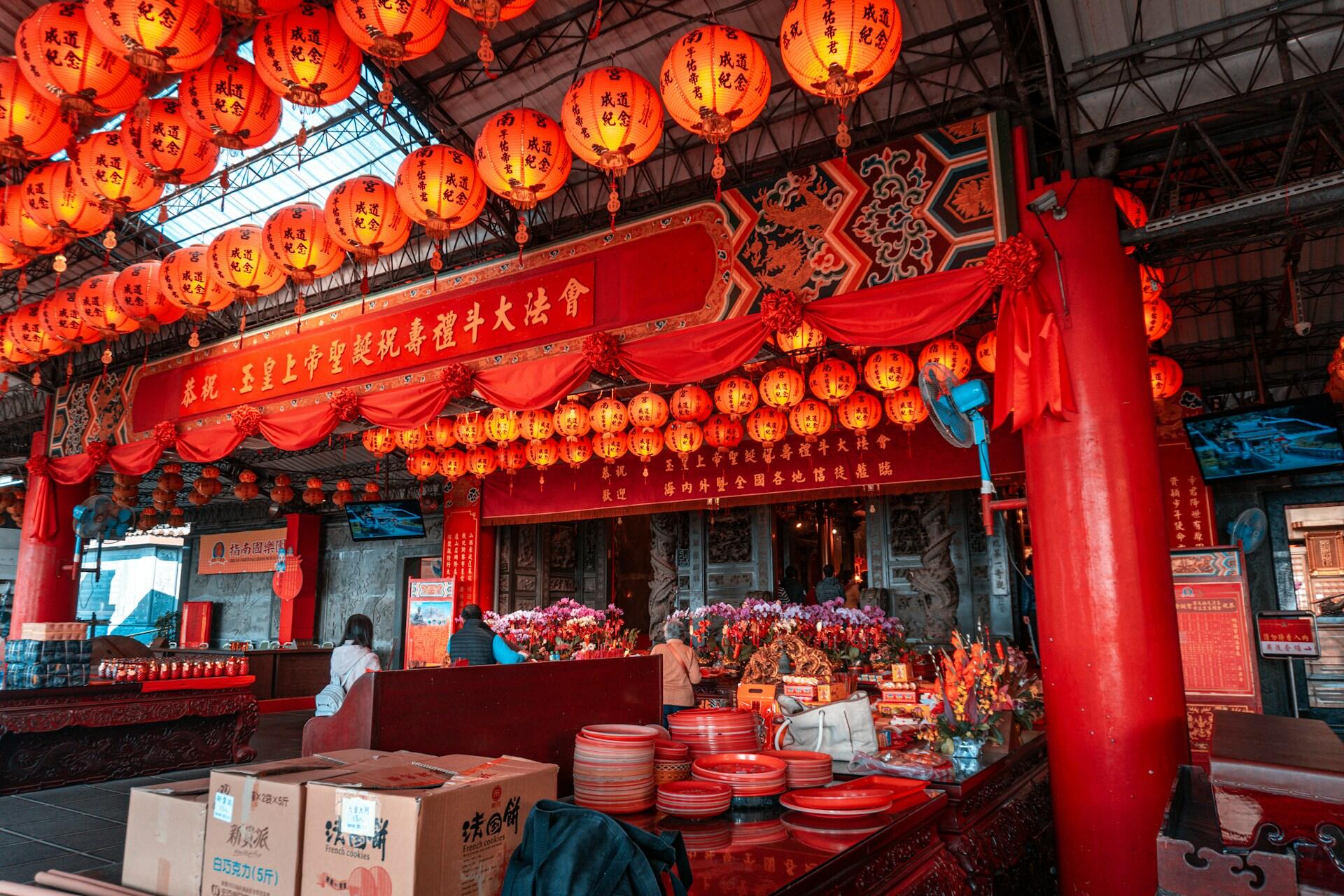
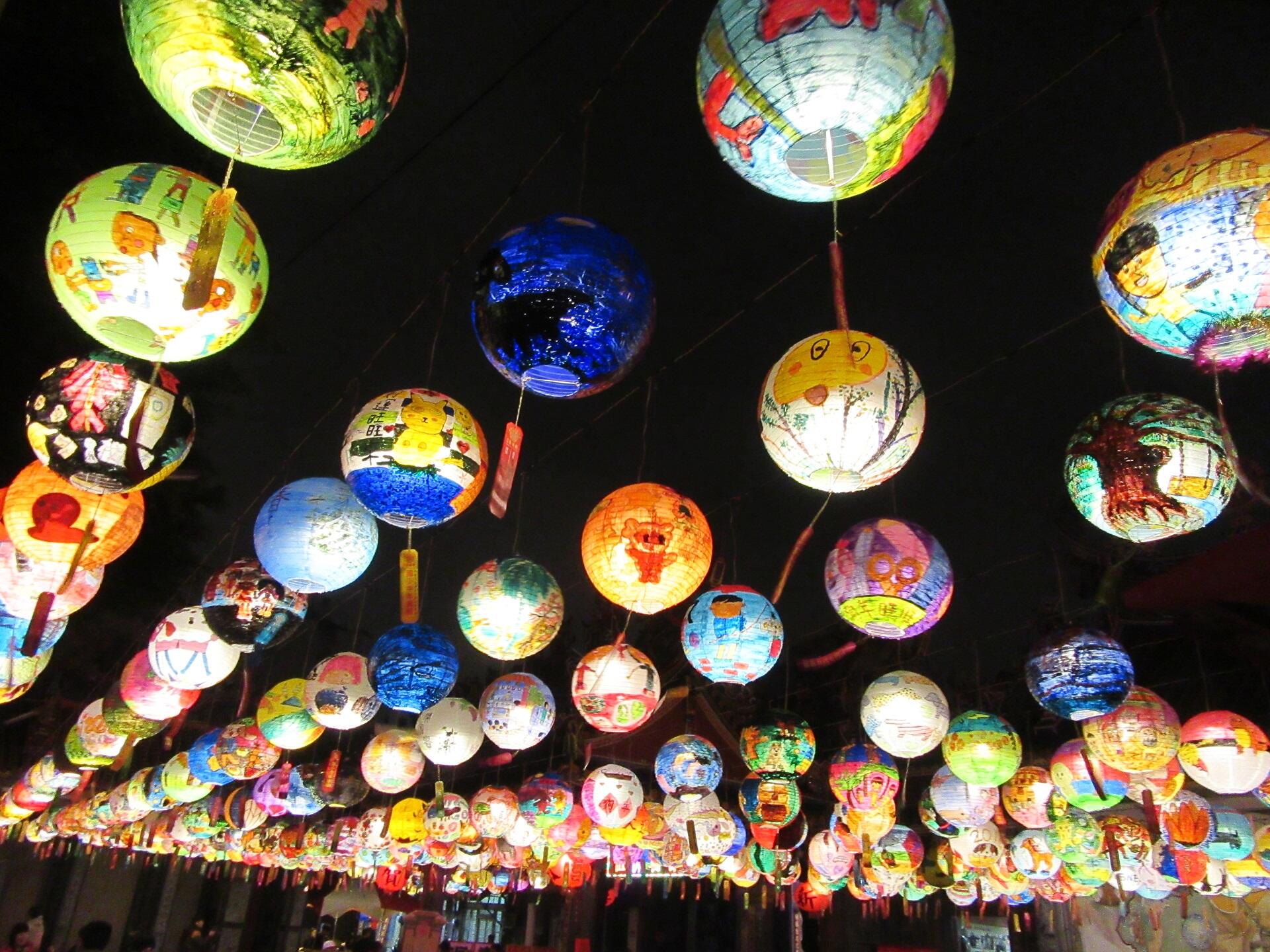
Of all the Chinese Festivals, we might call this one the most bittersweet. The Lantern Festival (元宵节 - yuán xiāo jié) signals the end of the New Year holiday period. Family members living in the city must leave the homestead once more to pursue the lives they made for themselves. Still, yuán xiāo jié is a festive occasion, full of delightful lantern displays, games, and special foods.
When to celebrate it
15 days after the Lunar New Year
What to do
- eat sweet rice ball soup (元宵 - yuán xiāo)
- tour lantern displays
- play riddle games
What it represents
the return of spring
A Han Dynasty emperor established the Chinese Lantern Festival more than 2,000 years ago. He was a devout Buddhist, and he happened to notice monks hanging lanterns on that day. He urged all his people to also hang lanterns and so, the tradition was born. From China, this festival spread to neighbouring countries.
Qing Ming
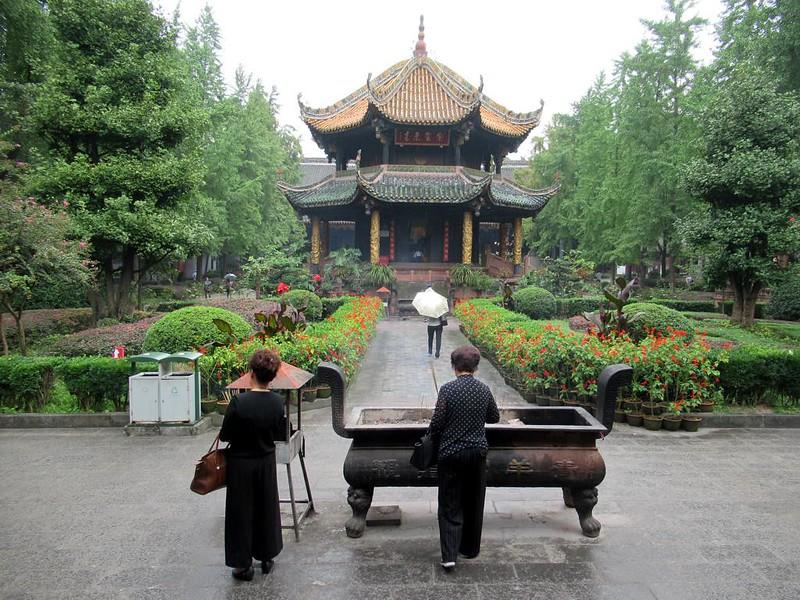
Qing Ming is less of a festival or celebration and more of an observance. Known as the Tomb Sweeping Day among English-speaking populations, Qīngmíng jié (清明节) isn't just about revering one's ancestors. It's also about appreciating the natural world2.
People also pursue outdoor activities on this day. After revering the ancient family members, taking walks in nature and especially flying kites are two top Qīngmíng activities. Though Qīngmíng has a direct link to China's Cold Food Festival (寒食节 - hánshí jié), today's Chinese do not necessarily eat only cold foods on this day.
Dragon Boat Festival
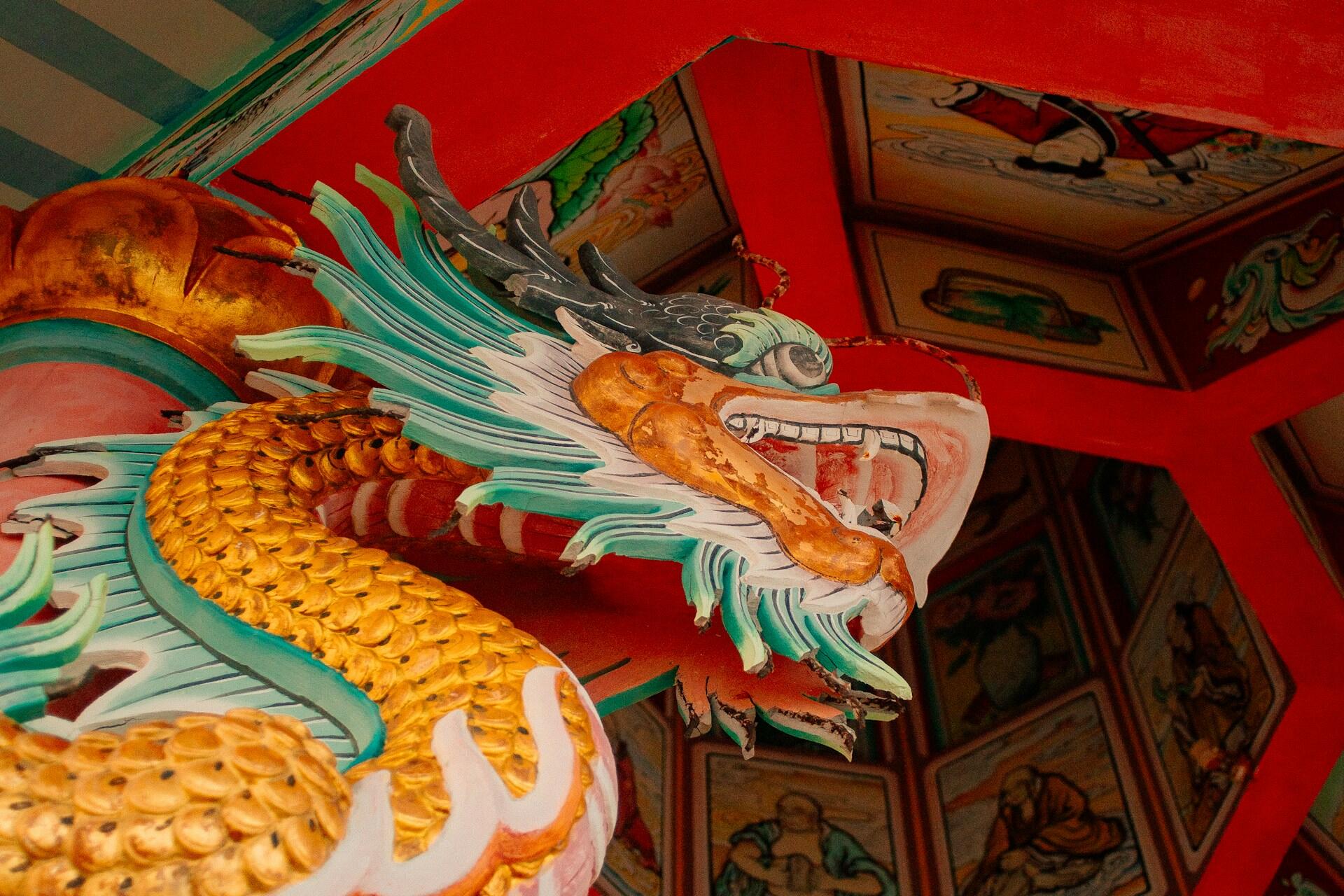
Of all the Chinese festivals and holidays, the Dragon Boat Festival (端午节 - duān wǔ jié) must be the most energetic. As its name suggests, boats of all types, each with a dragon as a figurehead, race down the river. To what end?
As the legend is told, a loyal statesman-cum-poet, Qū Yuán (屈原), pitched himself into the river in despair over his king's actions. Nearby people, who held Qū Yuán in high regard, rushed to pull him out of the water. Unable to find him, they threw rice in the water so the fish would eat the rice and leave Qū Yuán's body untouched.
Besides rowing or watching dragon boats race, families make and eat zòngzi (粽子).
These are glutinous rice 'dumplings' filled with sweet red bean paste or with savoury meat.
The Dragon Boat Festival is remarkable for being one where avoiding the 'Five Poisons' is an integral part3. Late May/early June is typically when creepy crawlies emerge from their dormant states. So, the wise Chinese will wear herb sachets and hang pungent scents over their doors to repel the five beasts that spread poisons.
Qixi Festival
The Qixi Festival is a romantic occasion that draws on the legend of the Cowherd and the Weaver Girl, a Chinese folk tale more than 2,600 years old. It tells a story as old as time: a luminous young woman falls in love with an impoverished young man. But the powers that rule their lives do not want them to be together.
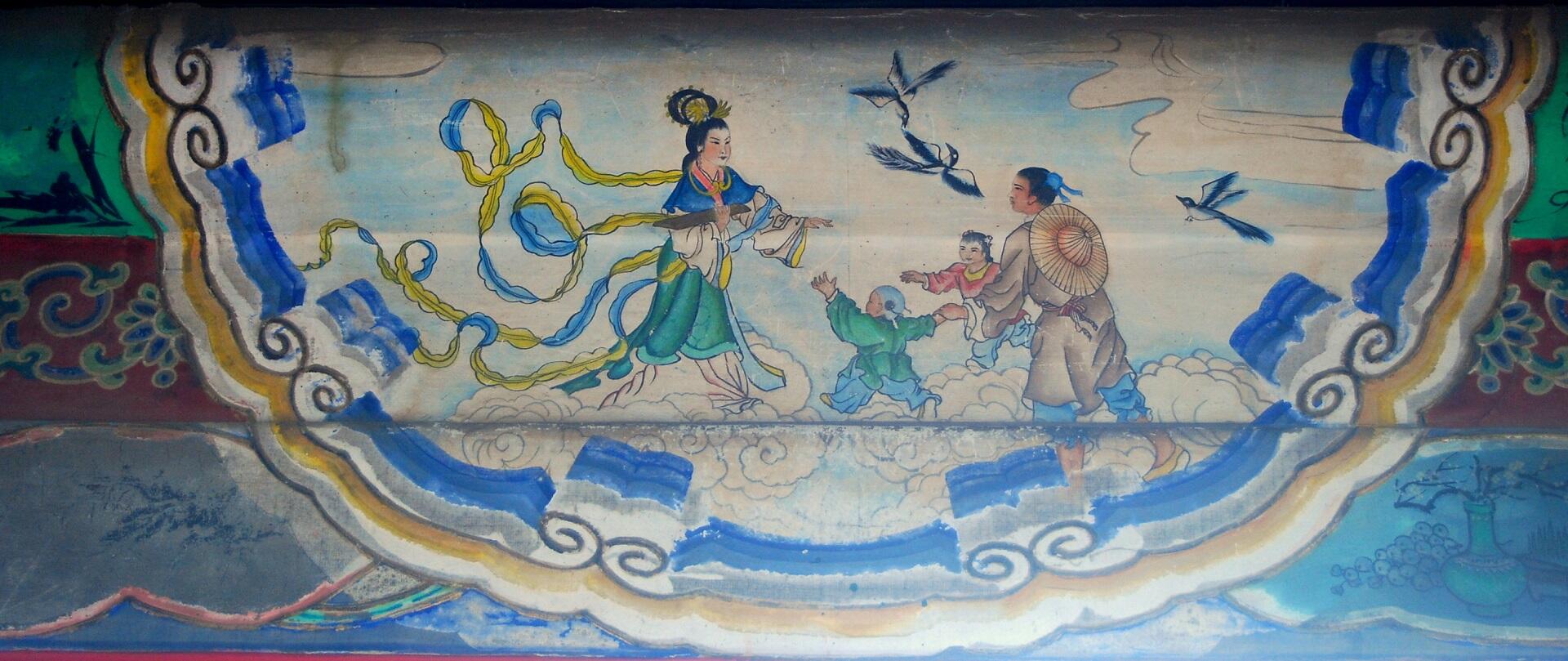
The Weaver Girl, Zhīnǚ (织女), is not of this world; she weaves for the God of Heaven. He is angry that she managed to make a life for herself, so he orders his troops to bring her back to her place. As she flies heavenward, the Cowherd, Niúláng (牛郎), flies after her. The heavens throw yet another barrier up to separate them, but magical magpies help them overcome it.
Today, people celebrate Qīxī (七夕) by exchanging small gifts, taking in puppet shows, and enjoying romantic dinners. Magpies remain a symbol of enduring love in China.
Mid-Autumn Festival
The Mid-Autumn Festival observance (中秋节 - zhōng qiū jié) is one of China's oldest celebrations, with more than 3,000 years of history. It is a harvest festival that coincides with the year's biggest, brightest moon. But this festival isn't just about pragmatic matters such as harvests and family bonds.
This is a time for families to come together, make and enjoy mooncakes, and gaze at the moon.
It celebrates the legend of Chang'e, the moon goddess. This story tells the tale of a devoted wife who saved the world from perpetual evil by drinking an elixir of immortality. She then took up residence on the moon to keep her husband in sight. To honour her sacrifice, he laid out all her favourite treats, including mooncakes; soon, everyone joined him in his tribute to Chang'e.
This festival falls between mid-September and early October. As Mid-Autumn Festival may coincide with National Holiday, it gives Chinese travellers a few extra days to enjoy adventures.
Laba Festival
This is one of the more muted festivals in China. Falling late in the Chinese calendar, the Làbā festival (腊八节) heralds the upcoming New Year celebrations. Here's what to know about this less festive festival4.
Eating Làbā congee, however, is still widely practised. This porridge, called là bā zhōu (腊八粥), typically contains eight ingredients (A very classic version might contain rice, glutinous rice, red beans, peanuts, lotus seeds, red dates, longan, and rock sugar.). For that reason, it's also called bā bǎo zhōu (八宝粥). Despite the name, it is less about one fixed recipe and more about making a rich, symbolic “eight-treasure” style porridge for warmth, abundance, and good fortune. China's various ethnicities and regions dictate which ingredients go into making the porridge most auspicious.
Naturally, there are many more Chinese celebrations, but none so important as the ones detailed here. Furthermore, some Chinese ethnicities consider some festivals more important than others, so they place more emphasis on them. Or they have their own celebrations, which typically don't feature in the roster of main Chinese holidays.
References
- Yeromiyan, Tania . “What Is the Chinese National Day Holiday? | China National Day.” CLI, 13 Jan. 2020, studycli.org/chinese-holidays/china-national-day/. Accessed 10 May 2026.
- Kulik, Rebecca M. “Qingming Festival | Traditions, Food, Meaning, China, History, Tomb Sweeping, Practices, & Significance.” Encyclopedia Britannica, 26 Nov. 2024, www.britannica.com/topic/Qingming-Festival. Accessed 10 May 2026.
- Meredith, Anne. “Dragon Boat Festival | Understand Its History and Modern Practice.” CLI, 27 May 2020, studycli.org/chinese-holidays/dragon-boat-festival/. Accessed 10 May 2026.
- “Laba Festival in China on 8th Day of 12th Lunar Month.” Travelchinaguide.com, 2022, www.travelchinaguide.com/essential/holidays/laba.htm. Accessed 10 May 2026.
Summarise with AI:
Did you like this article? Leave a rating!

 Loading...