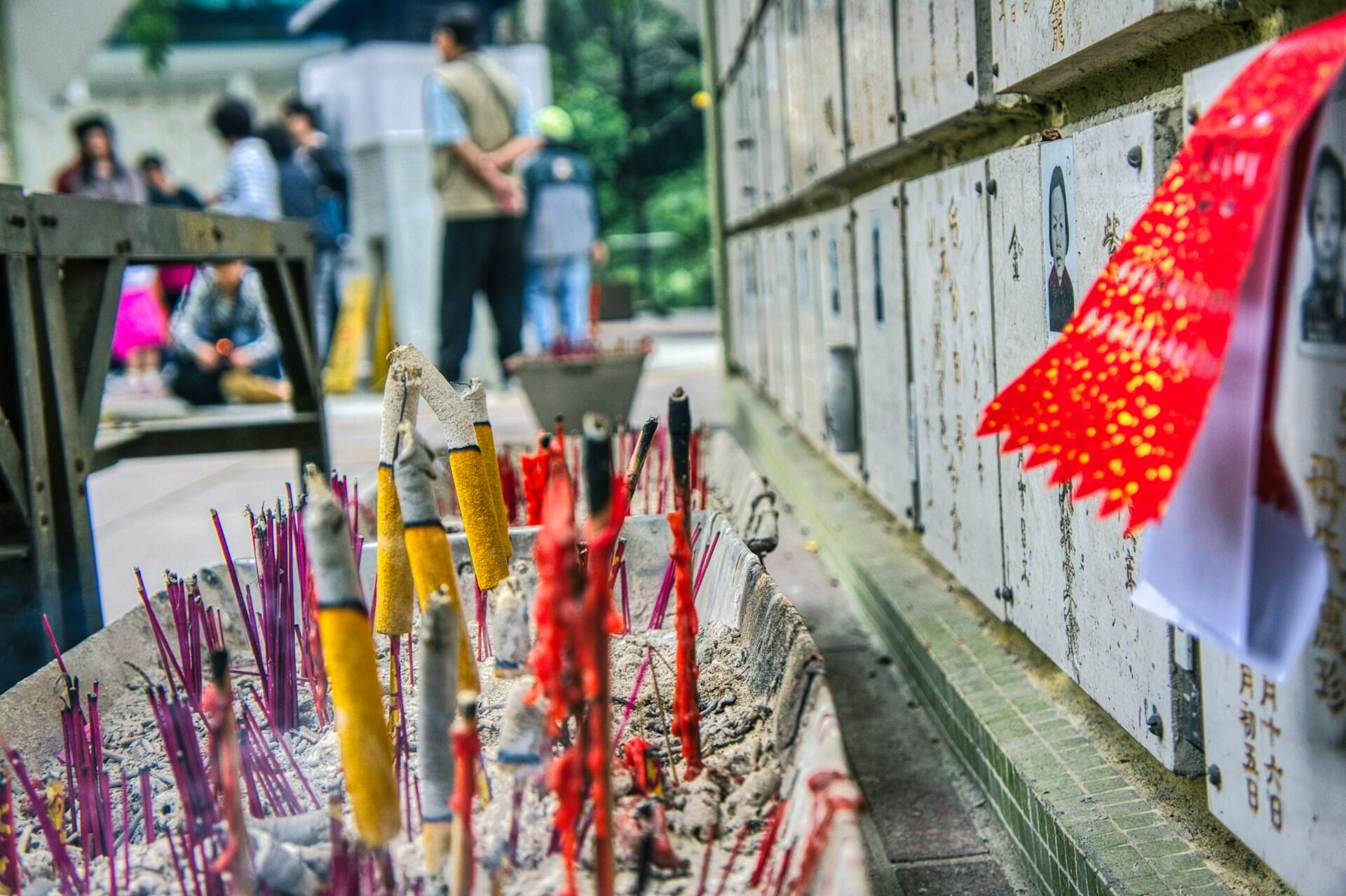

Outsiders observing the QingMing Festival (清明节 - qīng míng jié) are often taken aback by the revelry and raucousness of the doings. Well, that would be raucousness to outsiders' sensibilities; the way Chinese people honour their ancestors is poignant and historical. This article explores the spiritual beliefs and historical contexts that form QingMing Festival traditions, and how they manifest today.
Tomb-Sweeping Day Facts:
- This observance has a history of more than 2,500 years.
- QingMing is a result of the Cold Food Festival.
- Around 1,300 years ago, the emperor proclaimed QingMing an official observance.
- Today's QingMing activities range from cleaning ancestors' graves to flying kites.


Tomb-Sweeping Day Origins
Unlike the legend that forms the reason for China's most romantic festival, Qixi, qīng míng jié has its origins in actual historical events.
Qing Ming Jie: Early History
During China's Spring and Autumn Period (~770 to ~ 481 BCE - before the current era), a nobleman named Jiè Zhītuī (介之推) served his master, Jī Chóng'ěr (姬重耳). A period of unrest in 655 BCE caused Chóng'ěr to leave his home; naturally, his loyal servant followed1.
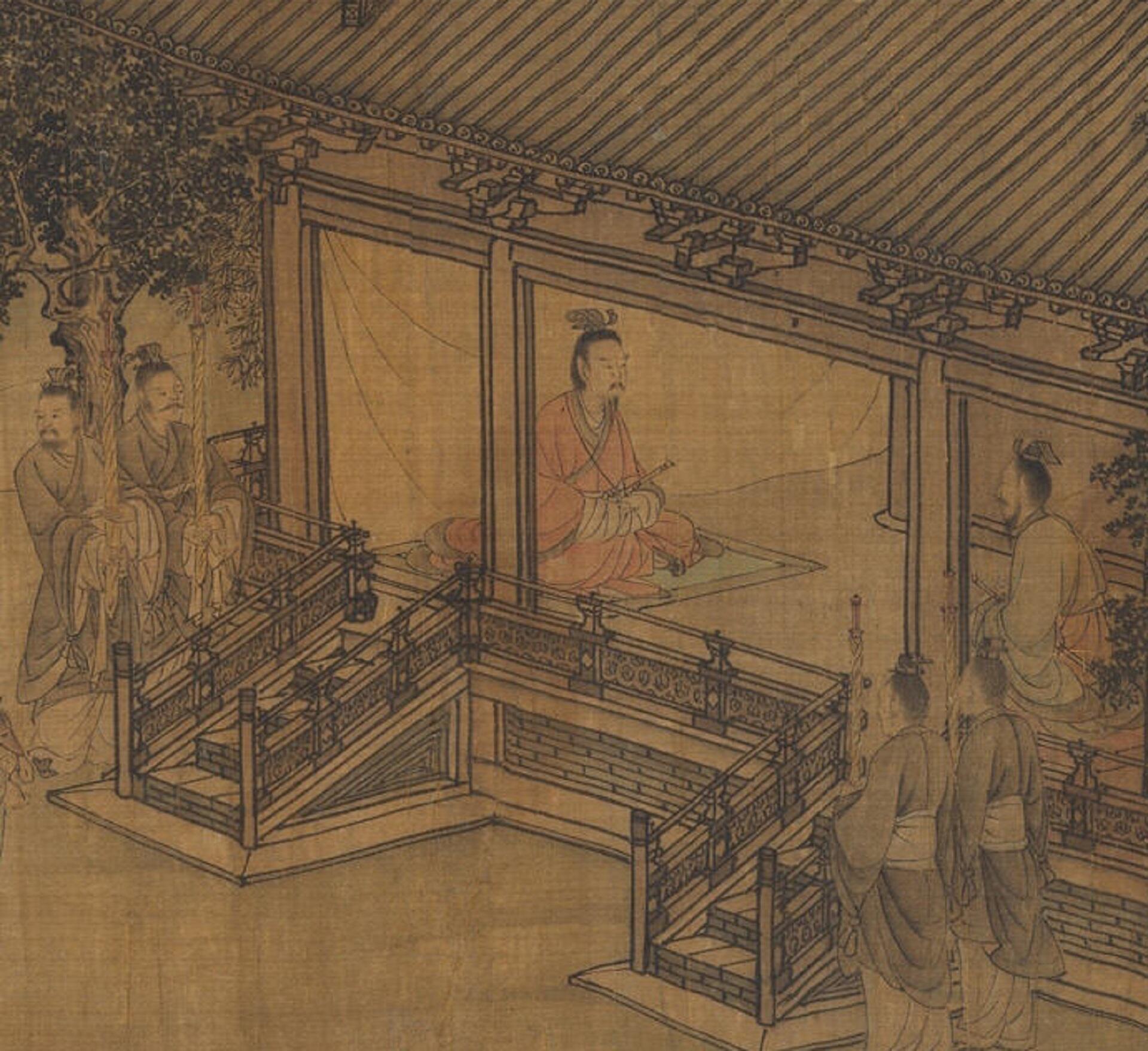
Unrest aside, Chóng'ěr was well regarded. During his 20-year exile, his father requested that he take the throne to rule the Jin state, but he refused.
In 636 BCE, he finally assumed the throne, at the urging of the head of the neighbouring state of Qin.
Once enthroned, Chóng'ěr rewarded all who were loyal to him during his exile.
Somehow, Jiè Zhītuī received no reward. He retired to the forest to care for his elderly mother. Chóng'ěr was unwilling to let him go, so he ordered his troops into the forest to find Jiè Zhītuī.
When they couldn't locate him, Chóng'ěr ordered them to set the forest ablaze, literally to smoke his servant out. Instead, Jiè Zhītuī and his mother died. Perhaps overcome with guilt, Chóng'ěr decreed that no fires may be lit on that day.
So moved were people about the death of Jiè Zhītuī on that winter day that they refused to light a fire for up to a month.
Naturally, that practice caused many to die in frigid temperatures, so rulers repeatedly urged them to a compromise. Over centuries, the observation moved from the depths of winter to springtime, and the 'no fire' practice was limited to just three days.
Commemorating Jiè Zhītuī's death meant not lighting cooking fires.
That was the origin of Cold Food Festival.
Today, the Cold Food Festival takes place on the 105th day after the winter solstice, which coincides with the QingMing festival date. You'll learn about China's unique system for scheduling holidays in this article's last chapter. It will lead you to understand why the dragon boat race festival is called Double Five Festival.
Tomb-Sweeping Day Evolutions Through the Centuries
The Tang Dynasty (618 to 907 CE) was a time of great cultural and economic expansion in China, so much so that we label it one of China's Golden Ages2. By this time, QingMing observations had become so lavish and expansive that the emperor felt compelled to issue a decree to limit the revelry.
In 732 CE, the emperor made Qingming an official holiday, limiting formal ancestor worship rites to just once per year.
Standard features of Qingming observations, established centuries ago, vied for importance on the one big day. With the rites thus limited, it became an action-packed event - much like the harvest celebrations of Mid-Autumn did. These are the activities that young and old participated in.
| 🧧 Activity/practice | 🔍 What it symbolises | 📆 Still practised today? |
|---|---|---|
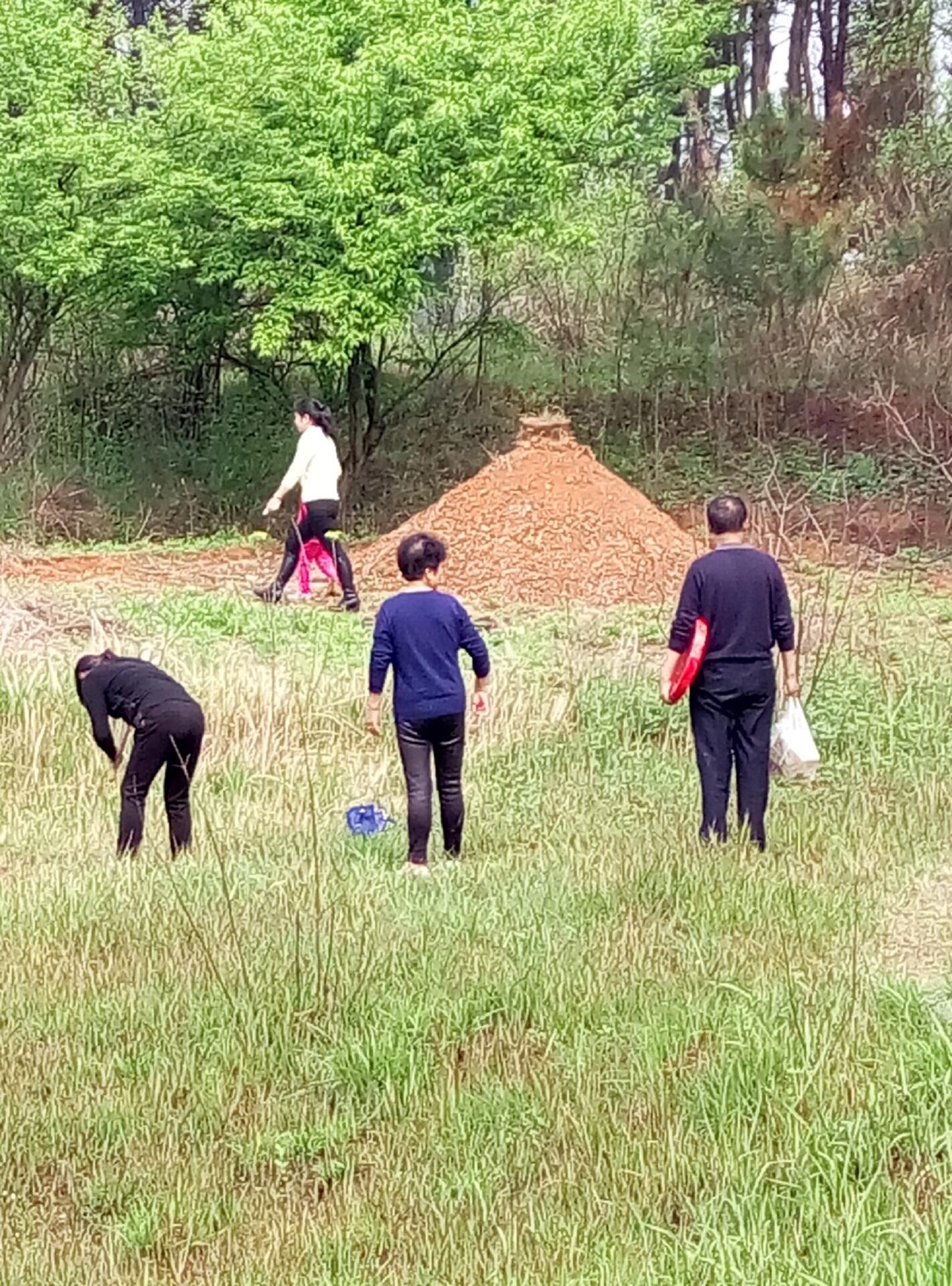
| Cleaning tombs/burial mounds | A 'spring house cleaning' of the ancestors eternal home. | Yes |
| Burning joss paper and joss sticks | Joss paper: money to spend in the afterlife Joss sticks: a tool of worship; the smoke carries the prayers to the heavens. | Yes |
| Making food offerings | Seen as sharing a meal with the ancestors. | Yes, but not necessarily at the graveside. |
| Lighting firecrackers | To scare evil spirits away from ancestors' graves. | Yes, typically in rural settings. |
| Flying kites | A way to carry messages an greetings to loved ones in the other world. | Yes |
| Planting willow branches | For spiritual protection; to ward off ghosts and evil spirits. | Yes, in some locations |
| Foods | Specialties vary by region; no particular food is standard for QingMing. | Yes |
| Going to temple | QingMing is a good occasion to pray to the Buddha or reaffirm Taoist faith. | Yes |
QingMing Festival Traditions, Customs and Practices
Younger Chinese are not too devoted to tradition.
Hú Xiǎoměi (胡小美), university student
For many in China, Tomb-sweeping Day is an occasion to travel to one's hometown, especially if the holiday coincides with a weekend. But, as my students informed me, traditional rites aren't necessarily a priority. And modern life often makes it a challenge to brave the highways and railways just for a few hours at home.
Walking down any city street around the time of the Qingming festival, you may see circles drawn in chalk on sidewalks, surrounding a pile of ashes.
These circles are mute testaments of the people who didn't travel home, yet wanted to ensure their ancestors had the money they needed to enjoy their afterlife. After securing that bit of ground and dedicating it to their elders, they will burn joss sticks and paper while quietly communing with them.
In the early 2010s, cardboard iPhones, cars, and other luxury items began appearing next to the joss paper in stalls across China. Why send only money to the ancestors when we can buy and send all these modern conveniences, too? Naturally, they sold at a substantial markup.
In 2012, President Xi Jinping set limits on Qingming ostentatiousness.
As in the Tang Dynasty, increasingly wealthy Chinese (and merchants hoping to become so) outdid each other to make their Qingming offerings the most lavish. These practices put at risk the purpose of the holiday: honour, duty, and filial piety.
As the emperor did so long ago, China's current leadership steered the country's course away from garishness4. Grumblings aside - and there are grumblings about this and other imposed limits, Chinese people have embraced the traditional Qingming activities listed above, especially the more fun aspects.
Customs, traditions, and even the foods eaten on this day vary by region.
Along the River During the QingMing Festival
This Song Dynasty painting depicts life along the river around the city of Biànjīng (汴京), one of China's Eight Ancient Capitals. The artist, Zhāng Zéduān (张择端), was a master of the jièhuà (界画) style of painting, which emphasises natural elements and exquisite details3.
Viewers 'read' the painting from right to left. First, one takes in the country scene before travelling along the river a piece to watch the boats unload from atop the Rainbow Bridge. And then, the viewer passes through the city gate, where they find the old customs office and a few shops and eating stalls. Progressing into the city, one sees a well-developed, orderly society, with many medical and commerce installations.
Name: 清明上河图 (qīngmíng shànghé tú), lit. 'QingMing on river map'.
Painting dimensions: 25.5 cm high, 5.25 m long.
Elements: 814 humans, 60 animals, 28 boats, 30 buildings, 20 vehicles, 8 palanquins, and 170 trees.
This work was celebrated from the moment of its completion; it's also been one of the most copied works in the Chinese art catalogue. During the Yuan Dynasty (1271 to 1368), renowned calligrapher Zhào Mèngfǔ (赵孟𫖯) produced a copy that was most faithful to the original. It received a measure of praise, but people tended to reject other reproductions as cheap rip-offs.
Standing in front of this expansive tableau is breathtaking, even if it's a replica. Not only due to the breadth of the work, which takes you from the countryside to the city, but because of the painting's minute details that tell the stories of long-dead Chinese.
Unfortunately, the original work is seldom displayed due to its age and fragility, one reason why all the replicas have gained new respect. Around the country, various installations treat viewers to aspects of the tableau. Among the most impressive is a 4-D immersive experience that brings to life the work's many scenes.
Words can hardly do the show or the artwork itself justice. So, take a few minutes to feast your eyes on this guided tour of life in China a millennium ago.
QingMing Festival Date
Many of China's major festivals follow a specific - dare one say elegant? - dating convention.
The first day of the first month is this country's most important celebration: Lunar New Year. The fifth day of the fifth month is the festival featuring dragon boat racing, and the seventh day of the seventh month is the day for lovers (the Qixi Festival).
In China, every day/month combination on the lunisolar calendar has its own celebration; the ones mentioned above are the major ones.
But QingMing does not follow that convention even though it is a major observance.
Instead, QingMing Jie is determined by traditional Chinese calendar divisions. This day counting system features 24 solar terms per year, covering solstices, equinoxes, and a host of other celestial events.
The date for QingMing is set on the 104th day after the winter solstice (冬至 - dōngzhì).
As these types of celestial events are more regular in their occurrences, it's easier to project dates for the holidays and observances attached to them. You're a touch too late for QingMing 2026; it was on April 5. But you can look forward to revering your ancestors on the same date next year.
In closing, we'd point out that another major Chinese holiday event, the Lantern Festival, doesn't follow the standard holiday dating convention, either. It falls on the 15th day of the first month on the lunisolar calendar; it marks the end of the New Year celebration period.
References
- “Qingming Festival: History, Traditions and Meaning | China Analysis.” China Analysis, 4 Mar. 2026, chinanalysis.com/qingming-festival/. Accessed 7 May 2026.
- “Tang Dynasty (618–907).” Smithsonian’s National Museum of Asian Art, asia-archive.si.edu/learn/for-educators/teaching-china-with-the-smithsonian/explore-by-dynasty/tang-dynasty/. Accessed 7 May 2026.
- China Online Museum. “Along the River during the Qingming Festival.” China Online Museum, www.comuseum.com/painting/famous-chinese-paintings/along-the-river-during-the-qingming-festival/. Accessed 7 May 2026.
- 闫星周. “Crackdown on Excess Helps Reshape China.” Chinadaily.com.cn, 2025, www.chinadaily.com.cn/a/202504/07/WS67f306b0a3104d9fd381dc71_1.html. Accessed 7 May 2026.
Summarise with AI:
Did you like this article? Leave a rating!

 Loading...