We know that there are two measurement systems. These systems of measurement are the metric and customary systems. The metric system is used all over the world, whereas in some countries like the U.S, the customary system is used.
In this article, we will discuss the units of measuring mass in the metric system of measurement. We will also study how to convert one unit to another. But before discussing the units of mass, you need to know what mass is. A mass, in simple terms, is defined as:
"The quantity of matter present in an object"
Although sometimes mass and weight are used interchangeably, however, both the terms are different from each other. The mass of an object can be used to measure its weight. Mass is the measure of the quantity of matter in an object, irrespective of where the object is located in the universe and how much gravitational force is applied to it. Unlike the weight of an object that depends on gravity, the mass of an object remains the same. For instance, your mass on Earth and Mars will be the same; however, your weight will vary because it depends on the gravitational force.
We can comprehend mass as a property of a physical body, as well as how resistant it is to acceleration when a specific amount of force is applied.






SI Units of Mass
The commonly used units of mass are:
- Grams
- Kilograms
The SI (Standard International) unit of mass is kilograms.
Other Units of Mass
Although the most commonly used units to measure the mass of an object are grams and kilograms, however, it also includes several other units that are multiples and submultiples of SI units. These units are convenient when we have to measure the masses of extremely small or large quantities. In these cases, we express the masses of the objects as multiples and submultiples of grams. The following table shows the relationship between the large and small units in grams.
| 1 tonne (T) | 1000000 grams |
|---|---|
| 1 kilogram (kg) | 1000 grams |
| 1 hectogram (hg) | 100 grams |
| 1 decagram (dag) | 10 grams |
| 1 decigram (dg) | 0.1 grams |
| 1 centigram (cg) | 0.01 grams |
| 1 milligram (mg) | 0.001 grams |
Note that each unit is 10 times larger than the previous.
We multiply or divide the units to convert them from one form to another. For instance, if you have to convert 50 kg to decigram, then you will use the following procedure.
1 kg = 1000 grams
1 decigram (dg) = 0.1 g
1 gram = 10 dg
First, we will convert 50 kg into grams and then we will convert grams into decigrams:
 kg =
kg =  grams
grams
=  grams
grams
grams =  dg
dg
=  dg
dg
Hence, 500 kg is equal to 500,000 dg.
Some other units are tonne (t), atomic mass ( ) unit, and electronvolt (eV). The atomic mass unit is used to measure atomic and molecular masses.
Example Problems
In this section, we will see some examples in which we will convert one unit of mass into another.
Convert 508 mg into decigrams (dg).
First, we will convert mg to grams and then grams to decigrams.
1 milligram = 0.001 grams
508 mg = 508 x 0.001 grams
= 0.508 grams
1 decigram = 0.1 grams
1 gram = 10 decigrams
0.508 grams = 0.508 x 10 = 5.08 dg
Convert 55.67 grams to hectograms.
1 hectogram (hg) = 100 grams
1 gram = 0.01 hg
55.67 grams = 
Since we are dividing the decimal number by 100, we will move the decimal point 2 units to the left
= 0.5567 hg
Convert 50 decagrams to kilograms.
First, we will convert 50 decagrams to grams and then the resulting grams will be converted into kilograms.
1 decagram = 10 grams
50 decagrams = 50 x 10 = 500 grams
1 kilogram = 1000 grams
1 gram = 0.001 kg
500 grams = 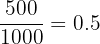 kg
kg
Convert 330 milligrams to kilograms.
First, we will convert 330 milligrams (mg) to grams and then the resulting mass in grams will be converted into kilograms.
1 milligram (mg) = 0.001 grams
330 mg = 
Since we have 1000 in the denominator, we will move the decimal point 3 units to the left:
= 0.3 grams
1 kilogram = 1000 grams
1 gram = 0.001 kg
0.3 grams = 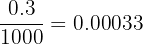 kg
kg
This unit can be written in scientific notation like this:
 x
x 
Convert 88 hectograms (hg) to kilograms (kg).
First, we will convert 88 hectograms (hg) to grams (g) and then the resulting mass in grams will be converted into kilograms.
1 hectogram (hg) = 100 grams
88 hg =  grams
grams
1 kilogram = 1000 grams
1 gram = 0.001 kilogram (kg)
Now, we will divide the mass in grams by 1000:
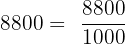
Since we have 1000 in the denominator, we will move the decimal point 3 units to the left:
 kg
kg
John went to the grocery shop and bought 5 kg 350 grams of rice and 1 kg 200 grams of sugar. What is the total mass of both items in centigrams?
First, we will convert the mass of both objects into grams:
Mass of rice = 5 kg 350 grams = 5350 grams
Mass of sugar = 1 kg 250 grams = 1250 grams
Total mass of both the items = 5250 + 1250 = 6600 grams
1 centigram = 0.01 grams
1 gram = 100 centigrams
6600 grams = 6600 x 100 = 660000 centigrams
The weight of an old elephant in the zoo is 7260 kilograms. There are two young elephants in the zoo that are 1/3 times as heavy as the older elephant. What is the combined weight of all three elephants in tonnes?
Before telling the weight of three elephants in tonnes, first, we need to find the weights of young elephants.
Weight of an old elephant = 7260 kg
Weight of 1 young elephant = 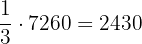 kilograms
Weight of 2 young elephants =  kg
kg
Total weight of all the elephants in the zoo = 7260 + 4860 = 12120 kilograms
We have to tell the weight of all three elephants in tonnes.
1 tonne (T) = 1000 kg
1 kg = 0.001 T
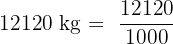
=  tonnes
Hence, the combined weight of three elephants in the zoo is 12.120 tonnes.
Sarah has 0.5 kg of salt. She gives 60% of the salt to her neighbour. How much salt is left with Sarah in milligrams?
First, we will find out the amount of salt in kilograms that Sarah had after giving 60% of her salt to the neighbour.
The total amount of salt Sarah had = 0.5 kg
Amount she gave to the neighbour = 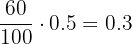 kg
kg
Amount of salt left = 0.5 - 0.3 = 0.2 kg
Now, we will convert the kilograms into grams and then the resulting grams will be converted into milligrams.
1 kilogram = 1000 grams
0.2 kg = 0.2 x 1000 = 200 grams
1 gram = 1000 milligrams
200 grams = 200 x 1000 = 200000 milligrams
Hence, Sarah had 200,000 mg of salt left after giving 60% to her neighbour.
A large cargo ship weighs 200,000 tonnes. Another medium-sized cargo ship is  times as heavy as the large cargo ship. What is the combined weight of both the cargo ships in kilograms?
First, we will find the weight of the medium-sized cargo ship from the given information.
Weight of the large cargo ship = 200,000 T
Weight of the medium-sized cargo ship = 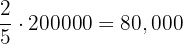 T
T
Combined weight of both cargo ships = 200,000 + 80,000 = 280,000 tonnes
Now, we will convert tonnes into kilograms (kg).
1 T = 1000 kg
280,000 T = 280,000 x 1000 = 280,000,000 kg
=  x
x  kg
kg
Hence, the combined weight of both cargo ships is x  kg.
kg.
Sam is baking a cake. The cake requires 0.25 kg of flour, 0.1 kg of sugar, and 0.005 kg of baking powder. What is the combined weight of all three ingredients in milligrams (mg)?
First, we will find the combined weight of all three ingredients in kilograms.
Weight of the flour = 0.25 kg
Weight of sugar = 0.1 kg
Weight of baking powder = 0.005 kg
Combined weight of all the three ingredients = 0.25 + 0.1 + 0.005 = 0.355 kg
In the next step, we will convert kilograms into grams and then grams into milligrams.
1 kg = 1000 grams
0.355 kg = 0.355 x 1000 = 355 grams
1 gram = 1000 milligrams
355 grams = 355 x 1000 = 335,000 milligrams
Hence, the combined weight of all three ingredients is 335,000 milligrams.
For more information on the metric system, along with practice questions, check out our article units of capacity.
Summarise with AI:
Did you like this article? Rate it!


 Loading...