In Waiting for Godot, conversation takes up most of the play - yet it rarely leads anywhere. Two characters, named Vladimir and Estragon, talk to fill the time as they wait for the mysterious figure of Godot, who they believe will change their lives for the better. However, their rambling exchanges often go in circles or simply stop without resolution. In this short yet handy guide, we’ll explore why communication is so central to the play by looking at how Beckett presents this theme through things like dialogue, repetition, and silence. Additionally, we'll also mention all the key quotes, characters, and overall context you need to ace your upcoming GCSE exam questions.


How This Theme Appears in GCSE Exams
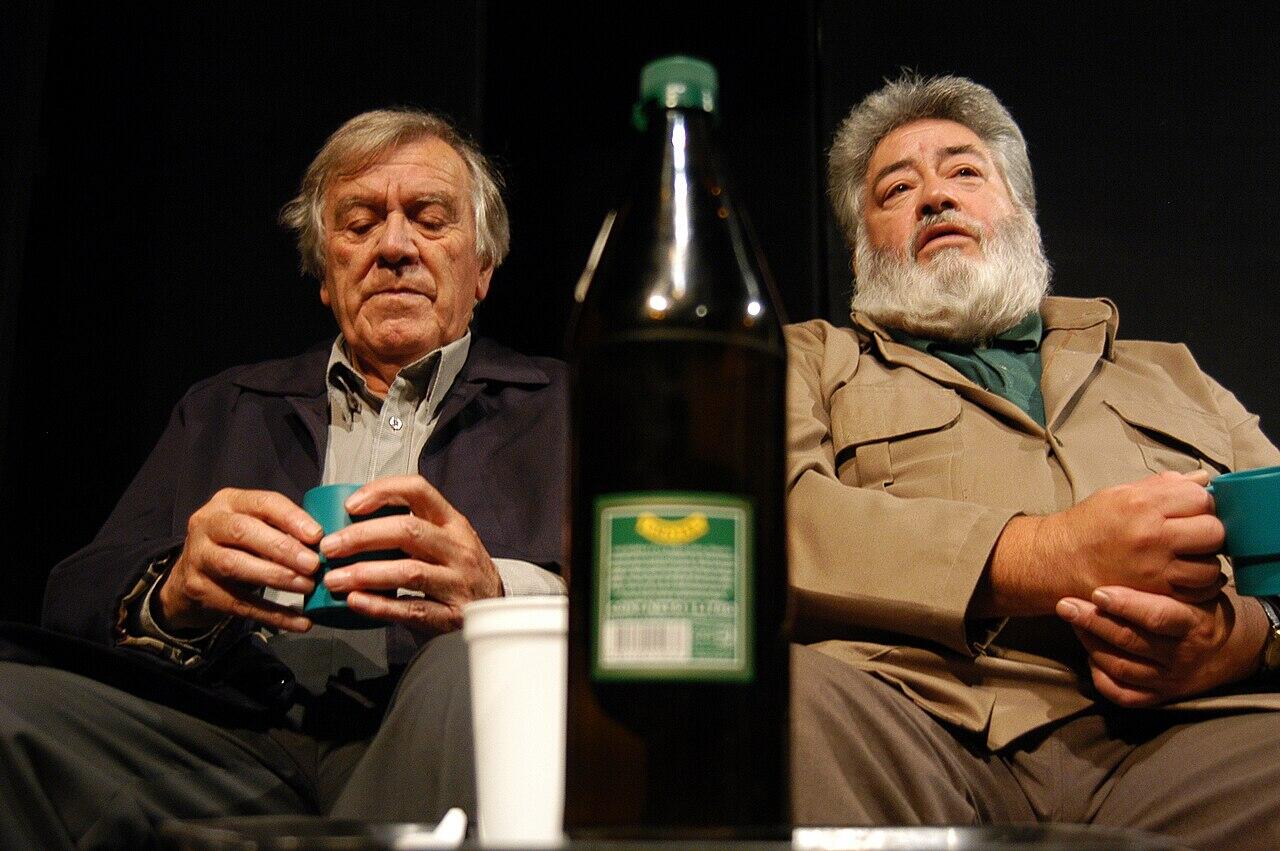
In a GCSE exam based around Waiting for Godot, you'll likely be given an extra to analyse, which will then be followed by a question that asks you to link your ideas to the play. Sometimes, you might get a question focused on a theme like communication across the whole text.
To answer this well, you need to keep the assessment objectives in mind as you write.
- AO1 (interpretation) - make your point clearly. For instance, you might argue that communication often breaks down or keeps circling back
- AO2 (Methods) - explain how Beckett shows the reader this through literary techniques such as repetition or broken dialogue
- A03 (Context) - link your ideas to the Theatre of the Absurd. This shows that language in the play often lacks clear meaning, which is why communication breaks down.
How Beckett Presents Communication
Rather than helping characters understand each other, communication in Waiting for Godot often exposes confusion and uncertainty. Let's look at this in further detail below:
Key Quotes and Analysis
Memorising quotes is only half the battle. To score top marks in your exam, you must analyse how Beckett uses these lines to give the play its meaning. Look at the five examples in the table here for a better idea of how to break down Beckett's methods yourself:
| Quote | Technique (AO2) | What it reveals |
|---|---|---|
| Nothing to be done. | Recurring motif | Creates a sense of futility and shows that communication is not used to solve problems, but simply to pass time. |
| Let’s go. / We can’t. / Why not? / We’re waiting for Godot. | Repetition / circular dialogue | Shows how conversation loops back to the same point, trapping the characters and preventing any real action. |
| Lucky’s speech (Given the existence…) | Unstructured monologue | Shows the breakdown of logic, as language becomes confusing and difficult to understand rather than meaningful. |
| Pause. | Stage directions | Uses silence to create tension and shows that communication still feels strained even when characters stop speaking. |
| The Boy’s inconsistent messages | Repetition / uncertainty | Suggests that communication is unreliable, as even simple information cannot be fully trusted. |
Communication Between Characters
Focusing on how specific characters interact can help you write more perceptive answers in the exam. Instead of talking about communication in general, look at how it works in particular relationships. This allows you to show exactly how the power dynamics and personality clashes change the way the characters talk to one another.
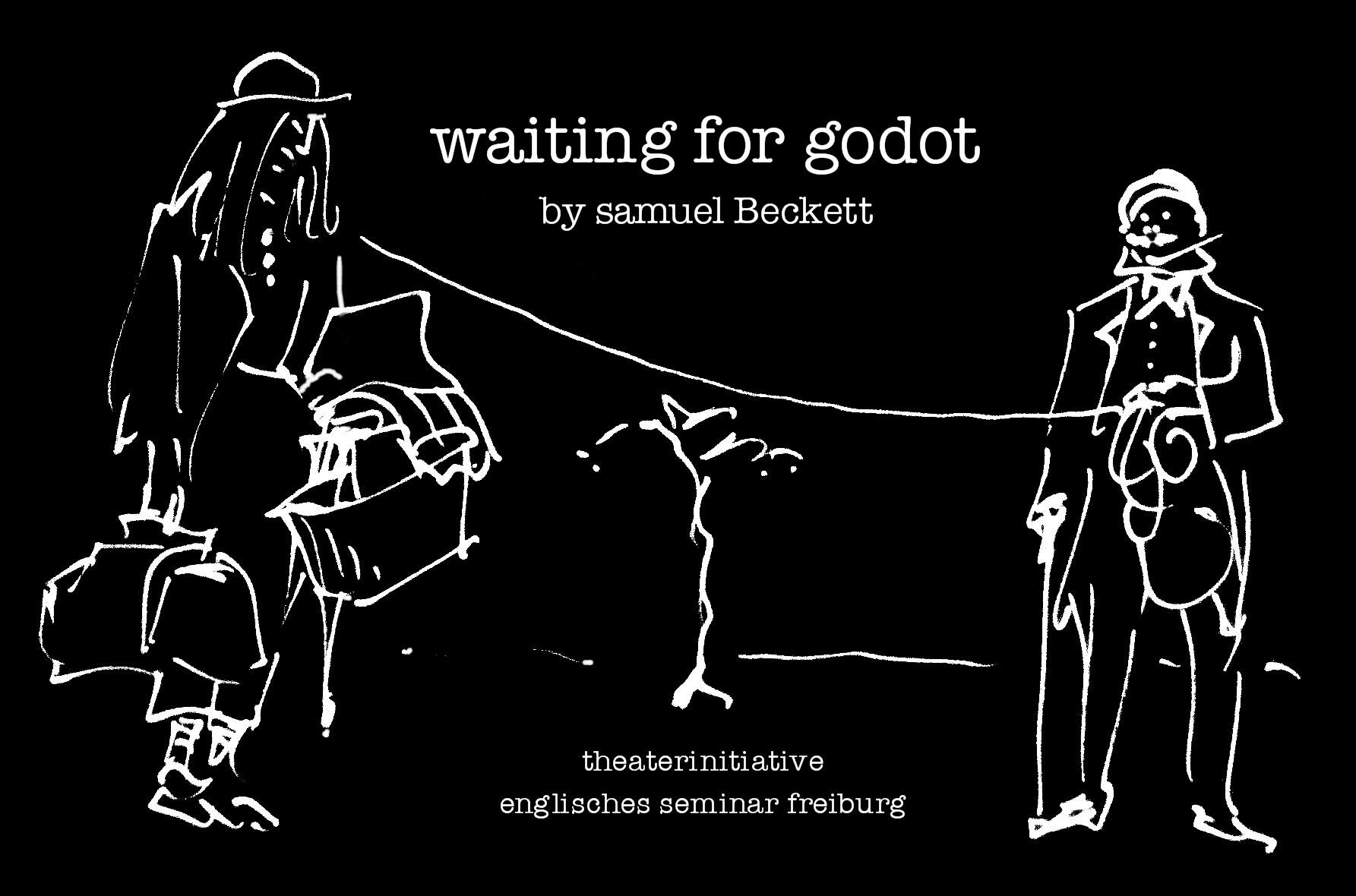
Vladimir and Estragon
As mentioned, their conversations really lead nowhere with ideas being repeated or forgotten. Likewise, their loop of “Let’s go… We can’t” shows how they return to the same stalemate. This suggests their communication is a way of coping
Pozzo and Lucky
Their relationship is built on inequality. Pozzo speaks to command and dominate, while Lucky is mostly silent or forced to perform. When Lucky finally speaks, his long and confusing monologue does not lead to any real understanding or connection
The Boy
Lastly, the Boy acts as a type of messenger, but is very unreliable. He delivers similar messages about Godot, yet denies meeting the characters before. This creates uncertainty/ shows that simple communication cannot be trusted in this world
Context: Theatre of the Absurd
As previously mentioned, Waiting for Godot is part of the Theatre of the Absurd, which was a style of drama that developed shortly after the Second World War. But what separates these styles of drama from others?
- Plots do not follow a clear beginning, middle, and end
- Events often repeat instead of progressing
- Characters are left without resolution or certainty
After the Second World War, many people started to question what life actually meant and what they could still believe in. The scale of destruction made it hard to feel certain about anything. Beckett reflects this uncertainty in the play. Communication does not lead to clear answers because the world itself feels unclear - characters still speak yes, but their words don’t fully explain or resolve anything.
How to Write About This Theme in an Exam
When communication comes up in a question on Waiting for Godot, try not to overthink it. Start with a tangible idea and go from there. Most examiners are really just looking for a point you can back up and explain properly, and aren’t looking to punish you for not sounding perfect. They want to see that you understand what Beckett is doing and can explain it in an easy-to-understand manner.
Example question
How does Beckett present communication in Waiting for Godot?
A simple way to structure your answer
- Point - start with an idea about communication
- Evidence - find and use a short and relevant quote
- Analysis - explain what Becket is doing and how it comes across to the reader
- Context - briefly link to the Theatre of the Absurd if it fits
What this looks like in practice
Beckett shows that communication doesn’t really lead to any solid answers. For example, the Boy repeats a similar message about Godot each time, but it’s not the same, which makes it confusing. This suggests that what’s being said can’t always be trusted. Lastly, it also links to the Theatre of the Absurd, wherein things don’t always make sense, and the meaning isn’t easy to pin down.
Revision Tips
| Tip | How it helps in the exam |
|---|---|
| Don’t panic if you don’t remember loads of quotes | A couple of well-used lines is enough. It’s better to explain one properly than mention lots without saying much. |
| Zoom in on small details | Even a single word or short exchange can give you something to analyse if you explain it clearly. |
| Think about what the audience notices | Consider how lines would sound on stage. Awkward pauses or repeated lines often reveal more than long speeches. |
| Use the extract properly | Start with what’s in front of you, then bring in the rest of the play to support your ideas. |
| Stay specific | Avoid vague comments. Be clear about what is happening and what it shows about communication. |
| Keep your writing straightforward | You don’t need complex language. Clear explanation is what earns marks. |
| Leave time to check your answer | A quick read-through can help you spot unclear points or missing links to the question. |
References
- Waiting for Godot Act 1 Summary & Analysis | LitCharts. (2024, December 6). LitCharts. https://www.litcharts.com/lit/waiting-for-godot/act-1
For more revision, read our essay on the theme of communication in Waiting for Godot.
Summarise with AI:
Did you like this article? Rate it!

 Loading...