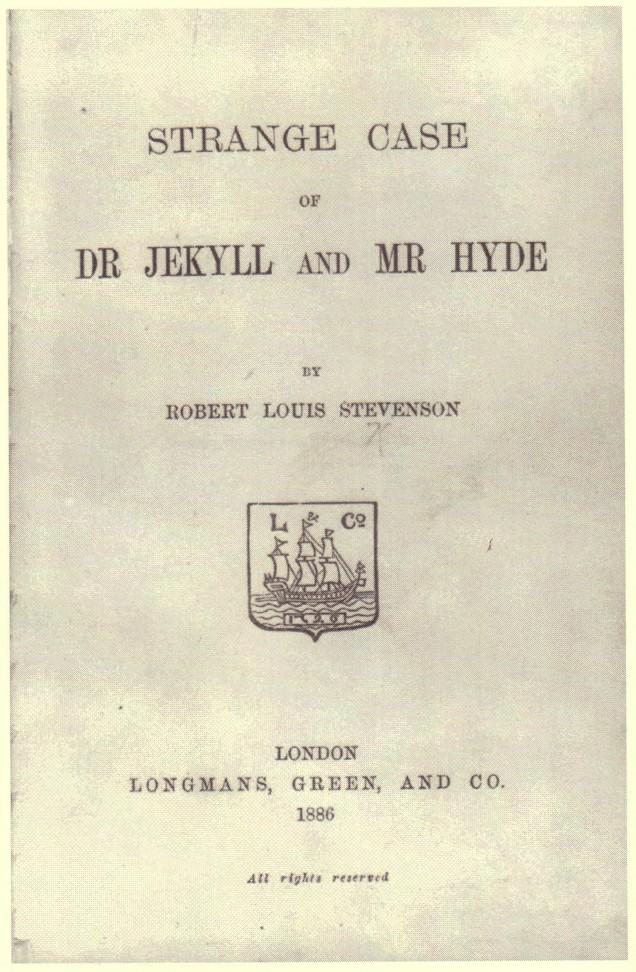
"The Strange Case of Dr. Jekyll and Mr Hyde" is a novella written by Robert Louis Stevenson and first published in 1886. It is also one of the books that you may study for GCSE English. As well as the original story, there are many different adaptations in film format as well as television shows. However, many of them take a liberal approach to the source material and may take the themes of the book and extrapolate them into other areas.
The story explores the duality of human nature and the consequences of tampering with the boundaries between good and evil, or even what the concepts of good and evil really mean. Set in Victorian London, the narrative unfolds through the eyes of Mr. Gabriel John Utterson, a lawyer and close friend of Dr. Henry Jekyll.




The Plot of The Strange Case of Dr. Jekyll and Mr. Hyde
The tale begins with Mr. Utterson and his cousin, Mr. Richard Enfield, taking their regular stroll through the streets of London. As they pass a mysterious door in a quiet, respectable neighbourhood, Mr. Enfield recounts a disturbing incident involving a sinister character named Mr. Hyde. According to the story, Mr. Hyde trampled a young girl, but rather than facing the consequences or trying to make amends, he paid her family off with a check signed by Dr. Henry Jekyll.
Intrigued and concerned about his friend's involvement with this dubious character, Mr. Utterson decides to investigate further. Dr. Jekyll is a respected scientist known for his benevolence and philanthropy and this strange new friend seems to be out of character. Despite his reputable standing, Dr. Jekyll becomes increasingly reclusive, and Mr. Utterson senses a profound change in his friend's demeanour.
Utterson eventually meets Mr Hyde and is worried about his demeanour and the way he talks. Utterson wants to warn Jekyll that Mr Hyde is taking advantage, but Poole, Jekyll’s butler, says that Mr Hyde has been given permission to come and go as he pleases.
Eventually, Utterson asks Jekyll about his will, which has been changed so that Mr Hyde is the main benefactor in the event of his death. Jekyll assures Utterson that there is no problem, and that he simply wishes for Hyde to inherit his belongings.
After a time-jump in the book, a well-respected local businessman by the name of Carew, is brutally murdered by Mr Hyde. The murder weapon is revealed to be the cane that Dr. Jekyll is known to carry, further fueling Utterson’s suspicions. Hyde disappears, and though Jekyll has become very ill, he is gradually becoming more sociable.
To Utterson’s surprise, Dr. Jekyll becomes depressed and refuses to see him anymore. This prompts him to visit Jekyll’s friend Dr. Lanyon, who is on his death-bed, and won’t share any details about Utterson. He does, however, provide a letter to be read in the event of his death.
As the narrative progresses, it is revealed to the reader Dr. Jekyll has been conducting experiments in an attempt to separate the good and evil aspects of his personality. He concocts a potion that transforms him into the sinister Mr. Hyde, allowing him to indulge in his darker impulses without tarnishing his own reputation. He can control when he changes into this “alter-ego”. Driven by a desire to experience the forbidden pleasures that society deems unacceptable, Jekyll transforms into the unpredictable and malevolent Hyde.
The consequences of Jekyll's experiments become increasingly dire as the transformations between Jekyll and Hyde become uncontrollable. The once-clear boundaries between the two personalities blur, and Hyde's influence grows stronger. Mr. Utterson, now deeply concerned, investigates further and discovers that Dr. Jekyll has left Hyde's malign influence unchecked, leading to disastrous consequences.
The narrative unfolds through a series of letters, witness accounts, and Dr. Jekyll's own confessions, allowing readers to piece together the events and understand the psychological and moral implications of the tale. Dr. Jekyll, in a letter addressed to Mr. Utterson, confesses the true nature of his experiments and the internal struggle between his virtuous and malevolent selves.
In a climactic moment, Dr. Jekyll realises that he can no longer control the transformations, and Hyde begins to manifest involuntarily. Desperate to retain his original identity, Jekyll writes a final letter detailing his impending demise.
The physical transformation is something often explored in the adaptations of the book.
After he has been locked in his laboratory for days, Utterson and butler Poole decide to break down the door, and find a small person with deformities and physical differences twitching on the floor, holding a vial. There is a copy of Jekyll’s will on the desk, and Hyde’s name has been crossed out and replaced by Utterson’s, along with a confession by Jekyll.
“I am careless; this is my true hour of death, and what is to follow concerns another than myself. Here then, as I lay down the pen and proceed to seal up my confession, I bring the life of that unhappy Henry Jekyll to an end.”
Utterson reads Dr. Lanyon's letter also, revealing the nature of the conflict going on inside his friend. The novella concludes with the revelation that Jekyll's influence has waned, leaving Hyde in control. The final testament asserts that Hyde will soon succumb to the consequences of his immoral actions.
The Plot and Its Meaning
The narrative serves as a cautionary tale about the dangers of unchecked desires, the consequences of playing with the boundaries of morality, and the inherent duality within the human psyche. Dr. Jekyll's misguided attempts to compartmentalise his morality result in the creation of a malevolent alter ego that ultimately consumes him. The story explores themes of morality, the struggle between good and evil, and the consequences of suppressing one's darker instincts.
The character of Mr. Hyde is a symbolic embodiment of the darker side of human nature, unleashed when societal constraints are discarded. Stevenson's exploration of the dual nature of man reflects the moral dilemmas faced by individuals in a society that often demands conformity and suppresses the expression of desires deemed unacceptable.
"The Strange Case of Dr. Jekyll and Mr Hyde" has left a lasting impact on literature and popular culture, inspiring numerous adaptations and interpretations. The novella continues to be studied and celebrated for its exploration of the human psyche and its enduring relevance in examining the complexities of human morality.
Summarise with AI:
Did you like this article? Rate it!

 Loading...