The Tempest is an iconic William Shakespeare play. It was one of his final plays and is rich with a diverse cast of characters, each contributing to the themes and narrative.
Over the years, there have been a number of interpretations and characters that have played these roles, providing their own spin on each of the characters and introducing new audiences to the play.
This guide explores the key characters, their traits, and the roles they play in the story. As well as reading the play, there are performances and even films that can be watched to help to introduce you to the characters, but remember that there are often twists and changes.




Prospero
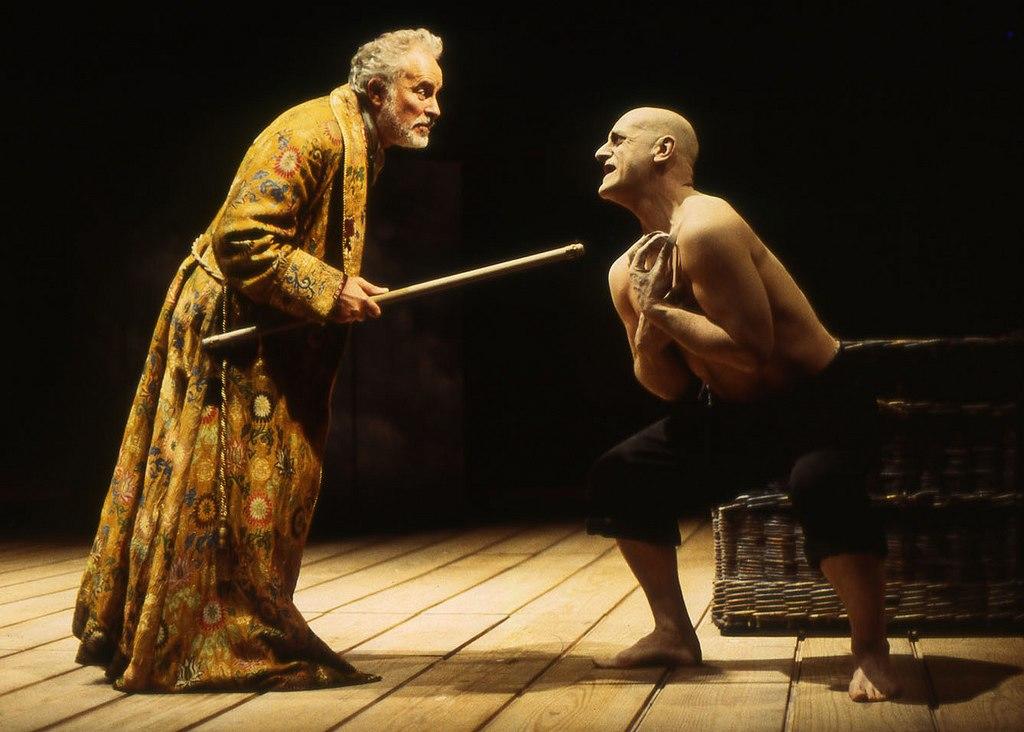
Prospero, shown to us as the rightfulDukeof Milan, is the central character of The Tempest. In many ways it is his redemption arc that forms the mainstay. Exiled to an isolated island with his daughter Miranda, Prospero has spent years honing his magical abilities.
Prospero is a complex figure, embodying both the compassionate father and the vengeful magician. His magic enables him to control the elements, spirits, and even the fates of the shipwrecked nobles.
Prospero’s journey is one of redemption and forgiveness; by the play’s end, he chooses to forgive his enemies and renounce his magical powers. His famous speech in Act V, where he vows to break his staff and drown his book, signifies his transition from a figure of supernatural control to a man of reconciliation.
Ye elves of hills, brooks, standing lakes and groves,
And ye that on the sands with printless foot
Do chase the ebbing Neptune, and do fly him
When he comes back; you demi-puppets that
By moonshine do the green sour ringlets make,
Whereof the ewe not bites; and you whose pastime
Is to make midnight-mushrooms, that rejoice
To hear the solemn curfew, by whose aid –
Weak masters though ye be – I have bedimmed
The noontide sun, called forth the mutinous winds,
And ’twixt the green sea and the azured vault
Set roaring war; to the dread-rattling thunder
Have I given fire and rifted Jove’s stout oak
With his own bolt: the strong-based promontory
Have I made shake, and by the spurs plucked up
The pine and cedar; graves at my command
Have waked their sleepers, ope’d and let ’em forth
By my so potent art. But this rough magic
I here abjure; and when I have required
Some heavenly music (which even now I do)
To work mine end upon their senses that
This airy charm is for, I’ll break my staff,
Bury it certain fathoms in the earth,
And deeper than did ever plummet sound
I’ll drown my book.
Miranda
Miranda, Prospero's daughter, is a symbol of innocence and purity. Having spent most of her life on the island, she knows little of the world beyond it.
Her compassion and naivety are highlighted in her reaction to the shipwreck and her immediate sympathy for the victims. Miranda's relationship with her father centres on both trust and obedience. Her love for Ferdinand, the son of Alonso, King of Naples, introduces a subplot of romance. Their relationship, which quickly blossoms into engagement, represents the hope for a new and harmonious future. Miranda’s famous line, "O brave new world, That has such people in’t!" reflects her awe and optimism about the world beyond the island.
Ariel
Ariel is a spirit bound to serve Prospero. Rescued from the witch Sycorax’s imprisonment, Ariel is grateful yet yearns for freedom. Ariel’s magical abilities are instrumental in executing Prospero’s plans, from creating the tempest to leading the shipwrecked passengers to various parts of the island.
Ariel's character is ethereal and playful, yet he demonstrates loyalty and a strong desire for liberation. Prospero’s promise of freedom motivates Ariel throughout the play, and his eventual release signifies the end of the supernatural influence over the island. Ariel’s famous song, "Full fathom five thy father lies," showcases his enchanting and otherworldly nature.
Caliban
Caliban, the son of the witch Sycorax and the island's original inhabitant, is portrayed as a complex character embodying both victimhood and villainy. He initially welcomed Prospero and Miranda but later became enslaved after attempting to assault Miranda. Caliban’s resentment towards Prospero and his longing for the island’s freedom highlight the theme of colonialism.
Despite his crude behaviour and language, Caliban's connection to the island is profound, as evidenced by his poetic speeches about its natural beauty. His famous lines, "Be not afeard; the isle is full of noises," reveal his deep bond with the island. Caliban’s character challenges the audience to consider the impact of colonisation and the nature of civilization.
Alonso
Alonso, the King of Naples, is a key figure whose journey in the play is marked by grief and repentance. Initially complicit in Antonio’s usurpation of Prospero’s dukedom, Alonso is later tormented by the apparent loss of his son Ferdinand in the shipwreck.
His despair and guilt lead him to reflect on his past actions. Alonso’s eventual reunion with Ferdinand and his reconciliation with Prospero signify the restoration of familial and political bonds. Alonso’s transformation from a figure of authority to one of humility underscores the play’s themes of forgiveness and redemption.
Ferdinand
Ferdinand, the son of Alonso, represents nobility and chivalry. Shipwrecked and separated from his father, he quickly falls in love with Miranda.
His courtship of Miranda is tested by Prospero, who imposes tasks on him to prove his worthiness. Ferdinand’s steadfastness and honour contrast with the treachery of characters like Antonio and Sebastian. His love for Miranda is sincere and pure, and in some ways magical. Ferdinand’s character brings a sense of youthful optimism and the promise of a brighter future.
Antonio
Antonio, Prospero’s brother and the usurper of the Milanese dukedom is a character driven by ambition and treachery. His betrayal of Prospero sets the play’s events into motion. Throughout the play, Antonio remains unrepentant and continues to scheme, even plotting with Sebastian to murder Alonso.
Antonio’s lack of moral scruples and his manipulative nature contrast sharply with the characters who seek redemption. His refusal to repent highlights the theme of the corrupting influence of power. Antonio's character serves as a foil to Prospero, emphasising the latter’s journey towards forgiveness.
Sebastian
Sebastian, Alonso’s brother, is another character who embodies ambition and duplicity. Encouraged by Antonio, Sebastian conspires to kill his brother and seize the throne of Naples. Sebastian’s willingness to commit fratricide for power mirrors Antonio’s earlier betrayal of Prospero. Unlike Alonso, Sebastian does not undergo a transformation by the play’s end, remaining a figure of unchecked ambition. Sebastian’s character reinforces the play’s exploration of the darker aspects of human nature and the destructive potential of unchecked ambition.
Stephano and Trinculo
Stephano and Trinculo provide comic relief in the play. Stephano, Alonso’s butler, and Trinculo, the jester, are shipwrecked on the island and quickly become entangled in Caliban’s plot to overthrow Prospero.
Their drunken antics and greed add humour to the play but also serve as a critique of the corrupting influence of power. Despite their low societal status, their actions mirror the ambition of the noble characters, highlighting the play’s exploration of human folly.
What does the relationship between Ferdinand and Miranda symbolise?
Who is the protagonist of the story?
What is Prospero’s story arc focused on?
Why do you think he is referred to as “Prospero” – is this deliberate by Shakespeare or a random choice?
Summarise with AI:
Did you like this article? Rate it!

 Loading...