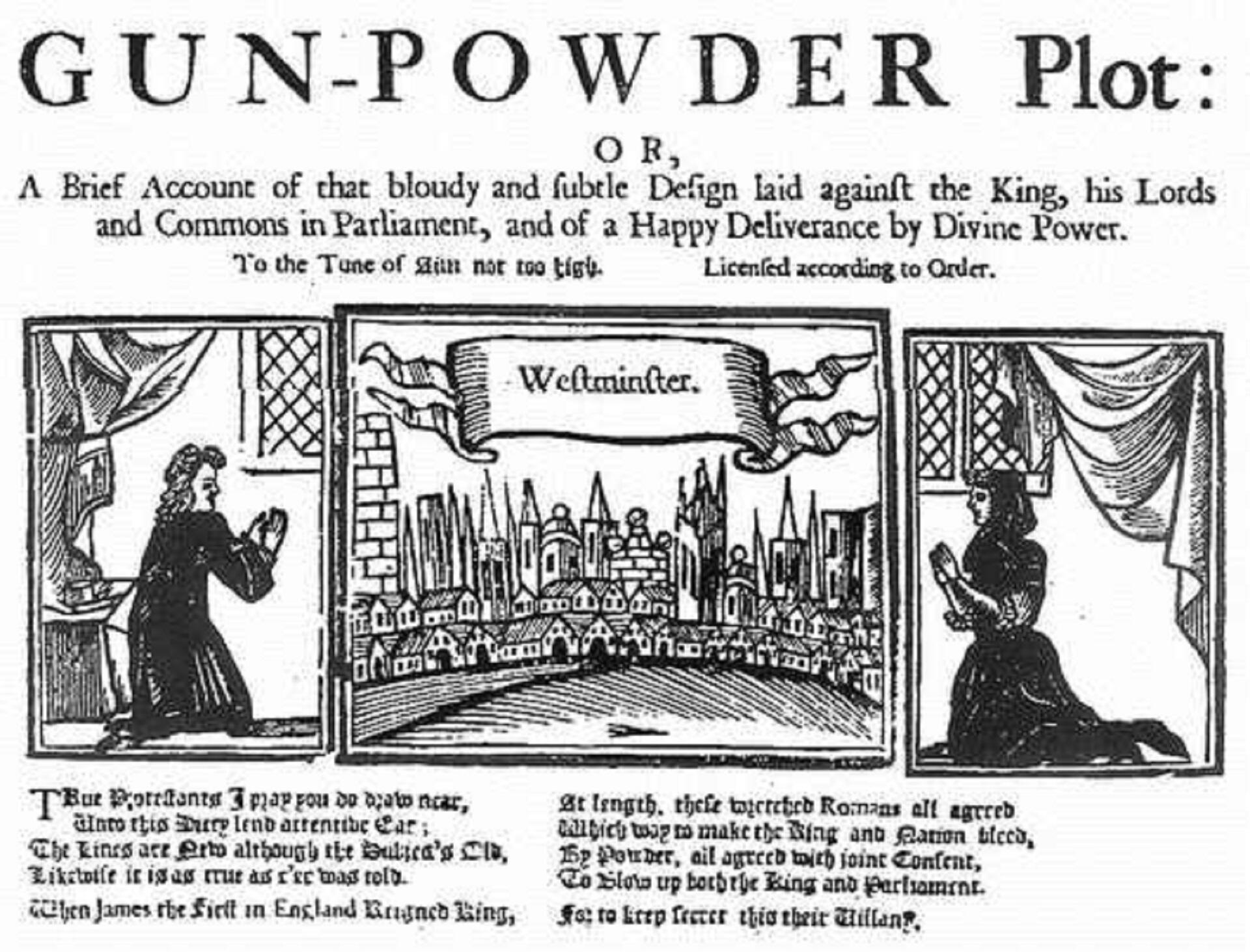

The early 17th century was an uneasy time for Catholics in England. King Henry VIII had established the Church of England some 70 years before, which set off a religious and political tug-of-war between the monarchy and society. When King James I refused to grant Catholics legitimacy, devout believers made plans to force his hand on the issue. This article details Robert Catesby's Gunpowder Plot, who was involved, how it unfolded, and what happened in its aftermath.
Gunpowder Plot History: What You Need to Know
- Robert Catesby and his conspirators planned to eliminate the King and the House of Lords, and install a Catholic ruler.
- They enlisted several sympathisers, including Guy Fawkes, who had experience with gunpowder.
- Before they could execute their plan, an anonymous letter tipped off a member of Parliament.
- Searching the Parliament building's undercroft, the Justice of the Peace found and arrested Fawkes, who was guarding the explosives.
- With the plot foiled, conspirators fled London, but were soon caught and sentenced.


What Is the Gunpowder Plot: Reasons, Plans, Participants, and Goals
The Act of Supremacy 1534 made the English King Henry VIII the titular head of the Church of England. Rather than build a new religion from the ground up, he retained many Catholic traditions, doctrines, and practices1. His tactics infuriated devout Catholics, not just because he spurned their religion, but because he plundered Catholic monasteries to enrich the monarchy.
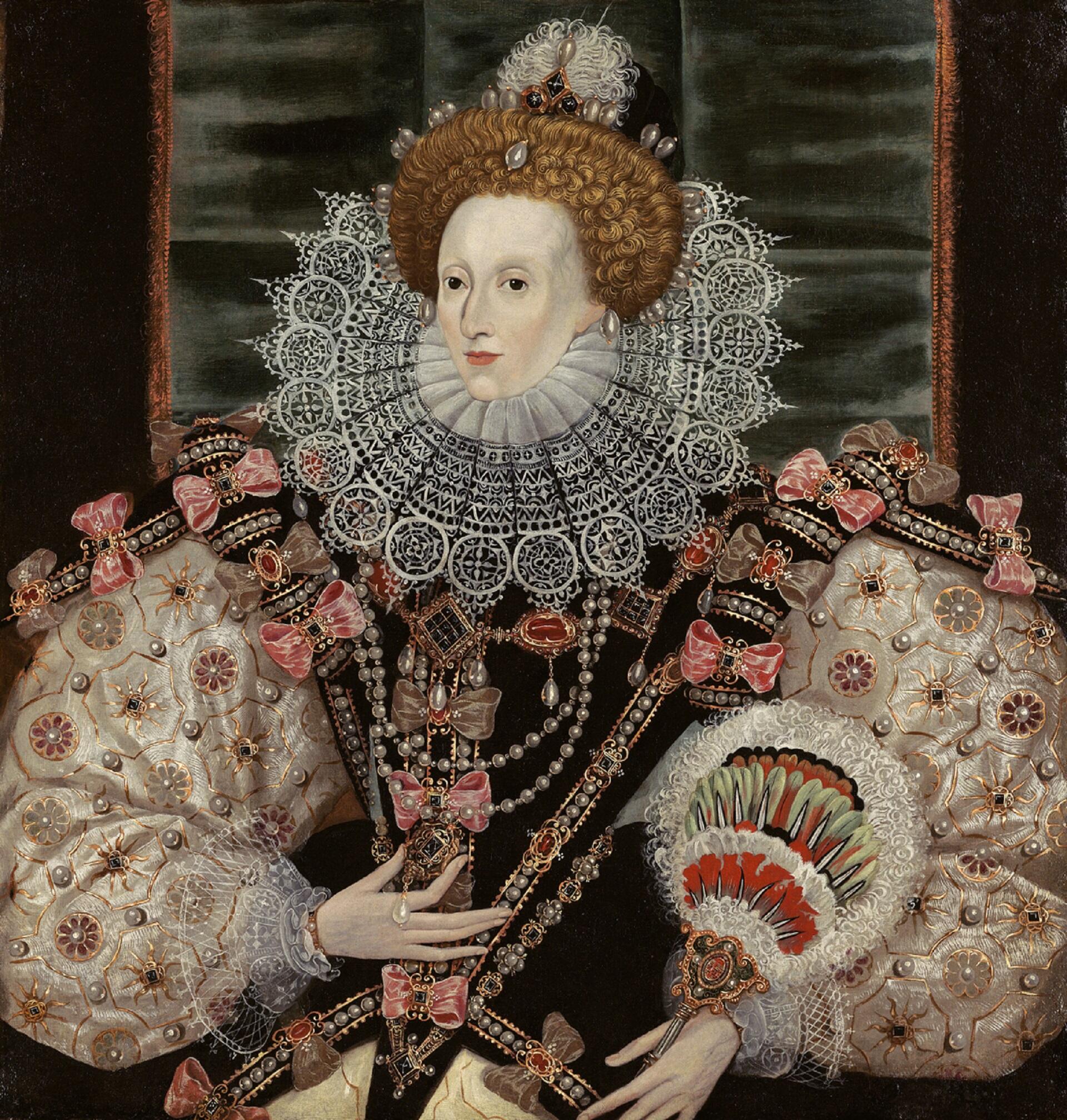
His successor, Queen Elizabeth I, reinforced her father's position by imposing the Elizabethan Religious Settlement. It mandated that anyone appointed to public office must swear allegiance to the monarchy and the Church of England.
Queen Elizabeth died, leaving no successor. King James VI of Scotland had been quietly groomed for the role during the queen's final months; after her passing, he claimed the throne as King James I.
Initially, he adopted a 'don't ask, don't tell' attitude towards Catholic practice, as long as Catholics were outwardly obedient to the law. This tolerant attitude didn't last long. Roughly three years into his English reign, he denounced Catholicism, which gave fervent believers all the reasons they needed to plan his removal.
The Conspirators' Plans and Goals
Agitator groups proposed more than one plot before the Gunpowder Plot, none of which advanced beyond the planning stage.
Kidnap and detain the King in the Tower of London until he agreed to be more tolerant of Catholics.
Remove the King, install Arabella Stuart, his cousin, and surround her with Catholic advisers.
These failed efforts taught Robert Catesby that his plan must be doable and effective, and it must bring about the end to the current King's reign. He reasoned that blowing up Parliament during its opening session, when the king and most of the Lords were present, would achieve his aims2.
[He was a man of] ancient, historic and distinguished lineage.
Contemporaries' assessment of Robert Catesby
With his charisma, social status and Catholic standing, Catesby had no trouble enlisting co-conspirators. However, the man he sent abroad, Thomas Wintour, failed to persuade the Spanish king to invade England, sympathetic as he was to the Catholic cause. While abroad drumming up support for the plot, Wintour searched out Guy Fawkes, a man of sterling reputation and a loyal Catholic.
Wintour and Fawkes assured Catesby that Spain would not support the plot.
With no outside help forthcoming, Catesby and his co-conspirators finalised their plan. They set the date for February 1605, the day Parliament would reopen, and went about recruiting more men to help.
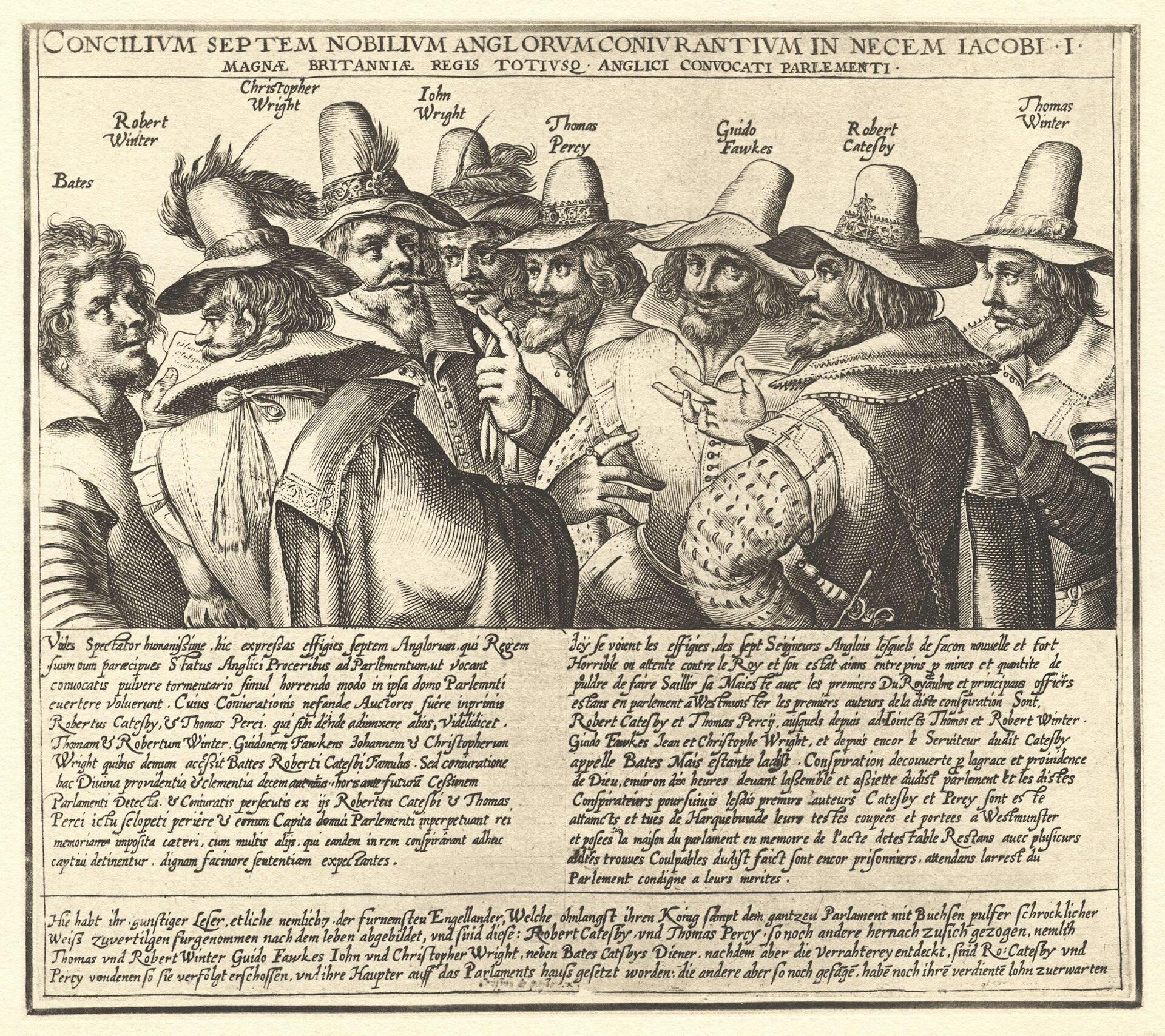
Who Were the Co-Conspirators?
Already, we have a few names: Robert Catesby, the plot mastermind, his trusted man, Thomas Wintour, and Guy Fawkes. However, this was a vast conspiracy, with several people invested in its success. This table lists them all, along with the role they played and their various relationships3.
| 📛 Name | 🧩 What role they played | 🔗 Connections to the plot |
|---|---|---|
| Robert Catesby | Enlisted like-minded Catholics. Sought help from Spain. | plot mastermind |
| Thomas and Robert Wintour | Thomas travelled abroad to convince the Spanish king to back their rebellion. Enlisted Guy Fawkes. | Cousins to Robert Catesby. |
| Thomas Percy | Helped fund the plot. Secured leases to London properties, including Parliament's undercroft. | His brother, Henry Percy, was to act as regent to the installed Queen Elizabeth, King James' 11-year-old daughter. |
| John and Christopher Wright | Advisors, due to their experience with rebellion and arrest. | Their sister was married to Thomas Percy. Early association with Guy Fawkes. |
| Robert Keyes | Guarded the gunpowder at Catesby's London property. | His first cousin was married to Ambrose Rookwood. |
| Ambrose Rookwood | His horses would help drive the Midlands rebellion to kidnap Elizabeth. | Hand-picked by Robert Catesby. |
| Thomas Bates | Servant to Robert Catesby. | None; he was invited to join after overhearing discussions about it. |
| John Grant | Provide supplies for the Midlands rebellion. | Married Thomas Wintour's sister. Hand-picked by Robert Catesby. |
| Everard Digby | Lease properties Plan a 'hunting party' - a band of armed men to attack the Midlands. | Hand-picked by Robert Catesby. |
| Francis Tresham | Suspected writer of the anonymous letter. | Asked by Robert Catesby to provide money and property, which he did not do. |
Guy Fawkes, with his 10 years of military experience, took on the plot's most important role: securing the explosives in the parliament's undercroft. As he was guarding it, carefully concealed beneath a pile of logs, Justice of the Peace Sir Thomas Knyvett arrested him, putting an end to the plot.
History of Gunpowder Plot: Timeline
Changing England's religion and formalising that change with a series of parliamentary acts set the stage for decades of religious rebellion. We start our timeline in 1604, with King James I's lack of consideration for his Catholic constituents.
19 February 1604
The King denounces the Catholic Church.
He orders the departure of all Jesuits and priests from the country three days later.
20 May 1604
The core conspirators meet at the Duck and Drake Inn, London.
They swear themselves to secrecy about the plot.
March 1605
Thomas Percy leases the Parliament undercroft.
The conspirators begin moving the gunpowder in.
26 October 1605
Lord Monteagle receives the anonymous letter.
By alerting the King's ministers, he reveals the plot.
November 1605
Searchers discover Guy Fawkes in the undercroft.
He's arrested and made to give up the names of other conspirators.
January 1606
Conspirators are tried and found guilty of treason.
They are sentenced to hanging and being drawn and quartered.
Perhaps the whole plot would have gone off without a hitch, were it not for the plague sweeping through London. Rather than reopening Parliament in February 1605, as was the norm, the session was pushed back to October of that year.
Discovery of the Gunpowder Plot
The plotters, whose plans were finalised for the original date, had to wait an additional eight months - a long time for plans to go unexecuted. It also presented a window of opportunity for the plot's discovery.
Three may keep a secret, if two of them are dead.
Benjamin Franklin
On 14 October, Catesby approached Francis Tresham, recently converted to Catholicism, about securing money and property. Tresham had serious misgivings about the number of Catholics who would die in Parliament along with the king, as many others who knew about the plot did by this time.
Tresham is one of three people suspected - but not confirmed - of sending the anonymous letter. Catesby and Wintour suspected him, but Tresham was able to convince them of his innocence. Regardless of the sender, it was that letter, delivered to Lord Monteagle at this home, that tipped the authorities off to the plot.
As the king was away on a hunt, it took a few days for him to learn about the danger to his life. During that time, Monteagle shared the letter with a few men in his circle. Their newfound knowledge spurred quiet investigations, so they could be well-prepared to inform the king upon his return.
Thomas Ward, related to the Wright brothers so active in the plot, overheard his lord's discussion about the letter. He sent Catesby a message that he'd been betrayed.
Despite being found out, the men believed that the king's long discussions about what should be done would give them enough time to strike and get away. They intended to carry their plan through.
What Happened to Guy Fawkes and the Plotters
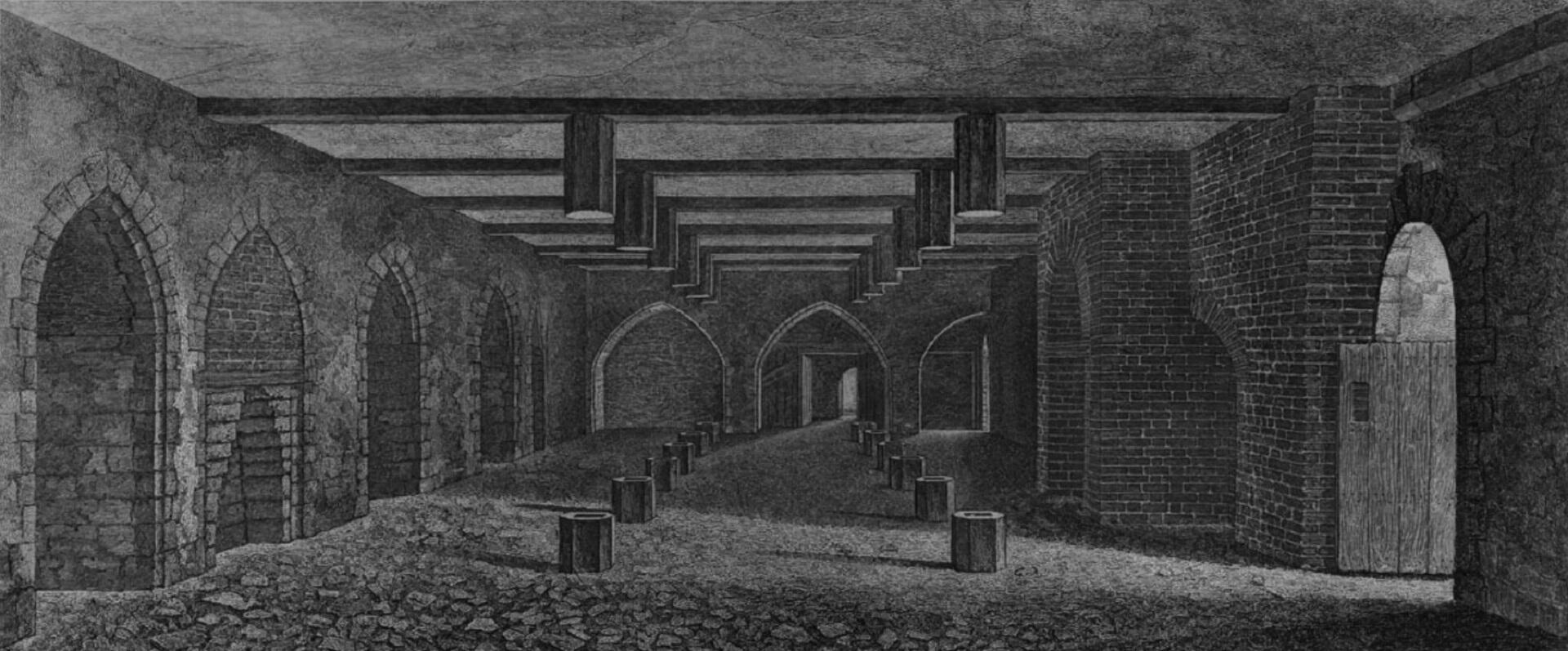
Indeed, the king took several days to decide on a course of action. On 4 November, as the plotters were making their final preparations, the king's lawmen undertook their first searches. They found the stacked lumber that concealed the gunpowder and asked Fawkes, the man standing there, whose wood that was.
It belongs to my master, Thomas Percy.
Guy Fawkes, upon being questioned about his presence in the undercroft.
Believing Fawkes was a mere servant guarding his master's wood, the searchers moved on. But they were suspicious, as Percy was a known Catholic sympathiser. They reported their findings to the king, who insisted on a more thorough investigation. Returning to the undercroft and again encountering Fawkes, they arrested him, finding on his person matches and touchwood.
During this search, the investigators found 36 barrels of gunpowder hidden beneath the logs.
Fawkes was arrested and hauled before the king the next morning. During initial questioning, he offered little information but affirmed that the plot was meant to get rid of the king and Parliament.
As news of Fawkes' arrest spread throughout London, the conspirators still in the city fled. Those who made it out of London before the city's gates closed ransacked the countryside for more weapons and supplies. Thomas Percy didn't make it out; he was placed under house arrest alongside the Earl of Northumberland, his patron.
The gentler tortours [tortures] are to be first used unto him ...
From a letter of King James I
Despite the king's admiration for Fawkes' fortitude, he decided that torture would be the only way to get answers out of him. Fawkes was taken to the Tower of London, where he endured brutality for two days before confessing and naming his co-conspirators. Their fates were as gruesome as his.
| 👨 Conspirator | 😨 Their fate | 📍 Where |
|---|---|---|
| Robert Catesby | Scorched in a fire Shot and killed | Holbeche House |
| Robert Wintour | executed | St Paul’s Churchyard |
| Thomas Wintour | Shot in the shoulder; arrested executed | Holbeche House Old Palace Yard |
| John and Christopher Wright | Both shot to death | Holbeche House |
| Everard Digby | executed | St Paul’s Churchyard |
| John Grant | executed | St Paul’s Churchyard |
| Thomas Bates | executed | St Paul’s Churchyard |
| Francis Tresham | Died of natural causes | Tower of London |
| Ambrose Rockwood | arrested executed | Holbeche House Old Palace Yard |
| Robert Keyes | executed | Holbeche House |
Guy Fawkes was sentenced to be hanged, drawn and quartered. However, he cheated his executioners out of the latter two phases by leaping (or falling) off the hanging platform, effectively snapping his neck such that drawing and quartering were not necessary.

Gunpowder Plot History: Why Does It Matter?
In the failed plot's aftermath, Parliament strengthened the laws against Catholicism in England. Recusants were made to pay fines and suffered social restrictions that lasted for hundreds of years. This led to centuries of conflict, both political and religious, some of which still manifests today4.
This act finally repealed the law forbidding anyone in the line of succession to the throne from marrying a Catholic. However, it maintains that no Catholic believer may ascend to the throne.
In the immediate aftermath of the failed plot, Parliament passed the Observance of 5th November Act1605, making its commemoration a yearly event. As Londoners had lit bonfires to celebrate the king's continued life, these fires became - and remain - a staple of our observance5.
Like any momentous event in our history, we count the Gunpowder Plot as one that helped shape the direction of our country. It impacted our foreign relations, particularly with Spain, a deeply Catholic country. It also set many political and legal precedents, such as the Oath of Allegiance and the Act of Settlement 1701, which remained in force for 300 years.
The tradition of inspecting the House of Lords cellars ahead of Parliament's opening has its roots in the Gunpowder Plot.
Finally, the plot's failure cemented the British Protestant identity. It paved the way for the King James version of the Bible, which wouldn't exist if the king had been assassinated. Globally, the King James Version remains among the most popular, accessible versions of that religious text.
References
- Grandstaff, Jacob. “Why Did Henry VIII Turn England Protestant?” History How It Happened, 5 Nov. 2019, historyhowithappened.com/why-did-henry-viii-turn-england-protestant/. Accessed 5 Oct. 2026.
- Ray, Michael. “Gunpowder Plot | Definition, Summary, & Facts | Britannica.” Encyclopædia Britannica, 2019, www.britannica.com/event/Gunpowder-Plot. Accessed 5 Oct. 2026.
- Ridgway, Claire. “The Other Traitors: What Happened to Guy Fawkes’ Fellow Conspirators? - The Tudor Society.” The Tudor Society, 30 Jan. 2025, www.tudorsociety.com/the-other-traitors-what-happened-to-guy-fawkes-fellow-conspirators/. Accessed 4 Oct. 2026.
- BBC. “New Rules on Royal Succession Come Into Force.” BBC News, 26 Mar. 2015, www.bbc.com/news/uk-32073399. Accessed 5 Oct. 2026.
- Warren, Josephine, et al. “Remember, Remember? Why We Shouldn’t Forget the History Surrounding the Gunpowder Plot - the Tablet.” The Tablet, 6 Nov. 2024, www.thetablet.co.uk/blogs/remember-remember-why-we-shouldnt-forget-the-history-surrounding-the-gunpowder-plot/. Accessed 5 Oct. 2026.
Summarise with AI:
Did you like this article? Leave a rating!

 Loading...