• Academic
    • English
      • English Language
        • A level English
        • GCSE English
        • KS3 English
        • Resources 11 Plus English
      • English Literature
        • A Level English Literature
        • GCSE English Literature
    • Maths
      • Algebra
        • Equations
        • Inequalities
        • Log
        • Polynomials
      • Analytical Geometry
        • Conics
        • Distance
        • Vectors
      • Arithmetic
        • Complex Numbers
        • Decimal Numbers
        • Divisibility
        • Fractions
        • Integers
        • Metric System
        • Natural Numbers
        • Ratio
        • Real Numbers
        • Sexagesimal
      • Calculus
        • Derivatives
        • Functions
        • Integrals
        • Limits
      • Geometry
        • Line
        • Plane
        • Solid
      • Linear Algebra
        • Determinants
        • Linear Programming
        • Matrix
        • System
      • Maths Exams
        • A Level Maths Exams
        • GCSE Maths Exams
        • QTS Maths
        • UKMT
        • University Entrance Exams
      • Probability
        • Binomial
        • Combinatorics
        • Normal Distribution
      • Statistics
        • Descriptive
        • Inference
        • Statistics Exercises
      • Trigonometry
        • Trigonometry Theory
    • Science
      • Biology
        • A Level Biology
        • GCSE Biology
        • KS3 Biology
      • Chemistry
        • A Level Chemistry
        • GCSE Chemistry
      • Physics
        • A Level Physics
        • GCSE Physics
    • Social Sciences
      • Economics
        • A level Economics
        • GCSE Economics
      • Geography
        • A Level Geography
        • GCSE Geography
      • History
        • A level History
  • Questions
    • Accounting
    • Art
    • Biology
    • Business studies
    • Chemistry
    • Computing
    • Economics
    • English
    • English language
    • English literature
    • Exam preparation
    • French
    • General studies
    • Geography
    • German
    • Health and social care
    • History
    • Humanities
    • Languages
    • Latin
    • Law
    • Maths
    • Medicine
    • Physics
    • Psychology
    • Religious studies
    • Science
    • Social sciences
    • Sociology
    • Spanish

English language

ResourcesQuestionsEnglish language

A Level English Language

Hi, my name is Ella and I'm approaching my a level exams. I would find a bit of extra help very useful because I'm doing this A level through distance learning. I want to achieve at least a B, and get into the university of my choice (my offer is BBB). My specification is AQA 7702. Help with effectively tackling the question is much needed. If you think you can help, I am willing to pay for online sessions in the run up to my exams (14th June, 20th June) so please reply to this message.

Thanks Ella

Emma

Can you help me make a sentence using the word lazier

Can you help me make a sentence using the word lazier

Emma

check my letter

I've written a letter i need someone to check quickly

Emma

COLLOQUIALISMS

Can anyone tell me what this means in English with regards to grammar. How does this play an important role in writing.

Emma

Coursework

Is there anyway someone could help me with my english Coursework. It is edexcel and i am in the first year of A levels (AS).

Emma

Discursive Essay: International Adoption.

I need help with my discursive essay. The topic is International adoption but im not sure how to start it.

Emma

Essay

What does this quote mean “monsters are disfigured versions of ourselves”. From the article Why Modern monster have Become so Alien to us.

Emma

gcse english equivalent test

Hi, I have to sit the GCSE English equivalent test @ Canterbury Christchurch University. They're not using any specific examination board. Could anyone tell me more about it please? I am very nervous about it! Thanks in advance,

Emma

Give me a good synonym for beautiful

Give me a good synonym for beautiful

Emma

Grammar

Complete the blanks with the Past Simple, Past Progressive, Past Perfect Simple or Past Perfect Progressive of the verbs in brackets.

1) Last year I .....(go) on an exciting safari holiday in Namibia with my husband. 2) I remember it ....(rain) continously for several days in Brussels before we ....(leave), so I couldn't wait to board the plane which ....(head) for sunnier climes. 3) Our safari holiday ....(be) unique in that, unlike many other safari holidays, the aim was not just to show a bunch of tourists some wild animals; while on holiday we would be volunteering at a conservation centre. 4) Our first night in the bush, while the biologists ....(entertain) everyone with tales, I ....(sit) back and ....(gaze) at the patterns made by the stars. 5) At one stage I ....(get) up to stretch when all of a sudden I ....(see) a huge creature nestled on my husband's shoulder; I ....(let) out an embarrassing squek of fear. 6) Apparently it was just a stick insect. Not like any stick insect I ....(ever/see); it was as big as my forearm. 7) The next day we ....(set) off early; our task was to make a note of any wildlife we saw. 8) While we .... (walk) through the thick forest, we ....(hear) birds and monkeys chattering in the trees. However after three hours, the novelty ....(wear) off, and I was exhausted. 9) And then I ....(see) it. A deer ....(stand) under a tree just a few metres away from me; I proudly ....(make) a note on my pad. 10) The next day, while we ....(travel) to a nearby village, we ....(spot) a herd of elephants crossing the road. 11) All too quickly our two weeks in Namibia ....(draw) to a close and we .... (find) ourselves back at home. 12) Altough we were a little sad, we both felt a tremendous sense of satisfaction as we ....(not only/visit) a beautiful part of the world, but we ....(also/make) our own small positive contribution.

Emma

Grammar

What is an example of a sentence that is “a compound, complex sentence with an appositive somewhere in the sentence and includes a resumptive modifier”? Please explain.

-Please explain what is an resumptive modifier

Emma

Grammar

How would make the following sentence:

“A sentence with two appositives for the same name. Make each appositive complex (each appositive must contain a subordinate clause)”

Emma

Homphones

Which witch is which? How do we work out the different aspects of the English Language when there are so many homophones? Do you know the definition to these? Which - Witch They're - There Here - Hear

Emma

How do I become a tutor for this site?

Do you use Skype with the clients? What if I need to charge more than £25 per hour?!

Emma

How do you use Hyphens?

Can you explain to me hoe to use hyphens? I was thinking of using it in my blog.

Emma

How to write a report

I have a report to do on a severe weather storm in my local area and I'm a little bit confused on how to do it, could you help?

Emma

how to write informatively?

could also explain the difference between persuasive and informative writing, please?

Emma

if I am a teaching assistant can I also tutor?

If I am working as a teaching assistant can I also tutor someone with out getting in trouble?

Emma

is this a metaphor or personification "I have a soul made out of lead so stakes me on the ground "

is this a metaphor or personification "I have a soul made out of lead so stakes me on the ground "

Emma

Is this sentence a run-on?

  1. For two years, I lived alone in a cabin in northwest Minnesota.

Emma

Is 'y' a consonant or a vowel?

Please can I have the answer by the eight of June. Cheers.

Emma

Key points on style of speaking sports commentary

(rugby commentary)

Emma

Learning the English language

What are the parts of speech?

Emma

Name some figurative sayings

Name some figurative sayings

Emma

Need advice on extra tuition for my year 5 daughter

My daughter has just started year 5, and she currently is sitting top of her class in all subjects, but her school teaching hasn't been consistent over the last year (she had supply teachers for most of Year 4) I am looking to find somebody who could help tutor her towards her 11 + and beyond

Emma

NONESSENTIAL CLAUSES

Is there such a thing as nonessential clause, if so how do we apply it ?

Emma

Nouns that are unchanged in plural.

Can you think of any nouns that are unchanged in plural?

Emma

plural people

«The peoples have the power and never surrender».

Is this phrase -ever- correct?

Emma

Split Infinitives

I've never really understood what constitutes a split infinitive. What makes a phrase an 'Infinitive' and why shouldn't one split it?

Emma

The dreaded structure question!

Many exam boards ask a question about how a writer structures a text to engage the interest of the reader. What do they actually mean by the term 'structure'? Does this demand writing about more than paragraphs? What do you think? How would you define structure?

Emma

use of question marks

I have always worked on the basis that question marks were full stops as well, but consider the following sentence from a blog post:

"Who's Justin Bieber?" you might say.

This seems to be a punctuation nightmare. I want the question mark in there, but it doesn't feel right to start a new sentence directly after it. It feels as though there should be a comma. What is the correct form?

Emma

What are the key things that I should mention when commenting on the writer's style and language?

I'm doing the CIE AS Level English language paper 1 and this question is frequently asked. When commenting on the writer's style especially, what are the key things that should be mentioned and could you give me an example too.

Emma

What does wincing mean?

What does wincing mean?

Emma

What is a bicentenary and what does it mean?

What is a bicentenary and what does it mean?

Emma

What is a Gypsy?

What is a Gypsy?

Emma

What is a synopsis?

What is a synopsis?

Emma

What is assonance?

What is assonance?

Emma

when do we have to use the word coincident

when do we have to use the word coincident

Emma

WRITING TO INFORM

Hi I am home schooling (only for English) my 12 year old son in Greece and would like some clarification on wtriting to inform. There is much information on the web that states what should be included in writing to inform. For instance: It is factual,unbiased, impersonal, focuses on WHO, WHAT, WHERE AND WHEN. Also may include some diagram, pictures or bullet points (bbc bitesize). Other sources emphasise the 5 w's. So we are missing the WHY from the above source. However bbc goes on the say that when we include the WHY this is classed as explaining, is written in the present tense but focuses on WHY. So do I tell my son to include WHY in the basics of writing to inform or should I leave it as an ingredient used for writing to explain...? Also, are there any flashcards or info sheets that would help my son to follow a set or rules when writing in difference styles. He seems to have issues with prewritng. Thanks for your time. Jo

Emma

GCSE English Language and Literature Help

Looking for help and tips for GCSE English Language and Literature to achieve good grade

Emma

what is the opposite of "not out"

is it out

Emma

Written expression

What is the best way to improve written communication? Notable for clarity and for a much more coherent answer. I never used to face this issue however now I am.

Emma

What is an Active Verb?


What is an active and passive verb?

In order to understand active and passive verbs, let’s first define what a verb is. Take a look at the table below for the standard definition of a verb. action_verbs

Definition Examples
Verb Expresses an action or state that usually relates two things To run, to walk, to swim, to laugh, to have

As you can see, verbs can sometimes make up the bulk of our dialogue. In the English language, verb conjugation is pretty simple in comparison to other languages. Compare the conjugation of the verb ‘to run’ in English versus french.

French English
I (je) cours run
You (tu) cours run
She/he (elle/il) court runs
We (nous) courons run
They (elles, ils) courent run

When we talk about active and passive verbs, then, we’re not really talking too much about the conjugation of the verb. Instead, it is dependent on what the subject in the sentence is doing. Take a look at the definition of active verbs below.

Definition Subject
Active verb When the subject of the verb is performing the action Who or what the sentence is about (performing action verbs)

Now that we’ve covered an active verbs definition, let’s take a look at some active verbs examples. action_voice Let’s take a look at passive verbs definition:
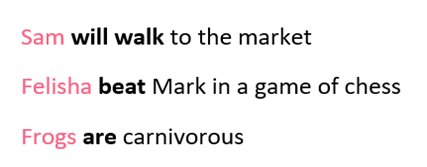
Definition Subject
Passive verb When the subject is being put through the verb action Who or what is receiving the action of the verb

Let’s take a look at some examples of passive verbs.
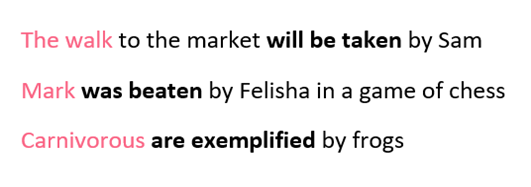
How do you know if a verb is active or passive?

One easy way to spot the difference between an active and passive verb is to understand whether the speaker is taking an active or passive tone. Now that you understand what is and active and passive verb, let’s take a look at the definitions of an active and passive voice below.

Definition Subject
Active voice Uses an active form of verbs Subject is performing an action
Passive voice Uses a passive form of verbs Subject is receiving the action from the verb

As you can see, when a speaker is using passive verbs, they are employing a passive voice. Let’s take a look at an example of a passive voice. passive_voice_verbs Here, we can break down each section as an example to see why the voice is passive or active.
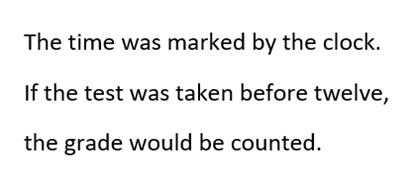
Subject Passive verb
The time was marked by the clock The time Was marked
If the test was taken before twelve The test Was taken
The grade would be counted The grade Would be

Let’s take a look at an example of an active voice. active_voice_verbs Again, breaking down each section gives us more clarity on why this voice is an active one.
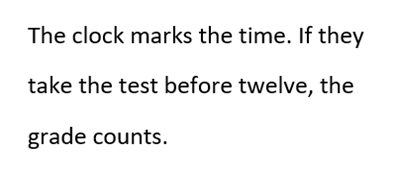
Subject Active verb
The clock marks the time The clock marks
If they take the test before twelve They take
The grade counts The grade counts

What is an active verb example?

Let’s break down an example of an active verb. Remember that an active verb is used when the subject of the sentence is performing the verb. Let’s take a look at some examples. Try your best to break down each example and decide whether or not they are using an active verb or passive verb.

Sentence Active Verb?
Example 1 Your grandma made the pierogies? ?
Example 2 The tornado destroyed much of what was left. ?
Example 3 I wanted to go, but I was busy. ?

Let’s take a look at the answers, as well as an explanation for why.

Sentence Active Verb? Subject Verb Performed by Subject
Example 1 Your grandma made the pierogies? Yes Grandma made
Example 2 The tornado destroyed much of what was left. Yes Tornado destroyed
Example 3 I wanted to go, but I was busy. Yes I wanted, was

When you use active verbs, you are using an active voice. Active voices are usually used in essays and in day-to-day life. active_voice

What is a passive verb example?

Now that we’ve looked at some examples of active verbs, let’s turn to look at passive verb examples. Recall that when we have a passive verb, the subject of the sentence is having the verb performed onto them. Looking at the examples below, try to identify which are passive verbs.

Sentence Active Verb?
Example 1 The pizza was burned by the oven. ?
Example 2 Trains are driven by train conductors. ?
Example 3 You were gone by evening. ?

Let’s take a look at the answers, as well as an explanation for why.

Sentence Active Verb? Subject Subject Receiving Verb’s Action Received from
Example 1 The pizza was burned by the oven. Yes Pizza Was burned Oven
Example 2 Trains are driven by train conductors. Yes Trains Are driven Train conductors
Example 3 You were gone by evening. No - - -

When you use passive verbs, you are using a passive voice. Passive voices shouldn’t be used in essays. They are, however, often used in journalism. Listen to the news and you should find plenty of examples of sentences with passive verbs. passive_verbs

Why are passive verbs used?

There are many different reasons why passive verbs are used. When you’re writing in any academic setting, active verbs are usually encouraged because they produce an active voice. However, there are some instances where you might want to use passive verbs. Take a look at some of the reasons why you might prefer to use passive verbs overactive verbs. Along with each reason, you will find an example.

Reason Example How
Focus on subject who is receiving the action rather than who is doing the action Glass is made by melting down and chemically altering sand. We don’t focus here on who made the glass but how it is made.
Avoid stating irrelevant information. The car was designed to withstand lightning strikes. We don’t care who made the car but rather it’s features.
Avoid repeating information The impact of the study is discussed in the conclusion. The author is discussing it, so it is not worth repeating.
Taking on an academic/professional tone The sample was taken from a representative group. We don’t have to use personal pronouns (we, I, etc.)

Emma

Can you name ten words starting with king

  Can you name ten words starting with king: Here’s an expanded list of English words beginning with “king‑”, divided into groups for easier reference.


A. Core/root forms

  • king (noun/verb)
  • kings (plural)
  • kinged (past tense of “to king” = to enthrone or make king)
  • kinging (present participle/gerund)

B. Derived with suffixes indicating state, condition, quality

  • kingdom, kingdoms
  • kinghood, kinghoods
  • kingship, kingships
  • kingly
  • kinglier, kingliest
  • kingless
  • kingliness, kinglinesses
  • kinglike
  • kinglihood, kinglihoods

C. Compound & specialised nouns

  • kingmaker, kingmakers
  • kingpin, kingpins
  • kingpost, kingposts
  • kingbird, kingbirds
  • kingbolt, kingbolts
  • kingcraft, kingcrafts
  • kingcup, kingcups
  • kingfish, kingfishes
  • kingfisher, kingfishers
  • kinglet, kinglets
  • kingling, kinglings
  • kingside, kingsides
  • kingsnake, kingsnakes
  • kingwood, kingwoods
  • kingklip, kingklips

D. Proper nouns/names & metaphorical uses

  • (As proper nouns, e.g., “King …” in a title or name)
  • “king of …” used metaphorically (“the king of pop”, “the kingpin”)
  • Use in card playing: the King card in a deck.

Key notes and caveats

  • Some derivatives use archaic or poetic form (e.g., kinglihood).
  • Compound words may be hyphenated or written as one word depending on usage (e.g., king‑maker vs kingmaker).
  • Some words beginning with king‑ may also derive from other sources (e.g., names of specific items or species like kingbird, kingsnake).
  • The list above omits words where king appears but is not the prefix (i.e., words containing “king” not at the start).

Emma

  • >

    The platform that connects tutors and students

  • Superprof Resources
    • English
    • Maths
    • Science
    • Social Sciences
    • Questions
  • About
    • Find a private tutor
    • Who are we?
    • Superprof Blog
  • Follow the adventure
    • Give lessons