In combinatorics, a circular permutation is an arrangement of objects around a circle rather than in a straight line. The key difference from a standard (linear) permutation is that in a circle, there is no fixed "first" or "last" position, which means some arrangements that look different in a line are actually identical around a circle. This article explains the theory behind circular permutations, shows how and why the formula differs from the linear case, and works through a range of examples.


Quick Recap: What are Permutations?
A permutation is an arrangement of objects where order matters. For example, the PIN code 4567 is a different permutation from 7654, even though both use the same digits.
The number of ways to arrange  distinct objects in a line is:

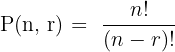
If we are selecting  objects from (without repetition), the number of permutations is:
When repetition is allowed and we select items from types, the count is simply  .
.
Linear vs Circular Permutations
In a linear permutation, objects are arranged in a row. There is a clear first position and a clear last position, so every shift creates a new arrangement.
In a circular permutation, objects are arranged around a circle. Because there is no fixed starting point, rotating every object one place around the circle does not create a new arrangement — it is the same circle viewed from a different seat.
Why does this matter? Consider seating 4 people — A, B, C, D — around a circular table. The arrangements ABCD, BCDA, CDAB, and DABC all look identical when everyone is seated in a circle, because each is simply a rotation of the same configuration. In a line, these would count as 4 different arrangements. In a circle, they count as 1.
For objects in a line, every arrangement can be rotated into positions that all look the same in a circle. This means the number of distinct circular arrangements is times fewer than the number of linear arrangements.
The Circular Permutation Formula
Case 1: Clockwise and anticlockwise arrangements are DIFFERENT
This is the standard case and applies to most problems (for example, people seated around a table where each person has a distinct left neighbour and right neighbour).

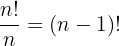
Why  ? There are
  linear arrangements. Since each circular arrangement corresponds to rotations that are identical, we divide by :
Example: 7 students sit around a circular table. The number of distinct seating arrangements is:

Compare this with the linear case:  . The circular count is exactly 7 times smaller, because each circular arrangement has 7 equivalent rotations.
Case 2: Clockwise and anticlockwise arrangements are the SAME
This case applies when the circle can be "flipped over" — for example, threading beads onto a necklace or bracelet. A necklace can be turned over, so a clockwise arrangement and its mirror image (anticlockwise) are considered the same.

We divide by an additional factor of 2 because each arrangement and its reflection are identical.
Example: 7 beads of different colours are threaded onto a bracelet. The number of distinct arrangements is:

Tip for deciding which formula to use: Ask yourself, "Can I flip the arrangement over and get the same thing?" If yes (necklaces, bracelets, keyrings), use  . If no (people at a table, items on a turntable), use latex!
| Arrangement Type | Formula | When to Use |
|---|---|---|
| Linear (all n objects) | n! | Objects in a row or line |
| Circular (direction matters) | (n - 1)! | People at around a table |
| Circular (direction does not matter) |  | Necklaces, bracelets, keyrings |
The key insight is that a circle has no fixed starting point, so we always divide the linear count by . If the arrangement can also be flipped (as with a necklace), we divide by a further factor of 2.
Worked Examples
How many ways can 8 different coloured balls be arranged in a circle, if clockwise and anticlockwise arrangements are considered different?
Using the formula for circular permutations where direction matters:


There are 5,040 distinct circular arrangements.
How many ways can 10 people be seated around a circular dinner table?
Seating people around a table is a standard circular permutation where clockwise and anticlockwise arrangements are different (each person has a distinct left and right neighbour):


There are 362,880 distinct seating arrangements.
Five different charms are placed on a bracelet. How many distinct arrangements are possible?
A bracelet can be flipped over, so clockwise and anticlockwise arrangements are the same. We use the formula:

There are 12 distinct arrangements.
A family of 6 is seated around a circular table for dinner. The parents insist on sitting next to each other. How many seating arrangements are possible?
When two people must sit together, treat them as a single unit. This gives us 5 units to arrange around the circle (the parent-pair plus the 4 other family members):

However, within the parent-pair, the two parents can swap positions (mum on the left or dad on the left). This gives:

By the counting principle:

There are 48 possible seating arrangements.
A committee of 9 people sits around a circular table. Three specific members — Alice, Bob, and Charlie — must all sit together. How many arrangements are possible?
Treat Alice, Bob, and Charlie as a single block. This gives  units to arrange around the circle:
Within the block, Alice, Bob, and Charlie can be arranged in:

Total arrangements:

There are 4,320 possible seating arrangements.
Eight diplomats from different countries sit around a circular table. Two particular diplomats refuse to sit next to each other. How many valid seating arrangements are there?
First, find the total number of circular arrangements without any restriction:

Next, find the number of arrangements where the two diplomats do sit next to each other. Treat them as a single block, giving 7 units around the circle:
The two diplomats can swap positions within their block:

Subtract the restricted arrangements from the total:

There are 3,600 valid seating arrangements.
12 different beads are to be arranged on a necklace. How many distinct necklaces can be formed?
A necklace can be rotated and flipped, so we use the formula where clockwise and anticlockwise arrangements are the same:



There are 19,958,400 distinct necklaces.
Four couples attend a dinner party and sit around a circular table. Each couple must sit together. How many seating arrangements are possible?
Treat each couple as a single block. This gives 4 blocks to arrange around the circle:

Within each couple, the two people can swap seats:

Since there are 4 couples:
latex^4 = 2^4 = 16[/latex]
Total arrangements:

There are 96 possible seating arrangements.
Summarise with AI:
Did you like this article? Rate it!


 Loading...
Hello, this article was very helpful for me, however for question number six, I have a question, since a key ring is similar to a necklace and it shows reflective symmetry wouldn’t you need to divide it by two? Thanks.
Binomial theorem’s and permutation and combination’s
Hi there! Thanks for your comment! The topics of the binomial theorem, permutations, and combinations are all closely related — great concepts to explore together!
Is problem 5 correct?
The last part is 10! Divided by 4!5!.
Thanks for your comment! 😊 You’re right to double-check that step — it’s great to see such careful attention. In this case, the expression 10!/(4!5!) doesn’t apply to this particular problem, as it represents a combination rather than the arrangement described. The correct solution is shown in the explanation above, and we’ve double-checked that problem 5 is correct as written.
Thanks again for taking the time to point it out!
Amazing content
It really help a lot to me…keep it up..
I need some solutions for numbers
Exercises 1 to 12 have covered the different types of combinations.
Bravo for the exercises.
Thanksssss