A lot of people have heard of the term ecosystem or even used it without fully understanding what it means. Ecosystem can also be used as a buzzword or a metaphor, such as the "business ecosystem".
What is an ecosystem and why does it matter? This is one of the fundamental aspects of geography and science, and if you are studying GCSE geography, it is crucial to get your head around it.
An ecosystem is a community of living organisms (this can be plants, animals, and humans) interacting with each other and their physical environment. They include both biotic components (plants, animals, microorganisms) and abiotic components (water, soil, air, sunlight).
All of the interactions form a complex network of relationships that sustain life. Ecosystems can be as large as a forest or as small as a pond, and they exist in a variety of environments, including terrestrial, marine, and freshwater systems. Ecosystems are everywhere.





Components and Balance of an Ecosystem
Ecosystems are split into abiotic and biotic components and factors.
What does this mean? What are the differences between them and what role do each of them play?
Abiotic components are the nonliving parts of an ecosystem that affect living organisms. They include:
- Water: Essential for all living organisms, it helps in various biological processes and acts as a habitat for many aquatic species.
- Soil: Provides nutrients and a medium for plant growth. The type of soil and its mineral content affect the types of plants that can grow and, consequently, the types of animals that can live there.
- Air: Supplies oxygen for respiration and carbon dioxide for photosynthesis. The composition and quality of air influence the health of the ecosystem.
- Sunlight: The primary energy source for most ecosystems. It drives photosynthesis and affects temperature and weather patterns.
- Temperature: Influences the metabolic rates of organisms and determines the types of species that can survive in an environment.
These are just some of the abiotic factors and components, referring to the physical environment of the ecosystem. Changing the factors would potentially change the ecosystem altogether.
Biotic components are the living parts of an ecosystem. Namely, they are:
- Producers (Autotrophs): The producers are primarily plants and algae that produce energy through photosynthesis, using sunlight to convert carbon dioxide and water into glucose and oxygen. They form the base of the food web.
- Consumers (Heterotrophs): These organisms obtain energy by eating other organisms. They are categorised into primary consumers (herbivores that eat plants), secondary consumers (carnivores that eat herbivores), and tertiary consumers (top predators that eat secondary consumers). Humans are classed as tertiary consumers.
- Decomposers (Detritivores): These organisms, such as fungi and bacteria, can break down dead organic material, returning nutrients to the soil and making them available for producers again.
It is easy to forget about the decomposers or Detritivores as they are not always obvious or visible, but for your GCSE knowledge, it is important to remember all of the biotic components.
An Example of an Ecosystem
To help you to understand, you should consider some of the ecosystems that surround us, including UK ecosystems. You may have a part of an ecosystem in your own garden, with loads of organisms you just don't think about from day to day, especially if they are nocturnal.
Let's look at an example of a UK ecosystem.
A woodland ecosystem in the UK, such as oak wood, provides an excellent example to illustrate the concept of interrelationships within a natural system. This ecosystem includes various producers, consumers, decomposers, and demonstrates complex food chains, food webs, and nutrient cycling.
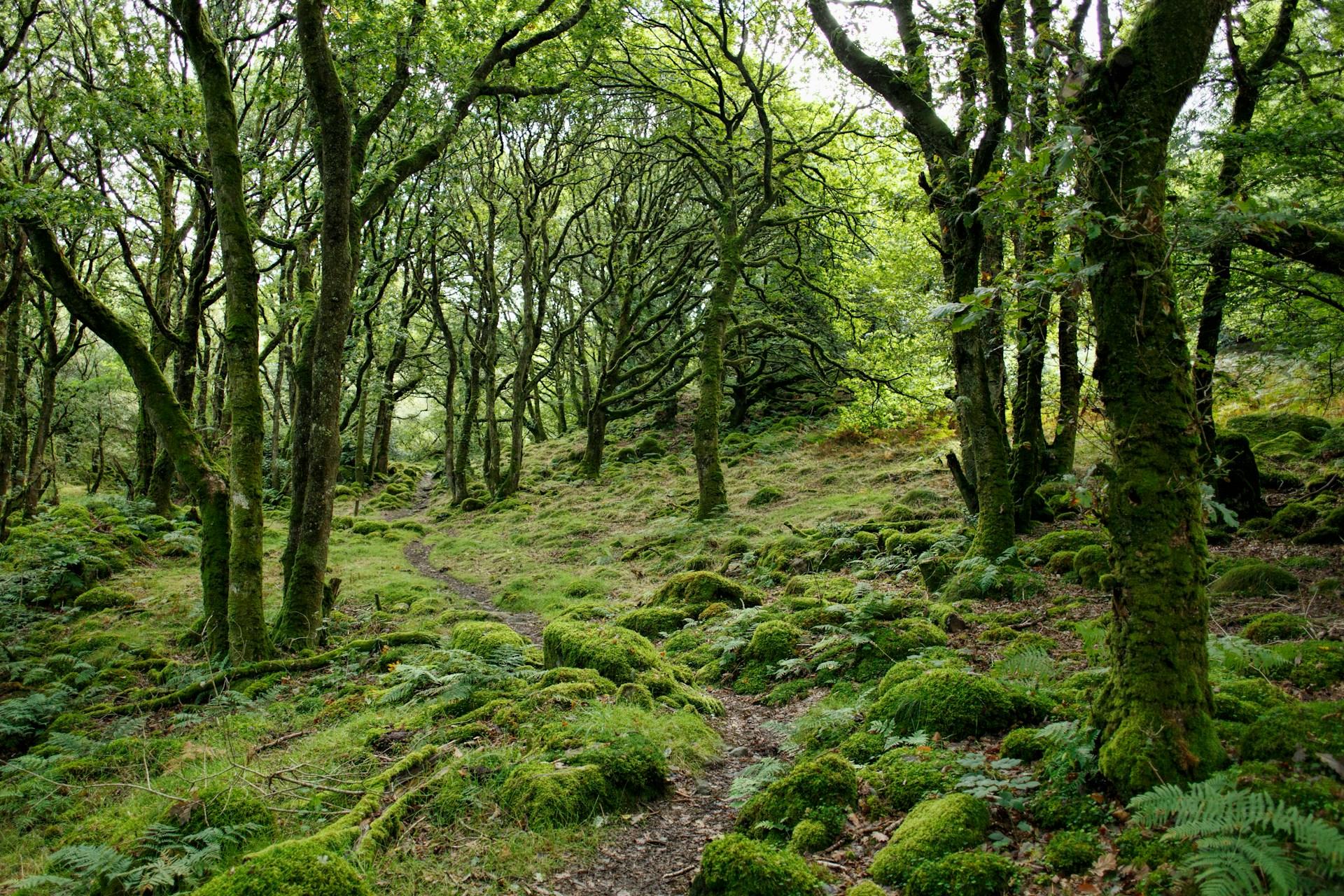
Trees and plants are crucial to this ecosystem, and are the primary producers, capturing sunlight to produce energy through photosynthesis.
We then have our consumers, split into the three categories.
- Primary Consumers: Herbivores such as deer (e.g., roe deer, Capreolus capreolus), rabbits, and various insects like caterpillars that feed on leaves and other plant parts.
- Secondary Consumers: Predators and carnivores such as foxes, birds, and small mammals like weasels (the UK’s smallest carnivore) that prey on herbivores.
- Tertiary Consumers: Top predators such as some larger birds of prey that feed on secondary consumers such as the small mammals. To continue our weasel example, owls, kestrels and buzzards are all known to eat weasels.
Completing the chain we have the detritivores. Woodland has fungus which breaks down dead wood and leaf litter. Additionally, various soil bacteria that organic matter, returning nutrients to the soil.
Earthworms, woodlice, and beetles also help break down dead plant material and contribute to nutrient cycling.
Global Ecosystems
Large-scale natural global ecosystems, also known as biomes, are distributed across the Earth based on climatic and geographical conditions. Each biome has distinct characteristics that define its flora, fauna, and overall environmental interaction. Some face some huge challenges due to the temperature or other environmental factors.
For instance, deserts, found in regions such as the Sahara and the Arabian Desert, face low rainfall, extreme temperature variations between day and night, and sparse vegetation. Adaptations in plants (like cacti) and animals (like camels) are crucial for survival in these arid conditions.
Tropical rainforests near the equator (e.g., the Amazon, Congo Basin), have high temperatures and abundant rainfall year-round. They are home to diverse plant and animal species and feature dense vegetation with multiple canopy layers. These can be very complex ecosystems.
Ecosystems exist all over the world and can take into account species and living things that cover multiple continents. Consider migratory birds, they are part of ecosystems wherever they go, and sometimes only exist because they are able to migrate and travel huge distances.
What is an example of a small ecosystem?
What is the difference between biotic and abiotic features?
Summarise with AI:
Did you like this article? Rate it!

 Loading...