


Introduction
Green plants are the primary producers of terrestrial ecosystems, sustaining almost all life on Earth through the process of photosynthesis. Through this biochemical pathway, plants trap light energy and convert it into chemical energy stored within covalent bonds of carbohydrate molecules.
The fundamental chemistry of photosynthesis involves converting inorganic raw materials into complex organic molecules. This process is summarized by the following chemical equations:


Understanding the environmental conditions that dictate the efficiency of this reaction is a core requirement of GCSE Biology. By managing these conditions, agricultural cultivators can bypass natural constraints to maximize crop yields.
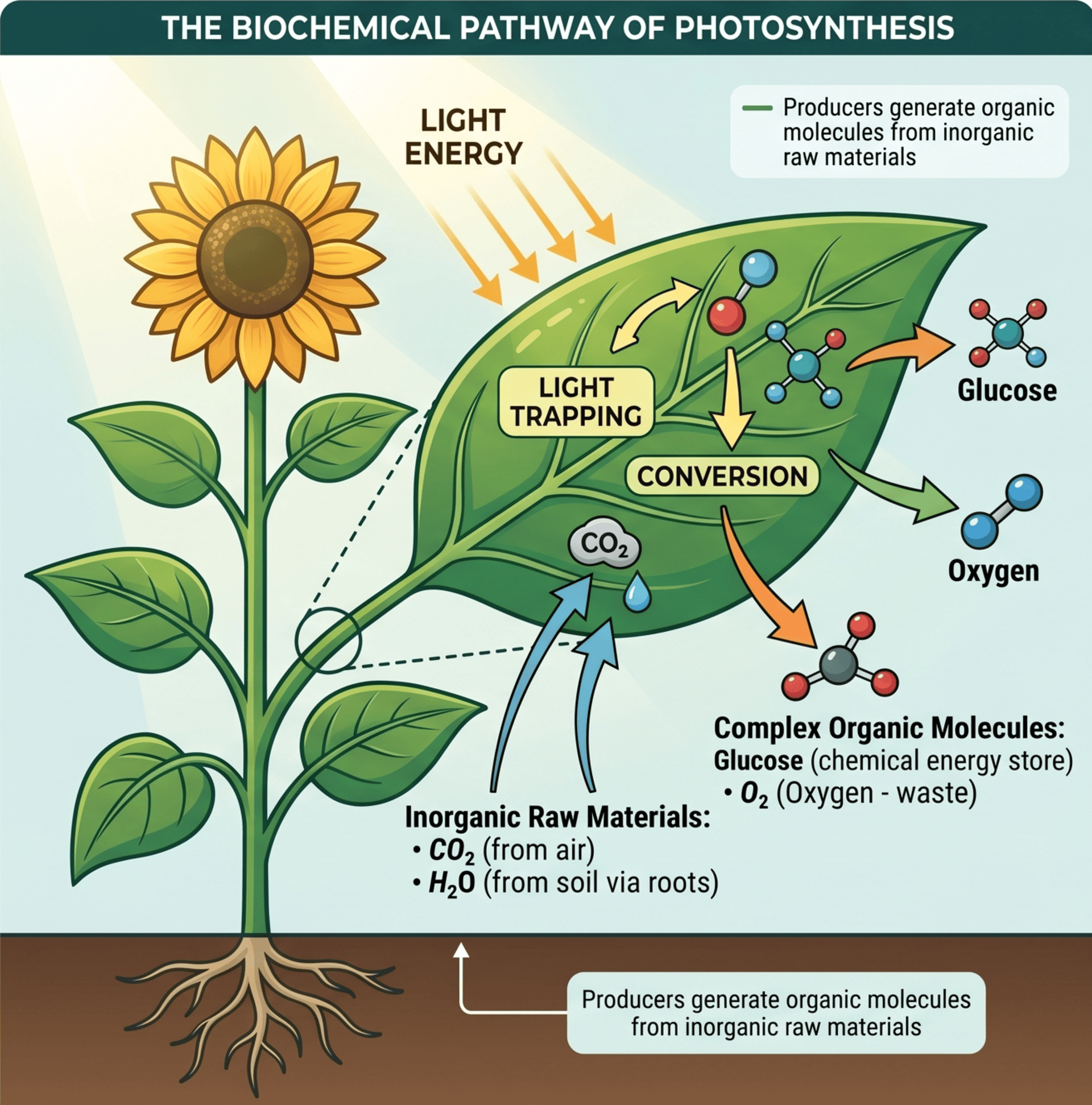
What Do Plants Need for Photosynthesis?
An essential distinction in GCSE biology exams is separating the structural raw materials (the molecular reactants) from the environmental conditions required for the reaction to take place.
- Raw Materials (Reactants):
- Carbon Dioxide: Diffuses into the leaf from the atmosphere through specialized microscopic pores called stomata.
- Water: Absorbed from the surrounding soil via osmosis by root hair cells and transported upwards through the xylem.
- Required Conditions:
- Light Energy: Absorbed by specialised photosynthetic pigments.
- Chlorophyll: The primary green pigment located inside chloroplasts (concentrated heavily within the upper palisade mesophyll layer of leaves) that captures photons of light.
Exam Tip: Examiners frequently trap students by asking for the "reactants" of photosynthesis. Sunlight and chlorophyll must never be listed as reactants; they are environmental factors or catalysts necessary to drive the reaction forward.
Investigating Photosynthesis via Starch Testing
While plants synthesise glucose, it is highly soluble and rapidly consumed in respiration or converted into structural cellulose. Excess glucose is polymerised into insoluble starch for storage within the chloroplasts. Testing a leaf for starch with iodine solution is therefore the standard method to verify if photosynthesis has successfully occurred:
- Boiling: The leaf is submerged in boiling water for 30 seconds to disrupt the cell membranes and kill the leaf, halting all enzymatic reactions.
- Ethanol Extraction: The leaf is placed into a tube of hot ethanol suspended in a water bath for 5 minutes. This dissolves and extracts the green chlorophyll pigment, bleaching the leaf white so subsequent colour changes can be observed clearly.
- Softening: The brittle leaf is rinsed in cold water to rehydrate it.
- Iodine Application: The leaf is placed on a white tile and treated with iodine solution. Areas containing starch turn from an orange-brown colour to a distinct blue-black.
What Is a Limiting Factor?
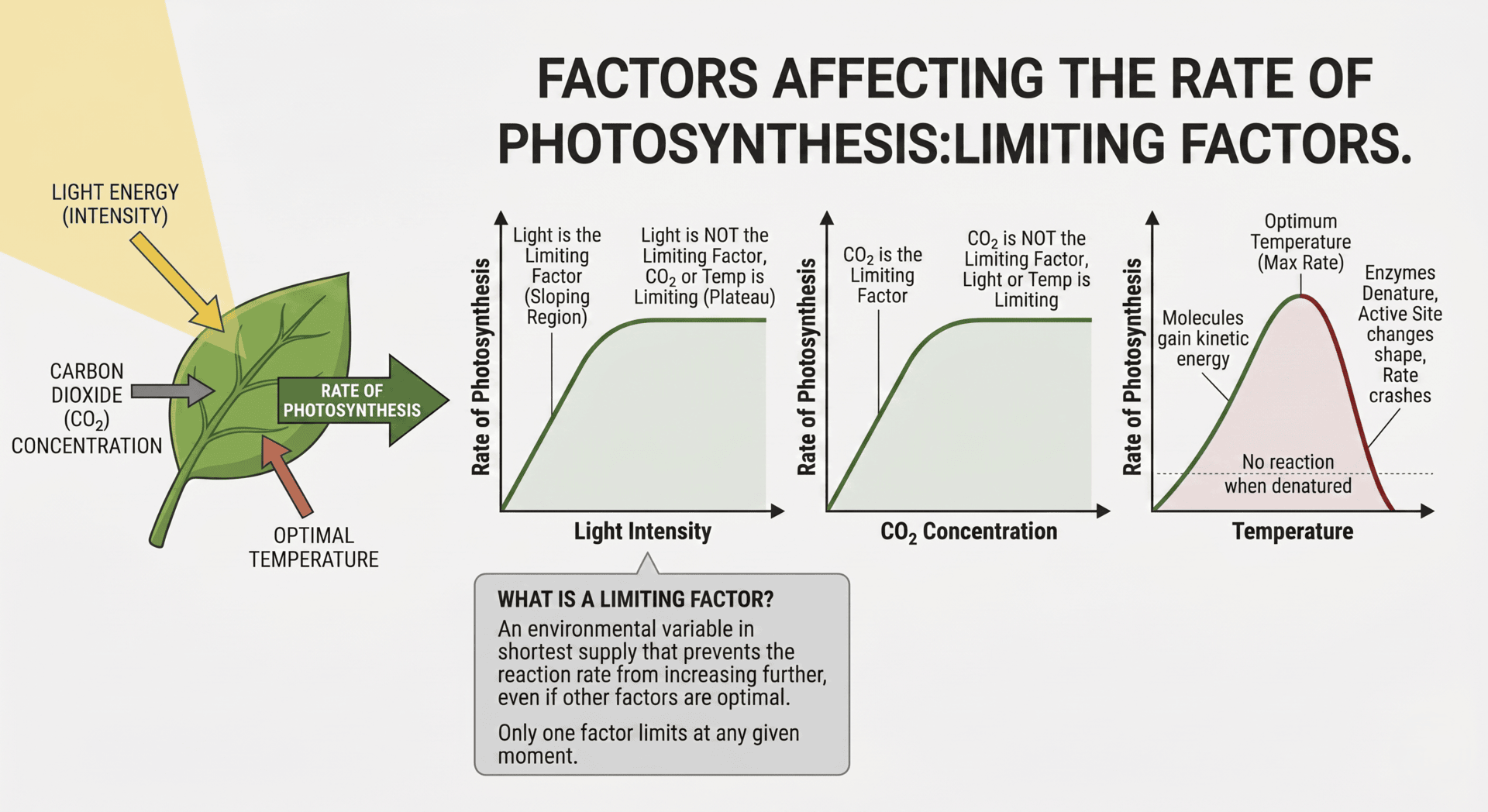
The rate of photosynthesis is dictated by a combination of fluctuating environmental variables. A limiting factor is defined as any environmental condition that is in the shortest supply and directly restricts the overall rate of a physiological process.
If any single factor required for photosynthesis is deficient, the rate of the entire reaction will be constrained, regardless of how abundant the other resources are. At any given moment, only one factor can be the active limiting factor.
The following matrix provides a summary of how these limiting factors function, how they alter the rate, and the biological reasoning behind their effects:
| Factor | Effect on Rate of Photosynthesis | Biological Why |
|---|---|---|
| Light Intensity | Proportional increase until a flat plateau is reached | Provides the fundamental activation energy needed to split water molecules. A plateau indicates another factor has become limiting. |
| Carbon Dioxide Concentration | Proportional increase until a flat plateau is reached | Acts as the carbon substrate needed to synthesize glucose. A plateau means light or temperature is now scarce. |
| Temperature | Parabolic curve rising to an optimum before dropping sharply to zero | Controls the kinetic energy of metabolic enzymes. Excess heat permanently alters the active site geometry (denaturation). |
Light Intensity and Photosynthesis
Light provides the quantum energy needed to split water molecules during the initial stages of photosynthesis.
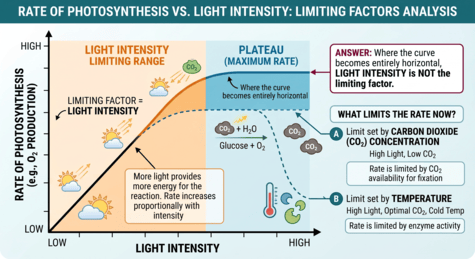
When plotting the Rate of Photosynthesis against Light Intensity, the curve exhibits two distinct zones:
- Linear Increase (Sloping Region): At low light levels, the rate of photosynthesis is directly proportional to light intensity. If you double the light, you double the rate. In this region, light intensity is the limiting factor.
- Plateau (Flat Region): As light intensity continues to rise, the rate eventually flattens out and remains constant. Further increases in light do not accelerate the reaction. At this point, light is no longer the limiting factor; the process is now limited by a shortage of carbon dioxide or an unfavourable temperature.
Carbon Dioxide Concentration
Carbon dioxide provides the carbon and oxygen atoms required to build the backbone of the hydrocarbon glucose molecule 
The graph for carbon dioxide concentration mirrors the light intensity curve exactly:
- At low concentrations, carbon dioxide availability directly restrains the process, making it the limiting factor.
- At high concentrations, the curve plateaus. The chloroplasts are absorbing as much carbon dioxide as they can process; the rate is now restricted by ambient light intensity or suboptimal temperatures.
Temperature and Enzymes
Unlike light and carbon dioxide, which act as basic inputs, temperature alters the kinetic environment of the cell. Photosynthesis is an enzyme-controlled metabolic pathway.
- Low Temperatures: Molecules possess minimal kinetic energy. Enzyme and substrate collisions occur infrequently, causing the rate of photosynthesis to be exceptionally low.
- Optimum Temperature: As temperature increases toward an optimum value (typically between 25°C and 35°C for temperate plants), kinetic energy rises. Enzymes and substrates collide with greater frequency and energy, causing the rate of photosynthesis to peak.
- High Temperatures (Beyond Optimum): If temperatures exceed roughly 40°C to 45°C, the weak hydrogen and ionic bonds holding the tertiary structure of the plant's metabolic enzymes begin to rupture. The enzyme's active site changes shape, meaning it is no longer complementary to its substrate. The enzymes have become permanently denatured, causing the rate of photosynthesis to crash immediately to zero.
Exam Tip: When describing the drop-off on a temperature graph, never say the enzymes are "killed". Enzymes are non-living biological catalysts; they are denatured.
Worked Example
A student sets up an experiment measuring the rate of photosynthesis by counting oxygen bubbles emitted by a piece of pondweed (Elodea). The pondweed is placed at varying distances from a fixed light source to evaluate the Inverse Square Law, which states that light intensity (I) is inversely proportional to the square of the distance (d) from the source:
Step 1: Calculate relative light intensity at a distance of 10 cm
Substitute d = 10 into the inverse square relationship:
Step 2: Calculate the relative light intensity when moved to a distance of 30 cm
Substitute d = 30 into the formula:
Step 3: Compute the fractional change in light availability
To determine how severely light drops when the distance is tripled, find the ratio of the new intensity to the original intensity:
Conclusion
Tripling the distance from 10 cm to 30 cm reduces the available light intensity to exactly one-ninth of its original value. If light intensity were the active limiting factor in this experiment, the rate of photosynthesis would also decrease ninefold.
Practice Questions and Solutions
Explain the color changes observed when a starch-filled leaf that was partially covered with black paper is exposed to light for 24 hours and then treated with iodine solution.
The uncovered areas of the leaf have access to light, allowing them to carry out photosynthesis and synthesize glucose, which is stored as starch. These areas turn blue-black when treated with iodine. The areas covered by black paper receive no light, meaning light is a limiting factor and no photosynthesis occurs. Any pre-existing starch is used up by the cells for respiration, so these areas remain orange-brown.
A commercial greenhouse manager artificially raises the carbon dioxide concentration from the atmospheric background of 0.04% to an elevated level of 0.12%. Explain why this practice might fail to increase crop growth if the greenhouse temperature is maintained at 5°C.
Photosynthesis is an enzyme-driven process. At a very low temperature of 5°C, the enzymes and substrates possess very low kinetic energy, resulting in a low frequency of successful molecular collisions. Consequently, temperature acts as the active limiting factor. Increasing the concentration of carbon dioxide to: 0.12% will have no effect on the overall rate of photosynthesis because the enzymes cannot process the extra substrate until the temperature is raised.
A piece of pondweed is placed at a distance of 5 cm from a lamp, and the distance is subsequently doubled to 10 cm. Use the inverse square law to calculate the exact factor by which the light intensity decreases.
State the inverse square relationship for light intensity:

Calculate the ratio of the new light intensity to the initial light intensity:
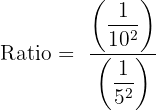
Simplify the fractions inside the ratio expression:
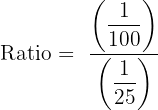
Invert and multiply to find the final scaling factor:
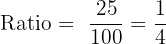
Thus, doubling the distance reduces the light intensity by a factor of 4.
Sketch the graphical relationship that occurs when plotting the rate of photosynthesis against light intensity, and identify what limits the rate at the point where the curve becomes entirely horizontal.
Describe how a student could chemically remove carbon dioxide from an enclosed experimental system to prove its necessity as a factor in photosynthesis.
The student can place an experimental plant inside an airtight clear container alongside a chemical agent that actively absorbs carbon dioxide from the internal atmosphere. The standard compound used for this absorption is sodium hydroxide (NaOH). A second identical setup containing a beaker of water instead of sodium hydroxide must be used alongside it to act as an experimental control.
Summarise with AI:
Did you like this article? Rate it!


 Loading...
i like the article
Hi Sam! Thank you! Great to hear that you found this resource useful.
welcome
Hi Suunu! Thanks for reaching out. Hope you’ve found this resource useful 😊!
i have learnt a lot which i did not know
am senior three student but this is cool
Am impressed
Am impressed
learning is the best