In this section, we will discuss the endocrine system and hormones in detail.
Hormones are secreted by the endocrine system into the bloodstream from glands throughout the human body. The hormones are carried to the target organ by the blood where an effect is generated.









Endocrine glands
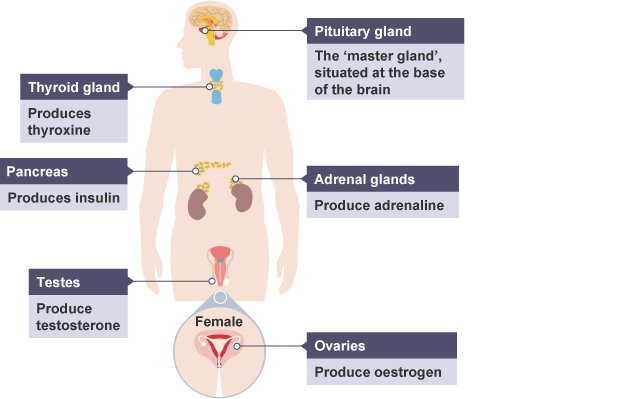
The various endocrine glands are:
- Pituitary gland: It produces several hormones to regulate the conditions inside the body. The hormones released by this gland tell other glands when to release hormones.
- The thyroid: It produces thyroxine which aids to control temperature, heart rate, and metabolism.
- Pancreas: It produces a chemical known as insulin which regulates blood glucose levels.
- Adrenal gland: This gland produces adrenaline which assists to prepare the mind and body for fight or flight
- Ovaries (in females): They produce oestrogen which controls the menstrual cycle in women.
- Testes: They produce testosterone which assists to control sperm production.
Facts about endocrine glands
- Endocrine glands have a proper supply of blood because when they create hormones, they need them to enter the bloodstream, especially blood plasma as soon as possible. They do this so that they can move around the body to target organs to create the desired effect.
- Hormones affect the cells with target receptors that they can bind to. They can be either present on the cell membrane or inside the cells. Receptors should be complementary to hormones
- The liver regulates hormones levels in the blood, breakdown or transforming them if they are in excess.
The following diagram shows various endocrine glands in detail:
What are Hormones?
Hormones refer to a chemical substance that a gland produces and is carried in the bloodstream which changes the activity of specific target organs.
Consider an example of the adrenal gland which secrets the hormone adrenaline to target the heart. The main purpose of this hormone is to enhance the heart rate. The liver destroys the hormone after it has been used up.
Difference Between Nervous and Hormonal Control
Although the effects of hormonal control are slower but act for a longer time as compared to the nervous system. Here are the differences between nervous and hormonal control:
Nervous system control
- Signal type: It generates an electrical signal
- Signal transmission: It transmits signals through nerve cells (neurons)
- Effectors: It targets muscles or glands
- Response speed: The response speed is extremely quick
- Response duration: The duration of response is short until nerve impulses cease.
Hormonal system control
- Signal type: It generates a chemical signal
- Signal transmission: It transmits signals through the bloodstream.
- Effectors: It targets cells in specific tissues.
- Response speed: The response speed is slower as compared to the nervous system.
- Response duration: The duration of response is long until the hormone is broken down.
Master Gland
The pituitary gland in the brain is referred to as a master gland. It secretes many hormones into the blood by responding to the body’s condition, for instance, blood water levels. These hormones also stimulate the release of various kinds of hormones and generate effects by acting on other glands.
Various Chemical Hormones Produced by the Body
Various chemical hormones are produced by the body that travels in the bloodstream and impacts various cells or organs in the body. The important hormones released into the bloodstream involve ADH (anti-diuretic hormone), insulin, and adrenaline.
- ADH: It is produced by the pituitary gland and targets the kidneys. The main objective of this hormone is to control the water content in the blood. It enhances the reabsorption of water by collecting ducts.
- Adrenaline: It is produced by adrenal glands and has many targets including circulatory and respiratory systems. It prepares for fight or flight. It enhances the heart rate, breathing rate, blood flow to the muscles, and conversion of glycogen to glucose.
- Insulin: It is produced by the pancreas and targets the liver to control blood glucose levels. It enhances the conversion of glucose into glycogen for storage purposes.
Insulin and Blood Glucose Levels
Our body needs glucose so that it can be supplied to cells for respiration. If the concentration of glucose is extremely high, then it can cause damage to the cells due to water loss by osmosis. The pancreas constantly monitors the glucose level in the blood.
Working of insulin
The steps below demonstrate how different changes occur in our body before and after a meal:
- The body has a normal glucose concentration
- A person eats a meal high in carbohydrate
- The concentration of glucose in the blood increases (the glucose gets absorbed from the ileum)
- Insulin is made in the pancreas after blood glucose increase is detected
- Insulin acts in the liver to minimize the concentration of blood glucose by:
- Increasing absorption of glucose from the blood by the muscles and liver
- Converting extra glucose to glycogen which is mainly stored in the liver
- Enhancing respiration in the liver
- The normal concentration of glucose is restored
When the glucose concentration in the blood is low, then less insulin is produced and the processes above do not occur or slow down. This assists to raise the glucose concentration in the blood.
Diabetes
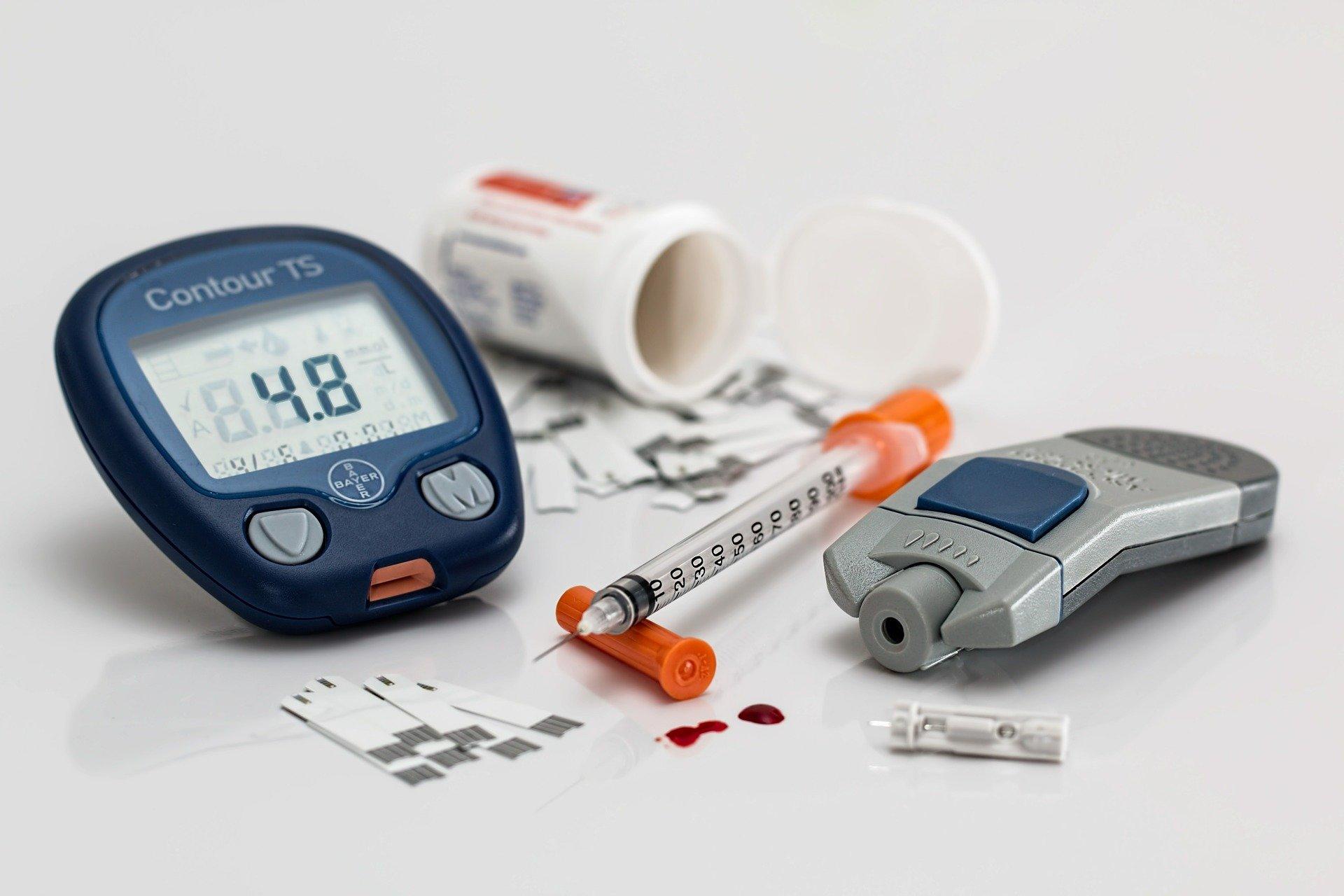
If people do not create sufficient insulin to regulate the concentration of blood glucose levels, then they have a condition known as diabetes.
The symptoms of diabetes include:
- Glucose in the urine: The concentration of glucose in the blood is so high that some of it is filtered out by the kidneys and passed into the urine.
- Feeling thirsty all the time
- High glucose levels in the blood
- Frequent urination
- Lethargy
Diabetes is of two types:
- Type 1 diabetes: It develops in childhood when the pancreas does not produce insulin. The treatment of this condition include controlling the intake of foods rich in carbohydrates, and insulin injections
- Type 2 diabetes: It is usually developed in older people when their pancreas gradually produces less insulin or insulin produced is not as effective as it should be. The treatment includes controlling the intake of carbohydrates, exercising to lose weight, and insulin injections.
Long term Effects of Diabetes
The long term effects of diabetes include:
- Heart disease
- Stroke
- Blindness
- Damage to kidneys
Negative Feedback
This mechanism ensures that the substance concentration does not deviate much from the normal concentration. These mechanisms include a hormone and continuous monitoring of the substance that is being controlled. For instance, the pancreas adjusts the amount of insulin it produces based on the concentration of glucose in the blood.
It is referred to as negative feedback because as hormone increases, the substance being controlled decreases. For instance, as insulin increases, the concentration of glucose in the blood decreases.
Summarise with AI:
Did you like this article? Rate it!


 Loading...
i like the article
Hi Sam! Thank you! Great to hear that you found this resource useful.
welcome
Hi Suunu! Thanks for reaching out. Hope you’ve found this resource useful 😊!
i have learnt a lot which i did not know
am senior three student but this is cool
Am impressed
Am impressed
learning is the best