When vectors are represented as arrows — showing a force, velocity, or displacement in a diagram — we add them graphically rather than by calculation. This article covers the three graphical methods for vector addition: the head-to-tail method (triangle law), the parallelogram method, and the polygon method for three or more vectors. It also covers graphical subtraction and shows how these methods connect to real physical problems.
For the algebraic (component) approach — adding coordinates directly — see Vector Addition: The Algebraic (Component) Method.
In this article, we will discuss how to add and subtract vectors. But before proceeding to discuss the addition and subtraction of vectors, first, let us define vectors.
A vector refers to a quantity that is described by magnitude, as well as direction. It is depicted by an alphabet with a right head arrow on the top. For instance,
and
etc are used to represent vectors.
In other words, we can say that the vectors refer to the geometric representations of the magnitude and direction. The magnitude and direction are depicted by straight arrows, that start from one point on a coordinate axis and culminate at a different point. The magnitude of the vectors is actually their length. This length represents some value so that the vector is comparable to another vector. The arrows of the vectors show that they have a direction. This is the primary difference between scalar and vector as scalars are quantities without direction.


1. What Is a Vector?
A vector is a quantity with both magnitude (size) and direction. We draw a vector as an arrow: the length of the arrow represents the magnitude, and the arrowhead shows the direction. Examples include displacement, force, velocity, and acceleration.
For a full introduction to vector notation, magnitude, and types, see Vectors in the Plane.
2. Why Use Graphical Methods?
Graphical methods are used when:
- Vectors are given as arrows or diagrams rather than coordinates.
- A question asks you to 'draw' or 'construct' the resultant.
- You want to visualise and verify a result before calculating it.
- You are working with forces or velocities in a physics problem where direction is given as an angle, not a component.
The two main graphical methods — head-to-tail and parallelogram — always produce the same resultant for the same pair of vectors. The choice of method is one of convenience: head-to-tail generalises to any number of vectors; the parallelogram method is visually intuitive for exactly two.
3. The Head-to-Tail Method (Triangle Law)
The head-to-tail method (also called the triangle law or tip-to-tail method) is the most flexible graphical method. It works for two vectors or more.
Place the tail of the second vector at the head (tip) of the first vector. The resultant is the vector drawn from the tail of the first vector to the head of the last vector.
The name 'triangle law' comes from the shape formed: the two original vectors and the resultant make the three sides of a triangle. The resultant closes the triangle.
Step-by-step procedure for two vectors a and b
- Draw vector a to scale as an arrow, starting at any convenient point. Label its tail A and its head B.
- From point B (the head of a), draw vector b to the same scale. Label its head C.
- Draw the resultant from point A to point C. This arrow — from the tail of a to the head of b — represents a + b.
- The length of AC (measured against your scale) gives the magnitude of the resultant. The angle of AC gives its direction.
Worked example 1
A person walks 5 km East (vector a), then 3 km North (vector b). Construct the resultant displacement graphically.
Step 1: Draw a horizontal arrow 5 cm long (scale: 1 cm = 1 km) pointing right. Label it a.
Step 2: From the head of a, draw a vertical arrow 3 cm long pointing upward. Label it b.
Step 3: Draw the resultant from the tail of a to the head of b.
By measurement: the resultant is approximately 5.83 cm long = 5.83 km, at an angle of arctan(3/5) ≈ 31° North of East.
Verification by components: a + b = (5, 0) + (0, 3) = (5, 3); |r| = √(25 + 9) = √34 ≈ 5.83 km. ✓
Why the order does not matter
Vector addition is commutative: a + b = b + a. Graphically this means you can draw b first and then a — you get a different triangle but the same resultant arrow from start to finish. This is a useful check: if you construct both orderings and get different resultants, you have made a drawing error.
4. The Parallelogram Method
The parallelogram method places both vectors tail-to-tail at a common origin, then completes a parallelogram. The resultant is the diagonal from the shared origin.
Step-by-step procedure
- Draw both vectors a and b so that their tails start at the same point O. Their directions and lengths must be accurate.
- From the head of a, draw a line parallel to b, and of the same length as b.
- From the head of b, draw a line parallel to a, and of the same length as a.
- These lines meet at a fourth point, completing the parallelogram.
- Draw the diagonal from O to the opposite vertex. This diagonal is the resultant a + b.
The name comes from the shape: the two vectors and their two parallel copies form a parallelogram, and the resultant is its diagonal. Important: the vectors must be drawn tail-to-tail (sharing the same starting point). A common error is placing them head-to-tail for the parallelogram method — this does not work.
Worked example 2:
Two forces of 6 N and 8 N act on a point at 90° to each other. Find the resultant force graphically (parallelogram method) and verify algebraically.
Step 1: At point O, draw one force of 6 N horizontally and one force of 8 N vertically (at 90°). Use scale 1 cm = 2 N.
Step 2: Complete the parallelogram by drawing lines parallel to each force from the head of the other.
Step 3: Draw the diagonal from O. Measure: it should be 5 cm = 10 N, at arctan(8/6) ≈ 53.1° from the 6 N force.
Algebraic verification:


Parallelogram method vs head-to-tail: which to use?
| Situation | Preferred method |
|---|---|
| Two vectors given as arrows from a point (e.g. two forces on an object) | Parallelogram — visually natural for forces acting at a point |
| A chain of movements (e.g. navigation, displacement) | Head-to-tail — reflects the physical sequence |
| Three or more vectors | Head-to-tail only — the parallelogram method does not extend directly beyond two vectors |
| Checking commutativity (a+b = b+a) | Head-to-tail — try both orders and confirm same resultant |
5. The Polygon Method (Three or More Vectors)
When adding three or more vectors, the head-to-tail method extends naturally into the polygon method. The procedure is the same as head-to-tail, repeated for each additional vector.
Step-by-step procedure
- Draw the first vector a to scale.
- From the head of a, draw vector b to scale.
- From the head of b, draw vector c to scale.
- Continue until all vectors have been placed.
- Draw the resultant from the tail of the first vector to the head of the last. This closes the polygon.
The resultant closes the polygon: if you were to draw it in the opposite direction (from head of last vector back to tail of first), it would complete a closed shape. If the resultant has zero magnitude, the vectors form a closed polygon — this is the condition for equilibrium in a force diagram.
Worked example 3:
Three displacement vectors are a = (3, 0), b = (0, 4), c = (-1, -2). Find a + b + c graphically and verify algebraically.
Graphical steps:
1. Draw a: 3 units East.
2. From its head, draw b: 4 units North.
3. From that head, draw c: 1 unit West, 2 units South.
4. Draw the resultant from the start point to the final head.
Algebraic verification:

Magnitude: √(4 + 4) = 2√2 ≈ 2.83 units at 45° North of East.
6. Graphical Vector Subtraction
To subtract vector b from vector a, think of it as adding the negative of b. The negative of a vector has the same magnitude but the opposite direction — you simply reverse the arrowhead.
Rule: a − b = a + (−b)
Parallelogram interpretation of subtraction
When vectors a and b are drawn tail-to-tail (as in the parallelogram method), the two diagonals of the parallelogram represent the two combinations:
- The diagonal from the common origin to the opposite vertex = a + b.
- The other diagonal (between the two arrowheads) = a − b (or b − a, depending on direction).
Worked example 4:
Find a − b graphically, where a = (5, 2) and b = (2, 4).
Step 1: Reverse b to get −b = (−2, −4). Draw −b as an arrow pointing left and down.
Step 2: Place −b head-to-tail after a.
Step 3: The resultant from the tail of a to the head of −b is a − b.
Algebraic check:
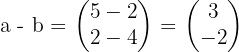 Magnitude: √(9 + 4) = √13 ≈ 3.61.
7. Scale Diagrams and Measurement Accuracy
Graphical methods depend on accurate drawing. In exams, marks are awarded for correct construction, not just the final answer. Follow these rules:
- Choose a scale that fits the diagram on your page while keeping it large enough to measure accurately (at least 6 cm for any vector).
- State your scale clearly (e.g. 1 cm = 5 N).
- Use a sharp pencil and a ruler. Draw arrows at the end of each vector.
- Measure the resultant with a ruler and convert back using your scale. Measure the angle with a protractor.
- Always label: show which arrow is which vector, and label the resultant.
The graphical method introduces small drawing errors. For an exact answer, always verify using the algebraic (component) method.
8. Equilibrium: When the Resultant Is Zero
If three or more vectors form a closed polygon (i.e. the head of the last vector meets the tail of the first), their resultant is the zero vector and the system is in equilibrium. This is a key concept in A-Level Mechanics and Physics.
Three forces F₁, F₂, F₃ act on a particle in equilibrium. If you draw them head-to-tail, the last arrowhead returns exactly to the first tail point, forming a closed triangle (if three forces) or polygon. In component form: equilibrium requires that the sum of all x-components = 0 AND the sum of all y-components = 0.
9. Summary: Choosing the Right Method
| Method | Best used when | Number of vectors |
|---|---|---|
| Head-to-tail (triangle law) | Vectors represent a sequence of movements; you want to show commutativity; you need to add more than two vectors | Two or more |
| Parallelogram method | Two forces or velocities act from a common point; the physical setup makes the parallelogram shape natural | Exactly two |
| Polygon method | Three or more displacement or force vectors; checking equilibrium (closed polygon = zero resultant) | Three or more |
| Algebraic component method | Vectors are given in coordinate or column vector form; an exact numerical answer is required | Any number |
Worked Example Problems
If  and
and  then find
  and
and  .
.


Now, we will find out . For this, we will rewrite as 
If  , then

If 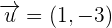 and
and  then find and .


. For this, we will rewrite as
 , then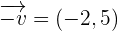


If  and
and  then find and .


. For this, we will rewrite as
 , then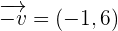


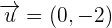 and
and  then find and .


. For this, we will rewrite as
 , then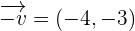


If  and
and  then find and .

 . For this, we will rewrite as
 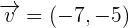 , then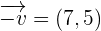


Summarise with AI:
Did you like this article? Rate it!


 Loading...