This factoring and polynomials worksheet covers every factorisation technique examined at GCSE — from taking out a common factor at Foundation level to factorising harder quadratics and the difference of two squares at Higher. Every question carries a tier badge and a difficulty rating. Full worked solutions show mark scheme reasoning step by step, so you can see exactly which lines earn marks in the exam.
GCSE Maths Specification Coverage
| Board | Code | Reference | Content |
|---|---|---|---|
| AQA | 8300 | A4 | Simplify and manipulate expressions by factorising, including quadratics of the form ax² + bx + c; difference of two squares |
| Edexcel | 1MA1 | A4 | Factorising quadratic expressions including the difference of two squares; ax² + bx + c where a ≠ 1 at Higher tier |
| OCR | J560 | A4b | Factorise quadratic expressions including ax² + bx + c and the difference of two squares |


Factorisation Theory Recap
1. Taking out a common factor (Foundation)
Look for the highest common factor (HCF) of all the terms — this could be a number, a letter, or both. Write the HCF in front of a bracket and divide each term by it to fill the bracket.
Example:
The HCF of  and
and  is
is  .
.
Dividing each term:
and
Always check by expanding — you should recover the original expression exactly.
2. Factorising  into double brackets (Foundation)
Find two integers  and
and  such that
  and
and  . Then
  .
.
Sign rules to narrow down your search:
If  is positive and
  is positive: both numbers are positive.
If is positive and is negative: both numbers are negative.
If is negative: one number is positive, one is negative. The larger one (in size) has the same sign as .
3. Factorising  where a>1 — the ac method (Higher)
Multiply  to get a target. Find two integers that multiply to
  and add to . Rewrite the middle term as two separate terms using those integers, then factorise by grouping.
Example: 
 . Find two numbers multiplying to
  and adding to
  : these are
  and
and  .
.
Rewrite: 
Group: 
Factorise: 
4. Difference of two squares (Higher)
Whenever you see a squared term minus another squared term, apply this identity directly:

Examples:


Exercises
Section A - Taking Out A Common Factor
AQA 8300 / Edexcel 1MA1 — Algebra A4. Foundation tier. Calculator not permitted.
In each question, factorise fully by identifying and extracting the highest common factor.
Exercise 1. GCSE Foundation
Factorise fully.
(a) 
(b) 
(c) 
(d) 
a)
The HCF of and  is
is  . M1 for identifying the correct HCF
 A1
A1
Check:  ✓
✓
(b)
The HCF of  and
and  is
is  . M1
. M1
 A1
A1
A common error is to write  — this is not fully factorised because
  is also a common factor.
(c)
The HCF of  and
and  is
is  . M1
. M1
 A1
A1
(d)
The HCF of  ,
,  and is . M1
 A1
A1
Note: the quadratic  does factorise further as
  , but at GCSE Foundation level you are not expected to continue unless the question specifically says "factorise fully and solve". If a Higher tier exam question asks you to "factorise fully", continue:
  .
.
Section B — Factorising Quadratics
AQA 8300 / Edexcel 1MA1 — Algebra A4. Higher tier only. Calculator not permitted.
Use the ac method. For each expression: calculate , find two numbers multiplying to and adding to , split the middle term, then factorise by grouping.
Factorise the following:
(a) 
(b) 
(c) 
(d) 
(a)
Need two numbers multiplying to  and adding to
  . Both positive since
  and
and  . M1
. M1
Factor pairs of :  ,
,  ,
,  . The pair and
  adds to
  . ✓
. ✓
 A1
A1
(b)
 so one number is positive and one is negative. M1
Factor pairs of  :
:  ,
,  . Since
  , the larger number is positive:
  and
and  give product
  and sum
  . ✓
. ✓
 A1
A1
(c)
 and
and  , so both numbers are negative. M1
 and
and  . ✓
. ✓
 A1
A1
(d)
 and
and  , so mixed signs; larger number is negative. M1
 and
and  . ✓
. ✓
 A1
A1
Factorise each expression and state the roots of the corresponding quadratic equation.
(a) 
(b) 
(c) 
(a)
Need two numbers multiplying to and adding to . Both positive since and . M1
Factor pairs of : , , . The pair and adds to . ✓
A1
(b)
so one number is positive and one is negative. M1
Factor pairs of : , . Since , the larger number is positive: and give product and sum . ✓
A1
(c)
and , so both numbers are negative. M1
and . ✓
A1
(d)
and , so mixed signs; larger number is negative. M1
and . ✓
A1
These quadratics require you to spot a common factor before factorising into double brackets.
(a) 
(b) 
(c) 
(a)
Both numbers negative.  ,
,  . M1
. M1
 A1
A1
Roots:  and
and  . A1
. A1
(b)
Mixed signs; larger positive.  ,
,  . M1
. M1
 A1
A1
Roots:  and
and  . A1
. A1
(c)
Mixed signs; larger negative.  ,
,  . M1
. M1
 A1
A1
Roots:  and
and  . A1
. A1
Factorise fully.
(a) 
(b) 
(c) 
(d) 
(a)
Step 1: Extract common factor. HCF = . M1

Step 2: Factorise the quadratic.  ,
,  . M1
. M1
 A1
A1
(b)
Step 1: HCF = . M1

Step 2:  ,
,  . M1
. M1
 A1
A1
(c)
Step 1: HCF =  . M1
. M1

Step 2: 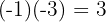 ,
,  . M1
. M1
 A1
A1
Factorise fully. Some of these require you to extract a common factor first.
(a) 
(b) 
(c) 
(d) 
(a)
 . Numbers multiplying to
  and adding to : and . M1
 A1
A1
(b)
 . Numbers: and
  . M1
. M1
 A1
A1
(c)
. Since and  A1
A1
(d)
 . Numbers multiplying to
  and adding to
  :
:  and . M1
 A1
A1
Factorise fully. Some of these require you to extract a common factor first.
(a)
(b)
(c)
(d)
(a)
No common factor.  . Numbers: and . M1
 A1
A1
(b)
 . Numbers:
  and . M1
 A1
A1
(c)
 . Since and
  A1
A1
(d)
Step 1: Extract common factor first. M1

Step 2: Recognise a perfect square:  ,
,  . M1
. M1
 A1
A1
Students who launched straight into the ac method on without extracting the first will find  and must split as
  — which still works, but is harder. Extracting the common factor is the more reliable first step.
Section C — Difference of Two Squares
AQA 8300 / Edexcel 1MA1 — Algebra A4. Higher tier only. Applies the identity  .
.
Factorise each expression using the difference of two squares.
(a) 
(b) 
(c) 
(d) 
(e) 
Apply to each. M1 per part for identifying the correct values of  and .
and .
(a)  A1
A1
(b)  A1
A1
(c)  A1
A1
The key step here is recognising 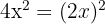 . The coefficient of
  must itself be a perfect square for DOTS to apply directly.
(d)  A1
A1
(e)  A1
A1
Factorise fully. Some require a common factor to be extracted before the difference of two squares can be applied.
(a) 
(b) 
(c) 
(d)  (treat
  as
as  )
)
(a)
Step 1: Extract HCF = . M1 
Step 2: Difference of two squares. M1
 A1
A1
(b)
 M1, A1
(c)
 M1, A1
(d)
Write as  and apply DOTS: M1

The second bracket is itself a difference of two squares: M1
 A1
A1
 does not factorise further — it has no real roots. This part of the question is at the top of Higher tier and would not typically appear on a Foundation paper.
Section D — Difference of Two Squares
AQA 8300 / Edexcel 1MA1. Higher tier only. Grade 6–7. These questions do not tell you which technique to use — identifying the correct method is part of the skill.
Factorise each expression fully. Show all working.
(a) 
(b) 
(c) 
(d) 
(e) 
(f) 
(g)  (perfect square — can you spot it?)
(h) 
Identifying the right technique is worth a mark in itself in some exam questions.
(a) → Difference of two squares M1
 A1
A1
(b) → Common factor only M1
 A1
A1
(c) → Simple quadratic, a = 1 M1
 ,
,  .
.  A1
A1
(d) → Common factor only M1
 A1
A1
(e) → Harder quadratic, a > 1, use ac method M1
 . Numbers: and
  .
.
 A1
A1
(f) → Extract common factor first, then DOTS M1
 A1
A1
Alternatively:  . Both routes are correct — the mark scheme would accept either if shown clearly.
(g) → Perfect square trinomial M1
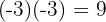 and
and  .
.
 A1
A1
A repeated root — the parabola  touches but does not cross the x-axis at .
(h) → Harder quadratic, ac method M1
. Numbers: and .
 A1
A1
Paper 1 (non-calculator). All factorisation questions at GCSE can appear on either paper, but the non-calculator paper (Paper 1) is where they most commonly appear. Practise without a calculator.
💡 Exam technique for GCSE factorising questions
(1) Is there a common factor? Extract it first.
(2) Is it a difference of two squares? Apply DOTS directly.
(3) Is
 ? Use the two-number method. (4) Is a > 1? Use the ac method.
 Getting into this habit means you never waste time applying the wrong technique.
" expects the answer  . "Solve
  " expects
  or . Writing solutions when the question says factorise does not earn marks — but it does not lose them either, so if you are unsure, write both. coefficient? This takes ten seconds and catches sign errors before they cost marks.
 with an attempt to fill them), and A1 for the fully correct answer. Even if you get the numbers slightly wrong, you may still earn the M1 if the method is clear.
Summarise with AI:
Did you like this article? Rate it!


 Loading...