


What are Simultaneous Equations?
Simultaneous equations are two or more equations that share common unknown variables. The equations are solved together because the values of the unknowns must satisfy every equation in the system at the same time.
You will already be familiar with solving systems of linear equations using substitution, elimination, or comparison. In this article, we extend those techniques to exponential equations — equations where the unknown variable appears as an exponent, for example:

In a system of exponential equations, two or more such equations must be solved simultaneously. The unknowns appear in the powers (exponents) of the expressions.
Strategies for Solving Exponential Simultaneous Equations
There are two main strategies:
Strategy 1 — Rewrite with a common base. If the bases of the exponential expressions can be made the same on both sides of each equation (using index laws), then you can equate the exponents directly. This converts the exponential system into a system of linear equations, which you can solve using substitution or elimination.
Strategy 2 — Substitution with new variables. If the equations involve terms like  and
and  , you can let
  and
and  (for example), rewrite the system in terms of
  and
and  , solve for these new variables, and then recover
  and
and  using logarithms or by inspection.
Key principle: If the bases are the same on both sides of an equation, you can set the exponents equal to each other:

Worked Example
Example 1
Solve the system of exponential equations:


Solution
First, rewrite  as a power of 3, since
  :
:

The right-hand side of the second equation is already  . So the system becomes:

Since the bases are identical, equate the exponents to form a system of linear equations:


Solve by substitution. From equation (1):  . Substitute into equation (2):




Substitute back into equation (1):
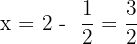
The solution is  .
.
Verification:


Additional Worked Examples
Example 2
Solve the following simultaneous exponential equations:


Solution
Let and . The system becomes:


Divide equation (2) by equation (1) to eliminate :
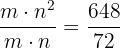

Since  , we get
  .
.
Substitute back into equation (1):


Since  , we get
  .
.
The solution is  .
.
Verification:


Example 3
Solve the following system of exponential equations:


Solution
Both equations already have the same base (5), so equate the exponents directly:


Solve by elimination. Add equations (1) and (2):



Substitute into equation (2):


The solution is  .
.
Verification:


Example 4
Solve the system:


Solution
Rewrite the right-hand sides as powers of 4:  and
and  .
.


Equate exponents:


Add equations (1) and (2):


Substitute into equation (1):
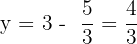
The solution is  .
.
Example 5
Solve the system:


Solution
Let and  . Note that
  . The system becomes:


Divide equation (2) by equation (1):
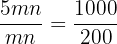

This is always true, meaning the equations are dependent — there are infinitely many solutions. For example, if , then  , so
, so 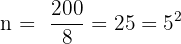 , giving . One solution is .
Example 6
Solve the system:


Solution
Rewrite using common bases. Since  and
and  , we apply the power rule latex^{n} = a^{mn}[/latex]:
 and
and 
So the system becomes:


Equate exponents:


Both equations give  . Since there is no further constraint, the system has infinitely many solutions of the form for any real value. For instance,
  ,
,  ,
,  are all valid.
Example 7
Solve the system:


Solution
Rewrite using index laws:  and
and  .
.
Let and :


Again, the equations are dependent (they reduce to the same equation). So we need additional information to find a unique solution. However, from  with and , one natural solution is
  , giving
  .
.
Check:  and
and  .
.
Example 8
Solve the system:


Solution
Rewrite:  and
and  .
.


Equate exponents:


Solve by elimination. Multiply equation (2) by 2:

Subtract equation (1) from equation (3):



Substitute into equation (2):
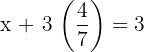
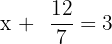
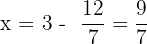
The solution is  .
.
Summarise with AI:
Did you like this article? Rate it!


 Loading...
Very good
Excellent
Hi there! Thanks for taking the time to comment, we’re glad that you found these exercises helpful :)
I am impressed well done.