What is Integration?
When you need to find the area of a shape, you usually use a formula for it. For example, below we have a triangle. 

| Shape | Area Formula | Dimensions |
| Circle |  | r = radius |
| Square |  | s = side |
| Rectangle |  | l = length w = width |



| What | Description | Example | |
| A | Integral sign | The m and n are the upper and lower bounds, which is the interval we want to find the area for |  |
| B | Function | Any function that we want to find the area for |  |
| C | dx | This term specifies the variable we are integrating |  |
| Function | Derivative | Integral | |
| Notation | f(x) | f’(x) |  |
| Rule | Any function |   |   |
| Example | f(x) = x^{2} | f’(x) = 2x^{2-1} = 2x |  =  = 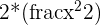 |
What are Trigonometric Functions?
Let’s continue with the idea of triangles. Trigonometry is actually based on triangles - which is helpful, because their behaviour (like areas) is very predictable. We usually use right triangles in trigonometry. 

. Opposite means it’s the side opposite the angle. This is a summary of the behaviour of triangles when it comes to the lengths of their sides:
| Sine |  = | Sin of the angle is = |  |
| Cosine |  = | Cos of the angle is = |  |
| Tangent |  = | Tan of the angle is = |  |
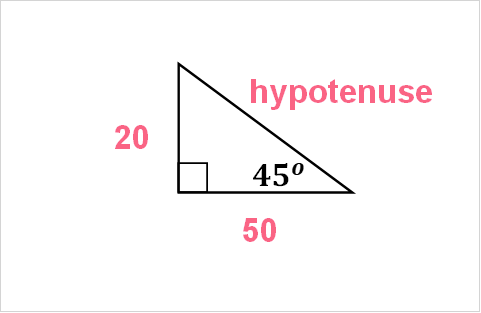
| Step 1 | Step 2 | Step 3 |
| cos(45) = 50/hypotenuse | hyp = 50/cos(45) | hyp = 95 |
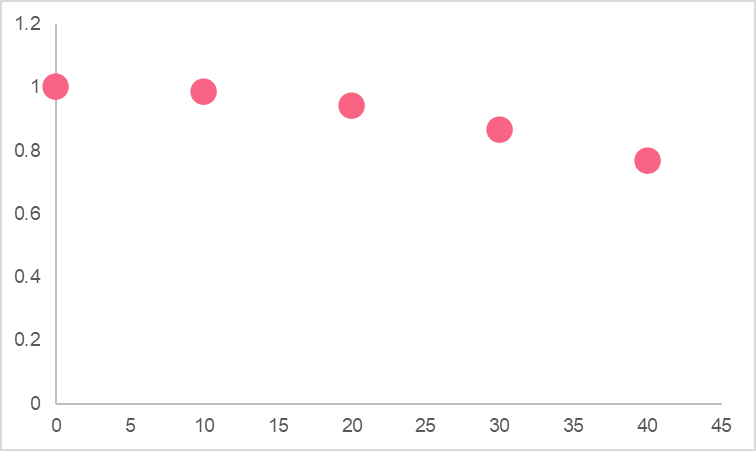
What happens when we plot trigonometric functions though? Take a look at the cosine graph: 
| A | B | C | D | E |
| (0,1) | (10, 0.985) | (20, 0.94) | (30, 0.866) | (40, 0.766) |
As you can see, we end up with 4 different triangles. However, the value of the cosine starts to create a line. If we continue this and take the cosine of more values, we end up with a graph like this. 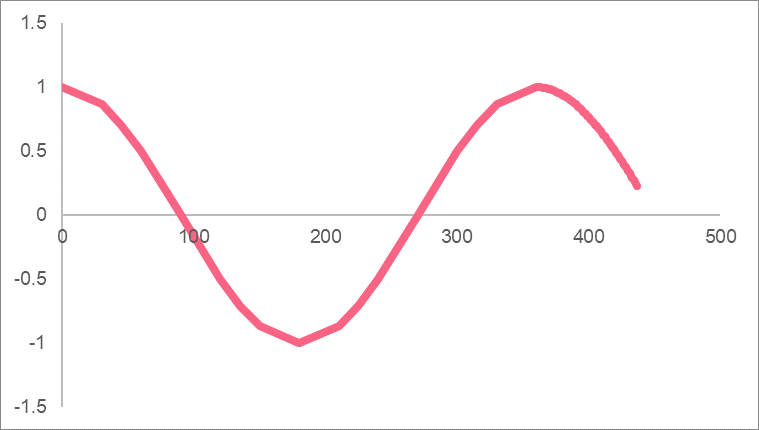

| A | B | C | D | E | |
| Angle (Degrees) |  |  |  |  |  |
| Cos( ) | 1 | 0.87 | 0.71 | 0.5 | 0 |
| Sin( ) | 0 | 0.5 | 0.71 | 0.87 | 1 |

Integration Rules for Trigonometric Functions
When integrating trig functions, it’s really easy. You simply need to follow these rules.
| Integration Function | Result | Example | |
| Cosine |  | sin(x) |  = sin(2) |
| Sine |  | -cos(x) |  = -cos(45) |
| Tangent |  | tan(x) |  = tan(20) |
What is an Inverse?
An inverse function undoes a function. Let’s take a look an example.
| Notation | Example | Description | |
| Function | f(x) | 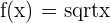 | The function is the square root of any number x |
| Inverse Function |  | 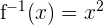 | The inverse of the function ‘undoes’ the square root by taking the square of x |
| 1 | Start with a function and replace f(x) with y |   |
| 2 | Swap y and x | 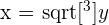 |
| 3 | Solve for y |   |
Inverse of Trigonometric Function
How do you get the inverse of a trig function? The first two steps are the same. 
| A | Start with a trig function and replace f(x) with y |
| B | Swap x and y |
Now, to solve for y, you have to take the ‘inverse sine’ of y, which cancels out the sine operation. 
| C | Take the inverse trig function of both sides to get the inverse function |
There are a couple of differences between a sine and inverse sine function. 
| Sine | Inverse Sine |
| x is an angle | x is a sine value |
| y gives us the corresponding sine value | y gives us the corresponding angle |
The inverse of a trig function can also be written like the following. 
Summarise with AI:
Did you like this article? Rate it!


 Loading...