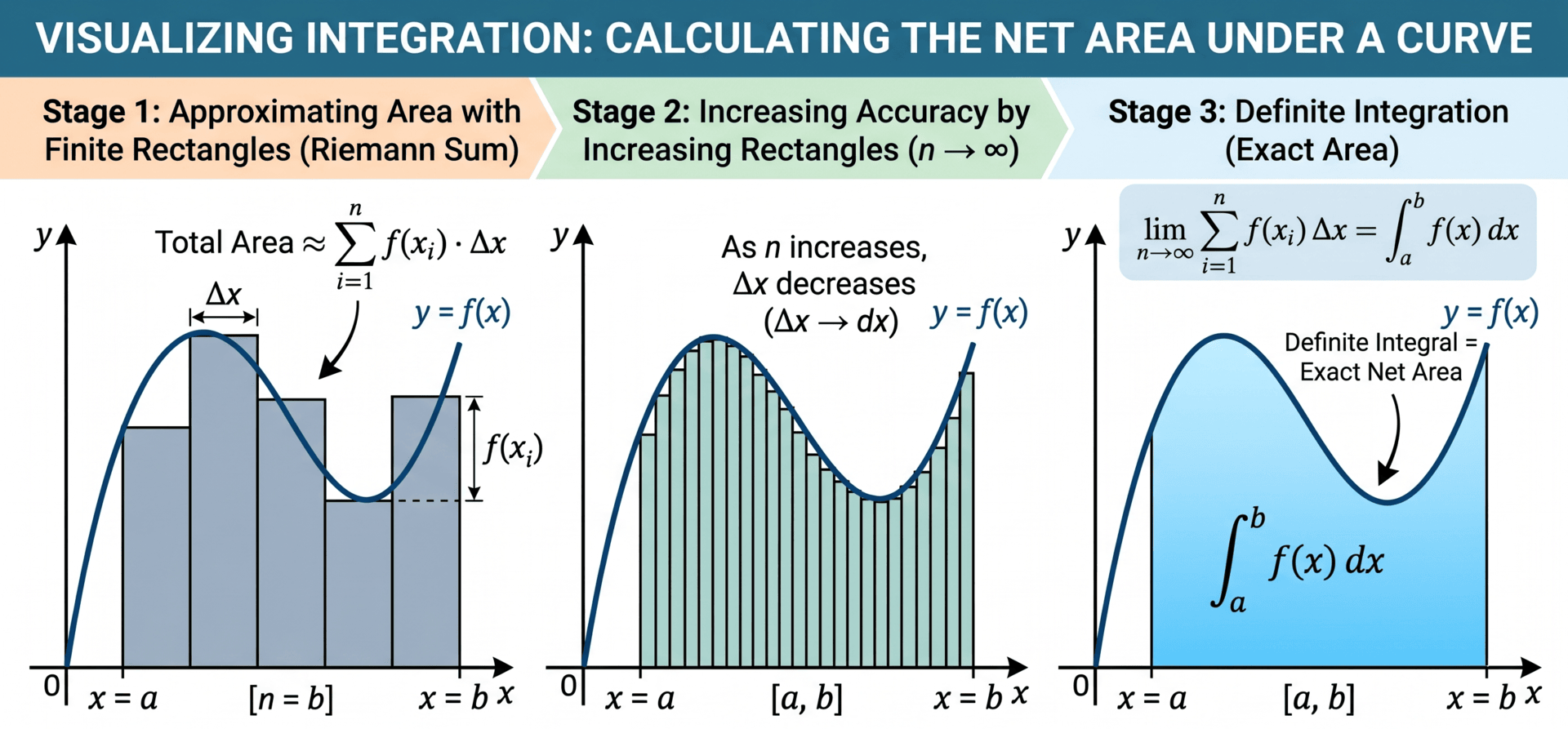
In calculus, mathematical operations often exist in inverse pairs: addition pairs with subtraction, and multiplication pairs with division. In the same way, integration serves as the mathematical inverse of differentiation.
While differentiation calculates the instantaneous rate of change (the gradient of a curve), integration reverses this process to recover the original function or to calculate the total accumulation of a quantity—most commonly visualised as finding the net area bounded beneath a curve. Mastering integration techniques is a critical milestone for achieving top grades in A-Level Mathematics.


Theory
The Fundamental Principles of Integration
When you differentiate a function, any standalone constant term becomes zero because a constant value has a rate of change of zero. For example, the functions:
and
Both differentiate to give the exact same derivative:
Because this constant information is lost during differentiation, reversing the process via integration requires us to add an arbitrary constant of integration, denoted as +c. This signals that an infinite family of parallel curves shares that same derivative.
Calculus Notation
The standard anatomy of an integral expression consists of several distinct components:
- Integral Sign: An elongated 'S', standing for "summa" (sum), indicating the accumulation of infinite infinitely thin areas.
- Integrand (f(x)): The specific function or derivative that you are integrating.
- Differential (dx): Indicates the variable of integration. It acts as the horizontal width (delta x) of the areas being summed, showing that we are integrating with respect to x.
Indefinite vs. Definite Integrals
Integration is divided into two primary structural categories depending on whether limits are applied to the calculation:
1. Indefinite Integrals
An indefinite integral has no specified boundaries. The output is a general algebraic formula representing the antiderivative of the function, and it must always include the constant +c.
2. Definite Integrals
A definite integral calculates the precise area under a curve between two specific horizontal limits: a lower bound (n) and an upper bound (m). Because you calculate a specific numerical value, the constant c cancels out during the subtraction step and is omitted.
| Step | Operation | Mathematical Action |
|---|---|---|
| 1 | Integrate | Find the general antiderivative function F(x) |
| 2 | Upper Bound | Substitute the upper limit (m) into the antiderivative to find F(m) |
| 3 | Lower Bound | Substitute the lower limit (n) into the antiderivative to find F(n) |
| 4 | Subtract | Calculate F(m) - F(n) to determine the final definitive area |
Core Integration Lookup Rules
To integrate complex expressions efficiently, you must memorize the core algebraic, exponential, and trigonometric standard forms.
| Function Type | Integrand f(x) | Integrated Result F(x) + c |
|---|---|---|
| Power Rule |  |  |
| Reciprocal Block |  |  |
| Exponential Form |  |  |
| Cosine Curve |  | 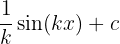 |
| Sine Curve |  | 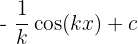 |
| Secant Squared |  | 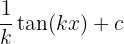 |
Advanced Integration Techniques
When expressions contain products, fractions, or composite functions, standard table rules cannot be applied directly. A-Level mathematics utilises three advanced operational mechanics:
1. Linearity Rules (Sum and Difference)
Integrals can be split across addition or subtraction boundaries, and constant multipliers can be factored outside the integral operator to simplify calculation:
2. Integration by Substitution (u-Substitution)
This technique is the reverse of the chain rule. It simplifies an integral by changing the variable from x to a new variable,u, turning a complex composite function into a standard form.
- Choose a term within the integrand to set equal to u (typically an expression trapped inside a power, root, or trigonometric bracket).
- Differentiate u with respect to x to find du/dx, then rearrange to isolate dx.
- Substitute both u and your new expression for dx back into the original integral to eliminate all instances of x.
- Integrate the simplified function with respect to u, then substitute the original x-expression back in at the end.
3. Integration by Parts
This technique is the algebraic reverse of the product rule. It is deployed when the integrand consists of two distinct types of functions multiplied together (e.g., a polynomial multiplied by an exponential or trigonometric term).
Exam Tip: To choose which function to set as u, use the LATE priority rule: Logarithms, Algebraic powers, Trigonometric terms, Exponentials. The category appearing highest in this list should be assigned to u.
Worked Example
Problem: Evaluate the definite integral given by the expression below:
Step-by-step Solution:
Apply the power rule and exponential rules independently to integrate the expression:
Write the integrated expression inside square limits, omitting the constant +c:
Substitute the upper limit (x = 3) into the expression:
Substitute the lower limit (x = 1) into the expression:
Subtract the lower limit result from the upper limit result to find the exact area:
Practice Questions & Solutions
Find the general indefinite integral for the algebraic function:

Apply the power rule to each term individually by increasing the exponent by 1 and dividing by the new exponent value:
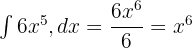

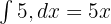
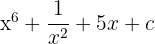
Combine the terms and remember to include the arbitrary constant of integration:
Determine the exact indefinite integral for the trigonometric expression:

Utilize the standard trigonometric integration rules, dividing each term by the coefficient of the inner linear variable:


Combine the integrated components together along with the required constant parameter:

Evaluate the precise numerical value of the definite area bounded by the following parameters:

Factor out the constant multiplier and apply the reciprocal integration rule to convert the term into a natural logarithm:
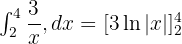
Substitute the upper boundary followed by the lower boundary into the bracketed expression:

Simplify the logarithmic expression using standard log operational rules:

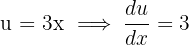
Use integration by substitution to find the indefinite integral of the composite function:

Define a new variable u for the internal function expression:

Substitute these terms back into the main structural equation to cancel the outer x-variable parameter:
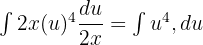
Integrate the simple power function directly with respect to u:
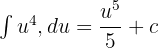
Re-substitute the original structural formula for u back into your final statement:
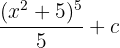
Apply the method of integration by parts to evaluate the expression below:

vAssign the terms using the LATE priority system to set the tracking variables:
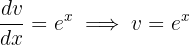
Substitute these components into the standard integration by parts structural formula:


Complete the final remaining integral step and add the constant of integration:

Summarise with AI:
Did you like this article? Rate it!


 Loading...