If there's one quote to aptly describe Richard Milhous Nixon, the 37th president of the United States, it would be this.
A man is not finished when he is defeated. He is finished when he quits. - Richard Nixon
Nixon didn't just appear out of nowhere when he took over the office from Lyndon Johnson in 1968. He was a political veteran and overcomer of setbacks who fought his way to the top.





What Contributed to Nixon's Victory In The 1968 Presidential tion?
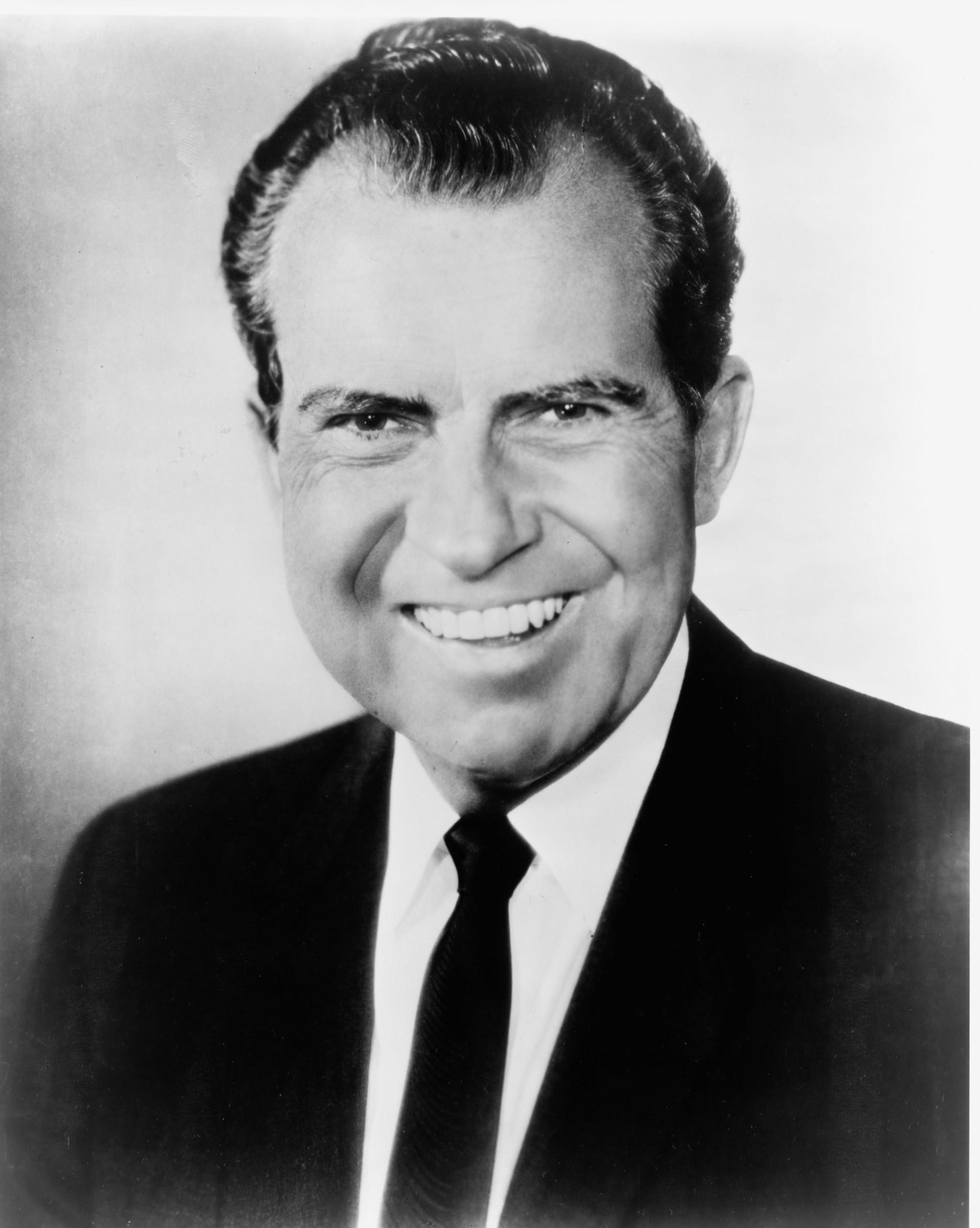
At 39, Nixon was the Vice President of Dwight D. Eisenhower in 1953 and almost became the President after losing narrowly to John F. Kennedy during the 1960 presidential election.
He retired temporarily from politics after losing to Pat Brown to contest for the position of Governor of California in 1962.
Here are 3 main reasons that contributed to his eventual presidential election victory in 1968:
- Resilience and fighting spirit: Nixon waited for the right time to make a victorious political comeback despite his previous defeats. As a seasoned Republican politician, he utilised his connections and loyalty among his party to secure his seat as the next presidential candidate.
- Good campaign team: Nixon's campaign team borrowed the power of media to craft a new political image for him. He was arranged to answer questions posed by ordinary Americans for television interviews instead of going for press questioning (which could be risky to his reputation)
- Divisions within the Democrats: Nixon took advantage of the division within the Democratic party due to the Vietnam War and criticisms towards the poor handling of increasing riots by the then-president, Lyndon Johnson.
These gave Nixon an advantage ahead of the polls and sealed his final victory against the Democratic candidate, Hubert Humphrey.
The Key Policies and Personalities During Nixon's Presidency
Nixon recognised that he must tackle some serious matters — to win the Vietnam War, build the economy, handle the social costs of ongoing protests, and recover America's self- image.
Under New Federalism, he centred his policies and legislation focus on constitutional issues, environmental issues and the growing threat of drugs.
The transfer of certain power from the federal government to individual states and the local government.
When it comes to his political administration, Nixon frequently had reshuffles for his team, either changing them or appointing new people.
He seldom had close friendships and long-term colleagues except for his National Security Advisor, Henry Kissinger. He was also close to famous American evangelist, Billy Graham, who served as the spiritual advisor to many US presidents.
He did have some celebrity friendships and was not shy to appear in media with big names like Elvis Presley and Sammy Davis Jr.
The Route To Restore Conservative Social Policies
Nixon tried to appeal to the public for their support through sentiments, often citing terms like the silent majority and the American Dream.
From there, he launched a series of welfare reforms such as negative income tax, Family Assistance Programme (FAP), the introduction of Supplemental Security Income (SSI) and health insurance reform.
A targeted audience of Nixon who did not get to express their opinions dominantly. They are predominantly white, working-class, have a high regard for traditional values, and huge believers in the American Dream.
Perhaps what Nixon didn't anticipate was the continuous protest movements towards the Vietnam War and civil rights as well as social changes during the late 60s and early 70s.
At the forefront of protest movements, rallies and marches were students, followed by war veterans. Nixon's tactics in dealing with the war protests proved to be ineffective — it was a matter of time to end the war.
To uphold the civil rights movement, Nixon tried to prevent further economic and educational segregation by introducing the busing practice to ensure schools are racially mixed and also the Philadelphia Plan in 1970. This act is crucial to tackle institutionalised discrimination targeting minority workers.
Nixon also used presidential power to advance women's rights during his administration.
The Partnership of Nixon and Kissinger To Solidify American World Power
Nixon was focused on building a legacy based on his foreign policies through international relations amid the Cold War.
Alongside his advisor, Henry Kissinger, they started a series of peace negotiations and tactics such as the Madman Theory, Vietnamization, and bombing threats, including an incursion into Cambodia to stop the Vietnam War.
In 1972, North Vietnam eventually proposed a peace deal and after few rounds of negotiations, the Paris Peace Accords were signed in 1973, leading to a ceasefire in Vietnam, the recognition of Vietnam territorially and most importantly, the end of the participation of the US ground forces.
Meanwhile, Nixon and Kissinger took turns to visit China in 1971 and 1972.

They were determined to improve US relations with China for three main reasons:
- Flexibility in the world scene
- Catch Russia's attention and improve relations with Moscow
- Receive help in resolving the Vietnam War
After visiting China, Nixon embarked on an eight-day visit to Moscow, signing two agreements to reduce nuclear armaments, and concluding several deals while building a diplomatic friendship with Leonid Brezhnev, the then-leader of Russia.
Known for his firm anti-communist stance, Nixon also authorised the Central Intelligence Agency (CIA) to remove a socialist-leaning president in Chile in 1970 and also cut financial aid to the country. Eventually, a coup d'état took place and a new leader took power.
The Consequences of the Watergate Affair
The Watergate Affair is something that will always be associated with Nixon's resignation as President.
Numerous investigations took place after the infamous break-in, including the formation of a Senate committee.
From the discovery of bugging equipment and cameras at the Democratic Office to the existence of taping system in the White House, they all revealed Nixon's desperation and insecurity about his position.
Nixon's reluctance to hand over the tapes for investigation further fueled the public's anger and distrust. When the transcripts of the tapes were eventually released, it showed the public a shockingly different side of Nixon (perhaps his true side).
Facing the risks of impeachment and pressure from the public, Nixon eventually resigned on 8 August 1974. Until today, Nixon's presidency and political legacy are still widely debated.
Some of his achievements include:
- Signing Title IX in 1972 to prevent gender bias at colleges and universities
- Dedicating $100million to begin the War on Cancer
- Overseeing the peaceful desegregation of Southern schools
- The end of draft for the Vietnam War
Summarise with AI:
Did you like this article? Rate it!

 Loading...