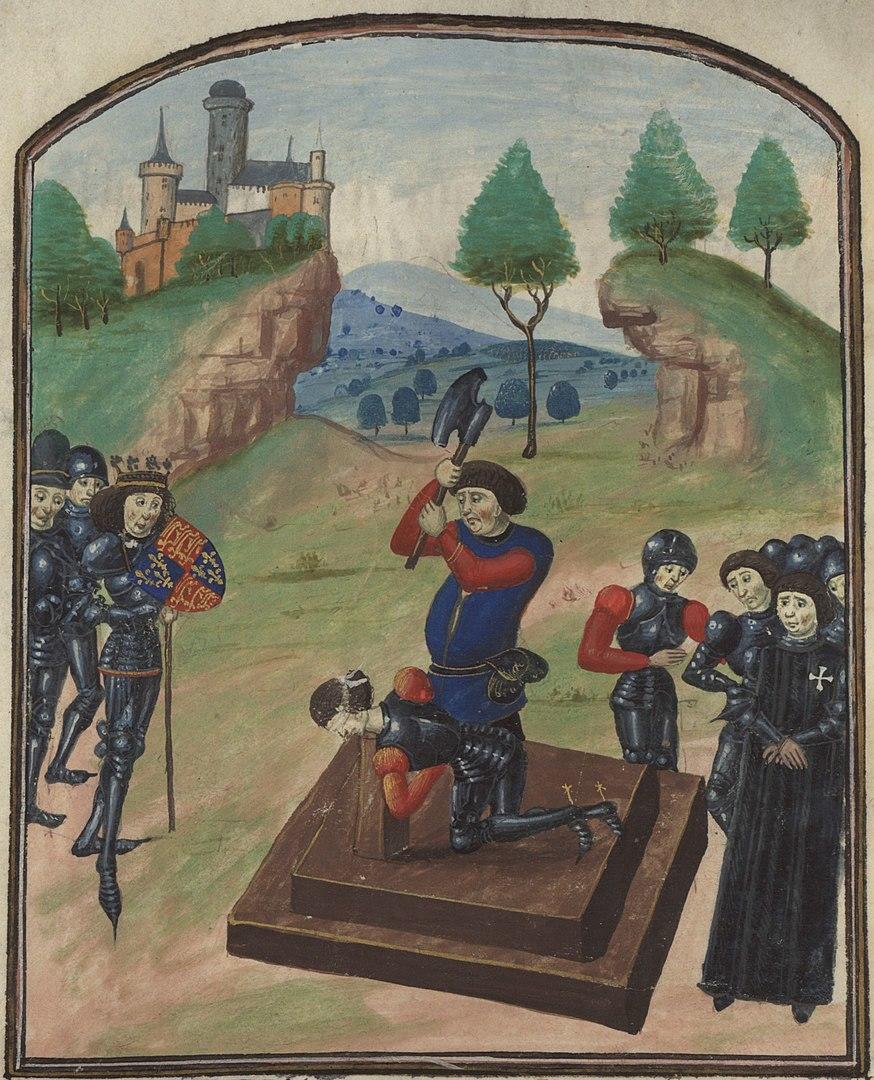
The House of York stands as a prominent dynasty in the history of English monarchs, providing us with some of the most infamous kings of the time. The period the House of York reigned was marked by triumphs, turmoil, and ultimately, its own demise. While it provided kings in the 15th century, the house was a younger branch of the house of Plantagenet of England, and was founded as early as the 1300s.





The Sun in Splendour
Edward, the Duke of York, claimed the throne after the Battle of Towton in 1461, a battle that saw Henry VI and his Queen flee to Scotland. This battle was part of the War of the Roses and according to historian Christopher Gravitt, it "has the dubious distinction of being probably the largest and bloodiest battle on English soil".
Edward IV took the power from Henry VI in the battle, and there were thought to be around 30,000 deaths.
However, this led to the reign of Edward IV, a period known as "The Sun in Splendour," as this referred to his battle flag. The period witnessed the zenith of Yorkist power and the consolidation of royal authority.
However, beneath the veneer of prosperity, factional rivalries, court politics, and the spectre of succession loomed large, ultimately precipitating the downfall of the House of York.
The reign of Edward IV initially saw the consolidation of royal authority and the implementation of new methods of government. Ascending to the throne following the tumultuous Wars of the Roses, Edward IV ushered in an era of relative peace and stability. His charismatic leadership and military prowess enabled him to quell internal dissent and assert control over a fractious realm.
He became king largely thanks to his cousin Richard Neville, the Earl of Warwick, who was the most powerful man in England during the early years of Edward’s reign.
Warwick defeated Lancastrian opposition in the far north of England between 1462 and 1464 and handled England’s diplomacy, so you may assume him to be a contender to be king. Despite this, Edward was popular, especially in London, due to his good looks and charm, and he wanted to assert his independence.
On May 1, 1464, he secretly married Elizabeth Woodville, a young widow of low rank, which upset Warwick and other influential Yorkist nobles who had plans for Edward to marry a French princess.
Edward's marriage to Elizabeth Woodville, a commoner of ambitious lineage, provoked resentment among other members of the nobility, who viewed the Woodvilles with suspicion and disdain.
The jealousy between the Woodvilles and Edward IV’s blood relatives left the nobility in a precarious position
Dr Jessica Lutkin (2016)
Woodville was not just the wife of Edward IV, but also the mother of the Princes in the Tower. She has been dubbed the “White Queen of England” which references the white rose, a symbol of the House of York.
By showing love to Elizabeth’s sons from her previous marriage, as well as to her brothers and sisters, Edward gained support from powerful magnates who could counterbalance the disapproval of Nevilles. Over time, Neville lost his influence in court. When he tried to negotiate an alliance with France, Edward embarrassed him by revealing that he had already made an alliance with France’s enemy, Burgundy, in 1467. In July 1468, Edward’s sister Margaret married Duke Charles the Bold of Burgundy, and the two planned a joint invasion of France.
Central to Edward's initial success was his adept handling of factional rivalries and court politics, particularly in managing hostile reactions against the rising influence of the Woodville family.
Edward IV’s Loss (and Regain) of Power
In 1470, Edward faced a significant challenge to his rule when his former ally, Richard Neville, Earl of Warwick (also known as the "Kingmaker"), turned against him. Warwick, disillusioned with Edward's marriage to Elizabeth Woodville and his perceived favouritism towards her family, joined forces with Edward's exiled brother, George, Duke of Clarence, and Margaret of Anjou, the wife of the former Lancastrian king, Henry VI.
Together, they orchestrated a series of military campaigns and political manoeuvres aimed at overthrowing Edward IV.
In September 1470, Warwick and his allies successfully invaded England, prompting Edward to flee to Burgundy for safety. With Edward in exile and Henry VI restored to the throne, Warwick's power seemed unassailable, and the House of York appeared to be defeated.
Despite his exile, Edward remained determined to reclaim the throne and plotted his return to England.
With the support of his brother-in-law, Charles the Bold, Duke of Burgundy, Edward gathered a small army and sailed back to England in March 1471. Landing at Ravenspur, Edward rallied support from his remaining loyalists and began marching southward, gathering momentum along the way.
On April 14, 1471, Edward's forces decisively defeated Warwick's army at the Battle of Barnet, where now-enemy Warwick was killed in action. Just weeks later, on May 4, 1471, Edward achieved another resounding victory over the Lancastrians at the Battle of Tewkesbury, effectively crushing their hopes of reclaiming the throne.
Henry VI's son, Edward of Westminster, was killed in the battle, and shortly afterwards, Henry VI himself died under mysterious circumstances in the Tower of London.
With his enemies vanquished and his claim to the throne reaffirmed, Edward IV was once again crowned King of England, marking the restoration of the House of York's rule.
Impact of the Baronial Wars
The Baronial Wars, also known as the Wars of the Roses, had a profound impact on English society by 1471. These conflicts, fought primarily between the rival noble houses of Lancaster and York, resulted in significant social, economic, and political changes.
The Baronial Wars led to a significant weakening of the aristocracy in England. Many prominent noble families, including the House of Lancaster and the House of York, suffered heavy casualties and losses of land and wealth. The Wars of the Roses were marked by intense internecine conflict within the nobility, as rival factions vied for power and control of the monarchy. This infighting weakened the cohesion and influence of the aristocracy, diminishing their ability to govern effectively and maintain social order.
The Baronial Wars had a disruptive effect on trade and the economy in England. The constant state of warfare and instability discouraged investment, hindered economic growth, and disrupted commercial activities.
Trade routes were often disrupted or unsafe, leading to shortages of goods and hindering the flow of commerce between regions. Merchants faced increased risks and costs associated with transporting goods, which impacted prices and availability of commodities.
The destruction and pillaging associated with military campaigns further exacerbated economic hardships, as towns and villages were ravaged by armed conflict. Agricultural productivity suffered, leading to food shortages and economic hardship for rural communities.
The Baronial Wars had a disruptive effect on trade and the economy in England. The constant state of warfare and instability discouraged investment, hindered economic growth, and disrupted commercial activities.
Trade routes were often disrupted or unsafe, especially during a time of piratical attacks by Warwick’s men, leading to shortages of goods and hindering the flow of commerce between regions. Merchants faced increased risks and costs associated with transporting goods, which impacted prices and availability of commodities.
The destruction and pillaging associated with military campaigns further exacerbated economic hardships, as towns and villages were ravaged by armed conflict and hit by both food shortages and high taxation, fueled by the struggle for power during the Wars of the Roses.
Summarise with AI:
Did you like this article? Rate it!

 Loading...