The early 1500s was a time of great change and upheaval in Europe, as the Protestant Reformation began to take hold across the continent. The years between 1521 and 1531 were especially crucial for the movement, shaping the religious landscape of Europe for generations to come.
In this article, the first in a series on the Reformation in Europe, we'll explore many of the radical ideas, theological debates, social upheavals, and political struggles that defined this period and set the stage for the future of Europe's religious climate. Join us as we step back in time and learn how a handful of determined reformers changed the world.





How Did Radical Reformers Influence the Course of the Reformation?
The Reformation officially began in 1517 when Martin Luther, a German monk and university professor, posted his 95 Theses criticising certain practices of the Catholic Church.
Not long after Luther's move, the reformation would take a more radical turn in the city of Wittenberg, Germany, sometime during the early 1520s. More fervent in his beliefs, Andreas Karlstadt who was a colleague of Luther's at the University of Wittenberg, would begin to directly challenge more and more of the catholic church’s sacred teachings.
Alongside Karlstadt , the Zwickau prophets, a group of preachers led by the combined efforts of Nicholas Storch, Thomas Dreshcel, and Mark Thomas Stübner would also gain influence too.
Claiming they had received direct revelations from God, they began to advocate for a society that was more equal and fair. In essence, they believed that the current social order favoured the wealthy and powerful, and was not at all in line with God's will.
Alarmed by the growing unrest in Wittenberg, Martin Luther would eventually leave his hiding place at Wartburg Castle and return to the city in 1522. He had been staying at the castle since 1521, after being declared an outlaw at the Diet of Worms for his controversial teachings. Upon his return, Luther set out to try and control the situation and steer the Reformation in a more moderate direction.

How did Luther Respond to the Radicals and Humanists?
Luther's relationship with radical reformers like Carlstadt and the Zwickau prophets were pretty tense, as he sought to distance himself from their extreme views. However, at the same time, Luther had just as complex a relationship with many humanists of the era as well, including the famous Erasmus of Rotterdam.
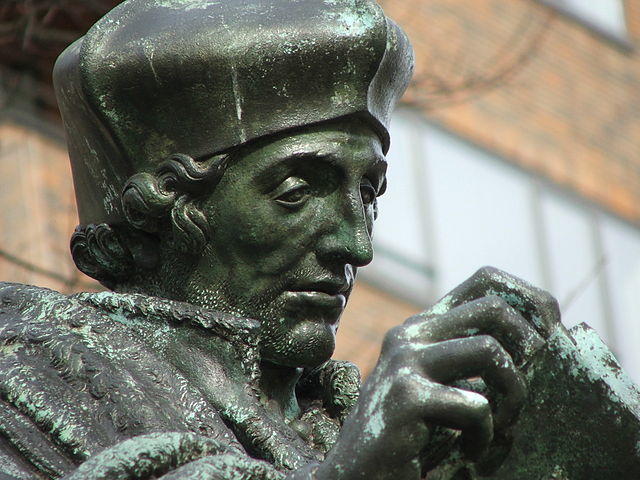
While Erasmus initially supported the Reformation, he slowly grew increasingly critical of Luther's views on free will and predestination, eventually leading to a bitter dispute breaking out between the two wise scholars.
In 1524, Erasmus would put his grievances on paper, publishing his treatise called “on the freedom of the will '' which directly challenged many of Martin Luther's key religious views. In response to this, Luther would also publish his own counter version of the treatise aptly named “on the bondage of will”.
However, Luther would also find allies during this time. For example, he would meet and befriend Philip Melanchthon, a brilliant young scholar who had also played a crucial role in shaping Lutheran theology and education.
What Impact Did Social and Political Unrest Have on the Reformation?
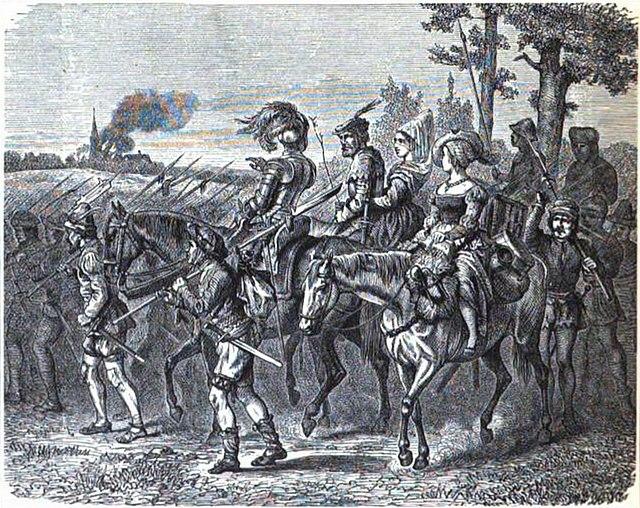
In 1522, a group of lower nobles known as the Imperial Knights, launched a rebellion against the Holy Roman Empire. The knights had been swayed by Luther's ideas, and as a result, had set out to try and put a stop to the power of the princes and the Catholic Church.
However, their rebellion wouldn’t last long, ultimately being quashed by the Swabian league who was made up of an alliance of princes and cities in southern Germany. However, the most significant social upheaval of the 1520s was yet to come.
In 1524, peasants from all over Germany began to rise up against their feudal lords in what would go down in history as the Peasants War. They were once again inspired by the teachings of Luther, as well as other grievances like heavy taxation and lack of political representation.
However, Luther would not react kindly to this news of this uprising. In fact, he would instead publish a series of pamphlets that condemned the peasants' actions as blasphemous. The most notorious of these was chillingly titled "Against the Murderous, Thieving Hordes of Peasants," and essentially urged the princes to act without mercy and crush the rebellion. Sadly, this would lead to the death of over 100,000 peasants.
How Did the Politics of the Holy Roman Empire Affect the Reformation?
The fate of the Reformation was closely connected to the political situation of the Holy Roman Empire. For example, the Diet of Speyer in 1526 essentially allowed princes and cities to choose their own religious policies, which helped Lutheran reforms take hold in many territories.
However, this decision would eventually be reversed at the Second Diet of Speyer in 1529, leading Lutheran princes and cities to issue a formal "protest," which is actually where the term "Protestant" comes from. After this, tensions reached a boiling point at the Diet of Augsburg in 1530, where Lutherans presented the Augsburg Confession (a summary of their core beliefs) in an attempt to find some sort of common ground with the catholic church.
Despite this, the differences proved impossible to overcome, soon leading to the formation of the Schmalkaldic League, a type of defensive alliance aimed at protecting Protestant territories.
The Schmalkaldic League was a defensive alliance formed in 1531 by Protestant princes in Germany to protect their rights and interests against the actions of Emperor Charles V and the Catholic Church during the Reformation era.
What Challenges Did the Swiss Reformation Encounter?
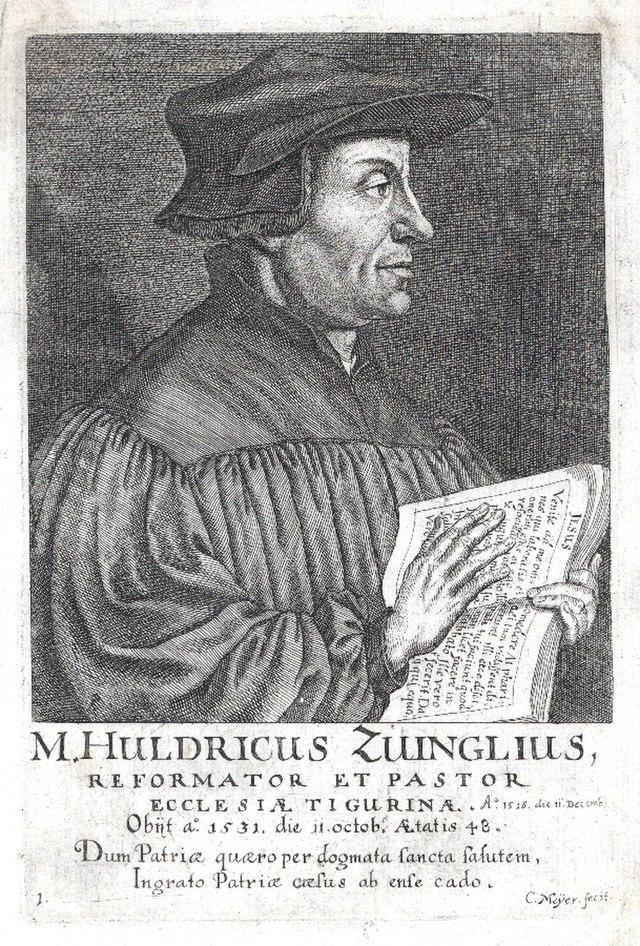
Meanwhile, in Switzerland, Huldrych Zwingli led a parallel Reformation in Zurich. By 1525, Zurich had officially adopted Zwingli's reforms, rejecting papal authority, clerical celibacy, and the veneration of saints.
However, Zwingli also faced much opposition from the Anabaptists, a group of radical reformers who rejected infant baptism and believed in the separation of church and state - ideas considered dangerous by both Protestants and Catholics alike.
While he was initially tolerant of the Anabaptists, Zwingli eventually grew to see them as a threat to social order. Due to this, Zurich authorities would eventually pass a law that made adult baptism punishable by death, leading to widespread persecution of Anabaptists throughout Switzerland and the Holy Roman Empire.
Conclusion
In conclusion, the decade between 1521 and 1531 would see the reformation grow from a small spark into an almighty blaze, as radical thinkers like Karlstadt and Zwingli pushed the boundaries of religious reform through Europe. Amidst important events like the peasant's war and the foundation of the Schmalkaldic League, the continent found itself hurtling rapidly towards a new religious era - one that would leave its mark on the continent for many years to come.
Summarise with AI:
Did you like this article? Rate it!

 Loading...