Amongst the crimes of the Nazi’s, the Holocaust was the most horrific and tragic of them all. During this incredibly dark and upsetting period in history, more than six million Jewish men, women, and children were murdered by the Nazi regime and its allies.
In this article, we’ll take a look at this subject in greater detail, explaining the root cause for the Nazi’s hatred of the Jews and other minorities, how they rose to power, and their relentless and terrible pursuit of what they believed was a racially pure state.





How did the Nazi Party Gain Power and What Were Their Views on Jews?
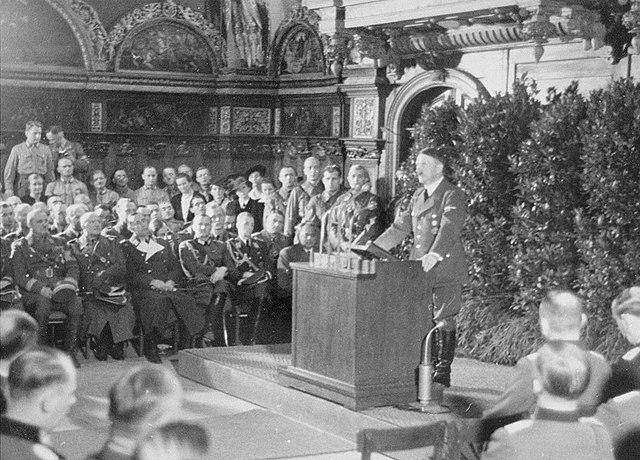
Following World War 2, the Nazi Party would take advantage of the economic turmoil and national humiliation caused by the defeat to gain overwhelming popularity with the German people. Demonstrating his talent as a public orator, Adolf Hitler would take to the streets and promote his nationalist and racist ideology, swaying the public to the idea that the Jewish were to blame for the country's ongoing problems.
For many years, Hitler had written about his hatred and distrust of Jews in books like Mein Kampf, believing they were not just a religious group but a dangerous race that threatened the so-called purity and strength of the German people. Sadly, once the Nazi regime was in power, this sentiment would only grow as Jewish people across Germany were systematically stripped of their human rights and labelled Untermenschen, the German word for sub-humans.
How Did The Nazis Initially Treat Jews and Other Minorities?
Shortly after they came to power in 1933, the Nazis began to implement their ideology of racial purity, targeting Jews and other minority groups as they did so. From here, they would enact a series of laws and policies designed to isolate these groups, the Jews especially, from the rest of German Society. For example, arguably the most notorious of these were the Nuremberg Laws, which took away Jewish peoples citizenship and prohibited the marriage of Jew’s and Non-Jews.
Alongside this, the Nazis would also embark on an extensive propaganda campaign designed to further spread their anti semitic and racist beliefs. Aiming to brainwash the public, state sponsored propaganda declared that the Jewish were less than human and a threat to the Aryan race. However, it wasn’t only the Jewish who would suffer, the Nazi’s were indiscriminate in their racism, targeting all those they deemed inferior - including Romani people, those with disabilities, homosexuals, and many others.
What Happened on Kristallnacht, the Night of Broken Glass?
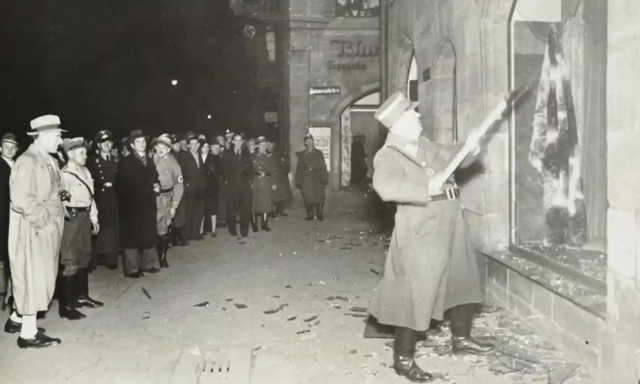
Kristallnacht, or the Night of Broken Glass, was yet another ominous turning point it Hitler's campaign against the Jewish. Taking place in November 1938, the campaign was orchestrated by the Nazis in retaliation for the assassination of a German diplomat in Paris, which had been carried out by a Polish Jew. Essentially, this event gave the Nazis the excuse they wanted to launch an all out physical attack against the Jewish community.
From here, they would frame the violence that was about to begin as spontaneous public outrage in a bid to further fuel anti-semitism against the Jewish. In the attack, many Jewish homes, hospitals, schools, and cemeteries were completely ransacked and destroyed, while over 1,000 synagogues were burnt to the ground.
Meanwhile, on the streets, around 7,500 Jewish businesses were vandalized, with glass and debris littering the ground around the ruined shopfronts - leading to the name “the Night of Broken Glass”. Unfortunately, the Jewish people weren’t spared from the violence, and many were dragged out into the streets and horrifically beaten, resulting in the deaths of over 90 innocent individuals.
What Was the Wannsee Conference and the Final Solution?
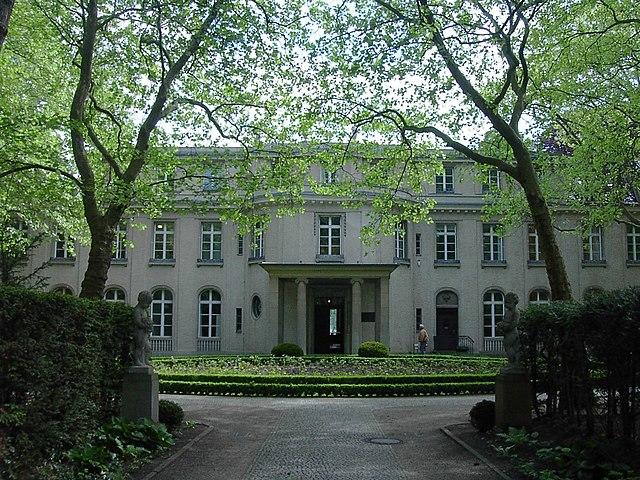
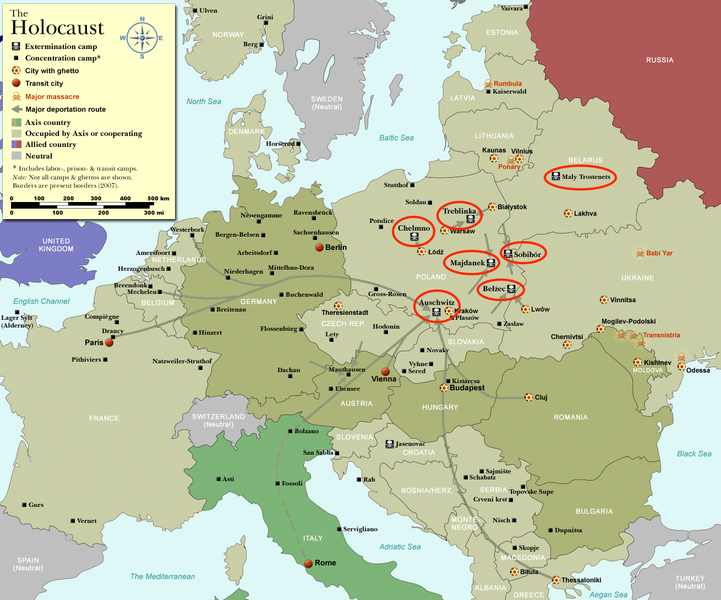
Held on January 20, 1942, the Wannsee Conference was a high level meeting of Nazi officials. Here, the officials coldly discussed the implementation of the Final Solution - their code name for the planned systematic extermination of the entire Jewish population. Sadly, it was the events of this meeting that would directly lead to Jews across Europe, many of whom had already been forced into overcrowded and unsanitary ghettos, being taken to extermination camps.
From this point in history, the Nazis would no longer focus on solely oppressing the Jewish, and instead set their sights on committing horrific mass murder on a scale never before seen in history.
What Role Did Concentration and Extermination Camps Play in the Holocaust?
Concentration and extermination camps were the grim heart of the Holocaust, reflecting the darkest aspects of human cruelty. Initially set up to house political prisoners or enemies or other enemies of the Nazi regime, places such as Dachau, Buchenwald, and Sachsenhausen, were effectively turned into brutal forced labor camps.
Here a variety of people from all backgrounds, including Jewish, Romani, and Slavs were forced to deal with unimaginable conditions - such as extreme overcrowding, rampant disease, and never ending backbreaking work.
However, even more horrifying were the extermination camps like Auschwitz, Birkenau, Treblinka and Sobibor, where countless millions of people were needlessly murdered. Lacking or ignoring any sort of empathy, Nazi officers would lure long lines of victims into gas chambers by offering them a shower, where they were then exposed to lethal amounts of Zyklon B. After this, the bodies of the dead were then disposed of unceremoniously in mass graves. This systematic slaughter, fueled by a twisted and perverse ideology, brutally stripped away the humanity of both its victims and those who perpetrated these acts.
What Happened When the Holocaust Camps Were Liberated?
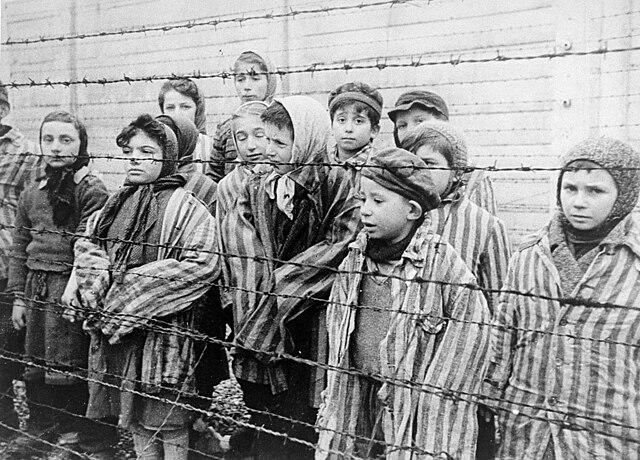
The liberation of the Holocaust Camps would begin in 1944, when the allies successfully began to push into Nazi occupied territories. As they did so, the horrified troops would stumble upon the concentration and extermination camps, coming to a newfound realization of the shocking extent of the war crimes the Nazis had committed. As the Allied forces moved deeper into the camps, the scenes they encountered became more and more heart breaking.
There were survivors, but most of them were skeletal and in need of urgent medical care. Alongside this, piles of bodies were scattered indiscriminately around the camps. Sadly, many of the survivors would never recover from the ordeal, nursing lifelong physical and psychological scars for the rest of their lives. However, there would be some form of justice for the atrocities that took place.
After World War 2, many Nazi war criminals were held accountable for their actions in the Nuremberg trials. These trials were a series of military tribunals where leaders of the Third Reich were prosecuted for crimes against peace, war crimes, and other crimes against humanity.
Conclusion
In summary, the Holocaust was one of World War 2’s most appalling atrocities. During this time, over six million Jews and other minorities were needlessly and brutally murdered by being forced into gas chambers. In this piece, we took a brief look at how the Nazi’s rose to power, how their deep-rooted anti semitism took hold of the general public, and how they segregated and led a campaign of hatred against Jews and minorities that soon culminated in mass slaughter.
Key events like Kristallnacht, the Wannsee Conference, and the operation of concentration and extermination camps would highlight the extent of this brutality. Near the end of the war, the allied liberation of these camps would eventually expose the crimes of the Nazi’s to the world, soon leading to the Nuremberg Trials, where they were finally held accountable.
Summarise with AI:
Did you like this article? Rate it!

 Loading...