The Reign of Terror stands as one of the darkest and most tumultuous chapters of the French Revolution, a period marked by widespread violence, political upheaval, and unprecedented repression. Lasting from September 1793 to July 1794, the Reign of Terror should serve as a cautionary tale, having involved mass executions, arbitrary arrests, and the consolidation of power by radical factions within a tyrannical, revolutionary government.
France was in a period of economic instability as well as a lot of social issues, not least of all the suppression of lower classes by the nobility.





Causes of the Reign of Terror
The French Revolution, fueled by Enlightenment ideals of liberty, equality, and fraternity, had unleashed the French appetite for radical change. However, the revolution quickly descended into chaos as competing factions vied for power and ideological supremacy. The Jacobins, led by figures such as Maximilien Robespierre, sold people a radical vision of the revolution, viewing violence as a means to purge counter-revolutionary elements and defend the Republic.
It has been said that terror is the principle of despotic government. Does your government therefore resemble despotism? Yes, as the sword that gleams in the hands of the heroes of liberty resembles that with which the henchmen of tyranny are armed ... The government of the revolution is liberty's despotism against tyranny. Is force made only to protect crime. - Maximilien Robespierre
France faced external threats from neighbouring monarchies alarmed by the spread of revolutionary ideals. The outbreak of war with Austria and Prussia in 1792 further exacerbated domestic tensions. Internally, the revolution unleashed social upheaval, with peasants revolting against feudal oppression and workers demanding economic reform. Many were hungry or even starving. Amidst this turmoil, fears of counter-revolutionary plots and conspiracies proliferated, leading to a climate of paranoia and suspicion.
Failing or disorganised governments played a huge part in the mood at the time. The revolutionary government, grappling with the legacy of absolute monarchy, struggled to establish stable institutions and mechanisms of governance. The Legislative Assembly and subsequent National Convention grappled with issues of factionalism, indecision, and the challenge of maintaining order amidst escalating violence. The absence of a cohesive leadership exacerbated tensions and provided fertile ground for radical elements to seize power.
The French authorities saw the swelling of support for revolutionaries and the fact that people were so unhappy and angry with their running of the country, and the response was the Reign of Terror, their way to try to instil fear in the citizens with executions and making an example of people who were rebelling.
Major Events During the Reign of Terror
Numerous events are remembered in connection with the Reign of Terror, though there were years of violent deaths and problems throughout the Terror that are still imprinted on the history of France.
The September Massacres
In September 1792, as foreign armies threatened Paris and rumours of royalist conspiracies spread, mobs launched a wave of mass killings, targeting perceived enemies of the revolution. Thousands of prisoners, including nobles, clergy, and suspected counter-revolutionaries, were brutally murdered in a frenzy of violence that shocked France and the world.
The Committee of Public Safety
In response to the escalating crisis, the National Convention established the Committee of Public Safety in April 1793, granting it broad powers to defend the revolution and suppress internal dissent. Led by figures such as Robespierre and Georges Danton, the Committee wielded near-dictatorial authority, overseeing the prosecution of suspected enemies of the revolution.
The Law of Suspects
In September 1793, the Convention passed the drastic Law of Suspects, which authorised the arrest and trial of individuals deemed "enemies of the people." This sweeping decree led to a wave of arrests and executions, as revolutionary tribunals dispensed summary justice to perceived traitors and counter-revolutionaries. In reality, this had given even more power to the authorities to make arrests and even executions for those who did not fit into their way of thinking.
The Reign of Terror in the Provinces
The Reign of Terror extended beyond Paris, engulfing the provinces in a wave of repression and bloodshed. Revolutionary tribunals, operating with impunity, targeted perceived enemies of the revolution, including Girondist sympathisers, refractory priests, and rural insurgents. Massacres, executions, and purges decimated communities and sowed fear and distrust. After the Storming of the Bastille, there were even more areas that followed suit.
The Fall of the Girondins
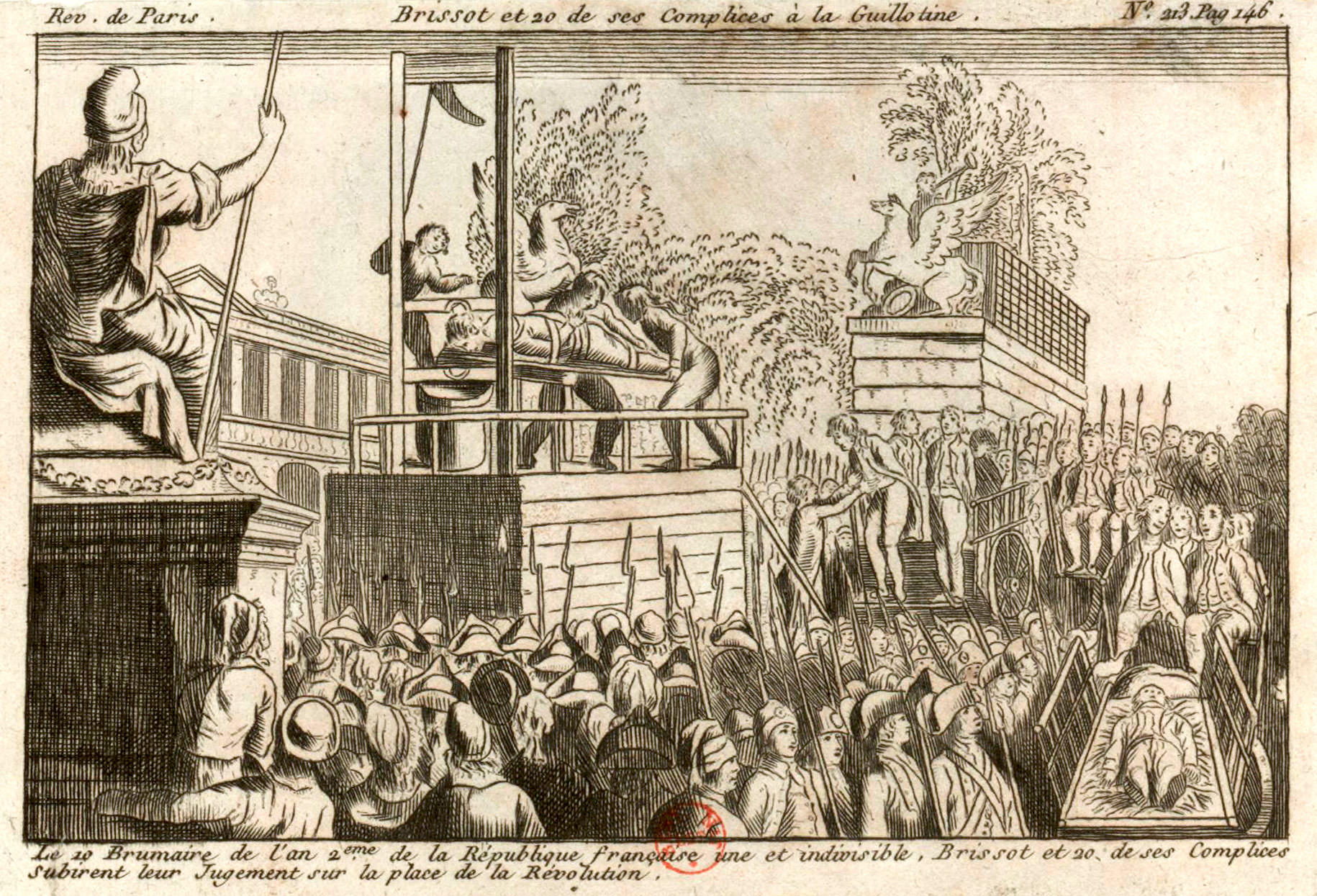
The Girondins were a moderate political faction during the French Revolution that advocated for gradual reform, constitutional monarchy, and political rights. Despite their initial prominence, they were ultimately eclipsed by the more radical Jacobins and fell victim to the political turmoil and violence of the Revolution.
Tensions between the Girondins and the Jacobins had rumbled through the war, but they came to a head during the trial of King Louis XVI in December 1792. While the Girondins initially opposed the king's execution, fearing it would alienate foreign powers and escalate the conflict, the Jacobins pressed for his death, viewing it as necessary for the survival of the revolution. Louis XVI was ultimately guillotined on January 21, 1793, a decision that deepened the rift between the two factions
The Girondin leaders were purged from the Convention, arrested, and ultimately executed, marking the end of their political influence.
The Rising in the Vendée
The Rising in the Vendée, south of the Loire River, was a large epicentre of a counter-revolutionary movement. Amid uprisings in the area lasting three years, the government were quick to send their troops, resulting in mass killings. Some have suggested that as many as 200,000 people could have been killed, with huge internal battles taking place at Cholet and Nantes.
The Role of Robespierre and His Fall
Maximilien Robespierre emerged as one of the most influential figures during the Reign of Terror. As a leading member of the Committee of Public Safety (CPS) and a prominent Jacobin leader, Robespierre wielded considerable power and influence. He espoused radical republican ideals and advocated for the purging of counter-revolutionary elements to defend the revolution.
Additionally, the sans-culottes were a radical faction of the French Revolution comprised mainly of urban workers and artisans. They played a significant role in popular uprisings and mass mobilizations, advocating for social and economic equality. The sans-culottes were staunch supporters of Robespierre and his policies, seeing him as a champion of the common people and a defender of the revolution against its enemies.
Despite his initial popularity and influence, Robespierre's increasingly authoritarian rule and the excesses of the Terror led to growing discontent among his colleagues in the National Convention. On July 27, 1794 (9 Thermidor), Robespierre was arrested following a dramatic confrontation in the Convention. The following day, he and several of his allies were executed by guillotine, marking the end of Robespierre's reign of terror and the collapse of the Terror.
The Thermidorian Reaction that followed ushered in a period of political consolidation and the gradual rollback of radical policies. The revolutionary government moved towards a more moderate stance, seeking to restore order and stability after years of turmoil and bloodshed.
Summarise with AI:
Did you like this article? Rate it!

 Loading...