Former US Senator, Pierre Salinger once said, “The death of JFK to the resignation of Richard Nixon marked a great turning point in American life.”
The aftermath of the Watergate scandal alongside the fast political, economic and social changes from the '70s the '80s proved to be a testing period for the next two US presidents, Gerard Ford and Jimmy Carter.





An Overview Of The Ford and Carter Presidencies
After Nixon's resignation, his Vice President, Gerard Ford became the next US President.
While Ford had a reputation for being the "man of the people", he faced a few challenges as he was not seen as a capable and wise leader. He was also constantly satirised in the weekly sketch show, Saturday Night Live.
One of the most controversial decisions made by Ford during his presidency was his pardoning of Nixon after the Watergate scandal. This eventually caused Ford to lose the next presidential election in 1976 to his Democratic Party opponent, Jimmy Carter.
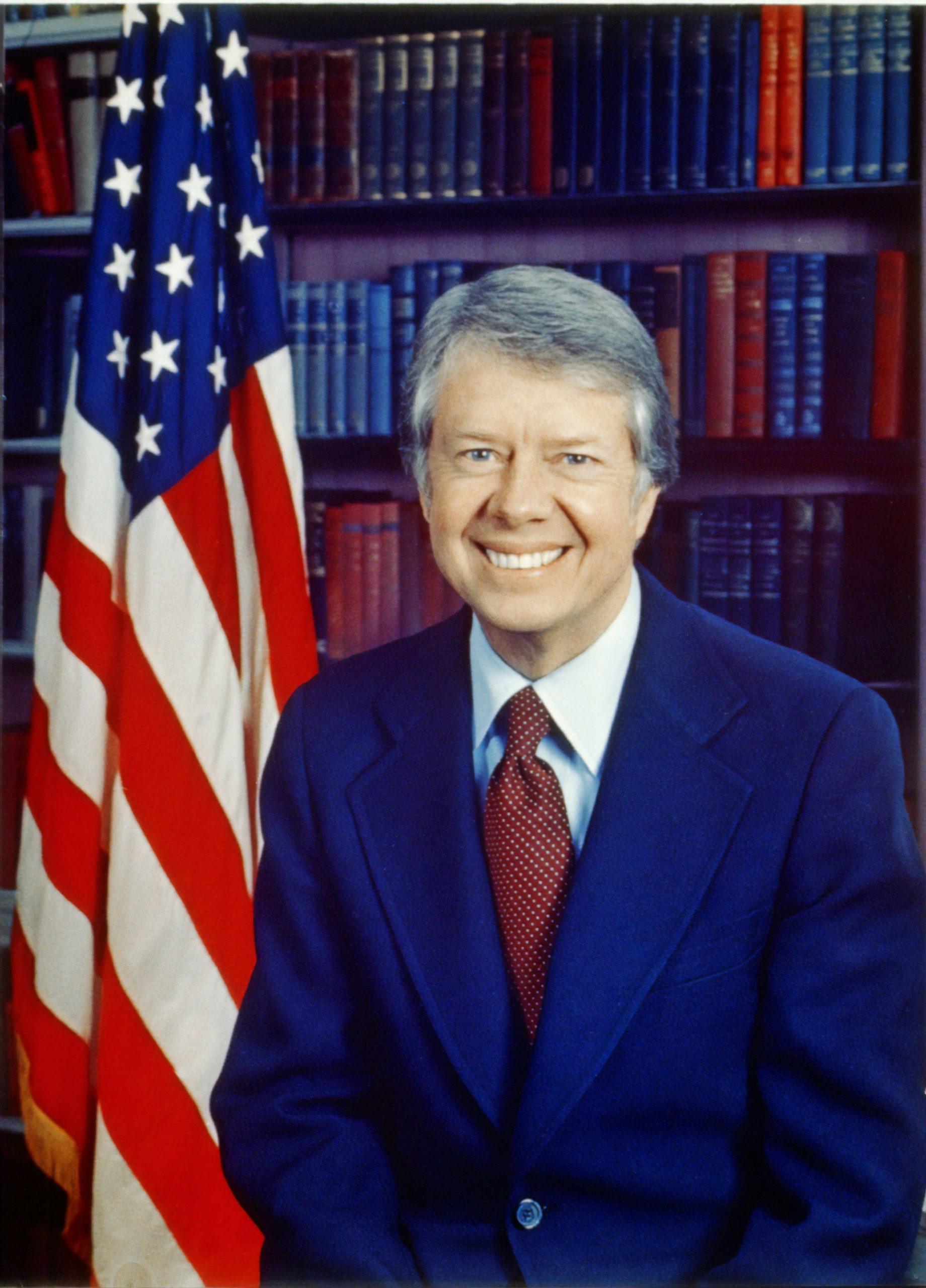
Initially, Carter garnered media support and portrayed himself as a progressive reformer.
However, his public image was damaged through unfavourable perceptions of his health and also key events like the Three Mile Island accident in Pennsylvania, where radioactive gas was released, leading to massive protests.
In terms of responding to social divisions and adapting to a changing country, both Ford and Carter signed legislation about women's rights like the Equal Credit Opportunity Act, and the Pregnancy Discrimination Act.
As the next President after Nixon, Ford and his team suffered a great deal from being associated with the Watergate scandal, especially when it comes to mistrust in government officials due to corruption.
On the other hand, Carter's family members received media attention for the wrong reason — associating with controversial public figures and receiving a huge sum of money for an unspecified reason.
This led the public to lose national self-confidence and feel sceptical about their leadership abilities to achieve the American Dream.
The Foreign Policies of Ford and Carter
During Ford's presidency in 1975, communist forces progressively entered Saigon, causing Ford to order the evacuation of all US forces and South Vietnamese citizens who had connections with the US. He also ordered US Marines to retake an American ship that the new communist government in Cambodia seized.
Saigon is another name for Ho Chi Minh City. It was the capital of South Vietnam before it was captured by North Vietnam.
Additionally, Ford continued relations with the Soviet Union. Together with Henry Kissinger, the US signed the Helsinki Accords and the Vladivostok Accords.
These decisions reflected the core of the US's foreign policy back then — the basis of respect for sovereign states, respect for human rights and also a commitment to peaceful settlement of disputes.
Carter had a different foreign policy when it came to relations with the Soviet Union. Alongside his National Security Advisor, Zbigniew Brzezinski, he believes that the expansion of the Soviet Union needs to be contained and there must be a strong alliance between non-Communist nations across the globe. He also wanted his foreign policies to focus on human rights.
To exert pressure on the Soviet Union, Carter recognised China as a communist state in 1979 even though it required him to sever ties with Taiwan. This decision helped trade relations in Southeast Asia to flourish as Deng Xiao Ping pursued a policy of opening China up to develop its socialist market economy.
Though Carter revoked the 1955 Mutual Defense Treaty with Taiwan, he later established the Taiwan Relations Act to make sure both sides were "satisfied".
The USA's Responses To Crises in the Middle East; Iran and Afghanistan
One of Carter's best-known foreign policies involving the Middle East was the signing of the Camp David Accords in Washington in 1979 following the Yom Kippur War involving Egypt and Israel.
Things however took a bitter turn when it came to the situation in Iran where there was a power struggle between the Shah (King) of Iran and their supreme religious leader, Ayatollah Khomeini. Eventually, Khomeini became the nation's leader and the Shah became a public enemy.
Carter made a misjudgement of allowing the Shah to be treated for cancer in the US, which angered the supporters of Khomeini. In November 1979, Islamic student militants took 66 Americans hostage, demanding for the Shah to return to Iran alongside his stashed assets and an apology from America.
Despite numerous efforts to rescue the hostages, Carter was unsuccessful. The hostages were eventually released after rounds of negotiations during the inauguration of his successor, Ronald Reagan after 444 days in captivity.
When Afghanistan was invaded by the Soviet Union in 1979, Carter was advised by Brzezinski to execute embargoes on grain sales and organised a boycott towards the 1980 Moscow Olympics.
An official ban on trade with a specific country
The Significance of the Civil Rights Legislation For The African Americans
Despite legislative advances like busing and desegregation of schooling to ensure equality, racial tensions were still high in the mid-70s — even leading to riots.
With the gradual proper execution of the Civil Rights Act in 1964, there were gradually some political gains among African Americans.
At the same time, more African American celebrities were making waves in the entertainment industry, especially in the music scene like Stevie Wonder and the Jackson 5.
Economic conditions were also improving with more African American students completing their high school education and enrolling in colleges, alongside the rise of feminism and new civil rights groups to fight for their rights.
However, the road to improving the situation of African Americans in the South remains an uphill battle — with examples of environmental discrimination still taking place.
America As A Superpower & Why Reagan Won The 1980 Presidential Election
By 1980, America solidified its position as a superpower due to a few reasons:
- The gradual collapse of communism across Europe
- Secure oil imports from the Middle East
- Stable relations with China and even the Soviet Union
- Solid alliances with European powers through NATO
Domestically, there were also changes, economically and socially.
Though Carter wanted to return for a second term, he eventually lost the election to Ronald Reagan.
A former actor, Reagan was comfortable in front of the camera and offered a more concrete election mandate: cutting taxes, shrinking the size of the federal government, and balancing the federal budget.
Essentially, the public wanted a change because they experienced disenchantment towards the state of the country. Reagan was seen as the right person at the right time.
Summarise with AI:
Did you like this article? Rate it!

 Loading...