One of the most challenging times in British history, the Blitz was a relentless bombing campaign that targeted the nation between September 1940 and May 1941. In this article, we’ll take a journey through the blitz, and explain how the British managed to overcome and adapt to the challenges of living under constant threat of these nightly raids.
You'll learn about the motivations behind the Blitz, the actions taken by the British Government to safeguard its citizens, how individuals and communities navigated the challenges of the nightly bombings, and the enduring effects on the nation as a whole. Keep reading to find out more!





What Sparked the Onset of the Blitz?
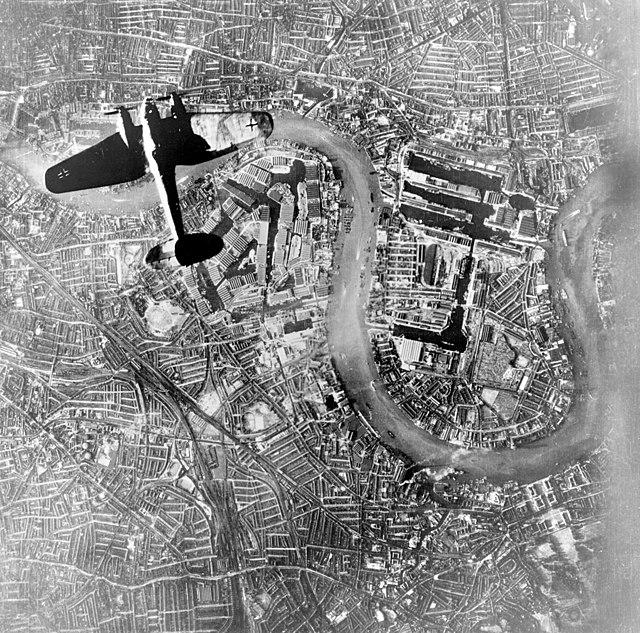
Essentially, the Blitz would begin as a part of Germany’s strategic effort to get Britain to surrender. Their strategy would centre around targeting and bombing civilian areas and industrial centres in an effort to demoralize and pressure the nation, which had so far proved steadfast in its efforts to oppose the Germans, into finally giving up.
The Blitz would take place shortly after the failure of the German Luftwaffe to gain air superiority during the Battle of Britain in the summer of 1940, and was seen by some as an act of retaliation. Initially, the Germans mainly focused on targeting London. However, the attacks would soon spread to many other major cities across the UK, leaving devastation and horror in their wake. Thankfully, the British would not roll over so easily, and civilians across the country would demonstrate remarkable bravery in the face of the Germans ongoing nightly onslaught.
How Did the Nightly Raids Transform Daily Life?
Having never faced an event such as this before, civilians across the UK had to rapidly adapt to the nightly raids their country now faced. Every night, bustling cities would effectively transform into ghost towns, with windows being blacked out and lights switched off - all in an effort to give the Germans less targets. This new routine would change the daily lives of Brits, as they had no choice but to deal with the effects of disrupted sleeping patterns, opening their businesses at unconventional times, and spending nights huddling together in air shelters.
Additionally, the constant threat of bombings meant adaptations had to take place in workplaces and schools too, introducing an underlying sense of uncertainty and urgency into everyday tasks. Unfortunately, for some, the psychological effects of the Blitz were too much, with the constant stress and fear leading to a condition known as “bomb neuroses”.
What Role Did Air Raid Shelters Play in Civilian Safety?
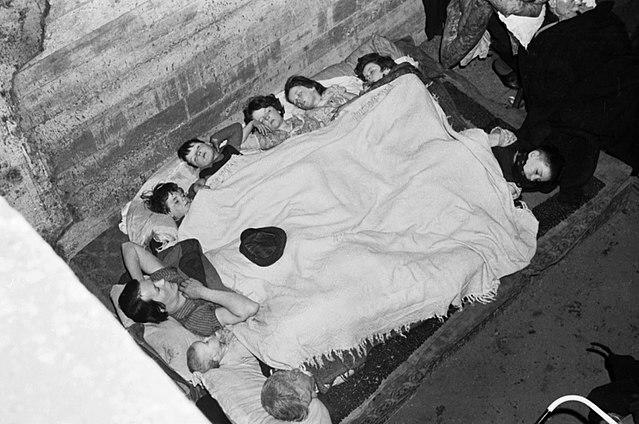
If you live in the UK or Europe, you’ve no doubt heard of the importance of air raid shelters during WW2. During the blitz, these structures also played a crucial role in keeping civilians safe during the nightly bombings. In fact, the British government, anticipating the need for widespread public protection, actually initiated a massive program to construct and distribute shelters of various types across the country.
For example, the Anderson shelter, one of the most common types, was provided free to lower-income families and sold to those who could afford it. Made from corrugated steel and buried half in the ground with earth heaped on top, these shelters could accommodate up to six people and were designed to withstand the blast and shrapnel from nearby explosions.
Alongside this, communal shelters were also erected in public spaces, which were useful for those who lacked a garden or outdoor space. Fascinatingly, the government also took advantage of subway stations and repurposed them into public air shelters. At night, thousands of people, many of whom had lost their homes in the attacks, would bed down together on the platforms and tracks.

What Was the Impact of the Blitz on Children and Families?
The Blitz had a massive and long-lasting impact on the lives of the nation's children. Seeking to keep the younger generation safe, the government would go on to initiate Operation Pied Piper. This scheme would see thousands of children sent far away from cities and into the relative safety of the countryside, where they would live with family members or strangers who had volunteered to take them in.
While the evacuation was designed to protect children from the physical dangers of the bombings, it introduced new challenges, including psychological stress and the strain of separation from close family. Although many children eventually formed close relationships with their host family, some also faced neglect and mistreatment, leading to lifelong scars. At home, many parents also struggled with the reality that they may never see their beloved children again. This led to a profound sense of loss and anxiety, which was further compounded by the stress of living under constant threat of air raids at home.

What Were the Consequences of the Blitz?
Sadly, the consequences of the Blitz were pretty staggering. Over the course of the bombing campaign, which took place from September 1940 to May 1941, around 40,000 men, women and children lost their lives. Across the country, the physical destruction was immense, with large swathes of residential areas, historical landmarks, and commercial zones being heavily damaged or even entirely obliterated. Many civilians were also badly injured, going on to live the rest of their lives with disabilities, which hampered their ability to provide for their families.
Additionally, the economic cost was also pretty significant too, with countless businesses destroyed and industrial production hampered. However, amidst the devastation, the Blitz brought about a remarkable sense of unity and community spirit among the British people - for instance, it wasn’t uncommon for neighbours to help each other sift through the rubble of their homes and to share spaces together in shelters.

How Did the Blitz End?
Eventually, the blitz would come to an end around May 1941. However, there was no official announcement, instead, nightly bombing raids became less and less common as Germany began to turn its attention towards the looming conflict with the Soviet Union on the Eastern Front. Lacking the number of Luftwaffe bombers to carry out both campaigns, Hitler would instead direct them towards the preparation for Operation Barbarossa, the planned invasion of the Soviet Union.
Over the course of the Blitz, the British had managed to improve their defence significantly, and the Luftwaffe found it increasingly difficult to inflict the level of damage it had initially achieved. Additionally, the Royal Air Force had become increasingly adept at intercepting the bombers before they could wreak any meaningful havoc. Over time, the vast majority of British people had adapted to life under constant threat of bombing - making it clear they had no intention of ever surrendering to the Nazi regime.
Conclusion
In conclusion, the Blitz was an important point in history for Britain, showcasing how the nation could resist and come together in the darkest of times. Both the government's defence strategies and the everyday resilience of its citizens played key roles in this.
Throughout the country, people of all ages and backgrounds were forced to adapt their lives and come together to support each other through the bombings. Despite the overwhelming destruction, Britain would eventually succeed in overcoming the Germans' efforts to get them to surrender. From here, the Blitz would end in May 1941 as the Nazi regime set its sight on the Soviet Union and the Eastern Front instead.
Summarise with AI:
Did you like this article? Rate it!


 Loading...