In the late 1700s, Louis XVI ruled the country in a way that suppressed the poor and continued to keep the rich and elite, such as the nobility and the church, tax-free and financially secure.
France was almost bankrupt, and Louis eventually summoned representatives of the other classes to advise him, which backfired spectacularly. The French Revolution was a crucial part of a turbulent time in French and European history and serves as a cautionary tale of the wealthy suppressing the working classes.
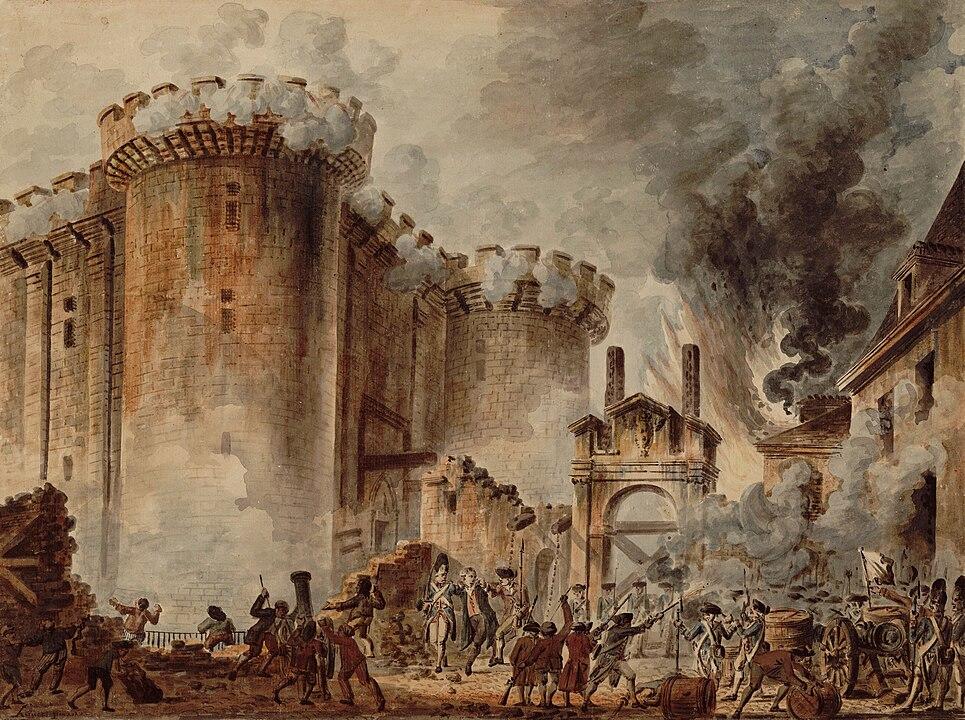





Contributing Factors to the French Revolution
The majority in France were disillusioned and frustrated. The economic squeeze on the country trickled down to the poorer classes, who found themselves struggling with all aspects of life.
French society in the late 18th century was an example of social inequality. The privileged classes, including the nobility and clergy, enjoyed vast wealth and privileges, while the majority of the population, particularly the Third Estate (bourgeoisie and peasants), faced economic hardship, heavy taxation, and lack of political representation. Economic crises, including poor harvests, rising food prices, and financial mismanagement, continued to add a burden, furthered social tensions, and fueled discontent among the lower classes.
France faced a severe financial crisis in the decades leading up to the revolution. The monarchy's extravagant spending, costly wars, and failing tax system had left the state treasury depleted and burdened with massive debt. Attempts to reform the tax system and impose austerity met with resistance, leading to a deadlock in governance and fueling the crisis.
Below, we’re going into more detail on some of the impacting factors, and how different ideas helped to contribute to the start of a revolution.
Hunger
Poor harvests led to food shortages and price increases, particularly for staple crops such as wheat and bread. The majority of the French population, especially the urban poor and rural peasants, relied heavily on bread as a primary source of sustenance. When crop failures resulted in scarcity and higher prices, it intensified the economic hardship experienced by these vulnerable groups, leading to discontent and even starvation in some places.
France was the most widely-populated country in the whole of Europe at the time.
Weak Leadership
The monarchy was failing. The reigns of Louis XV and his successor, Louis XVI, were marked by weak leadership, indecisiveness, and a lack of effective governance. The monarchy's attempts to address monetary and social problems through reforms were often stymied by resistance from vested interests, corruption and bureaucratic inefficiency. The absence of effective leadership and a connection with the people exacerbated political instability and eroded public confidence in the monarchy.
Resentment of the Ancien Régime
The Ancien Régime, or the old order, was perceived as archaic, unjust, and out of touch with the needs of the population. The privileges enjoyed by the nobility and clergy, as well as the arbitrary exercise of royal authority, fueled resentment and calls for reform.
Power was passed around clergy nobility, with no real prospects for those not born into wealth and privilege.
Discontent continued to grow among various social groups, including the bourgeoisie, peasants, and general workers, who wanted greater political participation and social equality.
The Enlightenment
The Enlightenment, an intellectual movement that emphasised reason, liberty, and equality, profoundly influenced French society in the 18th century. Enlightenment thinkers such as Voltaire, Rousseau, and Montesquieu critiqued the absolute monarchy, advocated for political reform, and promoted ideas of popular sovereignty and individual rights. Their writings challenged traditional authority and inspired calls for political change.
The writer and philosopher Rousseau circulated the idea that kings did not have the right to 'absolute' rule over the people, and that government was a 'social contract' between the monarch and the people of the country. This led to people opening up to the idea that the government and monarchy could be toppled.
Rousseau’s writing was provocative and powerful:
“Man will never be free until the last king is strangled with the entrails of the last priest.” - Rousseau
The National Assembly in France eventually adopted something called the Rights of Man, which states that: "Men are born free and remain free and equal in rights". They also abolished feudal rules and put steps in place to set up a parliament.
A Social Revolution
Some scholars argue that a change in the way people socialised also played a part. The 18th century witnessed profound social and cultural changes in France, including the rise of a public sphere characterised by increased literacy, the spread of printed materials, and the proliferation of bars, coffee houses and salons where ideas could be freely exchanged. These changes facilitated the dissemination of Enlightenment ideas and fostered a sense of collective identity and political consciousness among the French people.
The Aristocratic Revolt
When the French monarch lost the support of the Aristocracy, the writing was on the wall in many ways.
King Louis XVI, under the advice of his finance minister, Jacques Necker, sought to implement fiscal reforms to address the crisis, including proposals to tax the privileged classes, such as the nobility and clergy, who had previously been largely exempt from taxation.
The breakdown of negotiations with the nobility and the failure of the Assembly of Notables prompted Louis XVI to call for the convocation of the Estates-General, a representative assembly of the clergy, nobility, and commoners, for the first time since 1614. The convocation of the Estates-General in 1789 provided a forum for the expression of grievances and demands for political and social change, ultimately contributing to the outbreak of the French Revolution.
The Estates-General were immediately divided on many issues including how to divide their votes. Eventually, after failing to agree, the Third Estate declared themselves the National Assembly; they threatened to proceed without the other two orders and take the power of governing the country.
There were rumours of an “aristocratic conspiracy” by the king who was trying to overthrow the Third Estate, who may finally have given a voice to the working classes.
The Great Fear in Paris was a period of widespread panic and unrest rumbling throughout the summer, culminating in the Storming of the Bastille, covered in our next revision guide.
Summarise with AI:
Did you like this article? Rate it!


 Loading...