The Russian Revolution of 1917 was one of the most pivotal moments in the nation's history. Fueled by widespread dissatisfaction with Tsar Nicholas II’s rule, Russia would see not just one but two distinct uprisings within the same year. Join us as we take a deeper look into the events of the Russian Revolution and how Lenin and the Bolsheviks took advantage of the chaos to become the driving force behind a new era in the nation's history.





What Caused the Russian Revolution?
Before the Russian Revolution of 1917 officially started, Russia was already struggling under the burden of deep divisions amongst its people and a growing sense of unrest. Under the rule of Tsar Nicholas II, many felt the country was stuck in the past and out of step with the rest of the modern world, which had begun to lean more towards democracy and fairness.
To make matters worse, the Tsar and his inner circle continued to enjoy a lavish lifestyle, while the majority of Russian civilians lived in extreme poverty. This difference did not go unnoticed, and a growing sense of dissatisfaction began to simmer across the nation.
From here, the situation would escalate even further when World War 1 plunged millions into a brutal war, placing immense strain on the nation's people and resources in the process. Furthermore, as the war dragged on, the Russian government found itself unable to address the basic needs of its people, leading to widespread criticism. For example, in cities, workers faced harsh working conditions, long hours, and low pay. While in the countryside, peasants grew more and more angry over the lack of land reform, as they were still subjected to an outdated and oppressive system of feudal serfdom.
What Happened During the February Revolution?
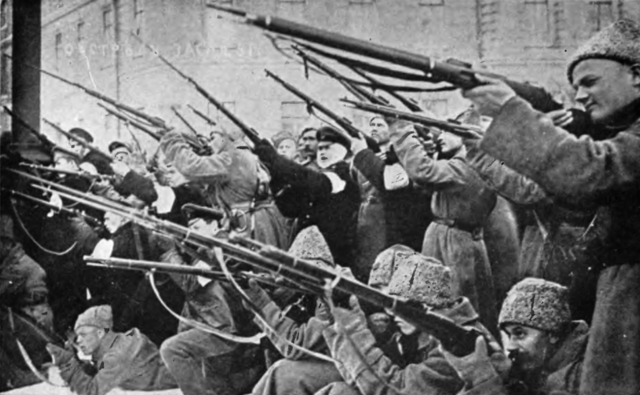
The February Revolution wouldn’t actually start as a result of one single incident but from a wave of protests and strikes that slowly but surely began to merge into a massive widespread movement against the Tsar. The protest began with Russians demanding to be given bread and quickly escalated to them calling for the end of Tsarist rule as a whole.
From here, soldiers would be deployed to bring the situation under control and put an end to the widespread protests. However, this wouldn’t go to plan as the soldiers would soon turn their guns away and join in with the protesters, marking an important turning point for the revolution that eventually culminated in Tsar Nicholas II stepping down and abdicating his throne.
What Shaped Russia's Path to Change After Tsar Nicholas II?
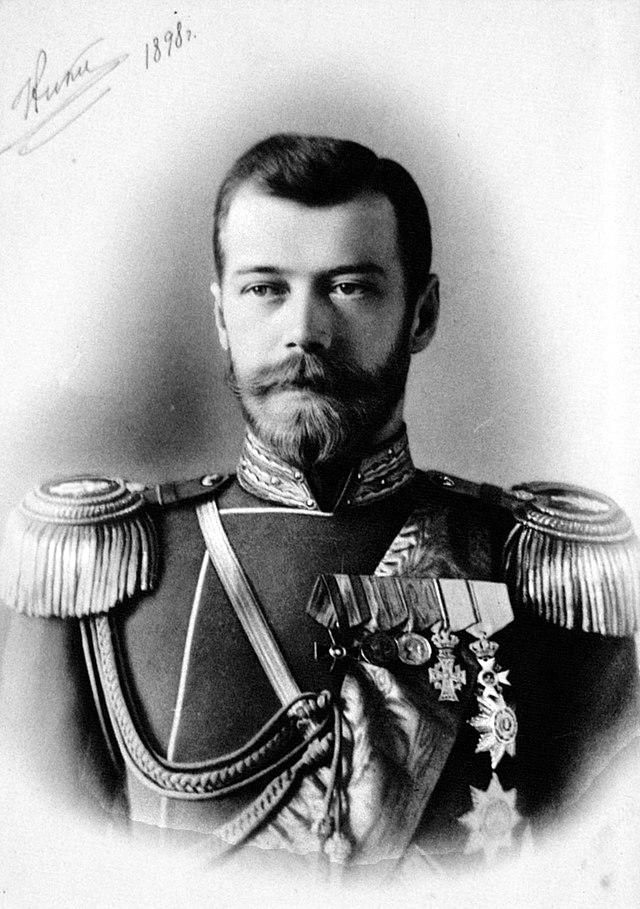
Following the chaos of Tsar Nicholas II’s abdication, a new Provisional Government would be formed. Those in the government aimed to create a liberal democracy while also facing the tricky challenge of balancing war commitments and taking into consideration the public's desire for social and economic changes.
However, the Petrograd Soviet would also come into the spotlight as a key player in Russia's shifting political scene as well. Made up of soldiers, workers, and intellectuals, the Petrograd Soviet quickly gained authority by presenting themselves as a unique voice for the people's demands. Unlike the Provisional Government, which aimed to steer Russia towards liberal democracy, the Petrograd Soviet had a different vision which was deeply linked to the needs of the lower classes. From here, the coexistence of the provisional government and Petrograd Soviet created a unique situation called “dual power”, where both sides vied for control over Russia's future. Unfortunately, this rivalry would only go on to cause further conflicts in the future.
What Role Did Lenin Play in the Revolution?
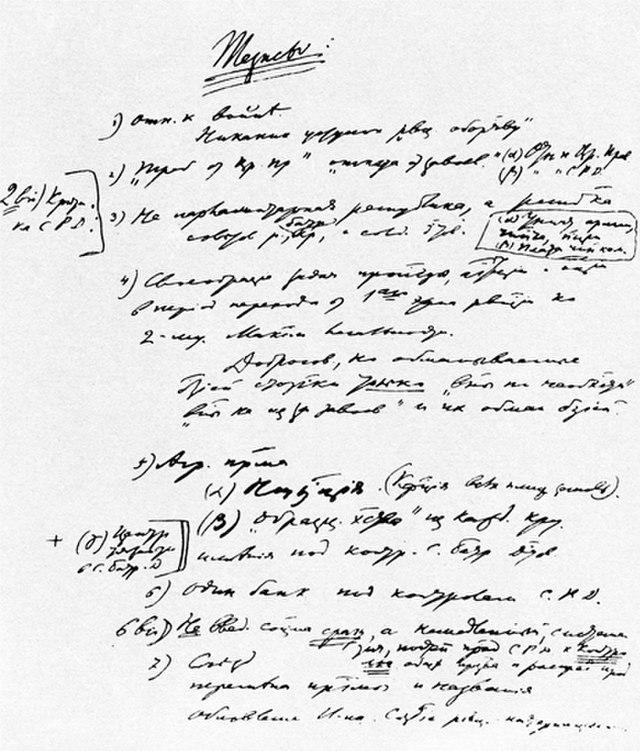
During the months between the February and October Revolutions, the atmosphere in Russia became increasingly tense and divided. Returning from exile aboard a sealed train from Germany, Lenin, a revolutionary leader and the head of the Bolshevik party would present his April Theses to the masses. Essentially, his manifesto called for a radical shift from the existing policies of the provisional government, advocating for power to be given directly to the Soviets, while also calling for an immediate end to Russia’s involvement in World War 1 and the redistribution of land back to Russian civilians. These ideals touched the hearts of many Russian people, who were increasingly weary from war and still suffering from hunger.
What Events Occurred Leading up to the October Revolution?
Soon after Lenin had outlined his April theses, two important events would further fuel the revolutionary fire which was about to take hold of the country. First among these was the July Days, an early yet ultimately unsuccessful attempt by the Bolsheviks to overthrow the provisional government, which resulted in a significant crackdown on the Bolsheviks and heightened tensions across the nation.
Not long after, an attempted coup by General Lavr Kornilov, known as the Kornilov Affair, would also further destabilise the already extremely volatile political landscape. This attempted coup aimed to restore order and reinforce the power of the Provisional Government through military force. However, it ended up backfiring spectacularly instead, serving only to deepen the mistrust and disdain for the Provisional Government among the general Russian populace.
What Happened During the October Revolution?
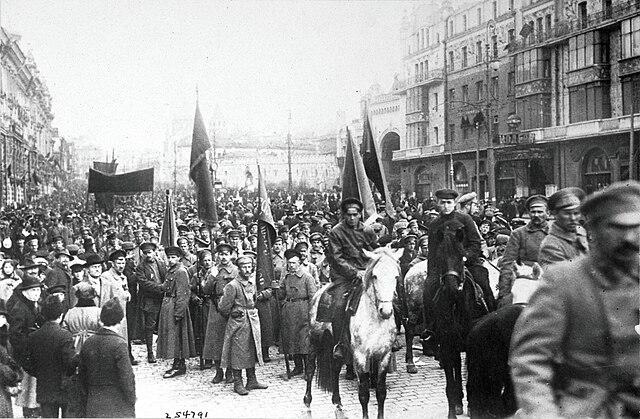
The October Revolution would begin when Vladimir Lenin and the Bolshevik Party attempted to overthrow the provisional government, seizing control of Petrograd (now known as Saint Petersburg) in the process. On the night of October 25 the Bolsheviks launched their plan into action, taking over key points in the city without much resistance or bloodshed.
Part of the reason they were able to do this was due to the involvement of the Red Guard, a type of workers' militia who were firm supporters of the Bolshevik's ideology. Their involvement was crucial, as they provided the necessary force to take over strategic locations without facing significant opposition. Once their goals were achieved and the previous government was ousted from power, the Bolsheviks wasted no time implementing changes - promptly withdrawing Russia from World War I, granting land to peasants, and initiating reforms to improve workers' rights and conditions.
Conclusion
The Russian Revolution was driven by widespread discontent with Tsar Nicholas II's rule, and was only made worse by WWI hardships. From here, the February Revolution saw the Tsar's abdication after massive protests. Despite the provisional government's efforts, it failed to address crucial issues, leading Lenin and the Bolsheviks to seize power in the October Revolution with the Red Guard's support. They implemented radical changes, including ending Russia's war involvement, redistributing land, and setting the stage for a socialist state.
Summarise with AI:
Did you like this article? Rate it!

 Loading...