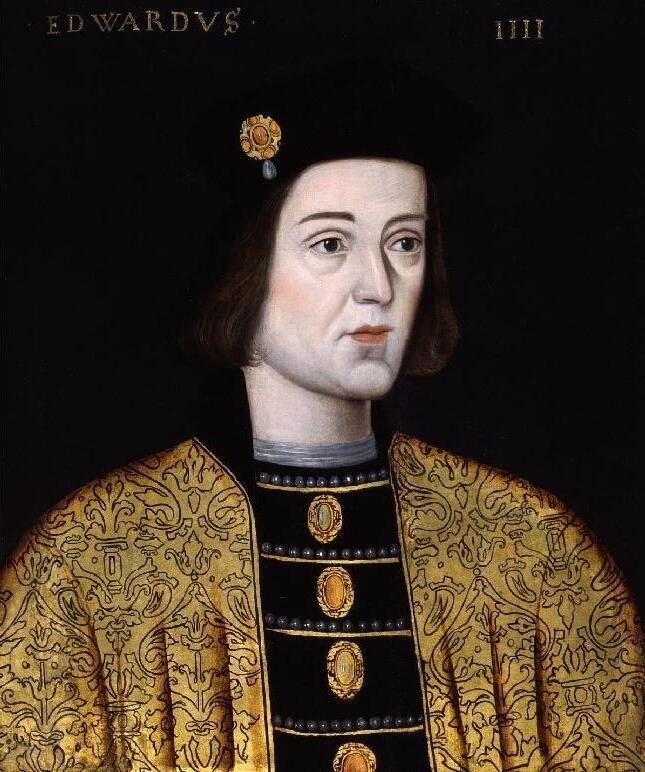
The period from 1471 to 1499 marked a tumultuous time in English history, seeing the eventual decline and downfall of the House of York. This era saw significant political manoeuvring, factional rivalries, and social shifts that ultimately contributed to the collapse of Yorkist rule. In this guide, we'll delve into the key factors that led to the demise of the House of York, covering the reign of Edward IV, factional rivalries, and the crisis of finding a successor to the throne, before the reign of Henry VII could begin.





Edward IV’s Rule
Edward IV came to power after crushing victory at the Battle of Tewkesbury. His second rule, spanning from 1471 to 1483, marked a period of strengthening royal authority and the introduction of new governmental practices. Coming to power after the turbulent Wars of the Roses, Edward IV brought about a time of relative calm and stability. His strong leadership and military skills helped him to pacify internal opposition and establish control over a divided kingdom.
Edward's accession to the throne owed much to his cousin, Richard Neville, the Earl of Warwick, who wielded immense influence in England at the start of Edward’s reign.
Warwick, known as the "Kingmaker," had defeated Lancastrian forces in the north of England between 1462 and 1464 and managed England’s diplomatic affairs, positioning himself as a potential contender for the throne. However, Edward's popularity, particularly in London, where he was admired for his handsome appearance and affable nature, led him to assert his independence.
In a controversial move on May 1, 1464, Edward secretly married Elizabeth Woodville, a young widow of humble origins. This clandestine union infuriated Warwick and other influential Yorkist nobles, who had intended for Edward to marry a French princess.
Edward's marriage to Elizabeth Woodville, a commoner with ambitious connections, stirred animosity among other members of the nobility, who viewed the Woodvilles with suspicion and disdain, but he did manage to keep power. However, rebellions were around the corner, with his previous kingmaker ally now becoming opposed to his rule.
The period of peace during Edward IV's reign allowed for economic growth and social mobility in English society. Trade flourished, facilitated by improvements in infrastructure and the expansion of overseas markets. The growth of trade contributed to the prosperity of urban centres and the emergence of a wealthy merchant class.
Social mobility also increased during this time, as individuals had some more opportunities to rise through the ranks based on merit rather than noble birth. The rise of the merchant class and the accumulation of wealth through trade provided opportunities for a level of upward mobility, challenging traditional social hierarchies, though there were still glass ceilings and robust societal structures for the lower classes.
Edward V’s Brief Reign
A sad tale from the time is that of young Edward V, who was Edward IV's eldest son, and briefly became king after his father’s premature death, but he was only twelve years old.
Richard the young king's uncle and a prominent noble, was given the important role of Lord Protector to govern in place of Edward V until he grew older.
However, instead of governing as expected, Richard saw an opportunity to take power for himself. He met Edward V on his way to London for his crowning and brought him to the Tower of London, saying it was for his safety. Richard then argued that Edward IV's marriage to Elizabeth Woodville was not valid because of a previous agreement, meaning Edward V and his siblings couldn't rightfully inherit the throne.
With Edward V and his younger brother, also named Richard, out of the picture for the throne, Richard of Gloucester worked to make sure he could claim it for himself.
Richard III’s (Slightly) Less Brief Reign
Now is the winter of our discontent
Shakespeare, Richard III
Made glorious summer by this sun of York
When Richard III took the crown, he would face rebellion almost instantly, and his reign lasted just two years.
The Duke of Buckingham attempted a rebellion but in a series of bloody skirmishes they were defeated and the rebellion collapsed. Buckingham himself was captured, tried for treason, and executed. His rebellion may have failed, but it destabilised Richard's regime and paved the way for Henry Tudor, who would put an end to the Yorkist and House of Plantagenet kings.
Indeed, it was Henry Tudor’s forces that took power and killed Richard III in his second year of being king. Richard's forces were defeated on the battlefield, as Henry fought for his claim to the throne, ending the Yorkist monarchy. Henry Tudor was subsequently proclaimed King Henry VII, inaugurating the Tudor dynasty. The Yorkists’ last king had perished in battle.
The End of the House of York
After Henry VII's victory, he sought to consolidate his power and eliminate potential threats to his reign, including Yorkist supporters. Many prominent Yorkists were either executed or forced into exile as Henry sought to neutralise any opposition.
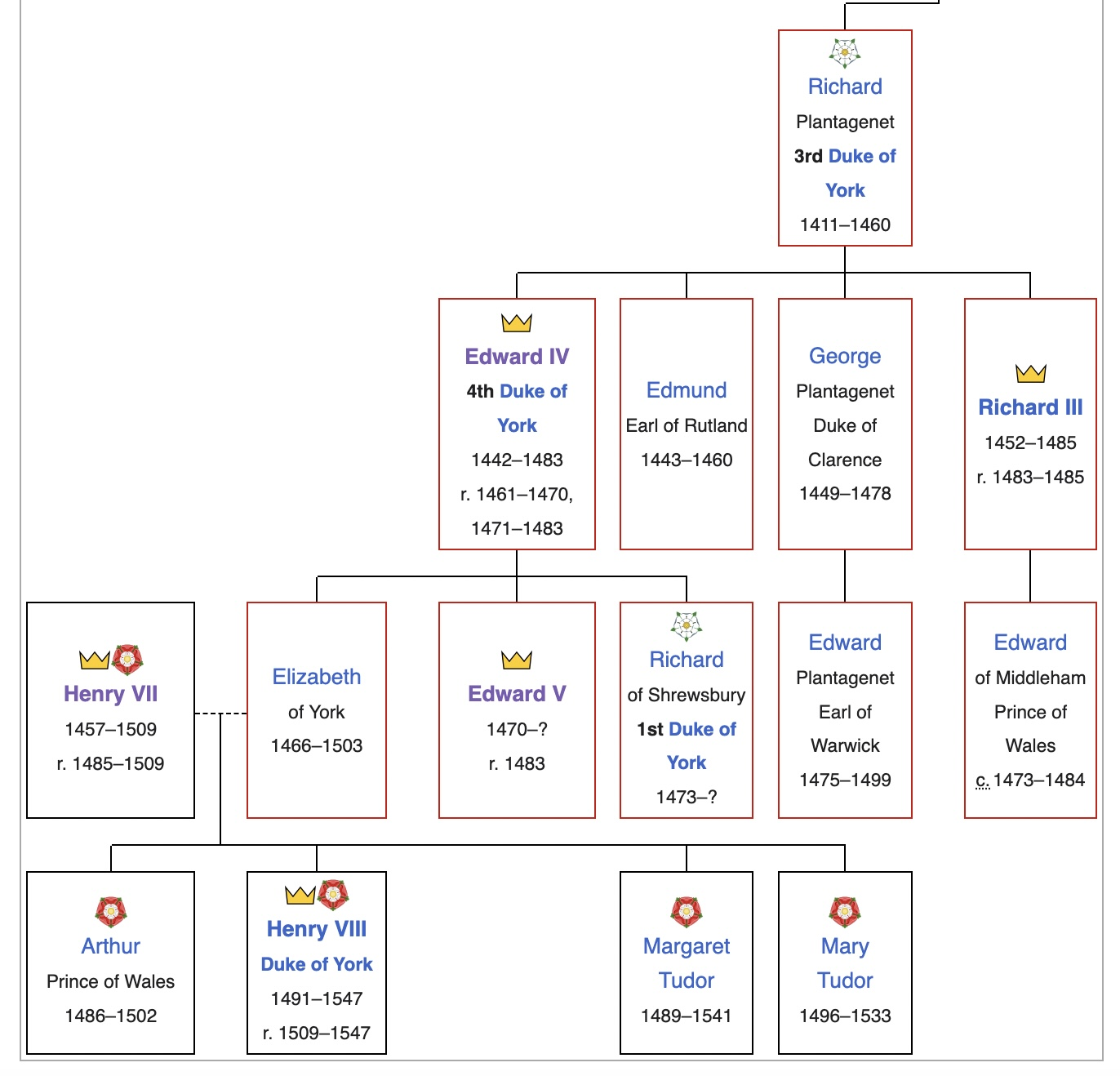
When Henry VII became king of England, there were eighteen people who could have claimed the throne based on their family history. By 1510, this number grew because sixteen children were born into the Yorkist family. However, Henry VII married Elizabeth of York, who was the oldest daughter of Edward IV. This meant that their children would inherit the throne according to both sides of the family.
Some members of the Yorkist family, like Margaret of York and the de la Pole family, continued to try to bring the Yorkist line back to power. Margaret's nephew, Edward, Earl of Warwick, was put in jail in London, but Margaret supported a rebellion in 1487 led by Lambert Simnel, who claimed to be Warwick.
John de la Pole, who was also part of the Yorkist family, joined the rebellion and was killed in the Battle of Stoke Field. Warwick was involved in more failed attempts to take back the throne. He was executed on 28 November 1499 after impersonating Edward IV’s child Richard in an attempt to claim the throne.
This is thought to be the end of the male lineage and claims to the throne from the yorkists. The families were now linked, and the reign of the Tudors would dominate the next century…
Summarise with AI:
Did you like this article? Rate it!

 Loading...