World War Two was devastating for Britain and the British people. War lasted from 1 September 1939 – 2 September 1945 and the British army was at the forefront of this.
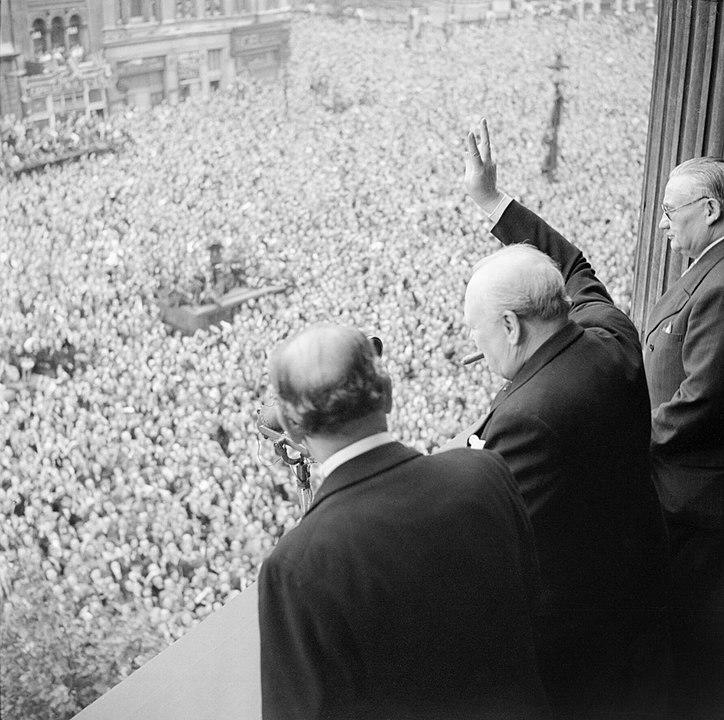
In the years after 1945 Britain had to deal with the impact of the Second World War, political developments, economic shifts, social changes, and evolving dynamics in global and local relations. From the leadership of Winston Churchill during wartime to the post-war Labour landslidevictory, the emergence of new ideologies, economic challenges, social reforms, and tensions, this era marked a pivotal chapter in British history.
Our revision guide explores some of the most important transformations and changes in Britain during this period. Less than a century on, its impacts can still be felt today, and many people in society can still remember what things were like in the 1940s, 1950s and early 1960s.
This is no war of chieftains or of princes, of dynasties or national ambition; it is a war of peoples and of causes. There are vast numbers, not only in this island but in every land, who will render faithful service in this war but whose names will never be known, whose deeds will never be recorded. This is a war of the Unknown Warriors; but let all strive without failing in faith or in duty, and the dark curse of Hitler will be lifted from our age.
Winston Churchill





The Impact of the Second World War on British Politics
The outbreak of the Second World War in 1939 catapulted Britain into a period of crisis and uncertainty. Winston Churchill, serving as Prime Minister from 1940 to 1945, emerged as the iconic wartime leader, rallying the nation with his stirring speeches and resolve. His leadership during the Blitz and the Battle of Britain strengthened national unity and bolstered morale.
The war also laid the groundwork for significant political shifts, culminating in the Labour Party's landslide victory in the 1945generalelection.
Political Developments
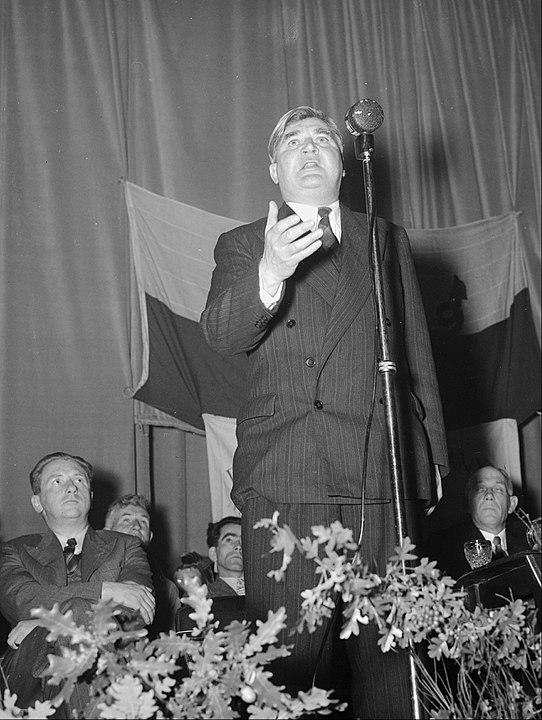
The Labour Party's triumph in the 1945 general election, often referred to as 'the Labour Landslide,' marked a turning point in British politics. Labour ideology and policies, centred around social welfare, nationalisation of key industries, and the creation of the National Health Service (NHS), definitely with the electorate's desire for social change and reform.
It seems strange, considering what a hero of British wartime Winston Churchill was, that he would be quickly ousted as Prime Minister, but there was a feeling that he had served his time and that, though a great wartime leader, new ideas were required.
Divisions within the Labour Party, particularly between its left and right factions, hindered cohesive governance and led to internal strife.
Despite Labour's initial post-war achievements, and the fact that the NHS was established, Conservative dominance in British politics prevailed from 1951 onwards, with the party forming the government for much of the period. The concept of Conservatism and the Establishment became entrenched in British politics, reflecting traditional values and hierarchical structures. Political consensus emerged as both major parties embraced Keynesian economics and a mixed economy, leading to a period of relative stability and consensus politics.
Economic Developments
The huge use of resources during wartime laid the foundation for Britain's post-war economic recovery and prosperity. The post-war boom saw rapid industrialization, technological advancements, and increased consumerism, which fueled economic growth and prosperity. However, balance of payments issues and 'stop-go' policies created economic challenges, leading to fluctuations in growth and periods of stagnation. It would be a generalisation to say that the economy grew in this time, but in spite of dips, the overall trend was upward.
“The UK’s ratio of public debt to GDP was very big after the Second World War, but economic conditions were highly favourable for its relatively painless reduction. Interest rates and unemployment were low, and economic growth was rapid.”
Economics Observatory
Changes to British industry and trade, coupled with the adoption of new technologies, transformed the economic landscape and spurred innovation and growth. The rise of automation and mass production revolutionised manufacturing processes, leading to increased productivity and competitiveness on the global stage.
Social Changes and Divisions
Britain still felt the effects of war, and austerity measures gave way to a post-war boom and growth of affluence in British society. The rise of consumerism and changes in the position of women and youth reshaped social norms and expectations, leading to shifts in lifestyles and attitudes.
Many people from outside of Britain saw the UK as a location where they could move to after the war, especially certain areas Britain had formerly colonised. Immigration and racial tensions emerged as significant social issues, reflecting the complexities of post-war migration and multiculturalism in Britain.
Developments in Social Policy
The Beveridge Report, which was actually called the Social Insurance and Allied Services published in 1942, laid the foundation for the growth of the Welfare State, advocating for comprehensive social welfare provisions to address poverty, inequality, and social insecurity.
The passage of the Butler Act in 1944 expanded access to education, while the establishment of the NHS in 1948 revolutionised healthcare provision in Britain. These initiatives marked significant milestones in the development of social policy and the promotion of social justice and equality.
The Condition of Ireland and Anglo-Irish Relations
Though the Irish now had more power in governance, there was still friction and tensions, including the riots of September 1964, which underscored the ongoing challenges in Anglo-Irish relations. The border in place between Northern Ireland and the Republic of Ireland meant that fighting continued long after the war, and there is still unrest today.
The beginnings of the civil rights campaign in Northern Ireland highlighted issues of discrimination and inequality, laying the groundwork for future political and social unrest. The Government of Ireland Act in 1920 attempted to address Irish Home Rule, but tensions persisted, leading to the Anglo-Irish Treaty of 1921 and the partition of Ireland. The condition of Ireland remained a contentious issue, with divided opinions and unresolved grievances shaping the political landscape.
Ireland’s independence came gradually with the following movements in parliament being required to force through independence.
- Proclamation – 24 April 1916
- Declaration – 21 January 1919
- Anglo-Irish Treaty – 6 December 1921
- 1922 constitution – 6 December 1922
- 1937 constitution – 29 December 1937
- Republic Act – 18 April 1949
As you would expect after the biggest war known to man, the period between 1939 and 1964 was a time of transformation, challenge, and change in Britain, marked by the aftermath of war.
From the leadership of Winston Churchill to the post-war Labour government's implementation of more progressive policies and the emergence of social welfare initiatives, this era reshaped British society and laid the groundwork for future developments.
Review Questions
- What was the Labour landslide?
- What happened to the UK’s economy after WW2?
Summarise with AI:
Did you like this article? Rate it!


 Loading...